
Quick Takeaways
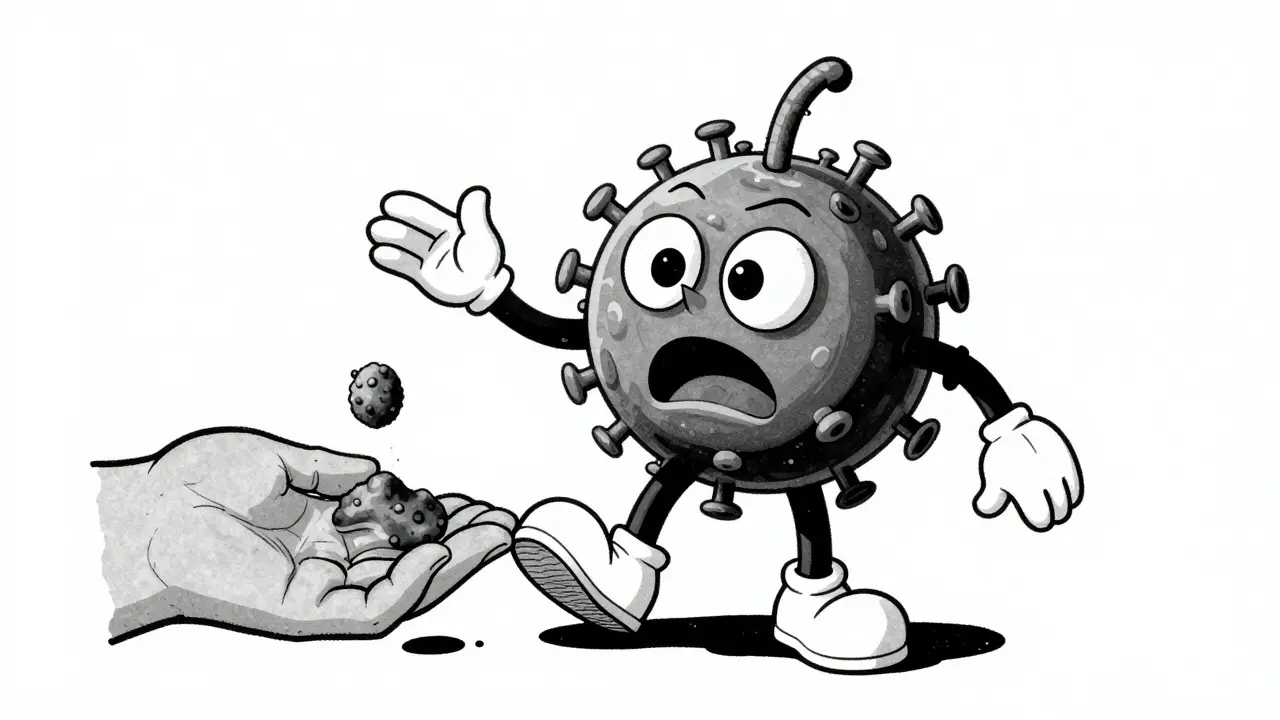
- Warts are caused by HPV and are highly contagious through skin-to-skin contact.
- About 60-70% of warts clear up on their own within two years.
- Over-the-counter salicylic acid is a highly effective first line of defense.
- Cryotherapy (freezing) is the most common professional treatment.
- Consistency is key; skipping treatment intervals often leads to lower success rates.
What Exactly Are Viral Warts?
To understand how to treat a wart, you first need to know what it is. Warts are caused by the Human Papillomavirus, or HPV. There isn't just one type of HPV; there are over 100 different strains, and different types target different parts of your body. For example, HPV types 1, 2, and 4 usually cause the common warts you see on hands, while types 1, 2, 4, 60, and 63 are the main culprits behind those painful plantar warts that feel like walking on a pebble.
If you've noticed flat, smooth bumps on your face or legs, those are likely flat warts, often caused by HPV types 3 and 10. Because these are viral, they can spread. If you pick at a wart on your finger, you might accidentally move the virus to your nail bed or another finger-a process called autoinoculation. This is why keeping the area clean and avoiding the urge to pick is a huge part of the battle.
Home Treatment: The Power of Salicylic Acid
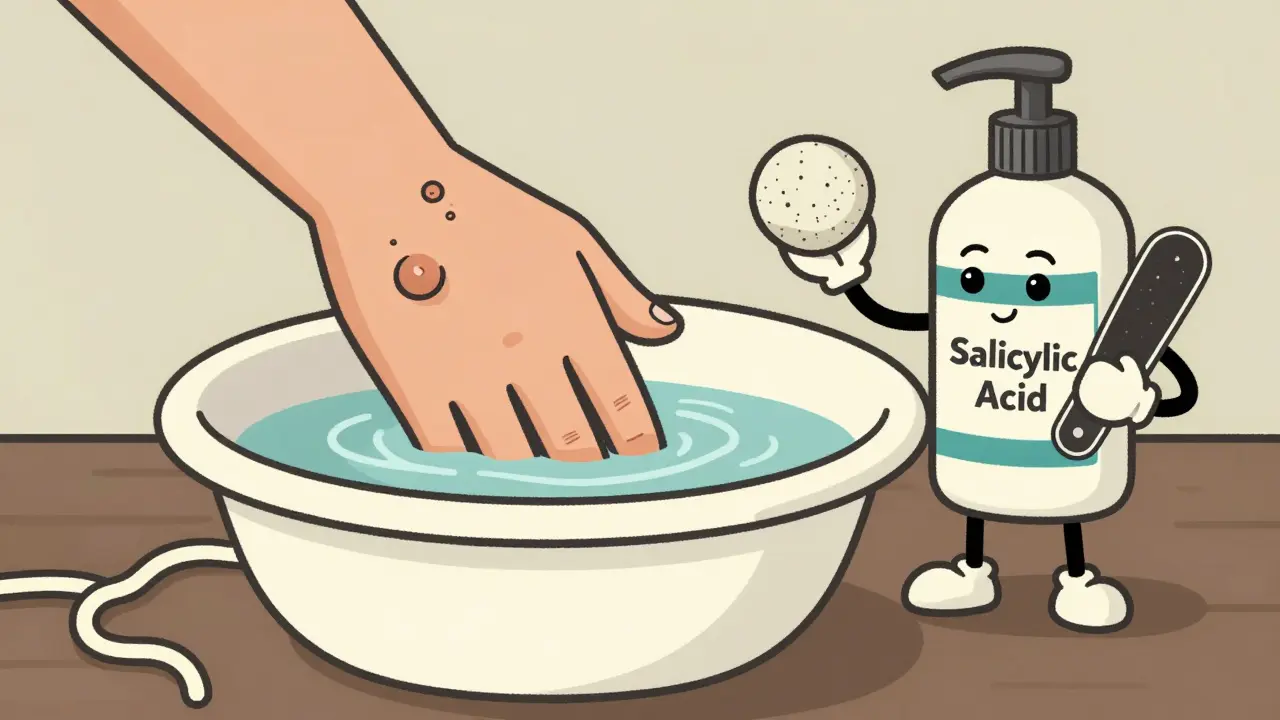
For many people, the first stop is the pharmacy. The most reliable over-the-counter option is salicylic acid, which usually comes in concentrations from 17% up to 40%. This isn't a "magic eraser" that works overnight; instead, it works by slowly peeling away the infected layers of skin, which triggers your immune system to notice the virus and fight it off.
To make this work, you can't just dab it on and hope for the best. The most effective routine involves soaking the wart in warm water to soften the skin, gently filing away the dead surface with an emery board or pumice stone, and then applying the acid. This allows the medication to penetrate deeper into the core of the wart. In some studies, this method has shown an 84% cure rate for plantar warts, making it a heavy hitter for home care.
Professional Removal: In-Office Options
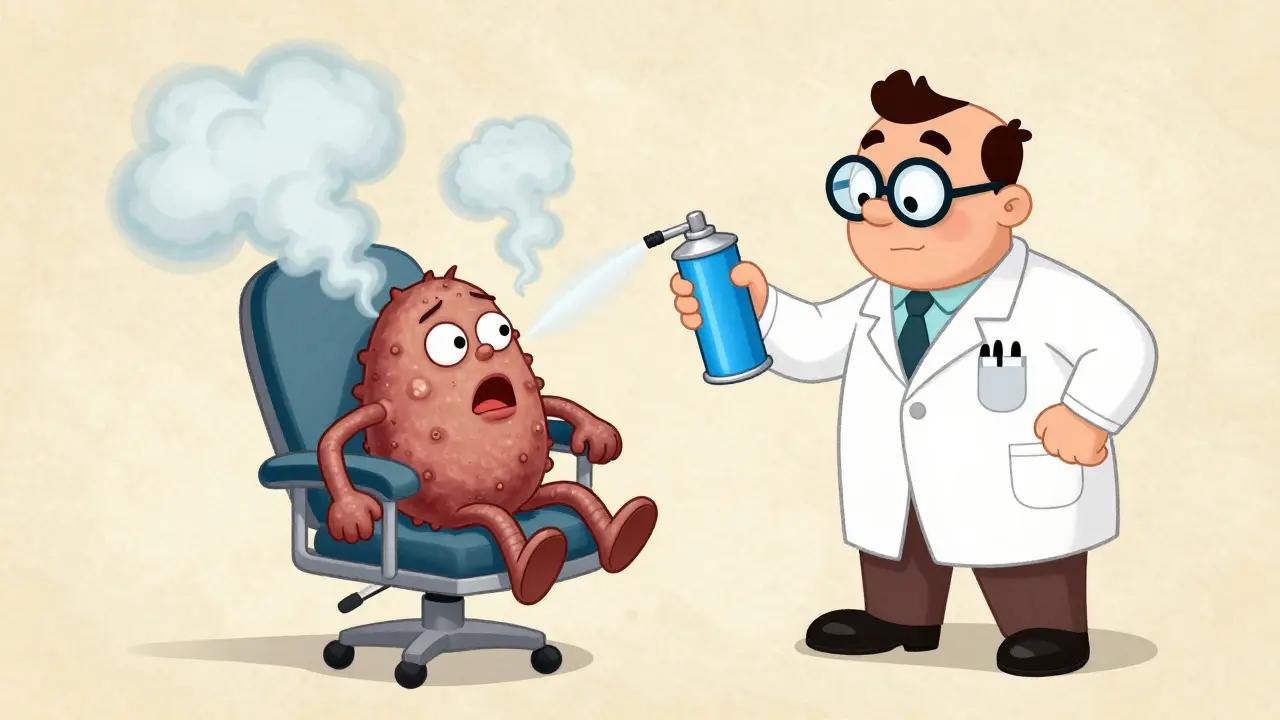
When home remedies fail or the wart is in a sensitive area, it's time to see a dermatologist. The most frequent choice is cryotherapy, which uses liquid nitrogen to freeze the tissue. The goal is to create a blister under the wart, which eventually pushes the infected skin off.
One thing to keep in mind is the schedule. If you go every three weeks, you're much more likely to see success than if you wait a month between visits. Some data suggests that increasing the interval from three to four weeks can cause the cure rate to drop significantly. You'll typically need between 3 and 6 sessions to fully clear the growth.
If freezing doesn't work, doctors might use trichloroacetic acid (TCA). This is a stronger chemical that causes coagulation of the wart tissue. It's particularly effective for warts on the palms or soles. For the most stubborn cases, there are more aggressive options like electrosurgery (burning the tissue) or pulse dye lasers, which cut off the blood supply to the wart, turning it purple or black before it falls off.
| Method | How it Works | Typical Setting | Pros | Cons |
|---|---|---|---|---|
| Salicylic Acid | Chemical peeling | Home / OTC | Cheap, accessible | Takes weeks/months |
| Cryotherapy | Liquid nitrogen freezing | Doctor's office | Fast application | Can be painful, needs multiple visits |
| TCA Acid | Chemical coagulation | Doctor's office | Very effective for flat warts | Risk of scarring/pigmentation |
| Immunotherapy | Stimulates immune response | Prescription | Great for recalcitrant warts | Can cause local inflammation |
Advanced Options for Stubborn Warts
Some people have "recalcitrant" warts-the kind that just won't quit no matter how much acid or nitrogen you throw at them. In these cases, doctors turn to immunomodulators like imiquimod. Instead of attacking the wart directly, this cream tells your immune system, "Hey, there's a virus here! Come destroy it." It's a slower process and can cause some redness and inflammation, but it's often the only thing that works when traditional methods fail.
Interestingly, some of the best results come from combining treatments. For instance, using both liquid nitrogen and salicylic acid together has shown higher efficacy than using either one alone. By attacking the virus from two different angles-chemical and thermal-you increase the odds of a full clearance.
Preventing the Spread and Recurrence
Treating the wart is only half the battle; you also have to stop it from coming back or spreading to other people. Since HPV loves moist environments, keep your feet dry and change your socks frequently. If you're hitting the gym or using public showers, always wear flip-flops. Walking barefoot in a locker room is a fast track to picking up a plantar wart.
You should also be careful with your tools. If you use a pumice stone or nail file on a wart, do not use that same tool on your healthy skin. The virus can hitch a ride on the file and move to another part of your body. The best practice is to have a dedicated "wart kit" that you sanitize or toss once the infection is gone.
Do warts ever actually go away on their own?
Yes, they do. Roughly 60% to 70% of viral warts will resolve spontaneously within two years without any treatment. This happens because your immune system eventually recognizes the HPV protein and clears the infection. However, many people choose treatment to avoid the discomfort or the social stigma associated with visible warts.
Is it safe to use drugstore freezing kits?
Generally, yes, but they aren't as cold as the liquid nitrogen used by doctors. Professional cryotherapy reaches much lower temperatures, allowing the freeze to penetrate deeper into the root of the wart. OTC kits are fine for small, common warts, but if you have a deep plantar wart, you likely need a professional's help.
How do I know if it's a wart or something else?
Warts often have tiny black dots, which are actually small clotted blood vessels. If you see these "seeds," it's a strong sign it's a viral wart. However, some skin cancers or corn/calluses can look similar. You should always have a professional diagnose a growth before you start applying strong acids to it.
Are viral warts related to genital warts?
Both are caused by the Human Papillomavirus (HPV), but they are caused by different strains. The types of HPV that cause a common wart on your finger are typically different from the types that cause genital warts. You generally won't get a genital wart from using a common wart remedy on your hand.
Why do my warts keep coming back?
Warts are notorious for returning because the virus can hide in the deeper layers of the skin. If the treatment doesn't kill every single infected cell, the wart can regrow. This is why consistency with home treatments and following the 2-3 week interval for cryotherapy is so important.
Next Steps for Your Recovery
If you're dealing with a wart right now, your first move should be to assess the location. If it's on your face or genital area, stop reading the home-care section and call a doctor immediately; the skin in those areas is too sensitive for standard OTC acids. For hand or foot warts, start with a high-quality salicylic acid treatment and commit to a daily routine for at least 6 weeks.
If you notice the wart is growing rapidly, bleeding, or changing color, make an appointment for a biopsy. While most warts are benign, any changing skin lesion needs a professional eye to rule out more serious conditions. Once you're clear, remember to keep your skin hydrated and avoid walking barefoot in public spaces to keep the HPV at bay.
Comments (9)
-
Srikanth Makineni April 6, 2026
duct tape method actually works’ better than most OTC stuff

-
Jay Vernon April 6, 2026
Thanks for the tips! 🌟 Always good to know how to keep things clean 🧼✨

-
Danielle Kelley April 8, 2026
Typical pharma propaganda. They tell you to use these acids just so they can sell you more creams when the first one "doesn't work" because the chemicals are designed to keep the virus dormant but not kill it. Have you guys actually looked into how these "clinical procedures" are just ways to gather data on our immune responses? It's all a game to them and the real cures are probably being hidden in some basement in Switzerland while we're told to wear flip-flops in a gym like some kind of joke. I bet the HPV strains are just mutating because of the stuff they put in the water supply anyway. Wake up people, these "benign" growths are just the beginning of some larger experimental rollout. I'm not touching any of that salicylic acid garbage unless I've synthesized it myself in a home lab. Everything is a scam and the dermatologists are just paid actors in white coats keeping the cycle of "treatment and recurrence" going forever to maximize their profit margins!

-
Timothy Burroughs April 8, 2026
everyone just follows the herd and goes to the doctor for a tiny bump lol just use a real remedy and stop being weak america is becoming a nation of babies who need a doctor to freeze a speck of skin

-
Brady Davis April 10, 2026
Oh wow, truly revolutionary advice here. I never would have guessed that a virus spreads through skin contact. Groundbreaking stuff. I'm sure my wart is just shivering in fear now that I've read this list of takeaways. Truly an epic saga of medical discovery.

-
shelley wales April 11, 2026
It can be so frustrating when they keep coming back, but just keep your head up! You've got this, and the right treatment will eventually work for you.

-
Alexander Idle April 12, 2026
I'm honestly far too exhausted to even try the whole "soaking and filing" routine because it sounds like a complete nightmare of a chore. Like, who actually has the time to sit in warm water every single day just to scrape their own foot? It's absolutely tragic that the only way to fix this is through such a tedious process. I'd rather just live with the pebble-foot feeling than spend my entire weekend acting like a professional manicurist for a virus. This is truly the most dramatic struggle of my adult life and I simply cannot be bothered with such rigorous maintenance. I'll probably just wait two years for it to go away while I complain about how unfair the biological lottery is. It's just so exhausting to even think about the effort involved.

-
Dhriti Chhabra April 13, 2026
It is most commendable that the distinction between common warts and genital HPV strains has been elucidated here, as it prevents unnecessary anxiety for the reader.

-
charles mcbride April 13, 2026
I completely agree that combining treatments is the most effective route. It is quite encouraging to see the data supporting a multi-angled approach for those stubborn cases.
