
PPI & Antifungal Interaction Checker
Imagine taking a powerful medication to clear a fungal infection, only to find out it's not working because of a common heartburn pill you take every morning. This isn't a rare fluke; it's a well-documented pharmacological clash. When Proton Pump Inhibitors is a class of medications that reduce stomach acid by blocking the H+/K+ ATPase pump in the gastric mucosa (often called PPIs) meets certain antifungal drugs, the result can be a total failure of treatment. However, the relationship is surprisingly complex. While some antifungals fail to enter your bloodstream, others might actually work better when paired with PPIs. Understanding this paradox is the difference between a successful recovery and a lingering infection.
The pH Problem: Why Some Antifungals Fail
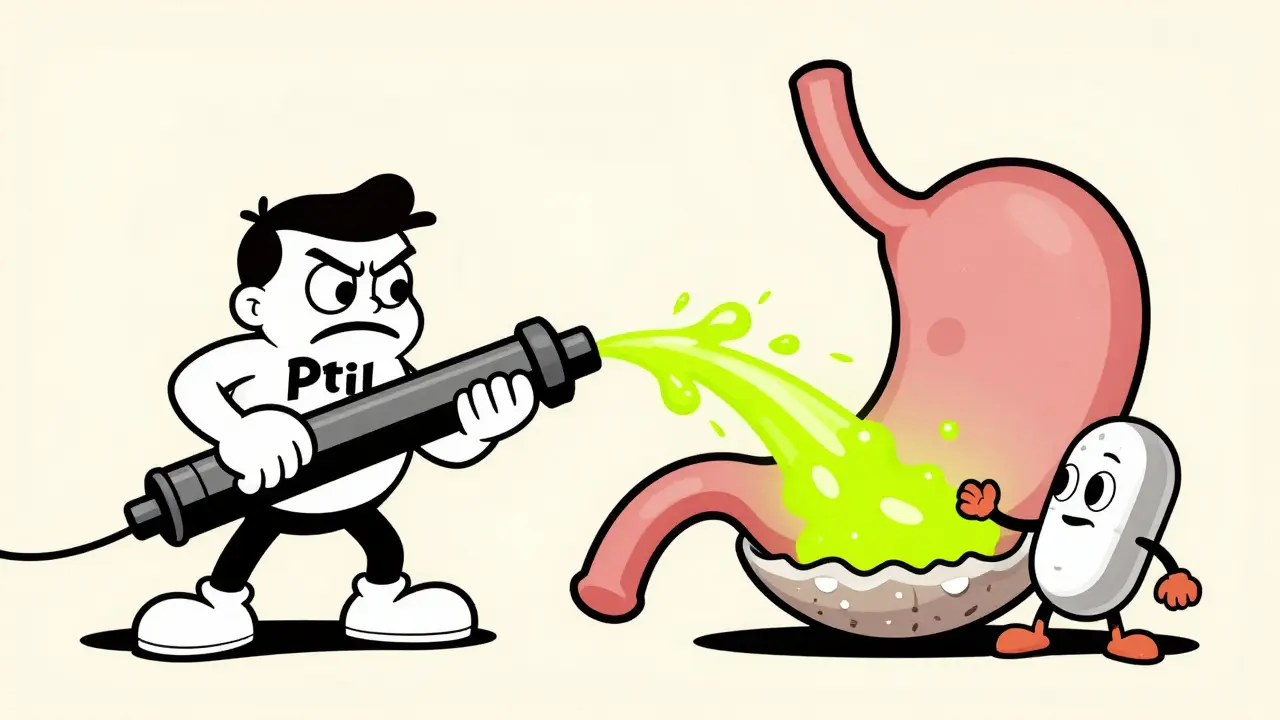
To understand why these drugs clash, we have to look at the stomach. Normally, your stomach is highly acidic, with a pH between 1.5 and 2.5. Some medications are "acid-labile," meaning they need that acidic environment to dissolve and be absorbed into the blood. PPIs, such as Omeprazole or Esomeprazole, raise the gastric pH to around 4-6. For many drugs, this is like trying to dissolve a pill in plain water instead of vinegar-it just doesn't happen efficiently.
The most affected drugs are the azole antifungals. Specifically, Itraconazole and Ketoconazole are notoriously pH-dependent. According to a 2023 study in JAMA Network Open, co-administering these with PPIs can slash their absorption by as much as 60%. Ketoconazole is a prime example: its solubility drops from 22 mg/mL in a normal acidic stomach to a tiny 0.02 mg/mL when a PPI has neutralized the acid. If the drug can't dissolve, it can't reach the infection, leaving the patient under-treated despite following their prescription.
| Antifungal Agent | Absorption Impact | Mechanism of Interaction | Clinical Risk |
|---|---|---|---|
| Itraconazole | Severe Reduction (60% AUC loss) | pH-dependent dissolution | Treatment failure; contraindicated |
| Ketoconazole | Severe Reduction | pH-dependent dissolution | Subtherapeutic serum levels |
| Fluconazole | Minimal to None | High water solubility | Low risk for absorption issues |
| Voriconazole | Minimal | Metabolic (CYP450) interaction | Increased drug levels (toxicity) |
The Metabolic Tug-of-War in the Liver
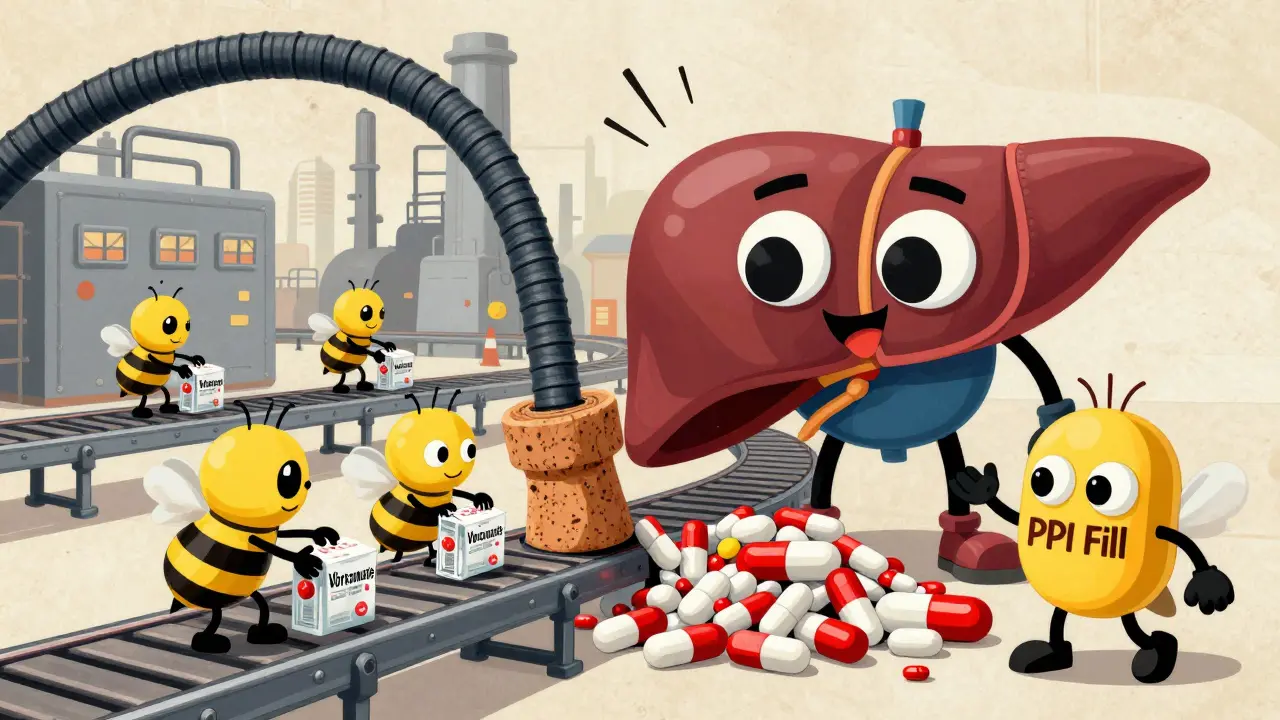
The interaction doesn't stop at the stomach. Once a drug is absorbed, it has to be processed by the liver, primarily through the Cytochrome P450 (CYP450) enzyme system. This is where things get messy. Many azoles and PPIs share the same "processing lanes" in the liver, specifically the CYP3A4 and CYP2C19 pathways.
Take Voriconazole. While its absorption isn't ruined by stomach acid changes, its clearance is. Certain PPIs, like pantoprazole, can act as competitive inhibitors. This means they block the liver from breaking down the antifungal, effectively slowing its exit from the body. Research in Antimicrobial Agents and Chemotherapy found that this can reduce voriconazole clearance by 25-35%. While this might sound like it helps the drug work better, too much of a good thing can lead to toxicity and side effects.
Conversely, Fluconazole is a bit of a powerhouse. It doesn't care about gastric pH, but it is a potent inhibitor of CYP2C9. If you're taking other medications-like the blood thinner warfarin-fluconazole can block the metabolism of those drugs, potentially leading to dangerous bleeding if doses aren't adjusted downward by 20-30%.
The Clinical Paradox: When PPIs Actually Help
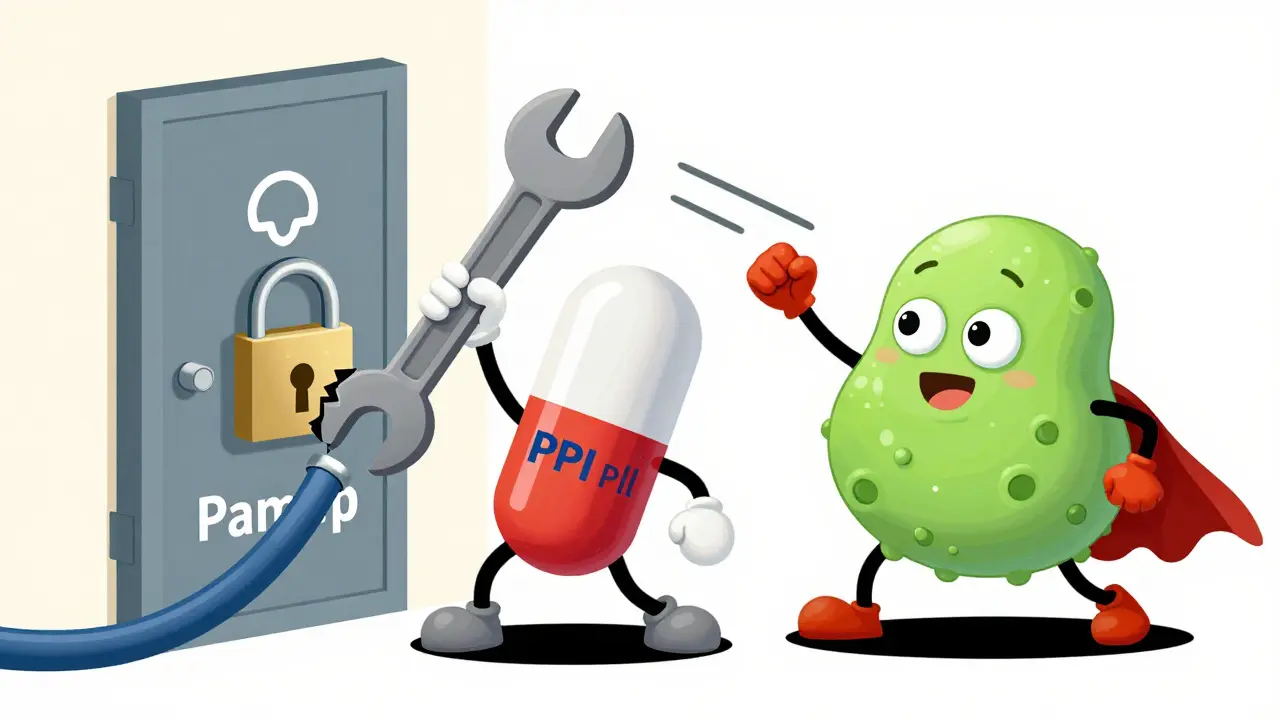
Here is where the story takes a surprising turn. While we've focused on how PPIs block absorption, new evidence suggests they might actually help kill fungi more effectively. This is the "clinical paradox." A groundbreaking 2024 study published in PMC (PMC10831725) found that PPIs might interfere with a specific fungal protein called Pam1p (a plasma membrane ATPase).
Essentially, by messing with the fungus's own "pump" system, PPIs like omeprazole can make the fungus more vulnerable to azoles. In lab tests against resistant strains of Candida glabrata, this synergy reduced the minimum inhibitory concentration (MIC) of fluconazole by 4 to 8 times. In plain English: the PPI made the antifungal significantly more potent. We are currently seeing Phase II trials at Johns Hopkins University to see if this can be used to treat stubborn, refractory candidiasis. It's a complete 180 from the traditional view that PPIs are only a hindrance.
How to Manage These Interactions in the Real World
If you or a patient must take both a PPI and a pH-dependent antifungal, you can't just take them at the same time. Management requires a strict schedule and, in some cases, blood work. The goal is to maximize the "acid window" or bypass the liver's bottleneck.
- Timing the Dose: For itraconazole, try taking the antifungal at least 2 hours before the PPI. This gives the drug a head start to dissolve while the stomach is still relatively acidic.
- The 6-Hour Gap: For ketoconazole, the Mayo Clinic suggests a 4-6 hour separation. Even then, be warned: this only partially fixes the problem, reducing the absorption loss from 60% to about 45%.
- Therapeutic Drug Monitoring (TDM): For voriconazole, you can't just guess. The Cleveland Clinic recommends checking blood levels within 72 hours of starting a PPI. This allows doctors to adjust the dose by 25-50% to keep the drug in the safe "trough" range of 1-5.5 μg/mL.
- Switching Strategies: Many infectious disease pharmacists simply avoid the problem entirely by switching the patient to echinocandins, a different class of antifungals that aren't affected by stomach pH.
The Future: Engineering Around the Problem
The medical community is tired of this guessing game. The FDA and other researchers are working on "pH-independent" formulations. One promising lead is SUBA-itraconazole-a submicron particle version that showed 92% bioavailability regardless of whether the patient was on a PPI or not. If these formulations hit the market, the risk of treatment failure due to heartburn medication will essentially vanish.
Until then, we have to rely on vigilance. With nearly 19% of hospitalized patients receiving both types of therapy, the risk of error is high. In fact, the FDA added a black box warning to itraconazole in 2023 specifically because of this interaction. It's a reminder that the smallest change in our internal chemistry-like a shift in stomach pH-can have massive ripple effects on how our bodies fight infection.
Can I take Omeprazole and Fluconazole together?
Yes. Unlike other azoles, Fluconazole is highly water-soluble and its absorption is not significantly affected by the increased gastric pH caused by Omeprazole. In some cases, emerging research even suggests a synergistic effect that might enhance the drug's efficacy.
Why is Itraconazole contraindicated with PPIs?
Itraconazole requires a highly acidic environment to dissolve. PPIs raise the pH of the stomach, which can reduce the absorption of Itraconazole by up to 60%. This often leads to subtherapeutic levels in the blood, meaning the infection isn't treated effectively.
What are the signs that my antifungal isn't working due to a PPI?
Signs include a lack of improvement in symptoms despite following the medication regimen, or the recurrence of a fungal infection shortly after treatment. If you are taking a PPI and an azole, you should ask your doctor about therapeutic drug monitoring (TDM) to check blood levels.
Does taking my PPI and antifungal at different times fix the issue?
It helps, but it doesn't always solve it. Separating doses by 4-6 hours can reduce the loss of absorption for drugs like ketoconazole, but it may not restore it to full levels. The only way to be sure is through blood tests or by switching to a pH-independent antifungal.
Will a PPI increase the side effects of Voriconazole?
Potentially. Because some PPIs inhibit the enzymes (CYP2C19 and CYP3A4) that break down Voriconazole, the drug can stay in your system longer and reach higher concentrations, which increases the risk of toxicity and side effects.
Next Steps and Troubleshooting
If you are a patient: Do not stop taking your prescribed medications without consulting your doctor. Instead, bring a complete list of your medications (including over-the-counter PPIs) to your next appointment and ask, "Will my acid-blocker affect how my antifungal is absorbed?"
If you are a healthcare provider: When prescribing itraconazole or ketoconazole, screen for PPI use. If a PPI is necessary, consider switching the antifungal to an echinocandin or fluconazole. If you must use both, implement a strict dosing schedule and prioritize TDM for voriconazole patients within the first 72 hours of therapy.