
Quick Summary: Managing Your Neck Strain
- What it is: Tearing or stretching of neck muscles and ligaments.
- Key Symptoms: Localized pain, stiffness, and a limited ability to turn your head.
- Fastest Recovery: Start mobilization and physical therapy within 72 hours.
- Top Red Flags: Numbness in the arms or loss of bladder control (seek immediate care).
- Long-term Fix: Correcting "forward head posture" through targeted strengthening.
Is it a Strain or Something Else?
Not all neck pain is created equal. It is easy to confuse a simple strain with more serious nerve or bone issues. For instance, Cervical Radiculopathy usually involves a pinched nerve, which sends shooting pains, numbness, or weakness down your arm-often past the elbow. In contrast, a strain keeps the pain localized in the neck and shoulders.
Then there is Cervical Stenosis, a narrowing of the spinal canal. This is more common in adults over 40 and can cause serious issues like balance problems or gait disturbances. If you're over 60, you might be dealing with Osteoarthritis, which typically feels like a gradual grind or "crepitus" when you move your head. The tell-tale sign of a strain? It generally feels worse when you move and significantly better when you rest, unlike inflammatory conditions like Rheumatoid Arthritis, where you might feel stiff for over half an hour every single morning.
| Condition | Primary Sensation | Location | Key Differentiator |
|---|---|---|---|
| Cervical Strain | Aching, Stiffness | Neck & Shoulders | Worsens with movement; improves with rest |
| Radiculopathy | Sharp, Electric | Neck radiating to Arm | Numbness or weakness below the elbow |
| Osteoarthritis | Grinding, Dull Ache | Deep Cervical Spine | Gradual onset; common in seniors |
| Stenosis | Pressure, Heavy | Spinal Canal | Balance issues or neurological deficits |
The Three Stages of Recovery
Recovery isn't a straight line; it's a process. Depending on the severity-from microscopic tears to a full rupture-your timeline will vary. Most people can get back to normal in a few days, but severe ruptures can take up to 12 weeks. The key is knowing what to do and when.
The First 72 Hours: Calming the Storm
The goal here is to reduce inflammation without freezing your neck in place. While old-school advice suggested stiff neck collars, modern research shows that complete immobilization for more than three days actually slows down recovery. Instead, use relative rest. Apply ice packs (cryotherapy) for 15 to 20 minutes every few hours. This targeted cooling is significantly more effective at reducing pain than leaving a cold pack on continuously.
Days 4 to 14: Getting Things Moving
Once the initial sharp pain subsides, you need to introduce controlled movement. This is where you start with gentle range-of-motion exercises. Try performing 10-15 repetitions of chin tucks (pulling your chin straight back like you're making a double chin) and scapular retractions (squeezing your shoulder blades together) three times a day. Doing this consistently can help you regain a significant amount of your rotation ability within two weeks.
Weeks 3 to 6: Building Strength
To stop the pain from coming back, you have to strengthen the supporting cast. This involves the Trapezius, Levator Scapulae, and Sternocleidomastoid muscles. Using a resistance band (like a TheraBand) for progressive training is far more effective than bodyweight exercises alone. Focus on the lower trapezius and serratus anterior to pull your shoulders back and support your head properly.
The "Tech Neck" Trap and Long-Term Fixes
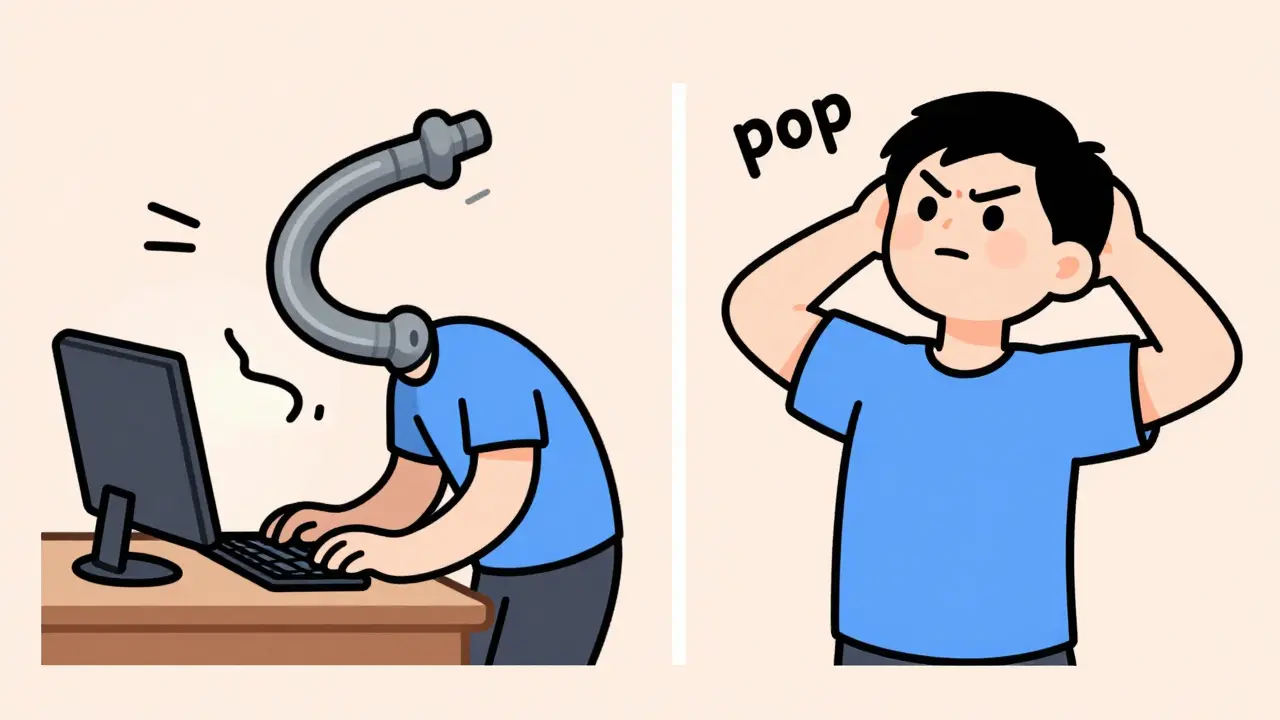
If you work in an office, you're likely fighting a losing battle with your desk setup. About 68% of office workers struggle with forward head posture-where your head drifts forward from your shoulders. This puts a massive amount of leverage and strain on your cervical spine. If you don't fix this biomechanical issue, you're nearly twice as likely to see your acute strain turn into a chronic problem.
One of the most effective ways to combat this is through Physical Therapy. Patients who start PT within 72 hours of an injury recover nearly 30% faster than those who wait. Many find success with "habit-stacking." For example, perform your chin tucks while you're brushing your teeth or waiting for your coffee to brew. This simple trick helps maintain a routine when motivation dips around the six-week mark.
For those who struggle with posture, new tech is emerging. The FDA-approved NeckSense wearable uses sensors to monitor your head position in real-time, alerting you when you're slouching. Combining this kind of biofeedback with manual therapy can drastically reduce the chance of the injury returning.
Medication: To Use or Not to Use?
When the pain hits, the instinct is to reach for the strongest anti-inflammatory available. However, the medical consensus is shifting. While NSAIDs (like ibuprofen) are great for the first few days, using them for more than 10 days doesn't actually provide more pain relief than simple acetaminophen, but it does increase your risk of stomach issues. The focus is moving away from masking the pain with pills and toward solving the movement problem through mobilization.
Avoiding the Chronic Pain Spiral
A small percentage of people-about 10-15%-don't get better. Instead, their acute strain evolves into Myofascial Pain Syndrome, where muscles stay in a constant state of contraction, creating painful trigger points. This often happens because of a diagnostic delay. Waiting two months to see a specialist can turn a 3-week recovery into a 6-month ordeal.
It's also worth noting the mental side of recovery. If you find yourself "catastrophizing" the pain-thinking it will never get better or that your neck is permanently broken-you are statistically more likely to experience chronic pain. Integrating cognitive strategies to manage stress and pain perception is now recommended alongside physical exercises to ensure a full recovery.
How long does a typical cervical strain take to heal?
Recovery depends on the grade of the strain. Mild strains (micro-tears) usually feel better within 48 to 72 hours. Moderate strains, involving partial tears, typically take 1 to 2 weeks. Severe strains, where a muscle or tendon is completely ruptured, can require 6 to 12 weeks of focused rehabilitation.
Should I use a neck brace for a strain?
Generally, no. While it might feel supportive, complete immobilization for more than 48-72 hours is actually linked to longer recovery times. The modern approach emphasizes "relative rest"-avoiding heavy lifting or extreme movements while keeping the neck moving gently within a pain-free range.
Can a cervical strain cause headaches?
Yes. Strains in the upper cervical region and tight muscles like the trapezius can lead to cervicogenic headaches. Correcting forward head posture and strengthening the lower trapezius often eliminates these headaches by reducing the tension pulling on the base of the skull.
What is the difference between a strain and a sprain?
A strain refers specifically to the stretching or tearing of muscles and tendons (the tissues connecting muscle to bone). A sprain refers to the stretching or tearing of ligaments (the tissues connecting bone to bone). In the neck, both often happen simultaneously during an injury like whiplash.
When should I be worried about my neck pain?
You should seek immediate medical attention if you experience "red flag" symptoms, including numbness, tingling, or weakness that radiates down your arms, sudden loss of coordination or balance, or any loss of bladder or bowel control, as these can indicate severe spinal cord compression.
Next Steps for Your Recovery
If you're currently in pain, your first move should be a gentle assessment. If you have no neurological symptoms (no numbness), start with the 72-hour icing protocol. If you've been aching for more than two weeks, it's time to stop the ice and start the chin tucks and scapular retractions. For those working a desk job, evaluate your monitor height-your eyes should be level with the top third of the screen to prevent the forward lean that causes these strains in the first place.