
Fournier's Gangrene: Causes, Risks, and What You Need to Know
When a Fournier's gangrene, a rapidly spreading bacterial infection that destroys skin, fat, and muscle tissue around the genitals and anus. Also known as necrotizing fasciitis of the perineum, it doesn’t wait for permission—it moves fast, and without urgent care, it can kill. This isn’t just a complication of diabetes, though people with diabetes are at higher risk. It’s a full-blown emergency that starts with what looks like a small skin irritation, then turns into swelling, severe pain, and blackened tissue—all within hours.
What makes Fournier’s gangrene so dangerous is how easily it hides. Many people mistake early signs for a bad pimple, a yeast infection, or even a pulled muscle. But when bacteria like Escherichia coli, Staphylococcus, or Clostridium team up and invade deep tissue, they release toxins that shut down blood flow and kill everything in their path. Men are far more likely to get it, especially those over 50 with diabetes, obesity, or weakened immune systems. But women and children can get it too—often from an infected cyst, abscess, or even after minor surgery or trauma.
It’s not just about the infection itself. The real threat comes from how quickly it spreads. A study from the Journal of Urology found that patients who waited more than 24 hours after symptoms started had nearly triple the risk of dying. That’s why knowing the warning signs matters: sudden, intense pain in the genital area, fever, redness that turns purple or black, a crackling sound under the skin (called crepitus), and foul-smelling discharge. If you see any of these, don’t wait for your doctor’s office to open—go to the ER. Treatment means surgery to cut out dead tissue, strong IV antibiotics, and often ICU-level care.
People with diabetes are especially vulnerable because high blood sugar weakens the immune system and slows healing. But even if you don’t have diabetes, poor hygiene, recent injury, or untreated skin infections can set the stage. That’s why checking your skin daily—especially in sensitive areas—isn’t just good advice, it’s a potential lifesaver. And if you’ve had a recent procedure, surgery, or even a cut near your groin, pay attention. Don’t ignore pain that gets worse instead of better.
What you’ll find in the posts below isn’t just theory—it’s real-world insight from people who’ve faced this, doctors who treat it, and experts who track how infections spread. You’ll learn how bacterial skin infections like cellulitis can turn deadly if ignored, how medication safety habits can prevent complications, and why knowing the difference between a simple rash and a spreading infection makes all the difference. These aren’t abstract ideas. They’re tools you can use to protect yourself or someone you care about.
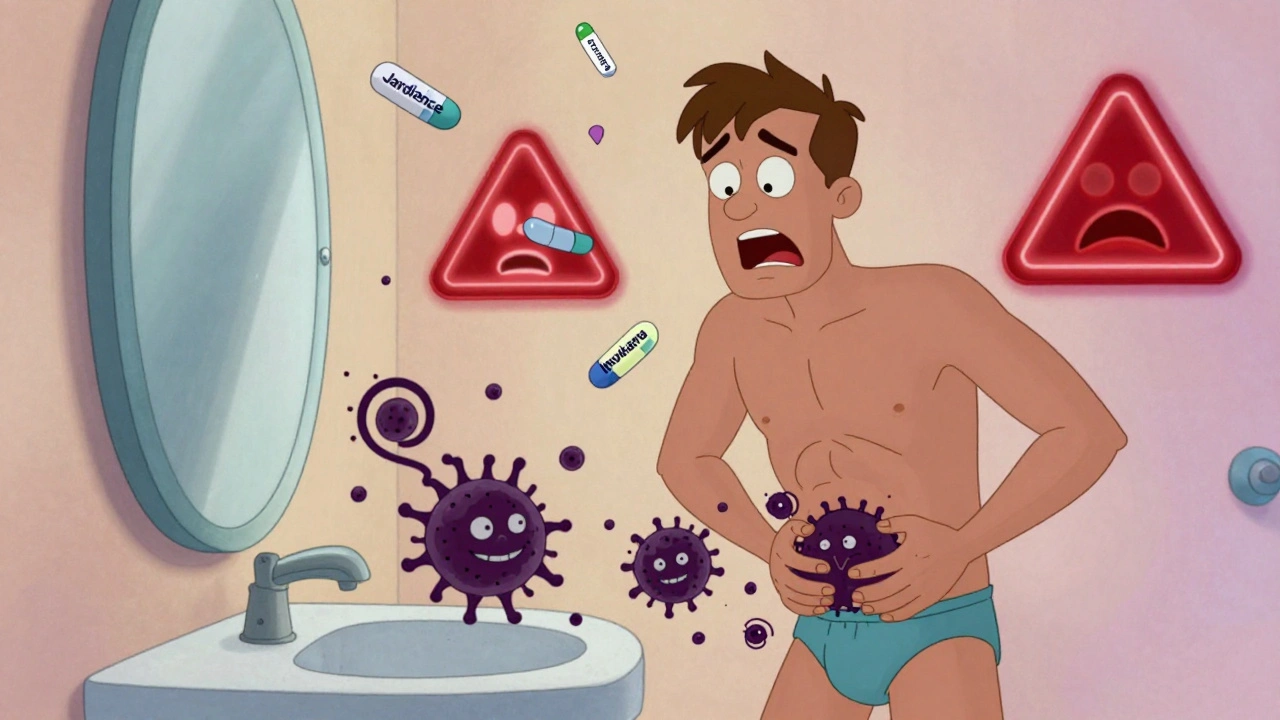
Fournier’s Gangrene and Diabetes Medications: Emergency Signs You Can’t Ignore
Haig Sandavol Dec 1 9Fournier’s gangrene is a rare but deadly infection linked to SGLT-2 inhibitor diabetes drugs like Jardiance and Farxiga. Know the emergency signs - severe pain, swelling, fever, foul discharge - and act fast. Early treatment saves lives.
More Detail