
It’s common to hear someone say, "I’m allergic to penicillin" because they got a stomachache after taking it. But that’s not an allergy-it’s a side effect. Confusing the two can be dangerous. It can lead to worse infections, higher medical bills, and even life-threatening choices when better options are avoided out of fear. Understanding the real difference between side effects and allergic reactions isn’t just academic-it can save your life or someone else’s.
What Are Medication Side Effects?
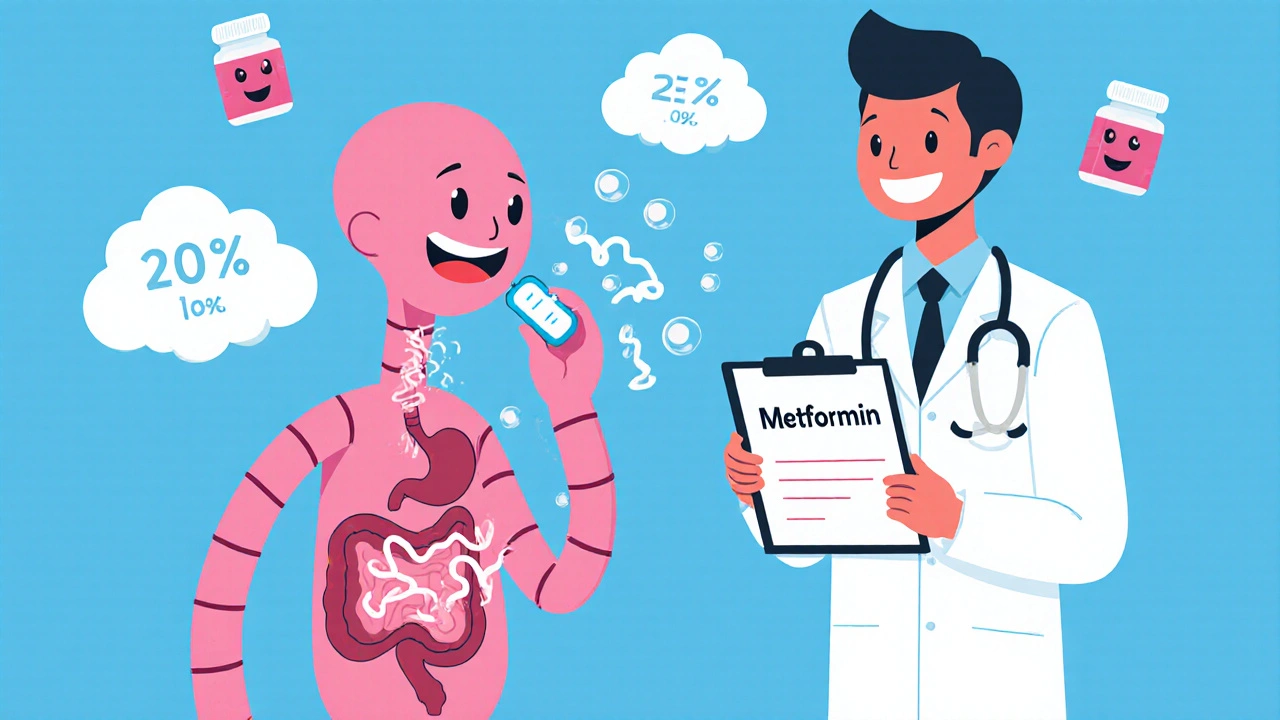
Side effects are predictable, non-immune reactions that happen because of how a drug works in your body. Every medication has a target-like lowering blood pressure, killing bacteria, or reducing inflammation. But drugs don’t always hit just that target. They can affect other systems too. That’s where side effects come from.For example, metformin, a common diabetes drug, often causes nausea, diarrhea, or gas. That’s not because your body is attacking it-it’s because metformin changes how your gut absorbs sugar. About 20-30% of people experience this, and most find it gets better after a few weeks. Statins, used to lower cholesterol, can cause muscle aches in 5-10% of users. Again, this is a known pharmacological effect, not an immune response.
These reactions are listed in drug labels with exact percentages. If a label says, "Headache occurred in 12% of patients," that’s a side effect. They usually show up within hours or days of starting the drug. Many fade over time as your body adjusts. Doctors often manage them by adjusting the dose, taking the pill with food, or adding another medication.
Side effects are common. Nearly everyone taking a prescription drug will experience at least one. But they’re not dangerous unless they’re severe. Even then, they’re usually treatable without stopping the drug entirely.
What Is a True Allergic Drug Reaction?
A true drug allergy is when your immune system mistakes the medication for a harmful invader-like a virus or pollen-and launches an attack. This isn’t about how the drug works. It’s about your body’s overreaction to it.The first sign? Your immune system makes antibodies-specifically IgE antibodies-against the drug. These trigger mast cells to release histamine and other chemicals. That’s what causes hives, swelling, itching, wheezing, or low blood pressure. In the worst cases, it leads to anaphylaxis, a life-threatening reaction that can shut down breathing or circulation.
Timing matters. Immediate allergic reactions happen within minutes to two hours after taking the drug. Think of it like a lightning strike: you take penicillin, and within 15 minutes, your throat swells and you can’t breathe. That’s not a side effect-that’s an allergy.
Delayed reactions are trickier. They can show up days later, often as a rash, fever, or swollen lymph nodes. These are usually T-cell mediated, not IgE-driven, but still true allergies. For example, a rash from amoxicillin that appears a week after starting the drug? That’s often an allergic reaction, even if it doesn’t look like classic hives.
Only 5-10% of all adverse drug reactions are true allergies. But people think it’s much higher. Why? Because they mix up symptoms.
Key Differences at a Glance
| Feature | Side Effect | Allergic Reaction |
|---|---|---|
| Caused by | Drug’s pharmacological action | Immune system response |
| Immune system involved? | No | Yes |
| Timing | Hours to days; often improves with time | Minutes to 2 hours (immediate); 48+ hours (delayed) |
| Dose-dependent? | Usually yes-higher dose, worse reaction | No-even tiny amounts can trigger it |
| Common symptoms | Nausea, dizziness, dry mouth, mild rash | Hives, swelling, wheezing, anaphylaxis, blistering rash |
| Can it be managed without stopping the drug? | Yes-dose change, timing, or add-on meds | No-must avoid completely |
| Reactions on re-exposure? | May get better or stay the same | Usually worse each time |
Why Mislabeling Matters
Here’s the scary part: up to 90% of people who say they’re allergic to penicillin aren’t. When tested properly-with skin tests or oral challenges-most show no reaction. Yet, they’re still labeled as allergic in their medical records. Why does that matter?Doctors avoid penicillin and reach for broader-spectrum antibiotics like vancomycin or ciprofloxacin. These drugs are more expensive, harder on your gut, and more likely to cause antibiotic-resistant infections like MRSA. A 2021 JAMA study found that patients mislabeled as penicillin-allergic cost the healthcare system $4,000 more per person annually. They also had a 69% higher chance of getting a dangerous hospital infection.
The same happens with sulfa drugs, NSAIDs, and even some blood pressure meds. People think, "I felt sick after taking this," so they avoid it forever. But if it was just nausea or a headache, they’re missing out on the safest, most effective treatment.
And it’s not just cost. It’s safety. If you’re having chest pain and need aspirin, but you think you’re allergic to it because you once got a rash from a different drug, you might not get the right care in time.
How Doctors Tell the Difference
A good doctor doesn’t just take your word for it. They ask detailed questions:- When did the reaction happen? Minutes after taking it? Or a week later?
- What exactly happened? Did you break out in hives? Did you feel like you couldn’t breathe? Or just feel queasy?
- Have you taken it again since? What happened then?
- Did you need emergency care?
For high-risk drugs like penicillin, they may recommend skin testing. This involves tiny pricks of the drug under the skin. If there’s no redness or swelling after 15-20 minutes, you’re likely not allergic. Then comes an oral challenge-taking a small dose under supervision. Less than 0.2% of low-risk patients react. That’s safer than most people think.
There are also blood tests now, like the basophil activation test (BAT), approved by the FDA in 2023. It’s more accurate than skin tests for some drugs. But it’s not widely available yet.
The bottom line? If you think you’re allergic to a drug, get it checked. Especially if it’s penicillin, sulfa, or insulin. You might be able to take it safely again.
What You Should Do If You Think You’re Allergic
Don’t just assume. Don’t avoid the drug forever without proof. Here’s what to do:- Write down exactly what happened-symptoms, timing, dose, and how long it lasted.
- Don’t label it yourself. Say, "I had a reaction," not "I’m allergic."
- Ask your doctor if you should see an allergist. Most primary care providers aren’t trained to diagnose drug allergies.
- If you’ve had a severe reaction-swelling, trouble breathing, fainting-get tested. Even if it happened years ago.
- If you’re told you’re allergic, ask for documentation: "Can you confirm this is a true allergy?"
Many people feel relieved after testing. One woman in Houston, 45, thought she was allergic to lisinopril because it gave her a cough. Turns out, that’s a known side effect-common with ACE inhibitors. She switched to a different med, no more cough, and no unnecessary restrictions.
What Happens If You Ignore It?
Ignoring a true allergy can be deadly. Anaphylaxis doesn’t wait. If you’ve had one before, you’re at higher risk for another. Carrying an epinephrine auto-injector (like an EpiPen) is critical if you have a confirmed IgE-mediated allergy.But ignoring a mislabeled allergy? That’s just as harmful. You might end up on a drug that causes more side effects. Or worse-you might be denied a life-saving treatment because your chart says "allergic to penicillin" when it’s not true.
Studies show that 40% of patients with mislabeled allergies report being denied necessary treatments. That’s not just inconvenient-it’s dangerous.
Final Thought: Your Medical Record Isn’t Set in Stone
Your drug allergy label isn’t permanent. It’s a note in a chart. And notes can be updated. If you’ve had a reaction years ago and aren’t sure if it was an allergy, get it re-evaluated. Many hospitals now have drug allergy clinics. Even your primary care doctor can start the process with a simple questionnaire.Don’t let an old story keep you from the best care. A side effect is manageable. An allergy is serious. But both can be misunderstood. Clarifying the difference isn’t just smart-it’s essential.
Can you outgrow a drug allergy?
Yes, especially with penicillin. Up to 80% of people who had a true penicillin allergy as children lose it over time. Even if you were labeled allergic 20 years ago, you may still be able to take it safely. Testing can confirm this.
Are all rashes from drugs allergic reactions?
No. Many rashes are side effects-not allergies. A mild, flat, red rash that appears days after starting a drug is often non-allergic. True allergic rashes usually itch intensely, spread quickly, and may blister. But only a doctor can tell the difference.
If I’m allergic to penicillin, am I allergic to all antibiotics?
No. Penicillin allergies are specific to that class. You’re not automatically allergic to amoxicillin, cephalosporins, or azithromycin. Cross-reactivity is low-only about 10% for some cephalosporins, and even less for others. Always get tested before assuming.
Can side effects become allergies?
No. Side effects and allergies are different biological processes. One is pharmacological, the other immune. But repeated exposure to a drug can trigger a true allergy even if you never had one before. That’s why you should never ignore new symptoms.
How do I know if I need to see an allergist?
See an allergist if you’ve had swelling, trouble breathing, hives, or anaphylaxis after a drug. Also if you’ve been told you’re allergic to penicillin, sulfa, or insulin and want to confirm it. Most primary care doctors can refer you. Testing is safe, quick, and often covered by insurance.
What Comes Next?
If you’ve ever avoided a drug because you thought you were allergic, take the next step. Talk to your doctor. Ask if your reaction was tested. Ask if you should be referred for allergy evaluation. Don’t wait for an emergency. The cost of getting it wrong-financially, medically, and emotionally-is too high.Medications are powerful tools. But only if you use them correctly. Knowing the difference between a side effect and a true allergy isn’t just about safety-it’s about getting the best care possible.
Comments (10)
-
Monica Lindsey December 1, 2025
People still don’t get this. Just because you threw up after antibiotics doesn’t mean you’re ‘allergic.’ You’re just grossed out by your own biology. Stop making your medical record a personality trait.
It’s not a vibe. It’s pharmacology.
Get. A. Clue.

-
jamie sigler December 1, 2025
I mean… I guess? But honestly, I just avoid anything that’s not aspirin. Why risk it? The docs never seem to know what they’re talking about anyway.
Also, I think my last doctor was just trying to sell me something.

-
Bernie Terrien December 1, 2025
Let’s cut through the medical fluff. Side effects? That’s your body screaming, ‘I didn’t sign up for this.’ Allergies? That’s your immune system going full SWAT team on a harmless molecule.
Penicillin? 90% of people who say they’re allergic are just misremembering a stomachache. Meanwhile, the real allergic folks are getting ghosted by their own charts.
It’s not ignorance. It’s systemic laziness wrapped in a white coat.
And yeah - your ‘allergy’ label is a digital scar you didn’t earn. Time to get it peeled off.

-
Jennifer Wang December 2, 2025
It is imperative to emphasize that the distinction between pharmacological side effects and immune-mediated hypersensitivity reactions is not merely semantic, but has profound clinical and public health implications.
As delineated in the referenced JAMA study, misclassification of adverse drug reactions as allergies results in significantly increased utilization of broader-spectrum antimicrobials, which in turn correlates with elevated rates of Clostridioides difficile infection and the emergence of multidrug-resistant organisms.
Therefore, formal allergist evaluation, including skin testing and graded oral challenges where appropriate, constitutes a standard of care for patients with a history of suspected penicillin allergy, particularly in the context of recurrent or serious infections.
Primary care providers are encouraged to initiate referral pathways and to document the nature of the original reaction with precision - avoiding vague terminology such as ‘bad reaction’ or ‘got sick.’

-
stephen idiado December 3, 2025
Pharmacological action? Immune response? You’re all being manipulated by Big Pharma’s semantic architecture.
Real talk: all drugs are toxins. Your body reacts because it’s smarter than your doctor’s algorithm.
Side effects? Allergies? Same thing - just different labels to keep you compliant.
And don’t get me started on skin tests. They’re just more profit centers disguised as science.
Trust your gut. Not the chart.

-
Subhash Singh December 3, 2025
This is a remarkably well-structured exposition on a topic that is grossly misunderstood in clinical practice. I appreciate the inclusion of temporal parameters and immunological mechanisms, particularly the differentiation between IgE-mediated and T-cell-mediated reactions.
However, I would like to inquire whether the prevalence of mislabeled penicillin allergies varies significantly across populations with differing genetic backgrounds, such as those in South Asia, where HLA-B*57:01 and other haplotypes may influence drug hypersensitivity profiles.
Additionally, is there any data on the cost-effectiveness of implementing universal penicillin allergy de-labeling programs in low-resource settings?

-
Geoff Heredia December 4, 2025
Wait - so you’re telling me the government and Big Pharma are using ‘allergy’ as a cover to make us take more expensive drugs?
And the ‘skin test’? That’s just a trap to get you hooked on their system.
Did you know the FDA approved that basophil test in 2023… right after the patent for vancomycin expired?
They want you scared. They want you avoiding penicillin. They want you on the $1,200 antibiotic.
Check your records. Ask who owns the testing lab.
Wake up.
They’re not saving lives. They’re selling fear.

-
Tina Dinh December 4, 2025
YES YES YES 😭 This is SO important!! I thought I was allergic to ibuprofen because I got a rash… turned out it was just dry skin + sunburn 😅 I got tested and now I take it like a champ 🎉
Don’t let fear hold you back - get checked, you’ve got this!! 💪❤️

-
Mary Kate Powers December 6, 2025
I’ve seen so many patients avoid life-saving antibiotics because they think they’re allergic - and then they end up in the ER with worse infections. One woman avoided penicillin for 15 years because she got a rash after her baby was born. Turns out, it was postpartum hormonal flare, not the drug.
It’s not just about money. It’s about trust - in your body, in your doctor, in the science.
Please, if you’ve been labeled allergic, take one step today. Ask your doctor. It could change your life.

-
Sara Shumaker December 6, 2025
There’s a quiet tragedy here - not just in misdiagnosed allergies, but in how we’ve outsourced our own bodily wisdom to medical labels.
We say, ‘I’m allergic,’ as if it’s a fixed identity - like being left-handed or having blue eyes. But biology isn’t a tattoo. It’s a conversation.
That rash you got at 17? Maybe your immune system was confused by stress, or a virus, or even a new laundry detergent.
What if we stopped saying ‘I’m allergic’ - and started saying, ‘I had a reaction once, and I’d like to understand it better’?
That’s not just medical literacy. That’s reclaiming agency.
And maybe… just maybe - that’s the real cure.
