
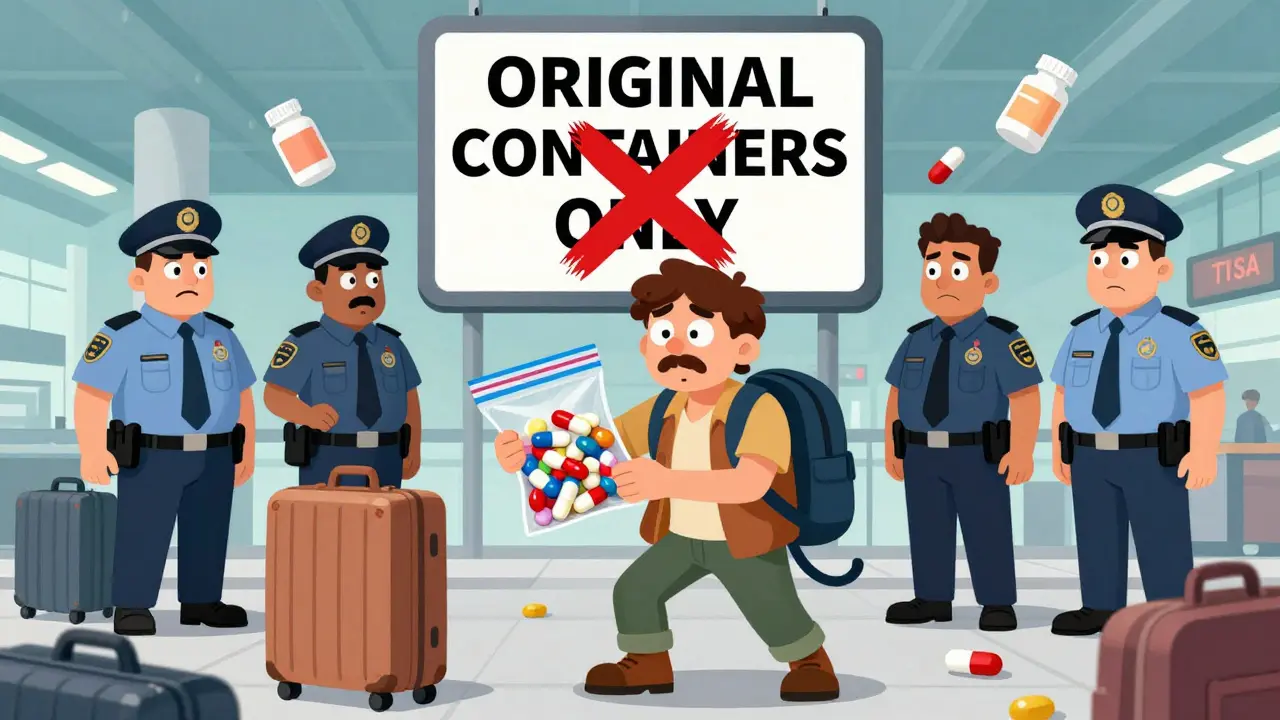
Half of all American adults take prescription meds daily. Now imagine you’re on a flight to Tokyo, Paris, or Bangkok - and your pills are in a ziplock bag. That’s not just risky. It’s a legal nightmare. One wrong move, and you could be detained, fined, or worse. The good news? You can avoid all of this. It’s not about packing more. It’s about packing smart.
Keep Pills in Original Containers - No Exceptions
Your pharmacy bottle isn’t just packaging. It’s your legal proof. The TSA, U.S. Customs, and foreign border agents all require it. No labeled bottle? You’re guessing. And guessing gets you questioned, delayed, or worse. Even if you’ve been flying for years with pill organizers, stop. That’s fine for home. Not for travel.Every major authority - from the CDC to Harvard Global Support Services - says the same thing: keep every pill, capsule, or liquid in its original container with the pharmacy label intact. That label has your name, the drug name, dosage, and prescribing doctor. Without it, you’re just carrying unknown substances. And in countries like Japan, South Korea, or the UAE, that’s enough to trigger a customs investigation.
Pro tip: If your bottle is too big for your bag, ask your pharmacy for a smaller travel-sized container. Most will do it for free. Just make sure the label stays on. Don’t transfer meds to another bottle. Even if it’s labeled. That’s a violation.
Bring Extra - At Least Two Weeks
Flights get canceled. Trips get extended. Your hotel’s mini-fridge breaks. And overseas pharmacies? They can’t refill your U.S. prescription. Not legally. Not ever.Northwestern University’s travel safety team says: carry enough for your whole trip plus 7-14 extra days. That’s not a suggestion. It’s a rule of thumb backed by real incidents. In 2019, a Toyota executive was stuck in Japan for 23 days because her pain meds ran out. She couldn’t get a refill. The medication was banned there. She had no backup.
Check your insurance. Most plans let you refill prescriptions up to 5 days early. Call your pharmacy at least a week before you leave. Ask for an early refill. If they say no, ask for a letter from your doctor explaining why you need extra. That letter can save you if you’re ever questioned.
Liquids? Declare Them. No Limits - But Show Them
You can bring more than 3.4 ounces of liquid meds - insulin, liquid antibiotics, cough syrup - through TSA. But you have to tell them. No hiding it in your toiletries bag. No hoping they don’t check.As of January 2023, TSA updated its policy: liquid medications of any size are allowed if you declare them at the checkpoint. Put them in a clear, separate plastic bag. Don’t mix them with your shampoo. Say it out loud: “I have medication liquids.” That’s it. No forms. No fees. No drama.
Insulin? It’s the most common issue. Keep it cool. Store it between 36°F and 46°F. Use a cooling pack. Most travel pharmacy kits include them. Don’t rely on hotel fridges. They can turn off. Or get too cold. Freezing insulin ruins it. Never pack it in checked luggage. Always carry it on.
Check Your Meds Before You Go - Country by Country
Just because it’s legal in the U.S. doesn’t mean it’s legal everywhere. The U.S. State Department says 67% of countries restrict at least one common U.S. medication. That includes stuff you’d never think twice about.Here’s what’s banned or controlled in some places:
- Adderall - Illegal in Japan, South Korea, and the UAE
- Ambien - Banned in 38 countries, including Germany and Thailand
- Sudafed - Contains pseudoephedrine. Restricted in 28 countries, including Australia and Canada
- Codeine - Controlled in 42 countries. Even if it’s in your cough syrup
- Hormone meds - Birth control, estrogen, testosterone - restricted in 35 countries
Use the U.S. State Department’s Medication Check Tool (launched March 2023). Type in your medication name. It tells you if it’s allowed, restricted, or banned in your destination. Do this for every country you’re visiting. Even if you’re just transiting. Some airports scan luggage even for layovers.
Bring Paperwork - Not Just a Prescription
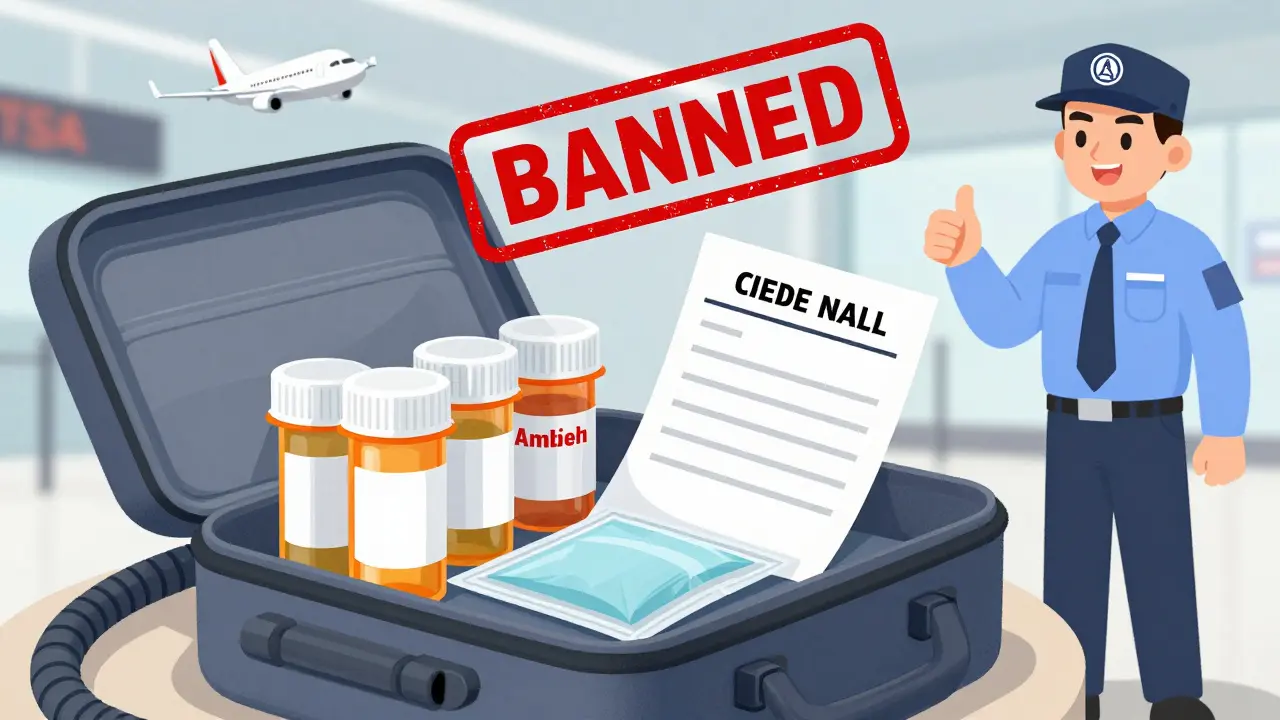
A prescription is good. A doctor’s letter is better. Why? Because not every country recognizes U.S. prescriptions. Some require a specific format. Some want it translated. Some want it stamped.Get a letter from your doctor. It should say:
- Your full name and date of birth
- Your diagnosis (e.g., “Type 2 diabetes” or “ADHD”)
- The name and dosage of each medication
- Why it’s medically necessary
- Your doctor’s license number, signature, and contact info
Carry two copies. One in English. One translated into the language of your destination. Use a professional translator - not Google Translate. Many countries require official translations. Hospitals in France, Japan, and Brazil often ask for them.
For controlled substances (like opioids or stimulants), this letter isn’t optional. It’s your shield.
Time Zones? Adjust Smart - Don’t Double Up
You’re flying from New York to Bangkok. That’s 11 hours ahead. Do you take your pill at 8 a.m. New York time? Or 8 a.m. Bangkok time? The answer: it depends.WebMD says: it’s usually safe to take your medicine 1-2 hours early or late. But never double up. That’s how overdoses happen. For insulin, blood pressure meds, or seizure drugs, timing matters more. Talk to your doctor before you go.
Set alarms on your phone - one for home time, one for destination time. Use a travel app like Medisafe Travel. It tracks your meds, adjusts for time zones, and reminds you when to take your next dose. 81% of travelers who used this method reported zero missed doses.
Storage Matters - Heat, Cold, and Humidity
Medications aren’t like socks. They don’t just survive anything.Most pills are fine if kept under 86°F (30°C). But heat can break them down. Insulin? Must stay cool. 36°F-46°F. Too cold? It freezes. Too hot? It loses potency. In tropical climates like Bali or Singapore, your hotel room can hit 90°F. That’s dangerous.
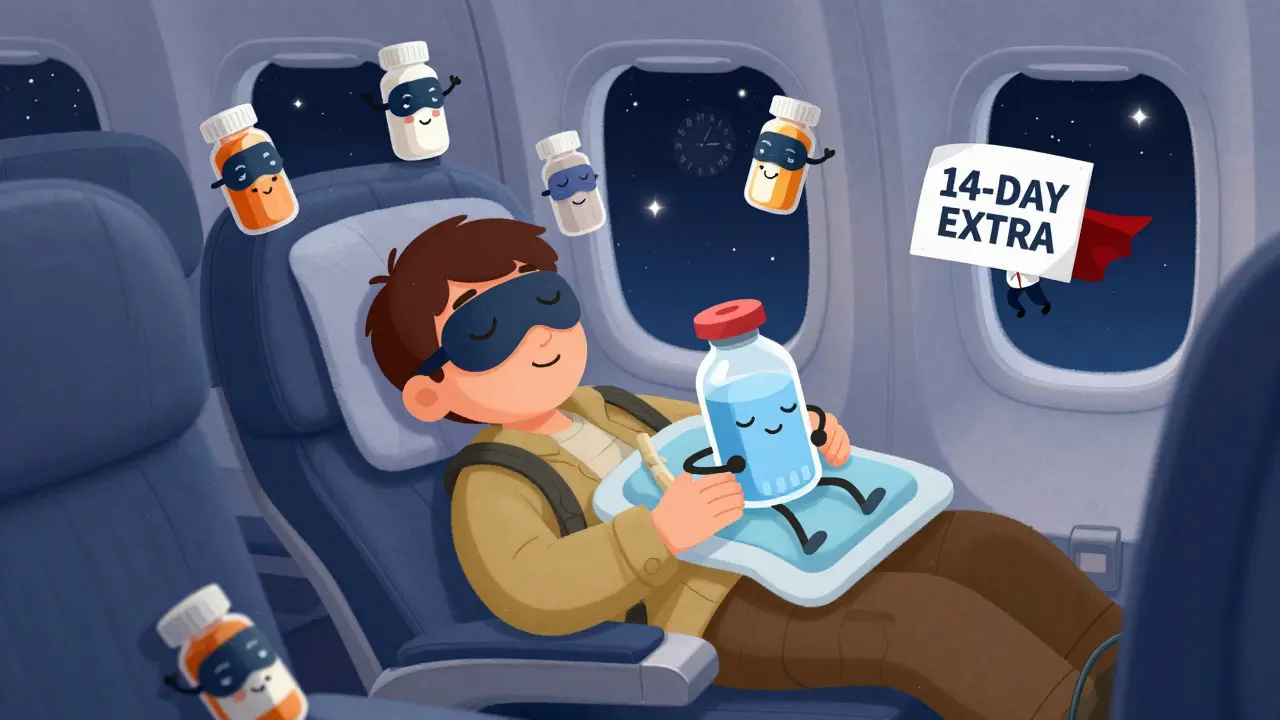
Use a small insulated bag with a gel pack. Buy one made for insulin or travel meds. They hold temperature for 48+ hours. Keep them in your carry-on. Never leave meds in a hot car or checked bag. Even for an hour.
Also: keep meds away from humidity. Bathrooms are bad. So are beach bags. Store them in your main carry-on. Dry. Cool. Always with you.
Lost Luggage? Never Happens - If You Do This
One in five travelers lose a bag. And if your meds are in it? You’re in trouble.The rule is simple: all medications must be in your carry-on. TSA, CBP, and every major airline require it. No exceptions. Even if you’re checking a suitcase for a two-week trip. Your pills stay with you.
Put them in a small, labeled pouch. Include your name, phone number, and doctor’s info. If your bag gets lost, you can still get help. Airlines and embassies can help you get emergency refills - but only if you have documentation and your meds are still with you.
What to Pack - The Minimalist Travel Kit
Here’s what goes in your travel med kit:- All medications in original bottles
- Extra 7-14 days’ supply
- Doctor’s letter (2 copies - English + translated)
- Insulin or liquid meds in a cooling pack
- Laminated copies of prescriptions
- Travel app (like Medisafe) set up with time zone alerts
- Small first-aid kit (bandages, pain relievers, antihistamines - check if they’re allowed)
Keep it in a clear, zip-top bag. Easy to pull out at security. Easy to find if you need it.
What Not to Do
- Don’t mail meds to yourself overseas. It’s illegal. You’ll get confiscated.
- Don’t rely on local pharmacies to refill your U.S. script. They can’t.
- Don’t assume your insurance covers overseas refills. It doesn’t.
- Don’t forget to check if your meds are banned in transit countries. Dubai, Singapore, and Frankfurt all scan luggage.
- Don’t skip the doctor’s letter. Even if you think you don’t need it.
Can I bring my medication in a pill organizer instead of the original bottle?
No. TSA and international customs require all medications to be in their original containers with pharmacy labels. Pill organizers are fine for home use, but not for travel. If you’re caught with unlabeled pills, you risk delays, confiscation, or even legal trouble in countries with strict drug laws.
What if my medication is banned in the country I’m visiting?
If your medication is banned, you cannot bring it. There are no exceptions. Contact your doctor before you travel. They may be able to prescribe an alternative that’s legal in your destination. For example, if Adderall is banned in Japan, your doctor might switch you to a non-stimulant like Strattera. Never assume a small amount will be overlooked - border agents scan for even one pill.
Do I need to declare my medications at U.S. customs when I return?
You don’t need to declare medications you brought with you - as long as they’re for personal use and in original containers. But if you bought meds abroad, you must declare them. U.S. Customs allows personal-use quantities of foreign medications, but they may ask for a prescription or doctor’s note. Keep all receipts.
Can I carry injectable medications like insulin or epinephrine on a plane?
Yes. Insulin pens, EpiPens, and other injectables are allowed in carry-on luggage. You don’t need to declare them unless asked, but it’s smart to carry a doctor’s note. TSA agents are trained to recognize these items. Keep them in your jacket or carry-on, not in checked bags. Never let them freeze.
What should I do if I run out of medication while abroad?
Contact the nearest U.S. embassy or consulate immediately. They can help you find a local pharmacy or doctor who can prescribe a replacement. Bring your original prescription, doctor’s letter, and medication bottles. Do not try to buy meds on the street or from unlicensed pharmacies. Many counterfeit drugs circulate abroad. Your safety is worth the wait.
Traveling with meds isn’t about fear. It’s about control. You know your body. You know your pills. Now you know the rules. Follow them. You’ll fly smoother, sleep better, and avoid the kind of story that ends with a customs officer holding your insulin in a plastic bag and asking, “Why didn’t you check?”