
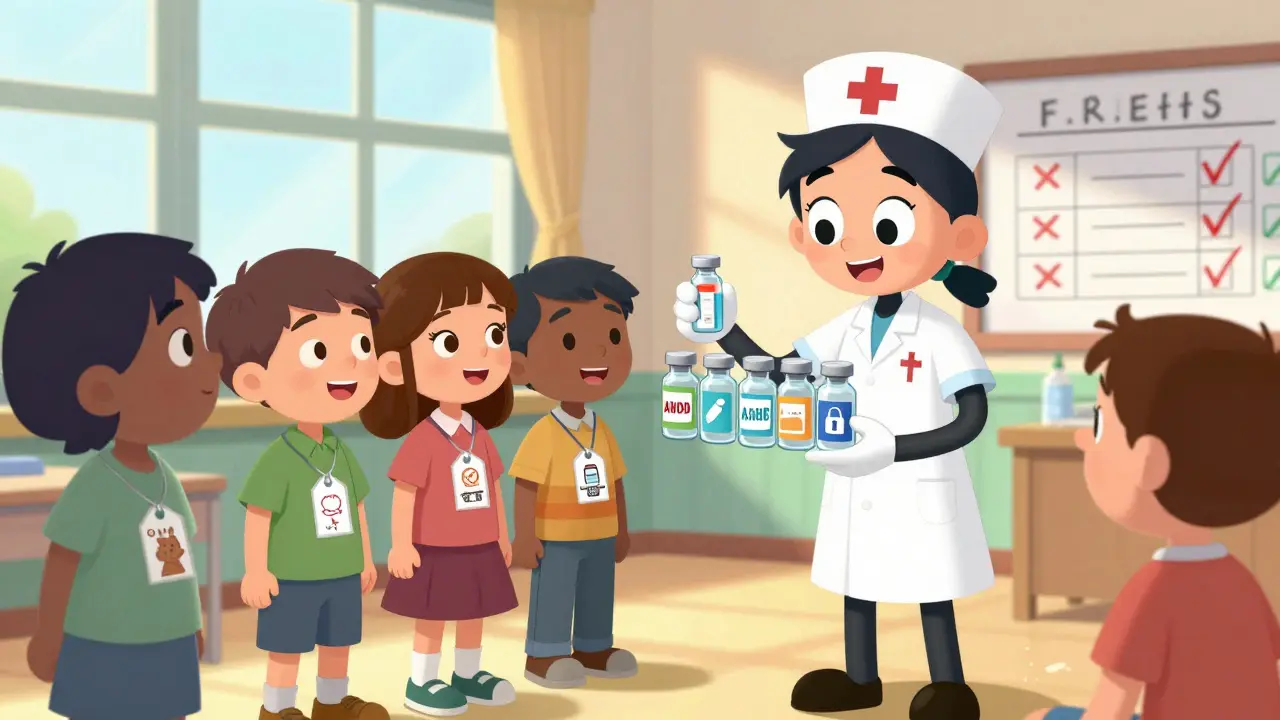
Every morning, hundreds of thousands of children across the U.S. take their prescribed medications at school - asthma inhalers, insulin shots, ADHD pills, epinephrine for allergies. But who makes sure it happens safely, accurately, and legally? School nurses are the backbone of this system, yet they’re often stretched thin, working with outdated tools, unclear rules, and too many students. Coordinating daily pediatric medication administration isn’t just about handing out pills. It’s a complex, high-stakes operation that demands structure, training, and clear accountability.
Why Coordination Matters More Than You Think
Medication errors in schools aren’t rare. According to the National Association of School Nurses (NASN), about 1.2% of all school-based administrations involve mistakes. That might sound small, but in a district with 10,000 students, that’s over 100 errors a year. Some are minor - a pill given 15 minutes late. Others are life-threatening - wrong dose, wrong child, or no documentation at all.
The stakes are even higher when you consider how many kids rely on school for their meds. About 5.5 million U.S. schoolchildren have asthma. Over 200,000 have Type 1 diabetes. Nearly 6 million are on ADHD medication. Without proper coordination, these kids risk hospitalization, missed school days, or worse.
The solution isn’t more nurses - though we need them. It’s better systems. And those systems start with clear protocols grounded in national guidelines.
The Five Rights: Your Non-Negotiable Foundation
Every time a child receives medication at school, the nurse (or trained staff) must confirm five things:
- Right student - Double-check name, ID, date of birth. Never assume.
- Right medication - Match the label to the prescription. No exceptions.
- Right dose - Use the exact amount prescribed. Don’t guess.
- Right route - Is it oral? Inhaler? Injection? Patch? Get it right.
- Right time - Administer within 30 minutes of the scheduled time unless the doctor says otherwise.
These aren’t suggestions. They’re the standard set by NASN in 2022 and reinforced by the American Academy of Pediatrics in 2024. Skipping even one of these steps increases risk dramatically. A 2023 study found that 63% of errors happened when nurses skipped the student verification step.
What Medications Can Be Given - And How They Must Be Stored
Not all meds are treated the same. Controlled substances - like Adderall or Ritalin - require extra safeguards. Federal law (21 CFR § 1306.22) requires them to be kept in locked containers with original pharmacy labels. In Texas, for example, dual signatures and double-counting are mandatory before and after each dose.
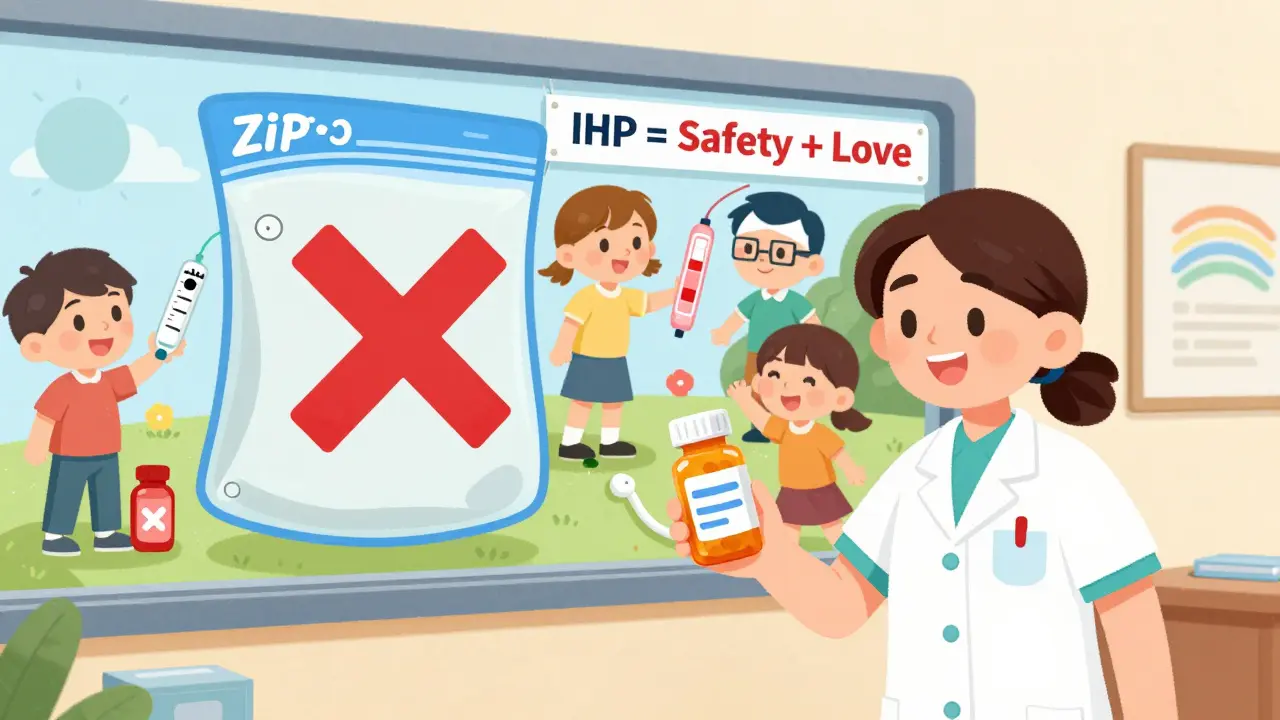
Even non-controlled meds must come in original containers. No Ziploc bags. No unlabeled bottles. A 2023 Texas Department of State Health Services report found that districts using unlabeled containers faced legal action under federal drug laws. Parents often bring meds in random containers because it’s easier. That’s where education comes in. Montgomery County, MD, ran mandatory parent workshops - and saw compliance jump 52%.
Emergency meds like epinephrine need special handling. The CDC says it must be given within 5 minutes of anaphylaxis symptoms. Thanks to standing orders, 87% of U.S. schools now keep stock epinephrine on hand - even for kids who don’t have a personal prescription.
Delegation: When Nurses Can’t Do It All
The national average for school nurse-to-student ratio is 1:1,102. The recommended ratio for schools with complex medical needs? 1:750. That gap forces schools to delegate tasks.
Delegation means training non-nursing staff - aides, teachers, even cafeteria workers - to give meds under the nurse’s supervision. But it’s not free rein. The nurse must:
- Assess the student’s medical complexity
- Assess the staff member’s competence
- Provide formal training (4 to 16 hours, depending on the med)
- Document everything
States vary wildly. In Virginia, nurses must review the first dose of every new medication. That model led to 22% fewer adverse events. In Texas, some districts treat it as an “administrative task” - letting principals assign meds without nurse input. That’s risky. A 2022 legal analysis found those districts had 14% higher liability exposure.
The key? Never delegate without training. A 2023 NASN survey showed 78% of nurses felt unprepared to delegate complex tasks like insulin pumps or feeding tubes. They need hands-on practice, not just a handout.
Documentation: The Paper Trail That Protects Everyone
Every dose given - whether by nurse or aide - must be recorded immediately. Why? Because if something goes wrong, the log is your defense.
As of 2023, 98% of districts use electronic health records (EHRs). But 42 states still allow paper logs. Paper works - if it’s filled out right. But 64% of school nurses spend over two hours a day just writing down doses. That’s time they’re not spending with students.
Some districts have cracked the code. Fairfax County Public Schools switched to an EHR system that auto-populates student data, sends reminders, and flags missed doses. Result? Documentation time dropped 45%. Accuracy went up 31%.
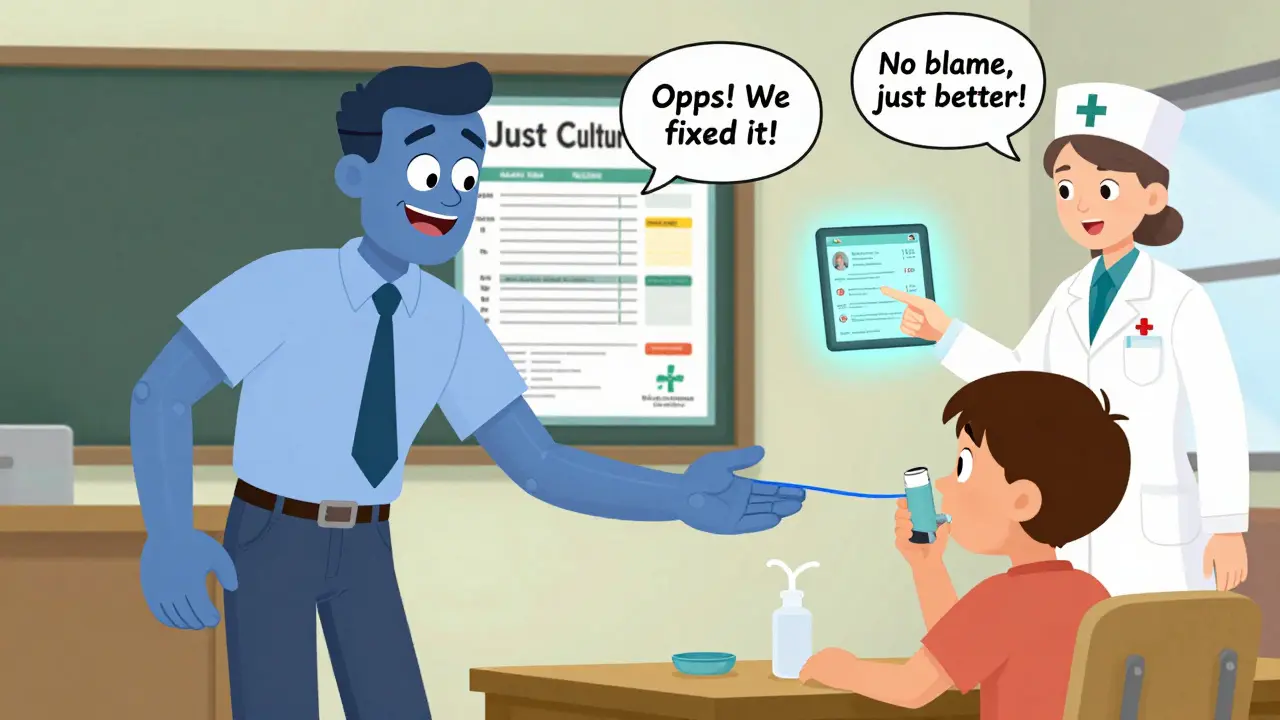
Don’t wait until after an incident to improve. Use the “Just Culture” model - a non-punitive system for reporting errors. One nurse on Reddit said her district’s error reporting templates cut staff anxiety by 70%. That’s not fluff. It’s what keeps people honest without fear.
Individualized Healthcare Plans (IHPs): The Blueprint for Safety
Not every child who takes meds needs the same level of care. That’s why IHPs exist. These are personalized plans, developed with parents, doctors, and nurses, that outline:
- Exact meds, doses, and timing
- Side effects to watch for
- Who can give the med
- Emergency steps
- How to handle missed doses
Students with diabetes, seizures, or severe allergies need full IHPs. Even kids on simple ADHD meds benefit from a clear plan. NASN data shows schools using IHPs have 28% better adherence than those using generic logs.
Creating one takes 2-4 hours per student. It’s worth it. A 2023 University of Pennsylvania study found districts with 100% IHP coverage had 37% fewer medication errors.
What’s Working: Real-World Examples
Not every district is struggling. Here’s what’s working:
- Fairfax County, VA - EHR system cut documentation time by 45% and improved accuracy.
- Montgomery County, MD - Parent education sessions boosted compliance with original containers by 52%.
- Virginia’s first-dose review policy - Cut adverse events by 22%.
- “Just Culture” error reporting - Reduced staff fear and improved transparency.
These aren’t magic fixes. They’re the result of clear policies, training, and leadership.
What’s Holding Schools Back
Here’s the ugly truth: 78% of districts rely on unlicensed staff because they can’t afford enough nurses. Rural schools are hit hardest - 82% of rural nurses say they don’t have enough time to document properly.
State laws clash. One state lets aides give insulin. Another requires a nurse to be physically present. This patchwork creates confusion. A 2022 Harvard analysis found only 41% of districts consistently follow the Five Rights during field trips or after-school events.
And then there’s the legal risk. In 2022, Houston ISD was fined $2.3 million by the Texas Education Agency for medication errors. That’s not a warning. It’s a wake-up call.
What You Can Do - Right Now
If you’re a school nurse, administrator, or parent:
- insist on original, labeled containers - no exceptions
- push for electronic documentation - even if your state allows paper
- demand IHPs for every student with chronic conditions
- use NASN’s free Implementation Toolkit - it has templates for policies, training, and logs
- advocate for nurse staffing - 1:750 isn’t a luxury, it’s a safety standard
The system isn’t perfect. But it can be better. And it starts with one thing: treating medication administration not as a chore, but as a critical health service.
Can a teacher give a student their medication?
Yes - but only if the school nurse has formally delegated the task after assessing both the student’s needs and the teacher’s training. The nurse must provide specific instruction, document competency, and remain available for questions. Simply handing over a pill is not legal or safe.
What if a parent brings medication in a Ziploc bag?
The school must refuse it. Federal law requires all medications to be in original, properly labeled containers from the pharmacy. This isn’t a suggestion - it’s a legal requirement. Schools that accept unlabeled meds risk violating drug regulations and facing liability. Parents should be educated on this policy, and many districts hold mandatory orientation sessions to prevent this issue.
Do school nurses need special certification to give meds?
All school nurses must be licensed RNs. But they also need training on school-specific protocols, including delegation, documentation, and state laws. Many districts require a 16-hour certification course aligned with NASN’s 2022 guidelines. This isn’t optional - it’s how schools reduce risk and ensure compliance.
Can a student self-administer their own medication?
Yes - but only if the student is assessed as capable and the parent and doctor agree. Common examples include asthma inhalers or epinephrine pens for older students. The nurse must still verify the student’s ability, document the decision, and ensure the medication is accessible and properly labeled. Even self-administered meds require a written plan.
What happens if a school doesn’t follow medication protocols?
The consequences can be severe. Schools risk lawsuits, state fines, loss of federal funding, and criminal liability in cases of negligence. In 2022, Houston ISD was fined $2.3 million for medication administration failures. Non-compliance with Section 504 or IDEA can also lead to federal investigations. Proper protocols aren’t just best practice - they’re legal necessity.
Comments (12)
-
Ian Kiplagat March 8, 2026This is solid. 🙌 Just wish more districts would adopt Fairfax’s EHR system. One less paper trail = one less chance for error. Simple.

-
Amina Aminkhuslen March 9, 2026Let me tell you - this whole system is a dumpster fire wrapped in a clipboard. I’ve seen kids handed meds in Ziploc bags like it’s a damn snack pack. And then the school says, 'We didn’t know.' Bull. They knew. They just didn’t care.

-
amber carrillo March 11, 2026The Five Rights are non-negotiable. Every child deserves safety, clarity, and consistency. Thank you for outlining what works - it’s a blueprint, not a suggestion.

-
Tim Hnatko March 12, 2026I’m a special ed aide. We’re trained to give meds, but never properly assessed. I’ve done 30+ doses a day with no backup. The system isn’t broken - it’s abandoned.

-
Aaron Pace March 12, 2026I’m not saying this is wrong… but what if the nurse is just *really* tired? 😅 Like, 14-hour shift tired? What then? We need backups. Real ones.

-
Joey Pearson March 13, 2026You got this. Seriously. Start with one IHP. Then two. Then five. Momentum builds. You’re not alone.

-
Roland Silber March 14, 2026I’ve reviewed 12 district policies. The biggest gap? Training for delegation. No one teaches you how to say 'no' to a principal who says, 'Just give it to them.' It’s not about rules - it’s about culture.

-
Patrick Jackson March 15, 2026This whole thing… it’s a mirror. We say we value children’s health, but we treat the people who keep them alive like disposable cogs. The nurse isn’t a clerk. She’s the last line between a child and an ambulance. And we’re letting her fight alone. 😔

-
Adebayo Muhammad March 17, 2026Let’s be real: this isn’t about safety. It’s about liability. Schools don’t care if the kid gets the right dose - they care if the paperwork says they did. The Five Rights? Just a legal shield. The real issue? Underfunded public systems. End of story.

-
Pranay Roy March 17, 2026Wait - you’re telling me the government lets schools give ADHD meds? What’s next? Free Ritalin in cafeterias? This is just step one. Next, they’ll be giving antidepressants to kindergarteners. Mark my words.

-
Joe Prism March 18, 2026If we treat medication like a chore, we’ll keep failing. But if we treat it like a sacred trust - that’s when change happens.

-
Bridget Verwey March 18, 2026So… you’re telling me a teacher can give a child insulin… but only if the nurse has a 16-hour certification? 🤦♀️ And we wonder why rural schools are falling apart.
