
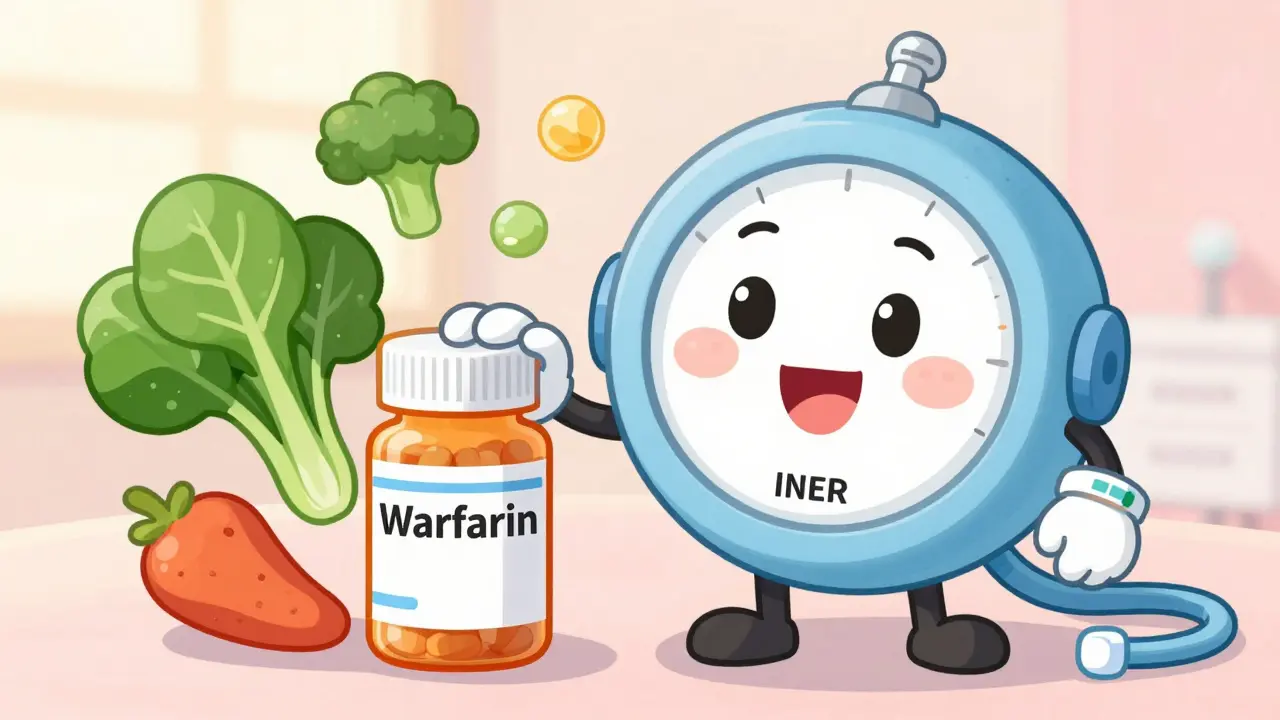
Warfarin Bleeding Risk Calculator
This tool calculates your bleeding risk based on your INR value and key health factors. Warfarin requires careful management, and understanding your risk is crucial for safety.
Note: This is for informational purposes only. Always consult your doctor for medical advice.
Warfarin has saved countless lives by preventing deadly blood clots - but it’s also one of the most dangerous medications you can take if not managed carefully. Every year, tens of thousands of people in the U.S. are hospitalized because of bleeding caused by warfarin. This isn’t rare. It’s common. And most of these cases are preventable.
Why Warfarin Is Still Used Despite the Risks
Warfarin, sold under the brand name Coumadin, has been around since the 1950s. It’s cheap - often less than $10 a month - and works well for certain conditions like atrial fibrillation, deep vein clots, and mechanical heart valves. But here’s the catch: it doesn’t have a safety margin. Too little, and you risk a stroke. Too much, and you bleed internally - sometimes without warning.
The key to staying safe is understanding your INR. That’s the blood test that measures how long it takes your blood to clot. For most people, the target range is 2.0 to 3.0. If your INR hits 4.0 or higher, your risk of major bleeding doubles. At 5.0? It’s nearly four times higher. And if you’re over 65, have high blood pressure, or a history of stomach bleeding? Your risk jumps even more.
The Real Danger: Bleeding You Can’t See
Most people think of bleeding as a cut that won’t stop. With warfarin, the real danger is bleeding inside your body - where you can’t see it.
- Brain bleed: Happens in 0.2% to 0.5% of patients each year. One fall, one bump, one sneeze too hard - and it can be fatal.
- Stomach or gut bleeding: Accounts for up to 30% of major bleeding events. You might notice black, tarry stools or vomit that looks like coffee grounds.
- Joint bleeding: Blood pooling in your knees or hips causes sudden, severe pain and swelling - often mistaken for arthritis.
- Eye bleeding: A red spot in your eye sounds minor. But if it’s deep inside, it can threaten your vision.
Don’t wait for symptoms to get worse. If you have pink or red urine, sudden back pain, dizziness, or a headache that won’t go away - go to the ER. These aren’t normal. They’re red flags.
What You Can Do Every Day to Stay Safe
Managing warfarin isn’t just about taking a pill. It’s about changing how you live.
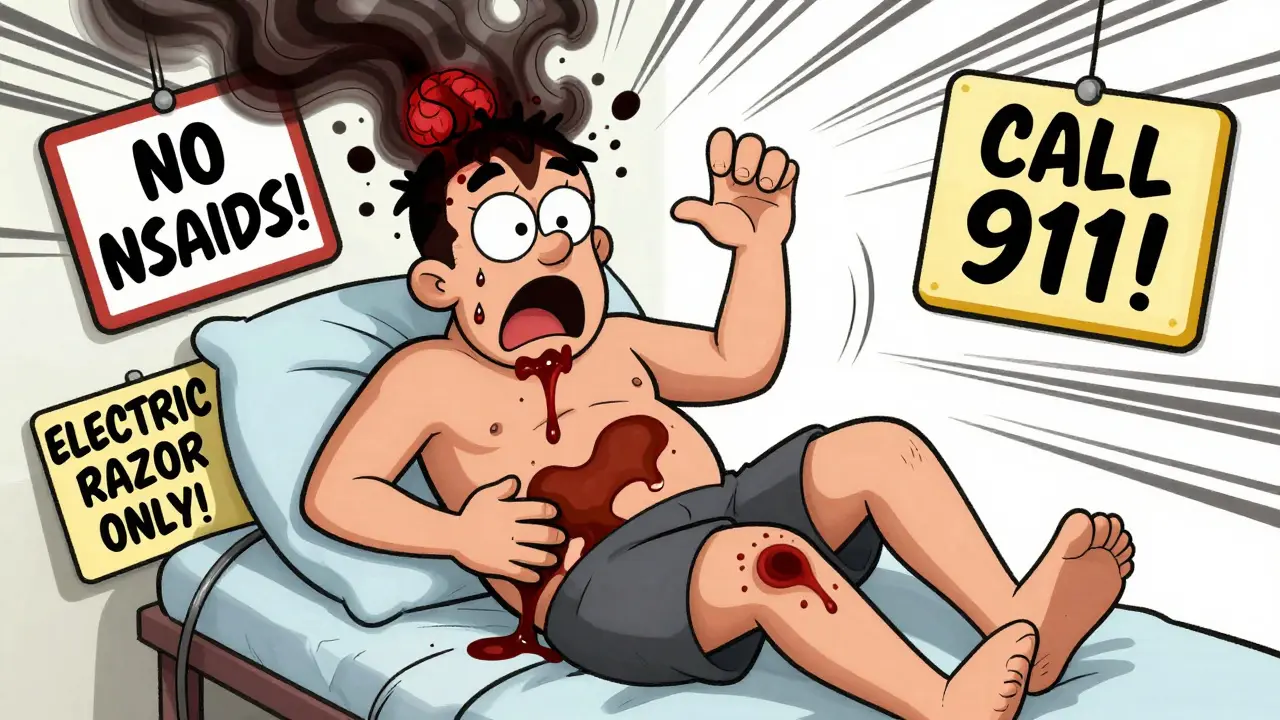
- Don’t take NSAIDs. Ibuprofen, naproxen, even aspirin - they can double your risk of stomach bleeding. Use acetaminophen (Tylenol) instead, but only if your doctor says it’s okay.
- Be careful with your teeth. Use a soft-bristle toothbrush. Floss with waxed floss. Bleeding gums aren’t normal - they’re a sign your INR might be too high.
- Use an electric razor. Blade razors cause tiny cuts that can turn into big problems. Switching to electric can cut your risk of skin bleeding in half.
- Avoid contact sports. Football, basketball, skiing, even horseback riding - if you can get hit or fall, don’t do it. A single fall can cause internal bleeding.
- Wear a medical alert bracelet. If you’re in an accident and unconscious, paramedics need to know you’re on warfarin. That can save your life.
Diet Matters More Than You Think
Warfarin works by blocking vitamin K. So if you eat a big salad one day and nothing green the next, your INR will swing wildly.
You don’t need to avoid leafy greens - you just need to keep your intake steady. Aim for about 60 to 80 micrograms of vitamin K per day. That’s roughly one cup of cooked spinach, kale, or broccoli. Don’t suddenly start juicing kale or go on a strict low-veggie diet. Consistency is everything.
Also watch out for herbal supplements. Garlic, ginkgo, ginger, and even St. John’s wort can interact with warfarin. Over 300 drugs and supplements affect it. Always check with your doctor before taking anything new - even over-the-counter cold medicine.
When to Call Your Doctor - And When to Call 911
Not every bleed needs an ambulance. But you need to know the difference.
Call your doctor within 24 hours if:
- Nosebleeds last longer than 5 minutes
- You have unexplained bruising, especially on your arms or legs
- Your gums bleed more than usual when brushing
- You notice minor blood in your urine or stool
Call 911 or go to the ER immediately if:
- You cough up blood
- You vomit blood or material that looks like coffee grounds
- Your stool is black, tarry, or bloody
- You have sudden, severe headache, confusion, or weakness on one side of your body
- You feel dizzy, faint, or your heart races for no reason
- You have intense back or abdominal pain
These aren’t symptoms to ignore. They’re emergencies.
What Happens If You Bleed Too Much?
If you end up in the hospital with major bleeding, doctors have tools to reverse warfarin fast.
- Vitamin K: Given by IV, it takes hours to work but is the first step for most cases.
- PCC (Prothrombin Complex Concentrate): This is the fastest way to reverse warfarin - often working in under 30 minutes. Used for brain bleeds or life-threatening situations.
- FFP (Fresh Frozen Plasma): Used if PCC isn’t available. Slower and less precise.
For brain bleeds, guidelines say reversal must happen within 30 to 60 minutes. Delaying even an hour can mean the difference between recovery and death.

Why Some People Switch to Newer Blood Thinners
Newer drugs like apixaban (Eliquis), rivaroxaban (Xarelto), and dabigatran (Pradaxa) are now preferred for most people. Why? Because they don’t need constant INR checks, have fewer food interactions, and cause about 30% less major bleeding than warfarin.
But warfarin isn’t obsolete. It’s still the best option for people with mechanical heart valves - especially in the mitral position. It’s also the only option if you have severe kidney failure. And if you can’t afford the newer drugs (they cost $400+ a month), warfarin is still the most practical choice.
The key isn’t whether warfarin is good or bad. It’s whether it’s the right tool for you - and whether you’re willing to do the work to use it safely.
What You Should Ask Your Doctor
Don’t leave your safety to chance. Ask these questions at every visit:
- What’s my current INR, and what’s the target for me?
- Have my risk factors changed? (Age, blood pressure, kidney function, history of falls?)
- Are there any new medications or supplements I’m taking that could interact with warfarin?
- Should I consider switching to a newer blood thinner?
- Can I get a home INR monitor? Some patients test themselves weekly - it improves control and cuts hospital visits.
If your doctor doesn’t talk to you about your INR trends, your bleeding risk, or your lifestyle changes - find someone who will. This isn’t just a pill. It’s a daily responsibility.
Bottom Line: Warfarin Is a Tool - Not a Cure
Warfarin isn’t dangerous because it’s a bad drug. It’s dangerous because it’s powerful and demands attention. People who manage it well live long, healthy lives. People who ignore the rules end up in the hospital - or worse.
If you’re on warfarin, you’re not just taking a medication. You’re managing a life-or-death balance every single day. Know your numbers. Watch your diet. Avoid the risks. Speak up when something feels off. And never assume bleeding is normal - because it’s not.
Can I drink alcohol while taking warfarin?
Occasional light drinking - like one beer or a small glass of wine - is usually okay. But heavy or regular alcohol use can increase your bleeding risk and interfere with how your liver processes warfarin. It can also cause your INR to swing unpredictably. If you drink, keep it consistent and tell your doctor how much.
How often should I get my INR checked?
When you first start warfarin, you may need checks every few days or weekly. Once you’re stable, most people get tested every 4 to 6 weeks. But if your dose changes, you get sick, start a new medication, or change your diet, you’ll need more frequent testing. Some patients use home monitors - these can improve control and reduce hospital visits.
Can I get a vaccine while on warfarin?
Yes, all vaccines are safe on warfarin. But if you’re getting a shot, ask your provider to use a fine needle and apply firm pressure for at least 5 minutes after. Don’t rub the area - that can cause bruising. If you’re on a high INR, your doctor might delay certain vaccines until your levels are stable.
Is it safe to travel while on warfarin?
Yes, but plan ahead. Bring enough pills for the whole trip plus extra. Carry a copy of your latest INR results and a list of all your medications. If you’re flying, avoid sitting for long periods - move your legs and walk the aisle to prevent clots. And know where the nearest lab is in case you need an INR test while away.
What happens if I miss a dose of warfarin?
If you miss one dose, take it as soon as you remember - but only if it’s the same day. If you don’t remember until the next day, skip the missed dose and go back to your regular schedule. Never double up. Missing doses can raise your clot risk. Taking too much raises your bleeding risk. Consistency is the goal.
Comments (10)
-
Tony Du bled December 22, 2025
Warfarin’s a beast. I’ve been on it for 7 years. Learned the hard way: no ibuprofen, no extra spinach, and always carry that bracelet. One sneeze and I’m in the ER.

-
Kathryn Weymouth December 24, 2025
Thank you for this detailed breakdown. I’ve seen too many patients overlook the subtle signs-like unexplained bruising or gum bleeding-and assume it’s ‘just aging.’ It’s not. These are red flags that demand action, not dismissal.

-
Sam Black December 25, 2025
I’m from Australia and we’ve got a lot of folks on warfarin here too. The home INR monitors are a game-changer-less clinic trips, better control. My uncle tests himself every Monday morning with his little machine. He’s 82, still drives, still gardens. Consistency beats perfection every time.

-
Jamison Kissh December 26, 2025
It’s funny how we treat warfarin like some ancient curse when really it’s just a tool that demands respect. Like driving a manual transmission-you don’t blame the car when you stall. You learn the clutch. The INR is your clutch. The diet? Your gear shift. And if you’re not paying attention? You’re gonna crash.

-
Nader Bsyouni December 27, 2025
Why are we still talking about warfarin when the new drugs exist? It’s like using a typewriter because you’re afraid of the internet. The system’s rigged to keep people on cheap meds while pharma profits off the newer ones. Wake up.

-
Art Van Gelder December 28, 2025
Let me tell you about my cousin. She was on warfarin after a pulmonary embolism. Started juicing kale every morning because her yoga instructor said it was ‘detoxing.’ INR went from 2.4 to 6.8 in three days. Ended up in ICU with a brain bleed. She’s fine now but uses a walker. That’s not a scare tactic. That’s biology. Your body doesn’t care about your Instagram diet trends.

-
Candy Cotton December 29, 2025
It is imperative that all patients be informed that the use of nonsteroidal anti-inflammatory drugs in conjunction with warfarin constitutes a medically indefensible practice. The risk-benefit ratio is catastrophically skewed. Acetaminophen is not a suggestion. It is a clinical mandate.

-
Sai Keerthan Reddy Proddatoori December 29, 2025
They say warfarin is dangerous. I say the system is dangerous. Why don’t they make a pill that just works? Why do we need to count spinach? Why do we need blood tests every week? This is not medicine. This is torture. And the doctors? They don’t care. They just want you to keep coming back.

-
Johnnie R. Bailey December 31, 2025
Warfarin’s legacy is like a 1970s muscle car-clunky, loud, needs constant tuning, but when it’s dialed in? Nothing else gets you there. The new drugs? Cleaner, quieter. But for mechanical valves? Nothing replaces it. And if you’re on Medicare with a $5 co-pay? Warfarin’s the only real option. Don’t romanticize the new. Respect the old-and do the work.

-
Julie Chavassieux January 1, 2026
I missed my INR test last week because I was at my daughter’s recital. Then I got a nosebleed that wouldn’t stop. I thought it was just stress. Turns out my INR was 5.2. I’m still scared. Don’t be like me. Test. Don’t wait. Your life isn’t a suggestion.
