
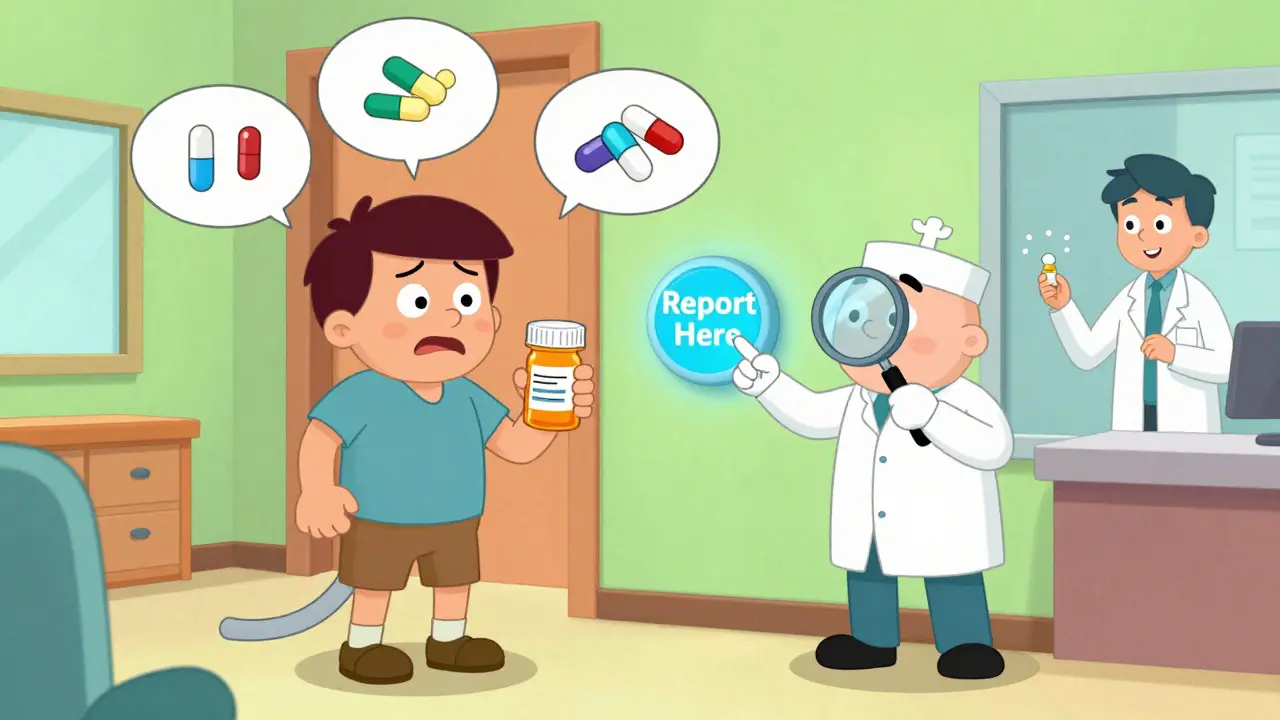
Spotting a medication error-like getting the wrong dose, the wrong drug, or a prescription that doesn’t match your usual routine-isn’t rare. What’s rare is knowing what to do next. Many people assume they should just call the FDA or wait to see if something bad happens. But the most powerful step? Reporting it directly to your clinic. This isn’t about blaming anyone. It’s about stopping the next person from getting hurt.
Why Reporting to Your Clinic Matters More Than You Think
Most people think medication errors are only serious if someone ends up in the hospital. But the truth is, most dangerous mistakes are caught before they cause harm-and that’s because someone spoke up. According to the Institute for Safe Medication Practices, 87% of preventable medication errors are identified through internal reports before they reach patients. That means your voice, right now, could stop a life-threatening mistake before it happens. Your clinic isn’t just a place to get prescriptions. It’s a safety system. Every clinic in the U.S. that’s accredited by The Joint Commission is required to have a way for staff-and patients-to report safety concerns. These reports aren’t filed away. They trigger immediate reviews. In clinics with strong safety cultures, reporting leads to real changes: updated labeling, redesigned workflows, better training. One study found clinics with active reporting systems cut medication errors by over 30% in just 18 months. Unlike reporting to the FDA (which collects data for national trends), clinic reporting is local, fast, and focused on fixing what’s broken right here. And by law, under the Patient Safety and Quality Improvement Act of 2005, these reports are confidential. You won’t be punished for speaking up. In fact, clinics with non-punitive cultures get nearly five times more reports-and they fix more problems.What Counts as a Medication Safety Concern?
You don’t need to be a medical expert to spot a problem. If something feels off, it’s worth reporting. Here are common examples:- You were prescribed 10 mg but received 20 mg pills
- The label says “take with food” but the pharmacist said “take on empty stomach”
- You got a new medication you didn’t ask for
- The pill looks different from your last refill
- You were given a drug that interacts with something you’re already taking
- You noticed a pharmacy tech misread a handwritten script
- A nurse gave you a shot at the wrong time
- You took a dose and felt strange-like dizziness, nausea, or a racing heart
How to Report: Step-by-Step
Reporting doesn’t have to be complicated. Here’s how to do it right:- Act quickly. The sooner you report, the better. Clinics that get reports within 24 hours are able to fix the problem faster. Waiting days or weeks makes it harder to trace what went wrong.
- Write down the details. Before you speak to anyone, jot down: the medication name (brand and generic), the dose you were supposed to get, the dose you received, when you took it, and any symptoms you felt. If you still have the bottle or packaging, keep it.
- Find the right person. Don’t just tell the front desk. Ask to speak with the clinic’s Patient Safety Officer. Every accredited clinic has one. If you don’t know who that is, ask for the office manager or lead nurse. They’ll know.
- Use the right channel. Most clinics accept reports in person, over the phone, through their patient portal, or via a dedicated hotline. Check your clinic’s website or ask at reception. About 83% of clinics accept reports at the front desk, 76% through nursing stations, and 68% via online portals.
- Be specific. Don’t say, “I think I got the wrong medicine.” Say: “I was prescribed metformin 500 mg twice daily. I picked up a bottle labeled metformin 1000 mg, and I took one pill this morning. I felt shaky afterward.”
- Ask for confirmation. After you report, ask: “Will someone review this? Can I get a follow-up?” Clinics are required to acknowledge your report within 24 hours and provide an update within 72 hours.
What Happens After You Report?
Once you submit your report, it doesn’t disappear. Here’s what typically happens:- Within 2 hours, you’ll get an automated confirmation (most clinics use electronic systems that send a receipt instantly).
- A safety officer reviews the report within 72 hours. They’ll look at the full picture: your medical history, the prescription, the pharmacy records, staff schedules.
- If it’s a real error, they’ll fix the system. Maybe they’ll change how prescriptions are printed. Maybe they’ll add a double-check step for high-risk drugs. Maybe they’ll retrain staff.
- They may contact you to thank you-and tell you what changed. A 2023 survey found that 74% of patients who received a follow-up felt respected and safer.
What Not to Do
Avoid these common mistakes:- Don’t wait to see if you get sick. By then, it might be too late. Report before harm happens.
- Don’t go straight to the FDA. The FDA handles national trends, not local fixes. Your clinic can stop the error tomorrow. The FDA might take months.
- Don’t blame the pharmacist or nurse. The system failed, not the person. Most errors happen because of rushed workflows, poor labeling, or unclear handwriting-not because someone was careless.
- Don’t assume your concern is too small. One patient reporting a mislabeled pill led to a clinic-wide change in how insulin vials are stored. That one report saved lives.
Why Some Clinics Don’t Respond Well
Not all clinics handle reports the same way. A 2023 survey found that 38% of patients felt their concerns were dismissed. Common reasons:- The clinic uses paper forms and the report got lost.
- Staff are overwhelmed and don’t know the safety protocol.
- Leadership hasn’t trained the team on just culture principles.
- The clinic doesn’t have an electronic reporting system (37% still use paper).
Real Change Is Happening
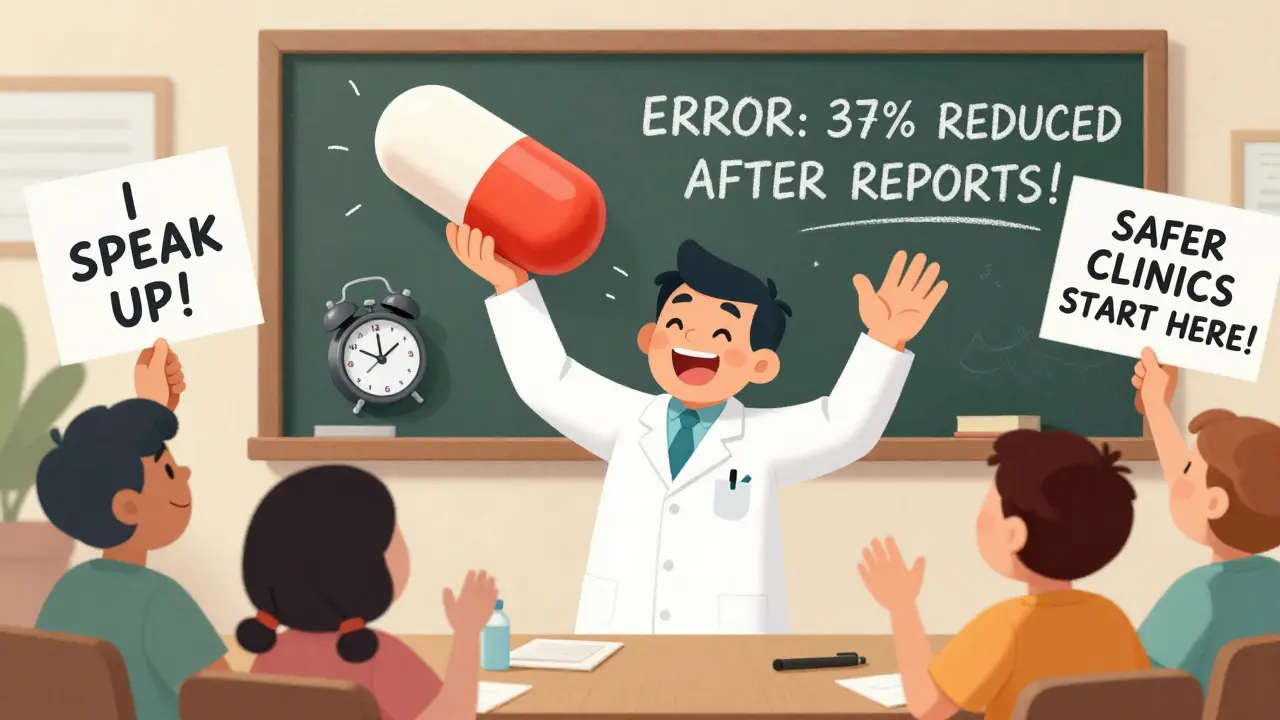
The system is improving. Since 2021, internal clinic reporting has increased by over 22%. The Biden Administration is investing $250 million to help small clinics switch to digital reporting by 2026. The 21st Century Cures Act now requires all electronic health records to include standardized safety reporting fields. And clinics like Mayo Clinic’s “Speak Up” program have seen patient-reported concerns jump by 210%-while actual medication errors dropped by 37%. This isn’t just bureaucracy. It’s protection. Every report you make helps turn your clinic into a safer place-for you, your family, and everyone else who walks through the door.What to Expect in the Future
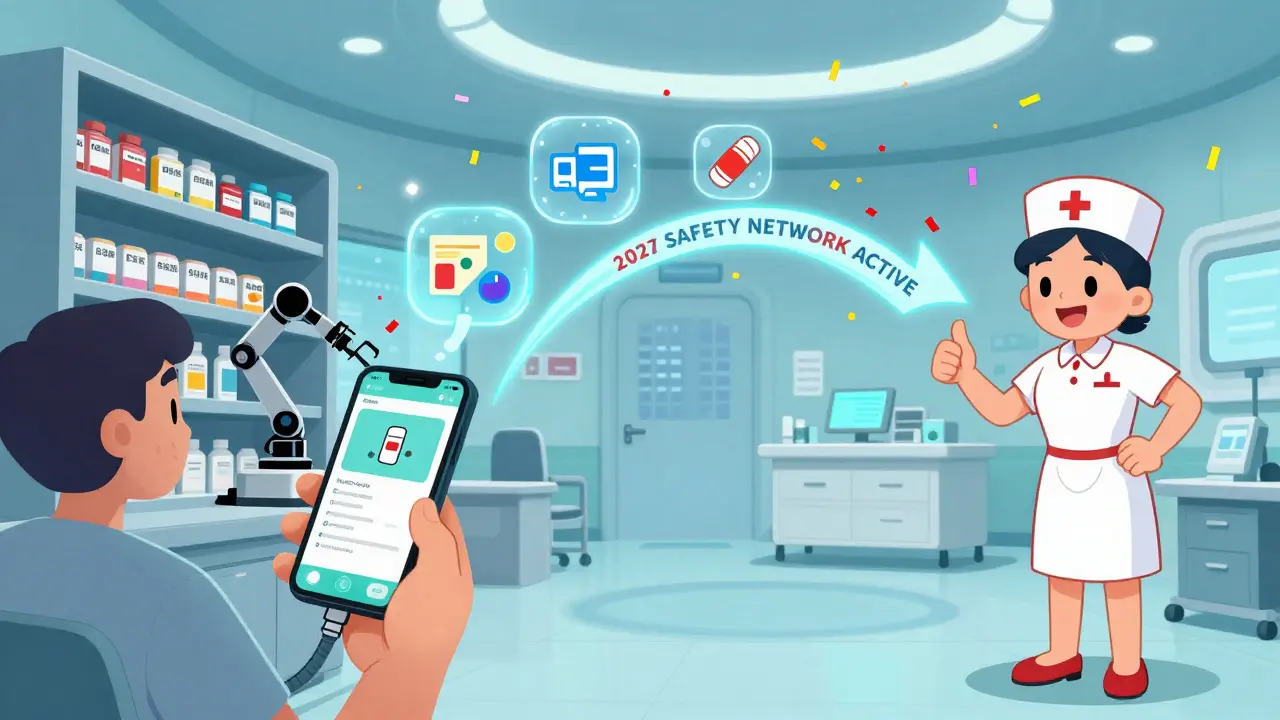
By 2027, nearly all U.S. clinics will have automated, interconnected safety systems. You’ll be able to report a concern through your phone app, and AI will flag patterns across hundreds of similar reports. Some clinics are already testing real-time alerts: if a patient takes the wrong dose, the system notifies the pharmacist immediately. Soon, clinics may even get paid more for catching errors early. Medicare’s 2024 Quality Payment Program proposes tying 3.5% of payments to how well clinics capture and act on patient-reported safety issues. The future of medication safety isn’t about perfect systems. It’s about people who aren’t afraid to speak up-and clinics that listen.Can I report a medication error anonymously?
Yes, you can report anonymously in most clinics. But if you want to know what changes were made because of your report, you’ll need to leave your contact information. Anonymous reports still help improve systems, but you won’t get feedback. If you’re concerned about privacy, ask the clinic about their confidentiality protections under the Patient Safety and Quality Improvement Act.
What if my clinic says to report to the FDA instead?
That’s a red flag. While you can report to the FDA (MedWatch), your clinic has a legal duty to handle internal safety concerns first. If they redirect you without investigating, they’re failing their safety obligations. Ask to speak with the Patient Safety Officer. If they still refuse, you can file a complaint with The Joint Commission or your state’s medical board.
Will reporting a mistake get me or my provider in trouble?
No. Under federal law, reporting systems are designed to be non-punitive. The goal is to fix the system, not blame the person. Staff who report errors are protected. In fact, clinics with blame-free cultures have nearly five times more reports-and fewer errors. If you’re threatened or punished for reporting, that’s a violation of the Patient Safety and Quality Improvement Act.
How long does it take for a clinic to fix a problem after a report?
Most clinics analyze reports within 72 hours. Fixes can happen immediately-like changing a label or retraining a staff member-or take a few weeks if it involves updating software or policies. You should receive a follow-up explaining what was done. If you don’t, call back. Waiting more than a week without feedback means the report may have been lost or ignored.
Can I report a concern for someone else, like an elderly parent?
Yes. Family members, caregivers, or advocates can report medication safety concerns on behalf of patients. You’ll need to provide the patient’s name and medical record number if possible. If the patient is unable to give consent, explain your relationship and why you’re reporting. Clinics are required to accept reports from authorized representatives.
What if I report and nothing changes?
If you’ve reported multiple times and see no action, escalate. Ask for a copy of the clinic’s Patient Safety Plan. If they don’t have one, that’s a violation of accreditation rules. Contact your state’s medical board or The Joint Commission. You can also report to the Office of the Inspector General. Your persistence saves lives.
Comments (12)
-
anggit marga January 1, 2026
Why are we even talking about clinics when the real problem is Big Pharma pushing dangerous meds on people? They don't care if you live or die as long as the profit's flowing. Report to your clinic? LOL. That's just letting the fox guard the henhouse. The system's rigged and you know it.

-
Joy Nickles January 3, 2026
Okay so I just got back from my doc's office and I swear I saw a nurse hand someone a bottle labeled 'Lisinopril 10mg' but the pill inside was a tiny blue oval?? I'm not a pharmacist but that doesn't look right?? And when I asked?? They just said 'oh that's the generic' and walked away?? I mean... come on?? I'm not crazy?? Right??

-
linda permata sari January 4, 2026
OMG I just cried reading this!! I had the exact same thing happen to my mom last year!! She was given a new blood pressure med that made her dizzy and confused!! We thought it was just aging!! Turns out the pharmacy swapped the bottle with another patient's!! I called the clinic and they were like 'oh we'll look into it' and then... silence!! But then?? After I went to the local news?? They sent us a handwritten apology letter and changed their entire labeling system!! I'm so proud of my mom!! She spoke up!! She didn't let fear win!!

-
Brandon Boyd January 5, 2026
You got this. Seriously. Speaking up is the bravest thing you can do in healthcare. I used to think I was just being paranoid until I reported a wrong dosage and found out three other people had the same issue. That one report led to a full staff retraining. You're not just protecting yourself-you're saving lives. Keep going. The system needs people like you.

-
Frank SSS January 5, 2026
Look, I get it. But let’s be real-most clinics are just trying to survive. They’re understaffed, overworked, and the software they use is from 2008. You think they’re gonna care about your ‘feeling off’ when they’ve got 17 patients waiting and a broken printer? I’ve seen it. You report something, they nod, they take your info, and then it vanishes into the void. It’s not malicious-it’s just broken. So yeah, report. But don’t expect magic.

-
Paul Huppert January 6, 2026
That 87% stat really stuck with me. It makes sense-if errors are caught before they hit patients, it’s because someone noticed something odd. I’ve had a few near-misses myself, like when my insulin pen looked different. I didn’t say anything at first. Now I always check the label twice and write it down. Small things matter.

-
Hanna Spittel January 6, 2026
ALERT! The government is using your medication reports to build a national health surveillance database!! They’re tracking your prescriptions to predict your behavior!! This is how they control the population!! I heard a guy on YouTube who knows a guy who works at the FDA and he said they’re already linking this to your social media!! Don’t report!! Don’t trust them!! 😱💉

-
Urvi Patel January 7, 2026
Why are we still using paper forms in 2025? This is basic. If your clinic can’t handle digital reporting they’re obsolete. I work in tech in Bangalore and even our local chaiwala has an app for complaints. You’re wasting your time with clinics that still use clipboards. Demand digital. Or leave.

-
Emma Hooper January 8, 2026
I used to think reporting was for drama queens. Then my aunt got prescribed a drug that turned her skin neon yellow. We reported it. They found out the batch had been contaminated. They recalled 12,000 pills. Turns out my aunt was the first one to notice. Now they call her their ‘Medication Whisperer.’ I still roll my eyes… but I also keep her on speed dial.

-
Martin Viau January 9, 2026
There's a systemic failure here, but the root cause is the lack of interoperability between EHRs and pharmacy dispensing systems. The Joint Commission mandates reporting, but without standardized HL7 FHIR interfaces, the data silos persist. Clinics aren't negligent-they're technologically stranded. We need federal investment in backend infrastructure, not just patient-facing checklists.

-
Robb Rice January 10, 2026
I appreciate the effort put into this guide. It's clear and well-structured. I’ve reported a dosage error before and was surprised how quickly they responded. The follow-up email even included a link to their safety improvement dashboard. It felt good to know I helped. Thank you for making this info accessible.

-
Harriet Hollingsworth January 12, 2026
People are too lazy to read their own prescriptions. If you can’t tell the difference between 500mg and 1000mg, maybe you shouldn’t be taking meds at all. I’ve seen too many patients blame the system when they just didn’t pay attention. This article is just enabling entitlement. Take responsibility. Read the label. Don’t wait for someone else to fix your mistakes.
