
What Is Hypoparathyroidism?
When your parathyroid glands don’t make enough parathyroid hormone (PTH), your body can’t keep calcium levels where they need to be. This is hypoparathyroidism. It’s rare, but if you’ve had thyroid surgery, it’s one of the most common complications. About 75 to 90% of cases happen after neck operations. Other causes include autoimmune diseases, genetic conditions like DiGeorge syndrome, or radiation damage to the glands.
Without enough PTH, calcium drops in your blood-sometimes dangerously low. At the same time, phosphate rises because PTH normally helps your kidneys flush it out. Low calcium means your nerves and muscles misfire. You might feel tingling in your fingers, lips, or toes. Muscle cramps, spasms, or even seizures can happen if it’s not treated. Long-term, uncontrolled low calcium can lead to kidney stones, brain calcifications, or bone density problems.
Why Calcium and Vitamin D Are the Cornerstones of Treatment
There’s no cure yet, so treatment focuses on replacing what your body can’t make. That means calcium and active vitamin D. You’re not just taking supplements-you’re replacing a hormone system that’s broken.
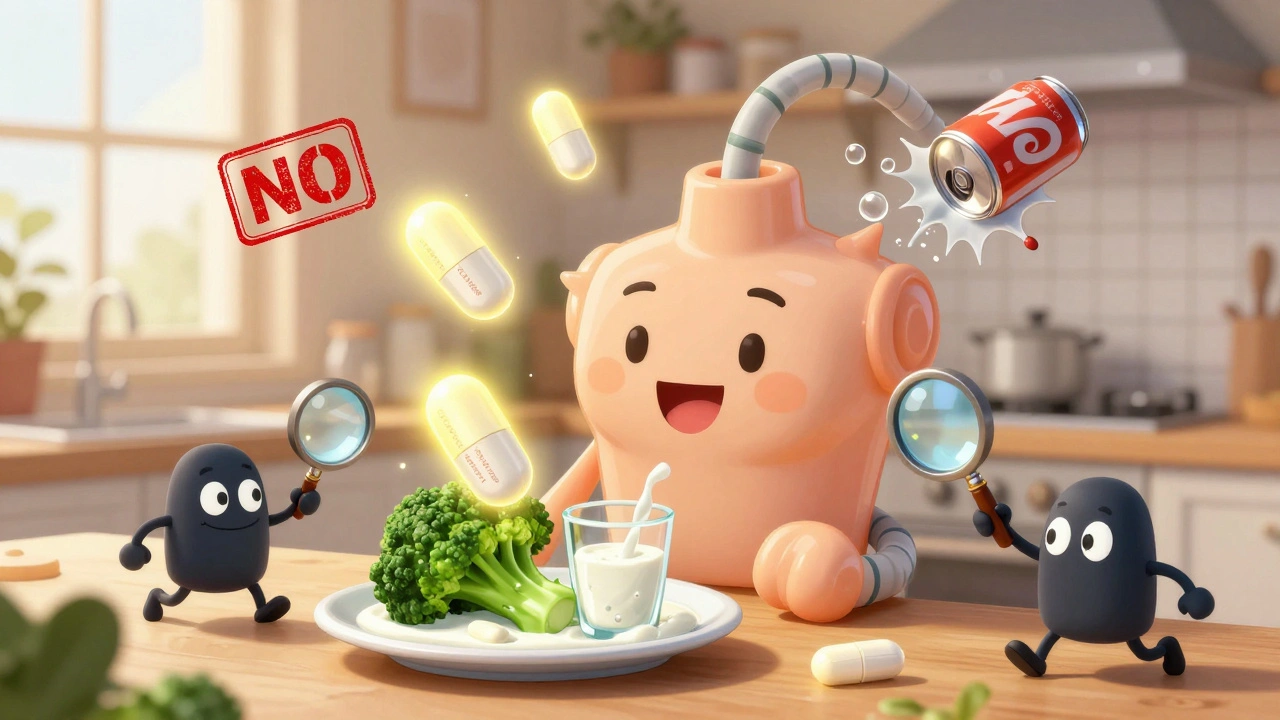
Calcium supplements are taken with meals. Why? Because food helps your body absorb it better, and the calcium also binds to phosphate in your gut, lowering your blood phosphate levels. The best form is calcium carbonate-it gives you 40% elemental calcium. So if you need 1,000 mg of elemental calcium, you take 2,500 mg of calcium carbonate. Calcium citrate works too, but you’d need to take more of it since it only gives 21% elemental calcium.
Active vitamin D, like calcitriol or alfacalcidol, is different from regular vitamin D3. Your body normally turns vitamin D into its active form using PTH. With hypoparathyroidism, that step doesn’t happen. So you need the active form already made. Calcitriol works 2.3 times faster than regular vitamin D3 at raising calcium levels, according to the 2018 REPLACE trial. Typical starting doses are 0.25 to 0.5 mcg daily, taken once a day, often at bedtime for better absorption.
How Much Calcium and Vitamin D Do You Actually Need?
Dosing isn’t one-size-fits-all. Most people start with:
- Calcium: 1,000 to 2,000 mg of elemental calcium per day, split into two or three doses with meals
- Calcitriol: 0.25 to 0.5 mcg daily
Some people need more. If you’re taking over 2 grams of calcium or 2 mcg of calcitriol daily, you’re in the high-dose group-and that’s a red flag. It means your body isn’t responding well, and you might need a different approach.
Even if you’re on active vitamin D, you still need 400 to 800 IU of regular vitamin D3 daily. Why? To keep your 25-hydroxyvitamin D levels between 20 and 30 ng/mL. This supports bone health and helps your body use the calcitriol properly.
What You Must Monitor-And Why
Taking pills isn’t enough. You need blood and urine tests to make sure you’re not causing more harm than good.
- Serum calcium: Keep it between 8.0 and 8.5 mg/dL (2.00-2.12 mmol/L). Going higher than 8.5 mg/dL raises your risk of kidney stones and brain calcifications. Parathyroid UK recommends staying below 2.25 mmol/L long-term.
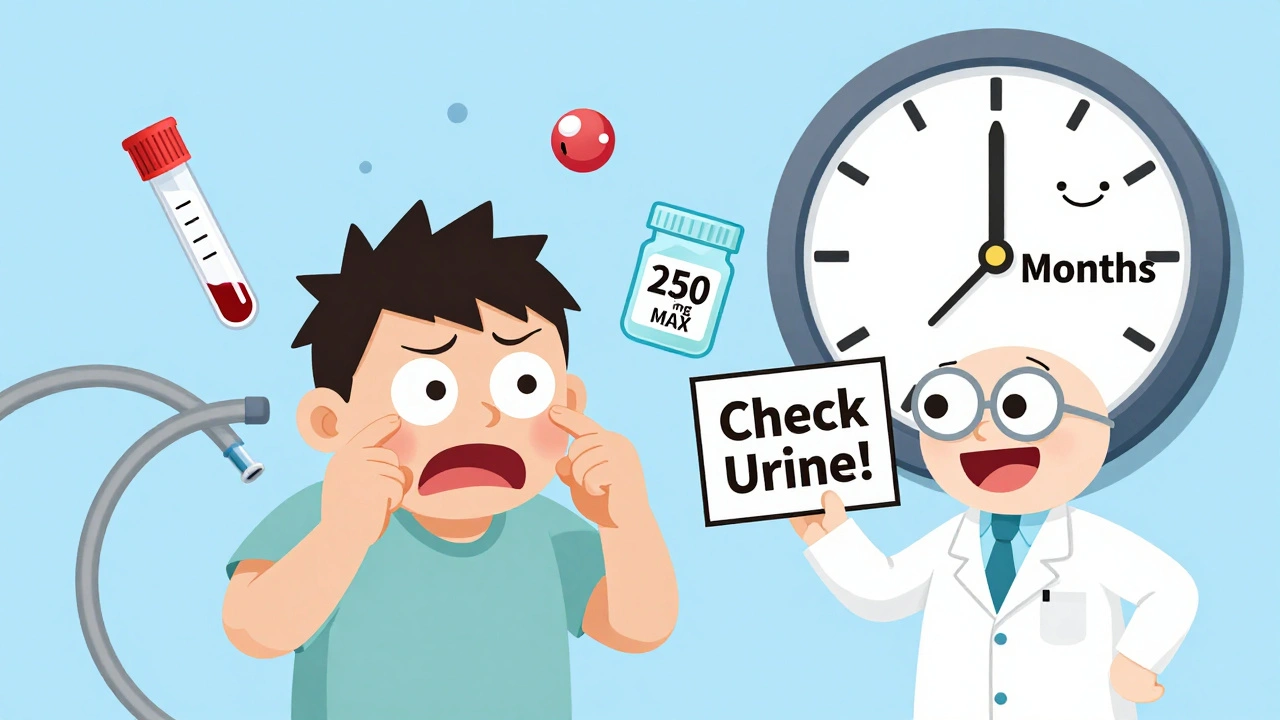
- Urinary calcium: Test your 24-hour urine. You want less than 250 mg per day. More than that means you’re at risk for kidney damage. About 35-40% of patients develop high urinary calcium on standard doses, so this test is non-negotiable.
- Serum phosphate: Target 2.5 to 4.5 mg/dL. High phosphate makes calcifications worse.
- Magnesium: If your level drops below 1.7 mg/dL, your body can’t use PTH-even if you’re taking calcium and vitamin D. Replace with magnesium oxide (400-800 mg daily) or magnesium citrate (200-400 mg daily).
Check these every 1 to 3 months until your levels stabilize. Then, every 3 to 4 months is enough if you’re steady.
Diet Changes That Actually Help
Food matters more than you think. You need calcium-rich foods-but you also need to avoid phosphate bombs.
- Good calcium sources: Milk (300 mg per cup), yogurt, cheese (but avoid hard cheeses-they’re high in phosphate), kale (100 mg per cup), broccoli (43 mg per cup), fortified plant milks.
- Phosphate traps to avoid: Soda (one liter can have 500 mg phosphoric acid), processed meats (150-300 mg per serving), fast food, packaged snacks, and colas. Even some breads and cereals have added phosphate.
- Target: Keep daily phosphate intake under 800-1,000 mg.
Don’t think of this as a diet. Think of it as a daily shield against complications. Skipping soda and choosing fresh food over processed can cut your phosphate load in half.
When Standard Treatment Isn’t Enough
One in three people with hypoparathyroidism struggle to get their levels stable. If you’re taking high doses of calcium and vitamin D, still have symptoms, or keep getting kidney stones, you’re not alone.
Doctors may try:
- Thiazide diuretics: Like hydrochlorothiazide (12.5-25 mg daily). These reduce calcium in your urine by helping your kidneys reabsorb it.
- Sodium restriction: Keep salt under 2,000 mg daily. High sodium makes your kidneys dump more calcium.
If that fails, there’s PTH replacement. Natpara (recombinant human PTH 1-84) and Forteo (teriparatide) are options. Natpara was pulled from the U.S. market in 2019 over manufacturing issues but returned in 2020 with strict controls. It’s given as a daily injection. Studies show it cuts calcium and vitamin D needs by 30-40%. But it costs about $15,000 a month-compared to $100-200 for pills. Insurance often requires a 30-45 day prior authorization process.
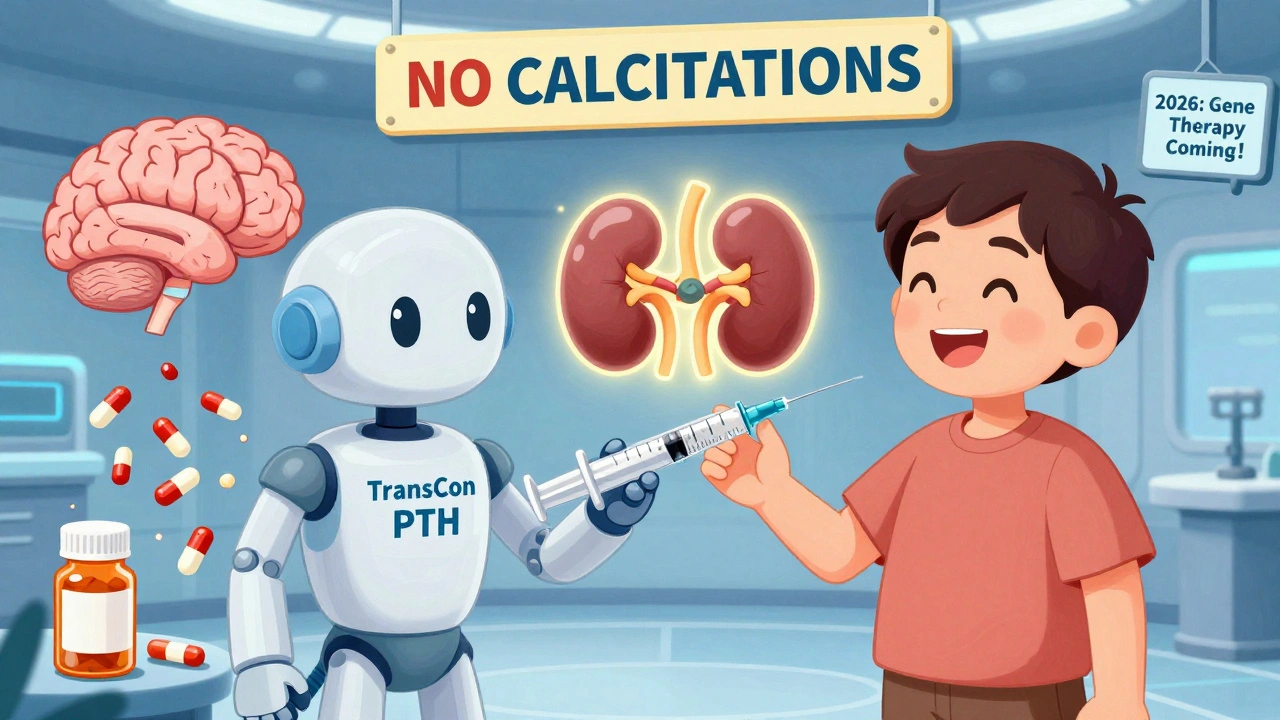
There’s also TransCon PTH, a long-acting version. In a 2022 trial, 89% of patients normalized their calcium with just one weekly injection. It’s not approved yet, but it’s coming.
What Patients Really Struggle With
Surveys of over 400 patients show the real pain points:
- 68% say their calcium levels swing like a rollercoaster-tingling one day, exhaustion the next.
- 52% still have symptoms daily, even on treatment.
- 45% get constipated from high-dose calcium.
- Most take 6 to 10 pills a day. That’s a heavy burden.
One trick that helps: split your calcium into four or five smaller doses instead of two or three. It smooths out the highs and lows. Also, taking magnesium with calcium improves stability-78 patients in a 2020 Cleveland Clinic study had 35% fewer symptoms when their magnesium stayed above 1.9 mg/dL.
What to Do in an Emergency
If you feel sudden numbness around your mouth, muscle cramps, or a seizure, don’t wait. Chew 2 to 3 calcium tablets right away. That’s 500-1,000 mg of elemental calcium. Call your doctor. Go to the ER if it doesn’t improve fast. Keep extra tablets in your car, purse, and bedside drawer.
Who Should Manage Your Care?
Start with an endocrinologist. You’ll need 3-4 visits in the first 3 months to fine-tune your dose. Once stable, you can switch to annual checkups with your primary care doctor-as long as you’re steady and your labs are good. But if your levels are unstable, your symptoms are bad, or you’re on PTH therapy, you need an endocrinologist.
Here’s the problem: 78% of family doctors say they don’t feel trained to manage hypoparathyroidism. That’s why patient advocacy groups like Parathyroid UK and the Hypopara Alliance are pushing for better education. If your doctor doesn’t know the targets, ask them to check the 2022 JBMR guidelines.
The Big Picture: Balancing Symptoms and Long-Term Risks
Managing hypoparathyroidism isn’t about just fixing low calcium. It’s about avoiding the hidden dangers: kidney stones, brain calcifications, and chronic kidney disease. One study found 15-20% of patients develop stage 3+ kidney disease after 10 years on conventional therapy. Another showed patients with calcium above 2.35 mmol/L had 2.8 times higher risk of brain calcifications after 15 years.
Your goal isn’t to feel normal. It’s to stay out of the hospital, avoid dialysis, and protect your brain and kidneys. That means staying in the lower half of normal. It means checking your urine. It means saying no to soda. It means taking your magnesium. It means knowing your numbers.
What’s Next for Treatment?
The future is looking better. Gene therapies targeting the calcium-sensing receptor are in early animal studies. They could one day restore the body’s natural calcium control. But human trials won’t start until 2026.
For now, TransCon PTH and other long-acting PTH drugs offer hope. Less frequent injections. Fewer pills. Better stability. These aren’t just new drugs-they’re a chance to live differently.
Can you take regular vitamin D instead of calcitriol for hypoparathyroidism?
No. Regular vitamin D (cholecalciferol) needs PTH to become active in your kidneys. With hypoparathyroidism, that step doesn’t happen. You need the active form-calcitriol or alfacalcidol-because your body can’t make it on its own. Taking regular vitamin D won’t raise your calcium levels effectively.
Why do you need to take calcium with meals?
Taking calcium with food improves absorption. It also acts as a phosphate binder in your gut, reducing how much phosphate enters your bloodstream. This helps control high phosphate levels, which are common in hypoparathyroidism and can cause calcifications in your organs.
Is it safe to take calcium supplements long-term?
Yes-if you stay within your target range and monitor your urine calcium. Taking too much calcium (over 2,000 mg elemental daily) can increase heart disease risk, according to the Women’s Health Initiative. The key is balance: enough to prevent symptoms, but not so much that you damage your kidneys or blood vessels.
Can magnesium help with hypoparathyroidism symptoms?
Absolutely. Low magnesium makes your body resistant to PTH-even if you’re taking calcium and vitamin D. If your magnesium is below 1.7 mg/dL, supplementation can improve calcium control and reduce muscle cramps and spasms. Magnesium oxide or citrate are common choices.
How often should you get your urine tested?
Every time your doctor adjusts your dose, and at least every 3-6 months once you’re stable. High urinary calcium is the #1 warning sign of kidney damage. About 40% of patients develop it on standard therapy, so skipping this test puts you at serious risk.
What should you do if you miss a dose of calcitriol?
If you miss a dose, take it as soon as you remember-if it’s still the same day. If it’s the next day, skip the missed dose and go back to your regular schedule. Don’t double up. Calcitriol stays active in your body for days, so skipping one dose won’t cause immediate symptoms. But don’t make it a habit-consistency matters for stable calcium levels.
Can hypoparathyroidism be cured?
Not yet. Most cases are lifelong. But research is moving fast. Long-acting PTH therapies and gene treatments are in development. For now, the goal is to manage it well enough that you live without symptoms or complications. Many people do this successfully with careful monitoring and the right treatment plan.
Comments (11)
-
David Brooks December 7, 2025OMG this is LIFE-CHANGING. I’ve been on calcitriol for 3 years and just learned I was supposed to be checking my urine calcium?! My kidneys are gonna thank me. 🙏

-
Jennifer Anderson December 8, 2025i legit thought regular vit d was enough lol. i’ve been taking 5000iu daily and wonderin why my cramps never went away. this post just saved me from a trip to the er.

-
Sangram Lavte December 9, 2025In India, access to calcitriol is a nightmare. We get D3 and calcium, but not the active form. Doctors say 'take more D3, it'll convert.' It doesn't. We need better guidelines here.

-
Ashley Farmer December 10, 2025I love how this breaks down the why behind everything. So many people just take pills without understanding the hormone cascade. This is the kind of education we need more of.

-
Oliver Damon December 11, 2025The real tragedy isn't the disease-it's the systemic neglect. Endocrinologists are overloaded, primary care docs are untrained, and patients are left to self-educate via Reddit threads. We need a national hypoparathyroidism care protocol.

-
Kurt Russell December 12, 2025I was told I'd need to take 10 pills a day for life. I did it. I tracked my urine. I cut out soda. I took magnesium. I’m 4 years in and my calcium is stable at 8.2. You CAN do this. It’s not easy, but it’s worth it.

-
Stacy here December 13, 2025Let’s be real-Big Pharma doesn’t want you stable. Why? Because if you’re on TransCon PTH once a week instead of 8 calcium pills a day, they lose billions. The FDA’s slow approval? Not bureaucracy. It’s profit protection.

-
Sadie Nastor December 14, 2025i cried reading this. i’ve had 3 kidney stones in 2 years and no one ever told me to check my urine. i feel so stupid. but also… so hopeful now. thank you. 🥹

-
Nicholas Heer December 16, 2025They’re hiding the truth. The FDA pulled Natpara because it’s TOO EFFECTIVE. They don’t want people cured. They want you dependent on calcium pills forever. The real cure? Stop trusting the system. Research your own meds.

-
Helen Maples December 17, 2025You missed a critical point: magnesium isn't just helpful-it's non-negotiable. If your Mg is below 1.8, your calcitriol is basically useless. Test it monthly. Supplement aggressively. This isn't optional.

-
Nancy Carlsen December 18, 2025This post made me feel seen. I’ve been managing this for 12 years. The soda thing? Game changer. I quit colas and my cramps dropped by 70%. I’m not just surviving-I’m living. 🌱💖
