
Penicillin Allergy: What It Means, How It's Diagnosed, and What Alternatives Work
When someone says they have a penicillin allergy, a hypersensitivity reaction to penicillin-class antibiotics that can range from mild rash to life-threatening anaphylaxis. Also known as beta-lactam allergy, it’s one of the most commonly reported drug allergies in the U.S.—but up to 90% of people who believe they have it don’t actually react when tested. Many people outgrow it, or were misdiagnosed after a childhood rash that had nothing to do with true allergy. Still, the label sticks, and it often leads to broader, costlier, and sometimes less effective antibiotic choices.
This mislabeling matters because avoiding penicillin can mean switching to stronger drugs like vancomycin or fluoroquinolones, which carry higher risks of side effects, C. diff infections, and antibiotic resistance. Amoxicillin, a penicillin derivative commonly prescribed for ear infections, sinusitis, and strep throat, is often avoided unnecessarily. Even cephalosporins, a related class of antibiotics used for respiratory and urinary infections, are often skipped out of fear—even though cross-reactivity with penicillin is now known to be under 1% in most cases. For people with confirmed true allergy, alternatives like azithromycin, clindamycin, or sulfonamides are used, but only after proper evaluation.
What’s missing from most patient stories is the fact that allergy testing exists—and it’s simple. Skin tests and graded oral challenges, done under medical supervision, can confirm or rule out a true penicillin allergy in under an hour. If you were told you’re allergic as a child, or had a rash after taking penicillin years ago, you might be safer on these drugs than you think. And if you’ve avoided them for decades, you could be missing out on the most effective, safest, and cheapest treatment for common infections.
The posts below cover real cases where patients were wrongly labeled, how doctors miss signs of true allergy, why some antibiotics are safer than others if you’re allergic to penicillin, and how to talk to your provider about getting tested. You’ll also find guides on reading drug labels to spot penicillin-related names, understanding cross-reactivity with other beta-lactams, and what to do if you have a reaction. This isn’t just about avoiding a rash—it’s about getting the right treatment without unnecessary risk.
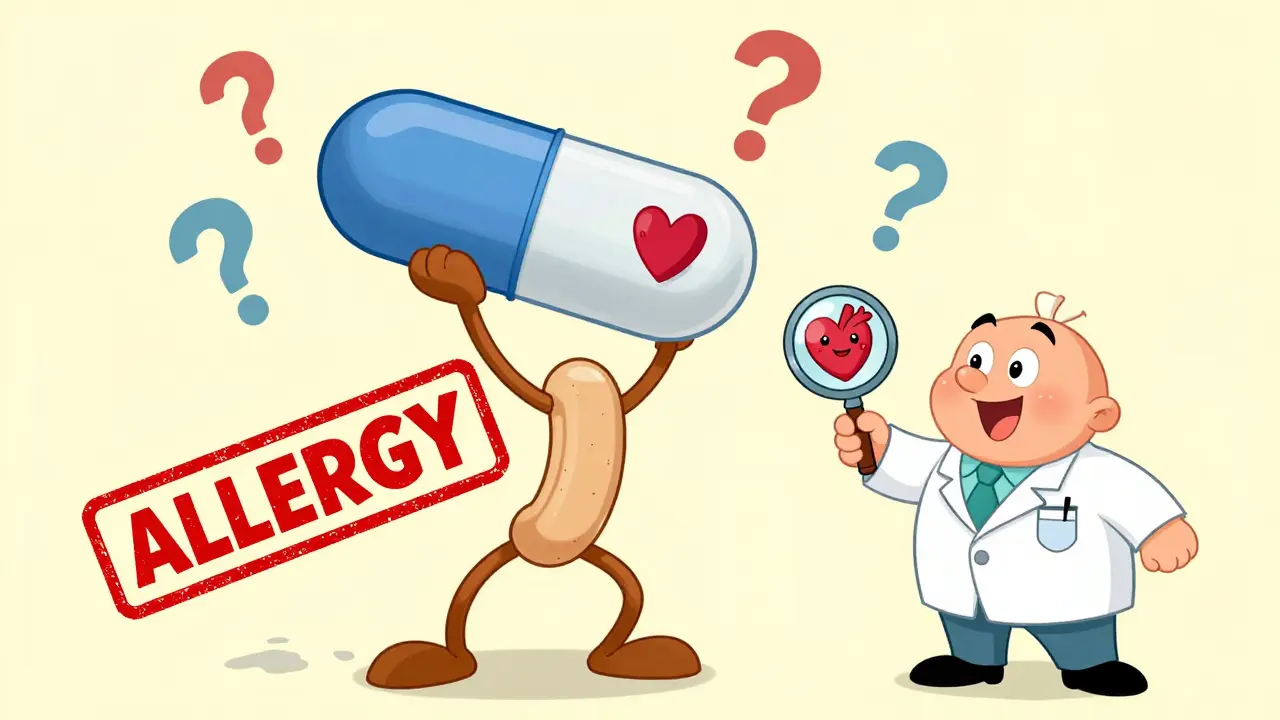
Common Medications That Cause Allergies and Hypersensitivity: What You Need to Know
Haig Sandavol Jan 21 13Many people think they're allergic to common medications like penicillin or NSAIDs-but most aren't. Learn which drugs truly cause allergic reactions, how to tell the difference, and what steps to take to avoid unnecessary risks and costs.
More Detail
Difference Between Medication Side Effects and Allergic Drug Reactions
Haig Sandavol Nov 29 10Learn the critical difference between medication side effects and true allergic drug reactions. Discover why mislabeling them can lead to dangerous treatments, higher costs, and unnecessary risks-and how to get it right.
More Detail