
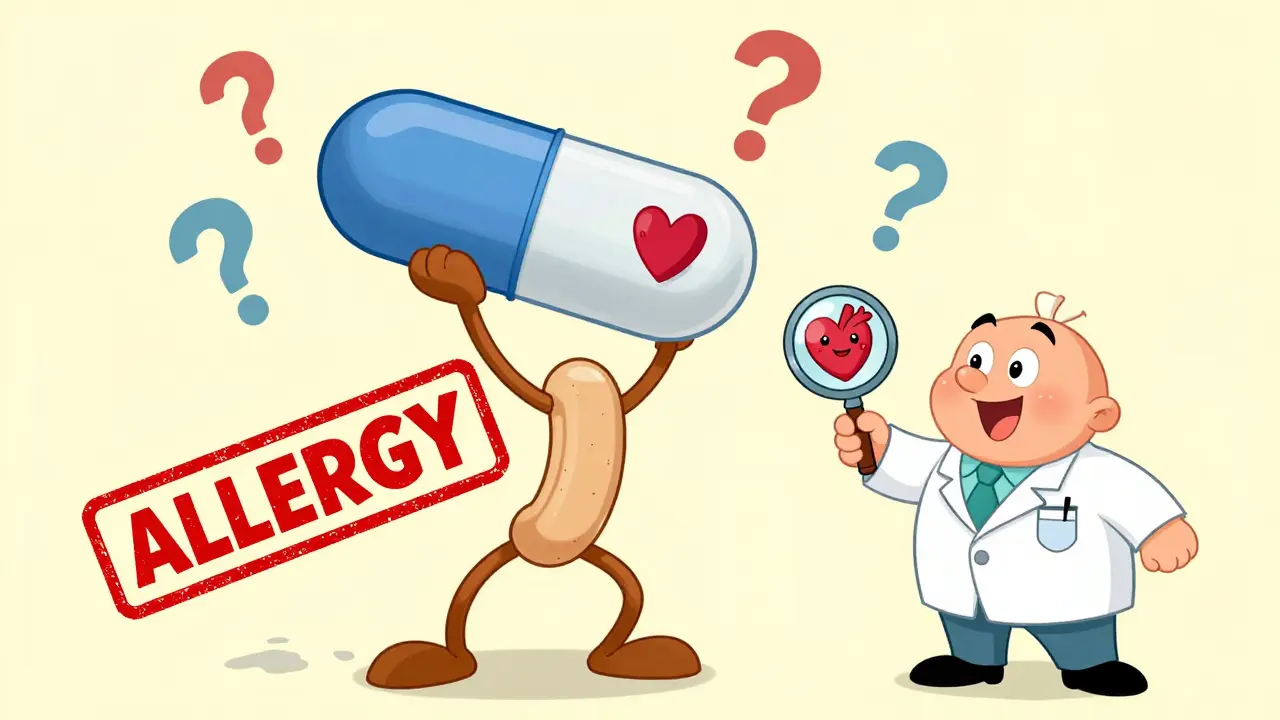
More than 1 in 10 people in the U.S. say they’re allergic to a medication. But here’s the twist: most of them aren’t. If you’ve been told you’re allergic to penicillin because you got a rash as a kid, you might be carrying around a label that’s not just wrong-it’s dangerous. Every year, thousands of people end up on stronger, costlier, and riskier antibiotics simply because they were mislabeled. And it’s not just penicillin. A growing list of common drugs can trigger real, sometimes life-threatening, allergic reactions. But knowing which ones, and how to tell if it’s truly an allergy, can save your health-and your wallet.
Penicillin: The Most Misunderstood Drug Allergy
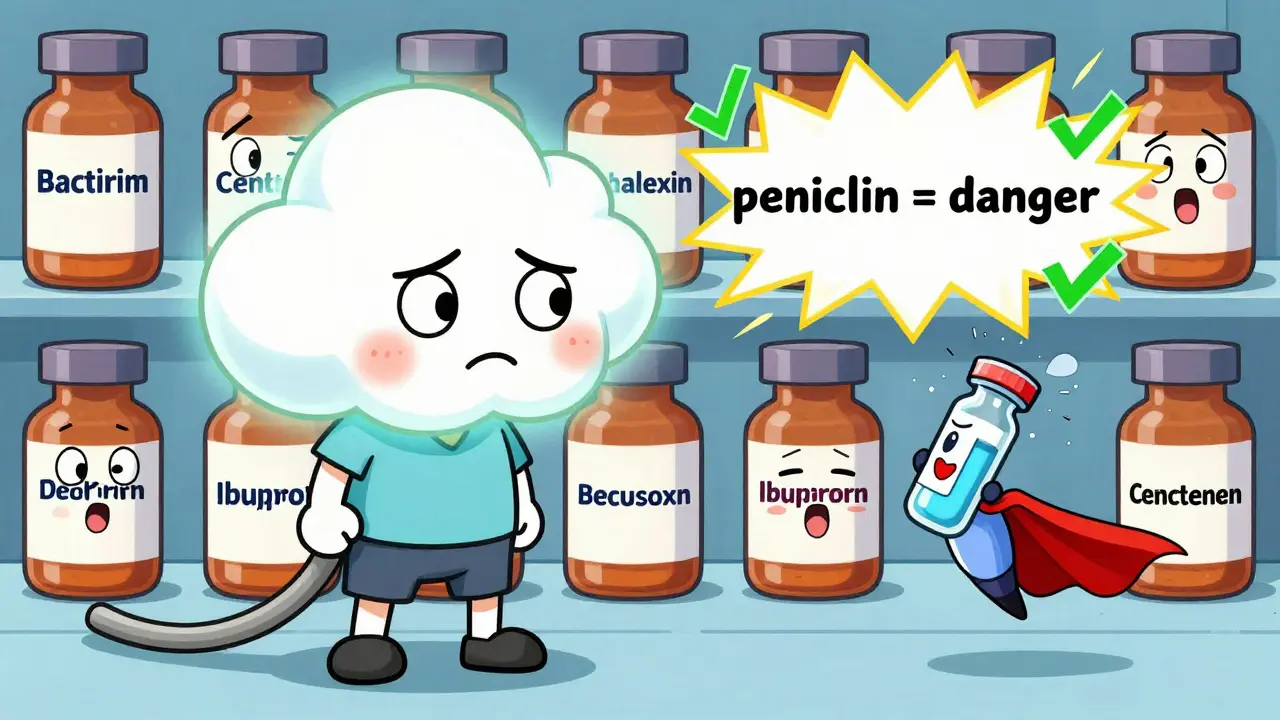
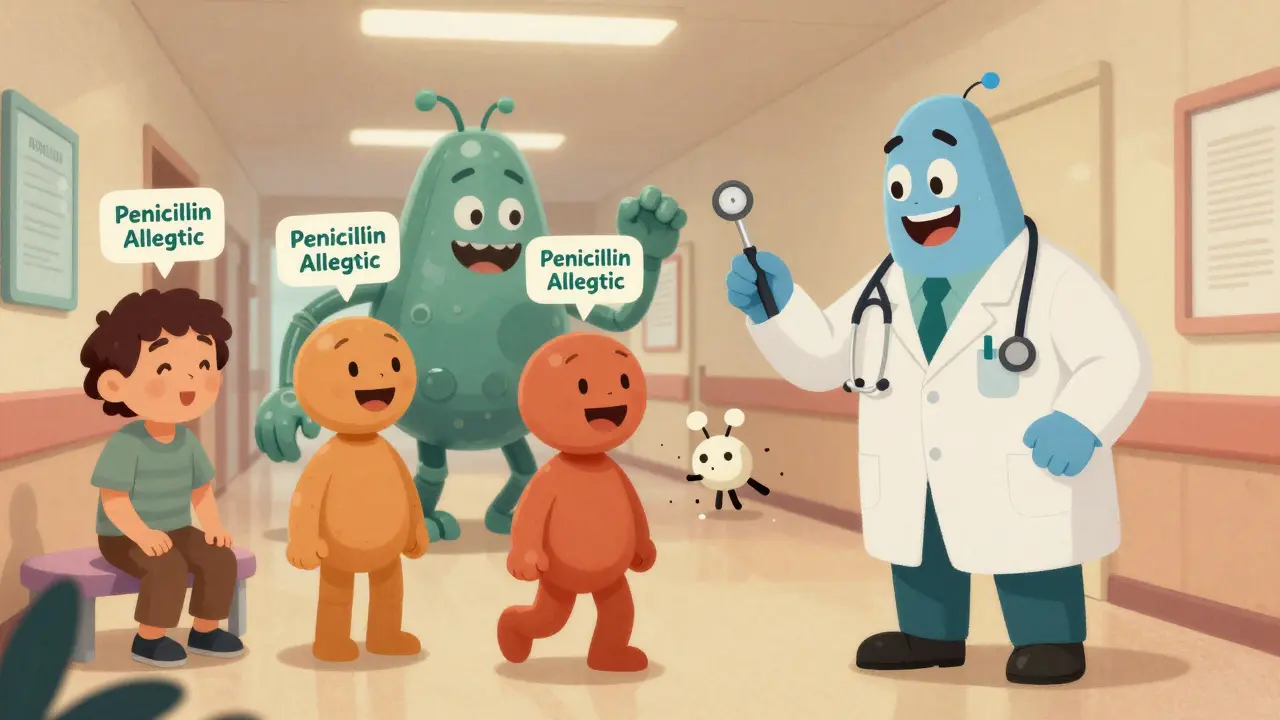
Penicillin is the #1 drug people say they’re allergic to. About 10% of Americans have it on their medical record. But research shows that 95% of those people can actually take penicillin without a problem. The truth? Most reactions labeled as allergies were never true allergies to begin with. A mild rash from childhood, a stomach ache, or even a viral infection mistaken for a drug reaction often leads to a lifelong label. The problem? Once you’re labeled allergic, doctors avoid penicillin entirely. They switch you to broader-spectrum antibiotics like vancomycin or clindamycin-drugs that are more expensive, harder on your gut, and more likely to cause antibiotic-resistant infections. A 2017 study in JAMA Internal Medicine found that patients with a penicillin allergy label stayed in the hospital half a day longer and paid over $1,000 more per admission. That’s not just inconvenient-it’s a public health issue.Here’s the good news: penicillin allergy testing is one of the most reliable tests in medicine. Skin testing combined with a small oral dose of amoxicillin is 97-99% accurate. If you’ve been told you’re allergic, ask your doctor about getting tested. You might be able to safely use penicillin again. And if you’re not allergic, you’re not just avoiding side effects-you’re helping fight antibiotic resistance.
Other Antibiotics: Sulfa Drugs and Cephalosporins
Penicillin isn’t the only antibiotic that causes trouble. Sulfa drugs like Bactrim (trimethoprim-sulfamethoxazole) are another big culprit. About 3% of the general population reacts to them, but that number jumps to 60% in people with HIV. Reactions can range from a simple rash to life-threatening conditions like Stevens-Johnson syndrome. The key here is timing: sulfa reactions often appear days after starting the drug, making them easy to miss. If you’ve had a rash after taking Bactrim for a UTI or sinus infection, don’t assume it’s harmless. Get it checked.What about cephalosporins-like cephalexin or ceftriaxone? For years, doctors warned that if you’re allergic to penicillin, you’re likely allergic to these too. But that’s outdated. Modern studies show cross-reactivity is only 1-3%, not the old 10% myth. If you need a cephalosporin and have a penicillin label, ask your doctor if you can try one under supervision. Many patients tolerate them just fine.
NSAIDs: More Than Just a Stomachache
Ibuprofen, naproxen, aspirin-these are the go-to painkillers for headaches, cramps, and arthritis. But for some, they trigger real allergic reactions. Unlike penicillin, NSAID allergies aren’t usually IgE-mediated. Instead, they cause what’s called aspirin-exacerbated respiratory disease (AERD). If you have asthma or nasal polyps, you’re at higher risk. People with AERD don’t just get hives-they can have severe breathing problems, wheezing, or even anaphylaxis after taking even a small dose. About 7% of adults with asthma and 14% with nasal polyps have this condition. If you’ve ever had trouble breathing after taking Advil or Aleve, it’s not just a coincidence. Talk to an allergist. You might need to avoid all NSAIDs, including aspirin, and use alternatives like acetaminophen.It’s also worth noting: you can be allergic to one NSAID and tolerate another. But testing is complex, and self-trialing is risky. Don’t try to figure it out on your own.
Anticonvulsants: When a Rash Turns Deadly
Carbamazepine (Tegretol), lamotrigine (Lamictal), and phenytoin (Dilantin) are life-saving for people with epilepsy and bipolar disorder. But they carry a hidden risk: severe skin reactions. Carbamazepine, in particular, can trigger Stevens-Johnson syndrome or toxic epidermal necrolysis-conditions where the skin starts to peel off like a burn. These are medical emergencies with a 30% death rate if not treated quickly.There’s a genetic link. People of Southeast Asian descent who carry the HLA-B*1502 gene are at extremely high risk. That’s why the FDA now recommends genetic testing before starting carbamazepine in those populations. In Taiwan, where this screening became routine, cases of SJS dropped by 90%. If you’re from Southeast Asia and your doctor wants to prescribe carbamazepine, ask about HLA-B*1502 testing. It’s a simple blood test that can prevent a tragedy.
Lamotrigine causes rashes in 5-10% of users. Most are mild, but 1 in 1,000 patients develop a serious reaction. The key? Start low and go slow. If you get a rash while on lamotrigine, stop it immediately and call your doctor. Don’t wait. Delayed reactions can appear up to two weeks after starting the drug.
Chemotherapy and Biologics: The New Frontier of Drug Allergies
Cancer treatments are powerful-and they’re increasingly causing allergic reactions. Taxanes like paclitaxel (Taxol) trigger hypersensitivity in up to 41% of patients. Monoclonal antibodies like cetuximab (Erbitux) cause infusion reactions in nearly 1 in 5. These aren’t always IgE-mediated. Many are “pseudo-allergic”-the immune system overreacts without true allergy antibodies. Still, the symptoms look the same: flushing, low blood pressure, trouble breathing.Hospitals now routinely pre-medicate patients with antihistamines and steroids before giving these drugs. That cuts severe reactions by over 90%. But if you’ve ever had a reaction during chemo, don’t assume you can’t get it again. Desensitization protocols exist. They’re done slowly under close supervision and work in 80-90% of cases. If you’ve been told you can’t receive a certain chemo drug, ask if desensitization is an option. It could mean the difference between treatment and no treatment.
Contrast Dyes and Other Triggers
If you’ve ever had a CT scan and felt hot, itchy, or nauseous afterward, you’re not alone. Contrast dyes used in imaging cause reactions in 1-3% of people. Most are mild-hives, nausea, a metallic taste. But in 1 in 2,500 cases, they cause anaphylaxis. The good news? Premedication with steroids and antihistamines reduces severe reactions from 12.7% to just 1%. If you’ve had a reaction before, tell your radiologist. They can adjust your protocol.Other less common triggers include muscle relaxants used during surgery, local anesthetics (like lidocaine), and even insulin. If you’ve had a reaction during or after surgery, it’s worth documenting and reviewing with an allergist.
How to Know If It’s Really an Allergy
Not every bad reaction is an allergy. Here’s how to tell:- True allergy: Happens within minutes to hours. Symptoms include hives, swelling, wheezing, drop in blood pressure, anaphylaxis. Often linked to IgE antibodies.
- Delayed reaction: Appears days later. Think rash, fever, organ inflammation. Often T-cell mediated. Common with antibiotics and anticonvulsants.
- Side effect: Nausea, dizziness, headache. These aren’t allergic. They’re expected, not immune-driven.
- Intolerance: Diarrhea from antibiotics, stomach upset from NSAIDs. Not an allergy-just your body reacting poorly.
If you’re unsure, keep a detailed log: What drug? When did you take it? What happened? How long did it take? Did you need emergency care? That info is gold for your doctor.
What You Can Do Now
If you’ve been told you’re allergic to a medication:- Don’t assume it’s true. Ask: Was it tested? Was it documented properly?
- Check your records. Is the reaction clearly described? Or is it just “penicillin allergy” with no details?
- Ask your doctor about referral to an allergist. Testing is safe, fast, and often covered by insurance.
- If you’re on a high-risk drug like carbamazepine and have Asian ancestry, ask about HLA-B*1502 testing.
- Don’t avoid all drugs in a class unless you know for sure. Cross-reactivity is often lower than you think.
And if you’ve never had a reaction but are about to start a new drug? Don’t panic. Most people tolerate medications just fine. But if you’ve had a reaction in the past-even years ago-don’t ignore it. Drug allergies don’t always go away. But they can be properly evaluated.
The Bigger Picture
Mislabeling drug allergies isn’t just a personal problem-it’s a system-wide crisis. It leads to more antibiotic resistance, longer hospital stays, higher costs, and unnecessary suffering. But change is coming. Hospitals are starting to use electronic alerts to flag potential mislabeling. Pharmacists are being trained to question allergy claims. Telehealth penicillin testing is cutting wait times from months to days.Genetic testing is becoming standard before prescribing certain drugs. And patient education is finally catching up. A 2022 survey found that 79% of people with drug allergy labels want to get tested. That’s a sign we’re moving in the right direction.
Don’t let a label from 10 years ago control your health today. If you’ve been told you’re allergic to a medication, take the next step. Ask for testing. Get the facts. You might be surprised what you find.
Comments (13)
-
Oladeji Omobolaji January 22, 2026
Man, I had a rash after penicillin when I was 7 and they just stamped 'allergic' on my chart. Never thought to question it until now. Guess I should get tested before my next infection-don’t wanna be stuck on some expensive junk antibiotic just because some kid got a little itchy.

-
Janet King January 23, 2026
It is imperative that patients understand the distinction between true immunologic allergy and adverse drug reaction. Mislabeling leads to inappropriate antibiotic selection, increased resistance, and higher healthcare expenditures. Allergists should be consulted routinely for documentation review.

-
Anna Pryde-Smith January 24, 2026
THIS IS WHY PEOPLE ARE DYING. Someone wrote 'penicillin allergy' on my grandma’s chart in 1998 and now she can’t get treated for pneumonia because some lazy doctor won’t look past a 25-year-old note. They don’t even test anymore-they just assume. This is medical negligence and it needs to stop. NOW.

-
Sallie Jane Barnes January 24, 2026
Thank you for sharing this. I’ve been avoiding NSAIDs for years because I got a rash once after taking ibuprofen-turns out it was just a viral rash. I didn’t know testing existed. I’m scheduling an appointment tomorrow. You just saved me from years of unnecessary pain.

-
Kerry Moore January 26, 2026
This is a profoundly important topic. The data on penicillin mislabeling is overwhelming, yet systemic inertia persists. I wonder how many other drug allergies are similarly misclassified? Could a standardized electronic flagging system be implemented across EHRs to prompt re-evaluation?

-
Sue Stone January 26, 2026
My sister got a rash on Lamictal and they told her to never take it again. She’s been seizure-free for 8 years now, but now she’s stuck on this weird combo of meds that makes her feel like a zombie. I’m gonna push her to talk to her neurologist about this.

-
Dawson Taylor January 28, 2026
Labels stick. Even when they’re wrong.

-
Laura Rice January 30, 2026
OMG I JUST REALIZED I’M ONE OF THOSE PEOPLE. I got a rash on Bactrim 10 years ago and they just said 'allergic' and moved on. I’ve been terrified of every antibiotic since. I’m calling my doctor RIGHT NOW. This post literally changed my life.

-
Stacy Thomes January 30, 2026
Stop letting old paperwork control your health! Get tested. You deserve better meds, cheaper care, and to not feel like a walking medical mystery. Do it for yourself.

-
dana torgersen January 31, 2026
Wait… so… if you got a rash… but it wasn't an allergy… then… what WAS it? Like… a side effect? Or… like… your body just… didn't like it? I'm confused. And also, why do they even write 'allergy' if it's not? This is so messy.

-
Kerry Evans February 2, 2026
People are too lazy to understand immunology. If you got a rash, you’re allergic. End of story. Testing is expensive, time-consuming, and unnecessary. Why risk it? Just avoid the drug. Your life isn’t worth the savings.

-
Vanessa Barber February 4, 2026
Actually, the real issue is that doctors don’t know how to document reactions properly. It’s not the patients’ fault. It’s the system. Also, I think they’re overdiagnosing sulfa allergies in HIV patients-maybe it’s just the immune system being a mess.

-
Andrew Smirnykh February 5, 2026
In Nigeria, we don’t even have access to allergy testing. If you had a rash in childhood, you’re labeled allergic forever. This post made me realize how lucky people in the U.S. are. We need global standards-not just for testing, but for education.
