
Collapsed Lung Symptoms: What to Watch For and When to Act
A collapsed lung, also called pneumothorax, happens when air leaks into the space between your lung and chest wall, causing the lung to deflate. Also known as pneumothorax, it’s not always caused by trauma—sometimes it just happens for no clear reason, especially in tall, thin young adults. When this occurs, your lung can’t expand fully, and that’s when symptoms start showing up.
The most common sign is a sudden, sharp pain on one side of your chest, often worse when you breathe in or cough. Many people describe it like a knife sticking in their side. Along with that pain, you’ll likely feel short of breath—not the kind from running, but the kind where even sitting still feels like you’re not getting enough air. Your heart might race, your skin could turn slightly blue around the lips or fingers, and you might feel dizzy or lightheaded. These aren’t vague discomforts—they’re your body’s alarm system. If you’ve had a recent injury, a history of lung disease, or you smoke, your risk goes up. But even healthy people can get it, and it doesn’t always follow a pattern.
It’s easy to mistake collapsed lung symptoms for a pulled muscle or heartburn, especially if the pain is mild. But here’s the thing: if your breathing gets worse over minutes or hours, don’t wait. A small leak might fix itself, but a larger one can push your organs out of place and become life-threatening. Doctors use chest X-rays or CT scans to confirm it, and treatment ranges from just watching and waiting to inserting a tube to pull the air out. The key is catching it early. People who’ve had one collapsed lung are more likely to get another, so knowing the signs again matters just as much as the first time.
What you’ll find below are real, practical posts that connect directly to what happens when your lung stops working right. You’ll read about how sudden chest pain can signal something serious beyond a strain, why certain medications might increase your risk, and how to spot warning signs before they turn into emergencies. There’s no fluff here—just clear, actionable info from people who’ve been through it, doctors who treat it, and experts who study it. Whether you’re worried about yourself or someone you care about, these posts give you the facts you need to act fast—or avoid panic altogether.
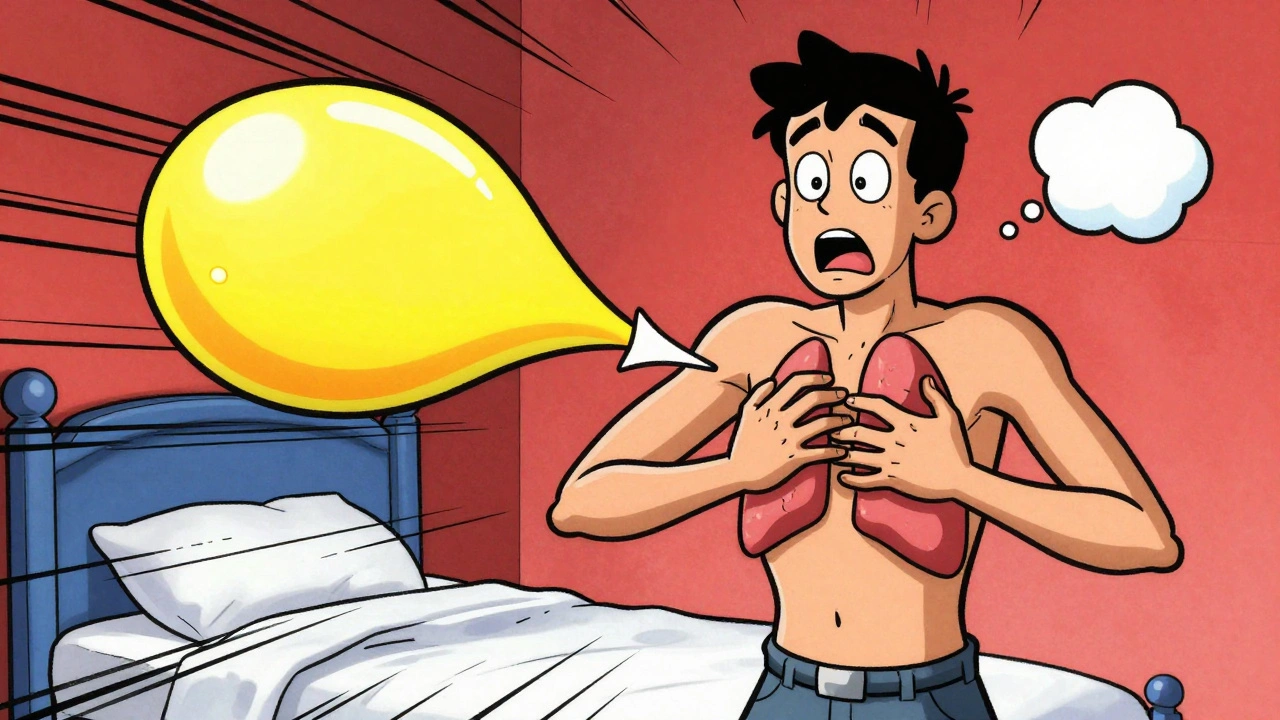
Pneumothorax: Recognizing Collapsed Lung Symptoms and Getting Emergency Care Fast
Haig Sandavol Dec 2 11A collapsed lung, or pneumothorax, is a medical emergency that requires quick recognition and treatment. Learn the key symptoms, how it's diagnosed, and why immediate care saves lives - plus what to do after you leave the hospital.
More Detail