
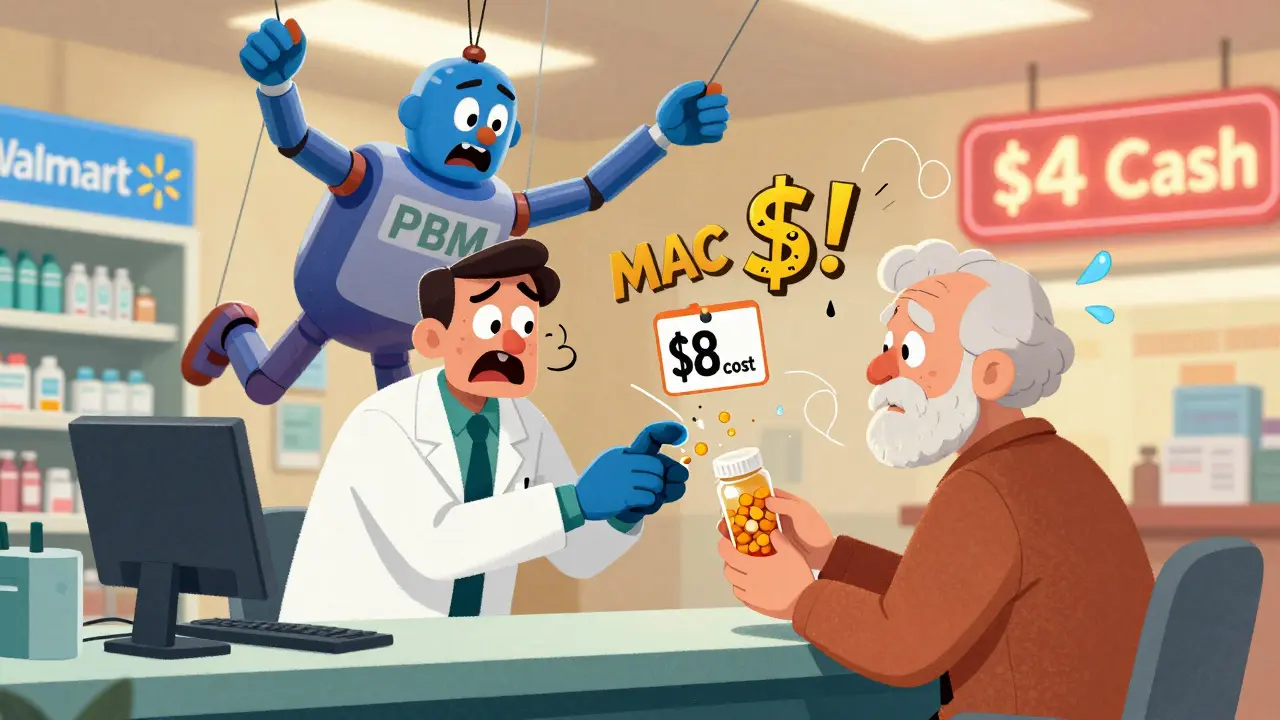
When you pick up a generic prescription at the pharmacy, you might assume the price is simple: cheaper than the brand, end of story. But behind that low copay is a web of federal and state laws, complex reimbursement models, and financial incentives that determine exactly how much the pharmacy gets paid-and whether they can even afford to fill your script. This isn’t just about drug prices. It’s about who controls the money, how laws shape access, and why some pharmacies are barely breaking even just to give you the medication you need.
How Generic Drugs Got Their Price Tag
The modern system for paying for generic drugs started with the Hatch-Waxman Act of 1984. Before that, generic manufacturers faced the same costly approval process as brand-name drugs. Hatch-Waxman changed that by creating the ANDA pathway-letting generic makers prove their drugs were bioequivalent without repeating expensive clinical trials. The goal? Lower prices through competition. And it worked. Today, generics make up 90% of all prescriptions filled in the U.S., but only 23% of total drug spending. But here’s the catch: just because generics are cheaper doesn’t mean pharmacies get paid enough to cover their costs. Reimbursement isn’t based on what the pharmacy actually paid for the pills. It’s based on outdated formulas tied to old price lists like Average Wholesale Price (AWP) or, more commonly now, Maximum Allowable Cost (MAC). MAC sets a cap on what insurers will pay for a generic drug, often lower than what the pharmacy paid to buy it. If a pharmacy buys a 30-day supply of metformin for $8 but the MAC is $5, they lose $3 on that prescription. No markup. No profit. Just a loss.Medicare Part D and the Hidden Costs of Formularies
Medicare Part D covers nearly 51 million seniors and people with disabilities. It’s supposed to help with drug costs, but the system is built around formularies-lists of approved drugs-controlled by Pharmacy Benefit Managers (PBMs). These are the middlemen between insurers, drugmakers, and pharmacies. PBMs negotiate rebates with manufacturers, decide which drugs get preferred status, and set reimbursement rates. For generics, Part D plans often place them in lower tiers with lower copays-$4 or $5 instead of $40 for a brand. Sounds good, right? But here’s what’s hidden: many plans require prior authorization just to fill a generic. In 2022, 28% of Part D plans required prior auth for at least one generic drug. That means your pharmacist has to call your doctor, wait for paperwork, and sometimes you get delayed or denied the cheaper option. The goal? To steer you toward a drug the PBM gets a bigger rebate on-even if it’s not the best clinical choice. And then there’s the “donut hole.” Even though generics are cheaper, if your total drug spending hits a certain threshold, you enter a coverage gap where you pay full price until you hit the catastrophic threshold. That hits low-income seniors hardest, especially if their plan doesn’t cover enough generics.Medicaid’s Preferred Drug Lists and State-Level Control
Medicaid, covering 85 million Americans, operates differently. Each state runs its own program and creates a Preferred Drug List (PDL). The state’s Pharmacy and Therapeutics Committee picks which drugs are preferred-and which aren’t. If a generic isn’t on the list, the pharmacy might not get paid at all unless the doctor jumps through hoops to get prior authorization. States also use the Medicaid Drug Rebate Program (MDRP), which forces drugmakers to pay rebates to both federal and state governments. Those rebates help lower the overall cost of drugs-but they’re negotiated behind closed doors. Manufacturers often raise list prices to offset the rebates they give to PBMs, creating a cycle where the sticker price goes up even as the net price drops. That doesn’t help patients at the counter, but it does affect what pharmacies are reimbursed.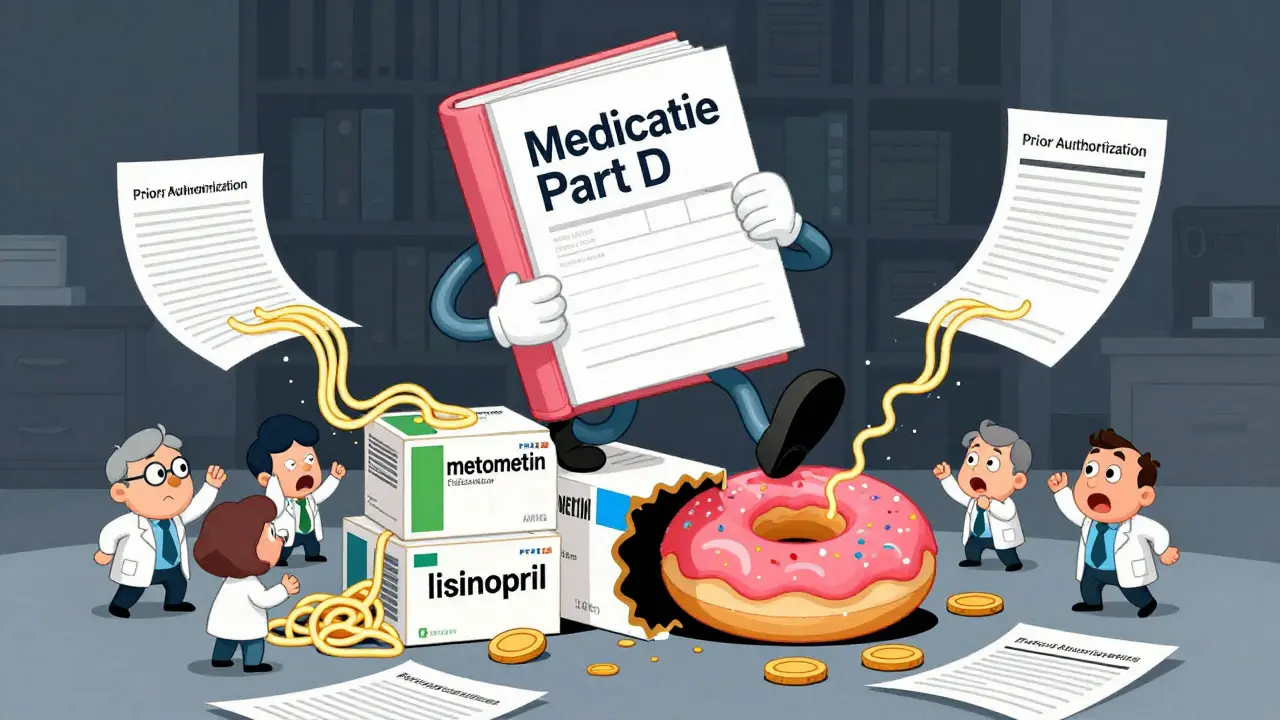
The PBM Problem: Spread Pricing and Gag Clauses
PBMs don’t just negotiate rebates. They also make money through “spread pricing.” Here’s how it works: Your insurer agrees to pay the PBM $15 for a generic drug. The PBM tells the pharmacy they’ll be paid $10. The PBM pockets the $5 difference. That’s spread pricing-and it’s been a major source of controversy. For years, PBMs used “gag clauses” to stop pharmacists from telling you that paying cash might be cheaper than using your insurance. A 2018 federal law banned those clauses, but the damage was done. Many patients still don’t know they could pay $4 out-of-pocket for a 30-day supply of lisinopril at Walmart or Costco-far less than their $10 copay. Independent pharmacies suffer the most. A 2023 report from the National Community Pharmacists Association found that the average profit margin on generic drugs had dropped to just 1.4%, down from 3.2% in 2018. Some pharmacies are losing money on every generic they dispense. That’s why so many independent pharmacies are closing or being bought out by big chains.The New $2 Drug List: A Step Toward Simplicity
In 2025, CMS is testing a new model called the Medicare $2 Drug List. It’s simple: pick about 100 to 150 clinically important generic drugs and cap the patient copay at $2. No formulary tiers. No prior auth. No surprise costs. The drugs are chosen based on clinical guidelines, how often they’re used, and how many manufacturers make them. This model is inspired by grocery store pharmacy programs like Walmart’s $4 list. But it’s being tailored for Medicare Part D. If it works, it could be expanded nationwide. It’s not a cure-all-PBMs still control the supply chain-but it cuts through the noise. For seniors, it means less confusion, fewer skipped doses, and more predictable costs.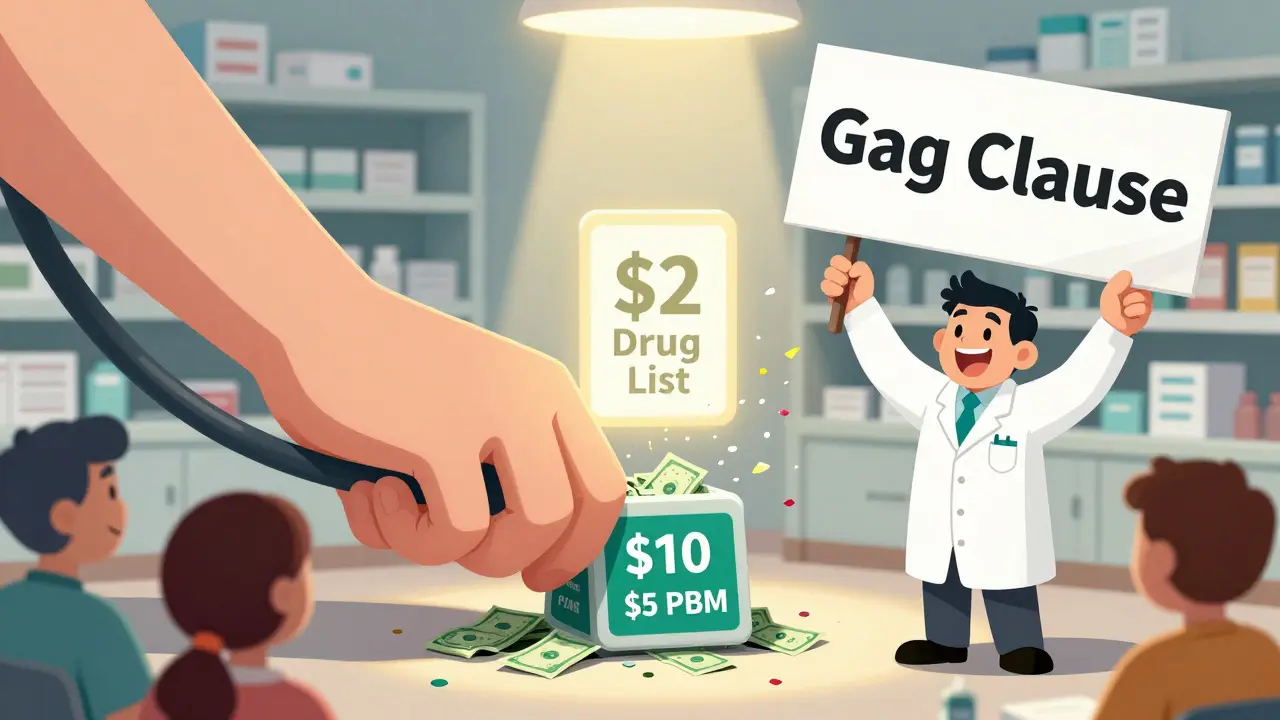
What’s Next for Generic Reimbursement?
The Inflation Reduction Act of 2022 capped insulin at $35 a month and will cap total out-of-pocket drug spending at $2,000 in 2025. That’s a big win. But it doesn’t fix the underlying reimbursement model. Generic drug prices are still falling-around 5-7% per year-and pharmacies are being squeezed harder. Some states are stepping in. As of early 2025, 44 states have passed laws regulating PBM practices, including requiring transparency in spread pricing and banning unfair reimbursement terms. More are coming. The biggest threat to generic access isn’t the drugmakers-it’s the system. When pharmacies can’t make money on generics, they stop stocking them. When PBMs control which drugs get paid for, patients lose choice. And when laws don’t keep up with the financial reality, the people who need the cheapest meds pay the highest price-in time, stress, and skipped doses.What You Can Do
- Ask your pharmacist: “Is this generic cheaper if I pay cash?” Many times, it is. - Check discount programs: GoodRx, SingleCare, and pharmacy loyalty programs often beat insurance prices for generics. - Know your formulary: If you’re on Medicare Part D, review your plan’s formulary each year. A small change in tier placement can cost you hundreds. - Speak up: If your generic is denied or delayed, file an appeal. You have rights under federal law. The system is broken-but it’s not unfixable. Real change comes from transparency, competition, and laws that protect pharmacies as much as patients. Until then, knowing how reimbursement works is your best tool for getting the drugs you need at a price you can afford.Why is my generic drug copay higher than the cash price?
Your insurance plan may be using a reimbursement model that pays the pharmacy less than the actual cost of the drug. The pharmacy absorbs the loss, so they may charge you more through your copay to cover it. Meanwhile, cash prices at retailers like Walmart or Costco are based on bulk wholesale costs and don’t include PBM fees or administrative markups. Always ask your pharmacist: “Can I pay cash instead?”
What is MAC pricing and how does it hurt pharmacies?
Maximum Allowable Cost (MAC) is the highest amount an insurer will reimburse for a generic drug. It’s often set below what pharmacies actually pay to buy the drug from wholesalers. If a pharmacy buys a 30-day supply for $7 but the MAC is $5, they lose $2 per prescription. This is especially damaging for independent pharmacies that don’t have the volume to absorb losses. Some MAC lists are outdated, based on prices from months ago, making the problem worse.
Do PBMs really control which generics I can get?
Yes. PBMs decide which drugs are on your plan’s formulary and whether they’re preferred or non-preferred. Even if a generic is FDA-approved and available, if the PBM doesn’t have a rebate deal with the maker, they can block it or make you pay more. They also control prior authorization rules, which can delay or deny access to generics-even when they’re clinically appropriate.
Why are some generics more expensive than others?
Not all generics are the same. Some are “authorized generics”-made by the original brand-name company and sold under a different label. These don’t face competition from other generic makers, so prices stay higher. Others come from manufacturers with limited supply or regulatory issues. Your plan’s formulary may favor one over another based on rebate deals, not clinical need.
Can my pharmacist tell me if another pharmacy has a better price?
Yes. Since 2018, federal law banned “gag clauses” that prevented pharmacists from telling you if paying cash would be cheaper. Your pharmacist can now compare your copay to cash prices at nearby pharmacies and suggest alternatives. Don’t be afraid to ask.
Comments (14)
-
Ajay Sangani December 24, 2025
so like... if the pharmacy pays $8 for metformin but gets $5 back... they just eat it? like, how is that even legal? i mean, i get that generics are cheap, but this feels like the system is designed to make sure small pharmacies die off. also, typo: 'reimbursement' is spelled right but my brain keeps seeing 'reimbursment' lol

-
Pankaj Chaudhary IPS December 25, 2025
It is imperative to recognize that the structural inequities embedded within pharmaceutical reimbursement models represent a systemic failure of public policy. The erosion of independent pharmacy viability undermines healthcare equity, particularly in underserved communities. Regulatory intervention must prioritize sustainable reimbursement benchmarks that reflect actual acquisition costs, not archaic indices such as AWP or outdated MAC schedules. This is not merely an economic concern-it is a matter of public health integrity.

-
Payson Mattes December 25, 2025
you ever wonder if the government and PBMs are in cahoots? like, why else would they let pharmacies lose money on generics? it’s gotta be a plot to push everyone into big chains so they can control everything. i heard the CDC has a secret database of all the pharmacies that get audited for ‘fraud’-and 90% of them are independent. also, did you know Walmart gets kickbacks from the PBM? they’re not helping you, they’re just the front for the real owners.

-
Steven Mayer December 26, 2025
The structural disincentives inherent in the MAC-based reimbursement paradigm create negative externalities for community pharmacy operational sustainability. The convergence of declining reimbursement rates with rising acquisition costs, coupled with non-transparent spread pricing mechanisms, results in a classic principal-agent misalignment wherein the PBM, as intermediary, internalizes profit at the expense of both provider and patient. The absence of cost-based reimbursement constitutes a market failure requiring regulatory recalibration.

-
Charles Barry December 26, 2025
Oh wow, so the system is rigged. Shocking. Of course it is. PBMs are just middlemen who don’t make anything but steal from everyone. And the government? They’re asleep at the wheel. This isn’t about drugs-it’s about power. They want you dependent. They want you confused. They want you paying $10 for a $4 pill because they made the rules so no one can see what’s happening. And now they’re pretending the $2 list is some miracle fix? Please. It’s a PR stunt while they quietly shut down every small pharmacy in America.

-
Rosemary O'Shea December 27, 2025
How utterly predictable. Of course the system is designed to fail independent pharmacies. It’s the same pattern everywhere-small businesses get squeezed until they collapse, then the oligarchs swoop in. And let’s not pretend the ‘$2 drug list’ is altruistic. It’s a cosmetic bandage on a hemorrhaging wound. The real issue? PBMs have become the de facto regulators of medicine. And we let them. How tragically naive we’ve become.

-
Ademola Madehin December 28, 2025
bro this is wild. i just went to the pharmacy yesterday for my blood pressure med and they said ‘pay cash, it’s cheaper’ and i was like wait what? i’ve been paying $12 for 30 days? turns out cash was $3.50. my whole life i thought insurance was saving me. nah. it’s robbing me. and now i’m mad. also, why do they even have insurance if cash is cheaper? this system is broken. 😭

-
Harsh Khandelwal December 29, 2025
so let me get this straight-pharmacies lose money on generics, PBMs make bank, and we’re supposed to be grateful for $4 pills? this is like buying a sandwich and the guy who made it gets paid less than the napkin costs. and the worst part? we don’t even know we’re being played. i mean, come on. if i could get lisinopril for $2 at Walmart, why is my insurance charging me $10? someone’s got a secret vault full of cash and we’re all just walking past it with our prescriptions.

-
Andy Grace December 29, 2025
I’ve worked in community health for over a decade, and this is exactly what we see on the ground. Patients skip doses because they can’t afford the copay-even when the drug is technically ‘cheap.’ The disconnect between policy and practice is staggering. What’s missing in this conversation is the human cost: the diabetic who runs out early, the elderly who ration pills because they’re afraid of the next bill. We need to stop talking about reimbursement models and start talking about people.

-
Lindsey Kidd December 30, 2025
OMG YES. 💯 I just found out my $15 copay for metformin was actually $3.99 cash at CVS. I was FUMING. 🤯 Why does no one tell you this?? My pharmacist actually smiled and said ‘I wish everyone knew.’ So now I tell everyone. Please, if you’re on generics-ASK. ALWAYS ASK. 💬 And if your pharmacist says ‘it’s cheaper with insurance’-they’re probably lying. (or just not told the truth by the system) #PharmacyTransparency #AskAboutCashPrice

-
Rachel Cericola December 31, 2025
Let’s be clear: the $2 drug list is a necessary first step, but it’s not a solution. It doesn’t touch the root causes-spread pricing, MAC manipulation, formulary steering, and gag clauses that were only partially outlawed. Even if copays are capped, if pharmacies are still reimbursed below cost, they’ll stop carrying generics altogether. We need legislation that mandates cost-plus reimbursement, bans spread pricing entirely, and requires PBMs to disclose their rebate structures. Without structural reform, we’re just rearranging deck chairs on the Titanic while people drown from lack of access.

-
CHETAN MANDLECHA January 2, 2026
Interesting. The economics are clear. The policy failures are evident. The human impact is undeniable. Yet the system persists. One wonders whether the inertia is due to institutional blindness, or if it is, in fact, by design. The pharmaceutical supply chain has become a labyrinth where no actor is incentivized to prioritize patient access over profit extraction. Perhaps the only viable path forward lies not in regulation, but in decentralization-community-owned cooperatives, direct-to-patient distribution models, or state-run generic procurement systems. The current paradigm is unsustainable.

-
Paula Villete January 4, 2026
Oh wow, so the system is broken and everyone’s pretending it’s not? Shocking. I’m just shocked. 🙄 And the fact that we’re celebrating a $2 copay like it’s some kind of miracle? Honey, that’s not a win-that’s what should’ve been the baseline since 2005. And now we’re supposed to be grateful because they stopped pretending to be fair? The fact that you have to fight to know if your $10 copay is actually $3 cash? That’s not a glitch. That’s the feature.

-
Katie Taylor January 5, 2026
This is why I’m so angry. People think drug prices are about pharma companies-but it’s the middlemen. PBMs. They’re the ones hoarding the money. And the worst part? They don’t even make the drugs. They just move them and take 30% off the top. And now they’re pushing these fake ‘solutions’ like the $2 list like they’re heroes? No. They’re the villains. And if we don’t start holding them accountable, more pharmacies will close, more seniors will skip meds, and we’ll all be paying more for less. It’s time to break them.
