
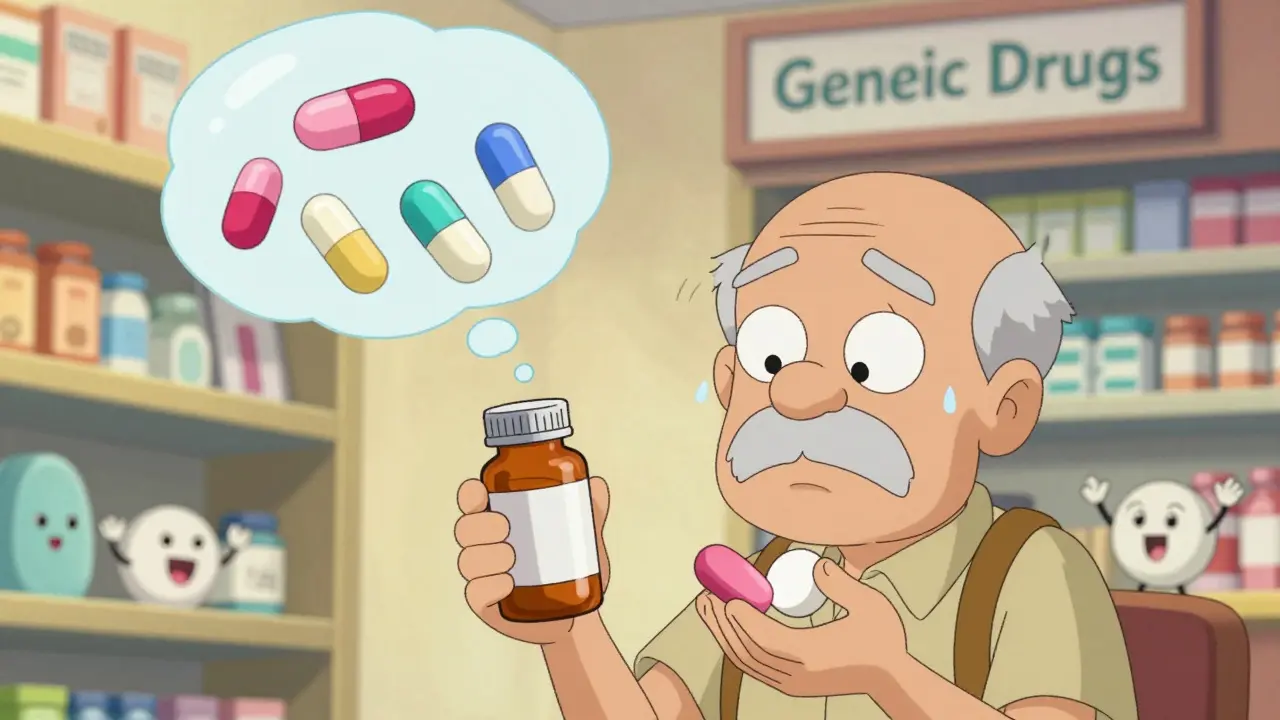
Have you ever opened a new bottle of your medication and stared at it, confused? The pill you’ve been taking for years is now a different color, shape, or size. You check the label. The name’s the same. The dose is right. But it doesn’t look like your usual pill. You wonder: Is this the right medicine? You’re not alone. Thousands of people face this every month - and many don’t know why it happens or what to do.
Why Do Generic Pills Look Different?
The reason is simple: U.S. law says they have to. Under the Hatch-Waxman Act of 1984, generic drug makers can’t copy the exact look of brand-name pills. That’s not because of safety - it’s because of trademark law. Brand-name companies own the visual identity of their drugs. Even if the active ingredient is identical, the generic version must look different to avoid legal issues. So, a pink oval Lipitor pill becomes a white round tablet. A blue extended-release metformin turns into a pale yellow oval. These changes aren’t random. They’re legally required. And they’re happening more often than you think. As of 2023, over 90% of prescriptions filled in the U.S. are for generics. With dozens of manufacturers making the same drug, your pill can change every time you refill - even if your pharmacy stays the same.It’s Not Just Color - Size, Shape, and Marks Matter Too
People often focus on color, but shape and markings are just as important. A round tablet might be easier to swallow than a large oval one. A pill with a score line helps you split it. If that line disappears, or the pill becomes too big to fit in your pill organizer, it affects your daily routine. Markings - the letters or numbers stamped on the pill - are your main clue for identifying it. But when a new manufacturer takes over, those markings change. One generic metformin might say "M 52," another says "107." If you’re taking five or six pills a day, mixing them up becomes a real risk. A 2023 survey by Healthgrades found that 14.7% of patients skipped doses because they weren’t sure if the new pill was the right one.What Happens When Your Pill Changes?
The FDA says appearance doesn’t affect how the drug works. And technically, they’re right. Bioequivalence tests prove the generic delivers the same amount of active ingredient at the same rate as the brand. But real life isn’t a lab. Harvard researchers studied 38,507 people on heart medications and found something startling: when the pill changed appearance, patients were 34% more likely to stop taking it. That’s not because they felt worse - it’s because they didn’t recognize it. One patient told researchers, "I thought I was given the wrong medicine. I didn’t take it for three days until I called my pharmacist." For older adults, the problem is worse. A 2022 AARP survey showed that 37% of adults over 65 had trouble recognizing their meds after a change. That’s compared to 22% of younger adults. Memory, vision, and multitasking all play a role. If you’re managing diabetes, high blood pressure, and thyroid medication - each with different colors and shapes - a sudden change can trigger anxiety, confusion, or even dangerous mistakes.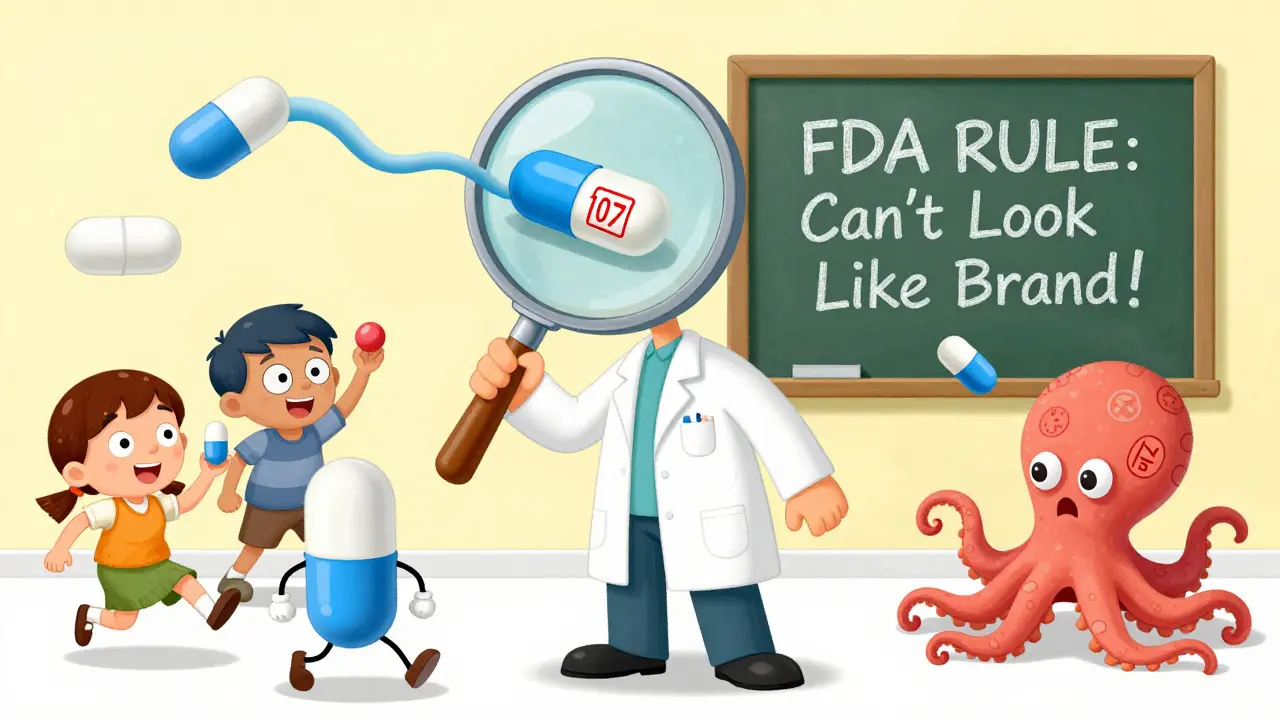
Pharmacists Are Seeing This Firsthand
Community pharmacists report getting complaints about pill changes in nearly one in five generic refills. The American Pharmacists Association found that 67% of those complaints come from patients 65 and older. Many patients come in saying, "This isn’t my pill," or worse, "I didn’t take it because I thought it was something else." Some pharmacies now use digital tools to help. The Surescripts E-prescribing network lets pharmacists show patients a photo of what their pill looked like on previous fills. But only 42% of pharmacies use this feature. Most still rely on printed medication guides - and even those don’t always match the exact pill you got.What You Can Do to Stay Safe
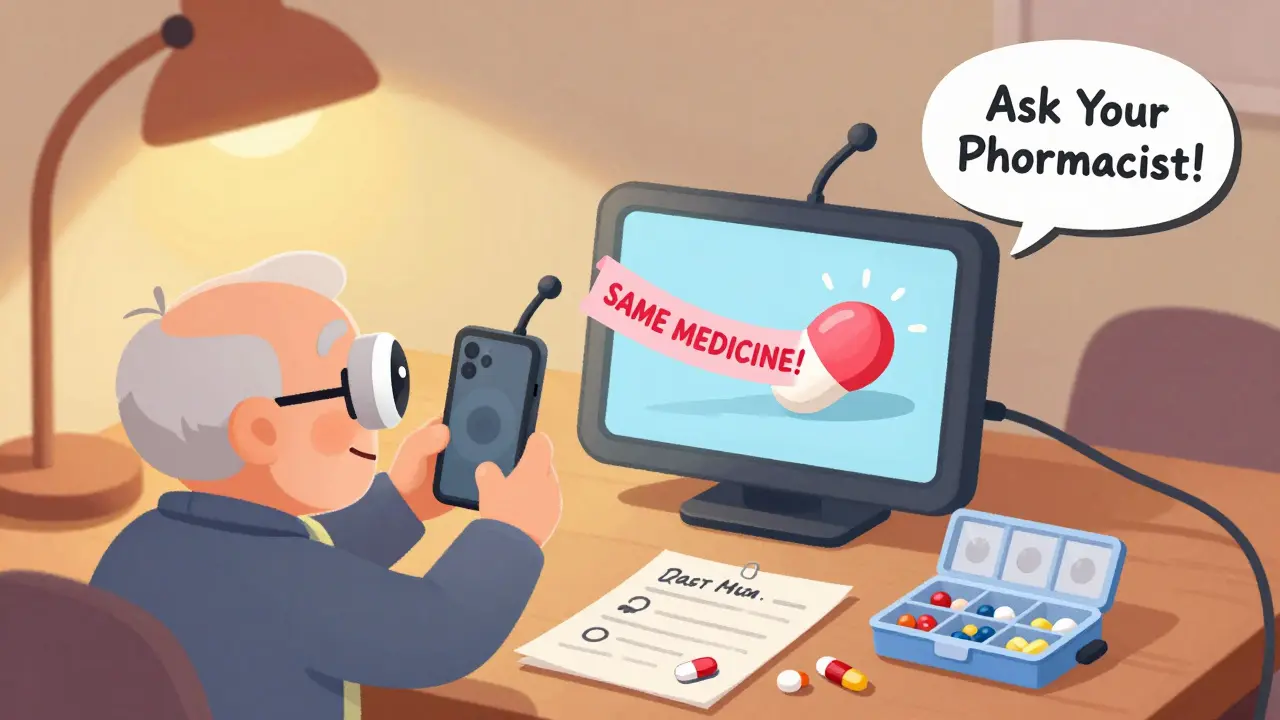
You don’t have to guess or worry every time you refill. Here’s what works:- Take a photo of your pill when you first get it. Keep it in your phone. If the next refill looks different, pull up the photo and compare. A Johns Hopkins study showed this reduces errors by 27% in seniors.
- Ask your pharmacist for the manufacturer name. Write it down. If you get the same one every time, you’ll get the same pill. Not all insurers guarantee this - but it’s worth asking.
- Use a pill organizer with labeled compartments. Even if the pill changes, putting it in the right slot helps avoid mix-ups.
- Don’t assume. If it looks different, don’t just take it. Call your pharmacist. Ask: "Is this the same medicine?" They’ll confirm it’s bioequivalent - and explain the change.
- Keep a written list of all your meds: name, dose, manufacturer, color, shape, and marking. Update it every time you get a new refill.
Why This Isn’t Going Away - But It Might Get Better
The FDA has recognized the problem. In 2016, they issued guidance asking generic manufacturers to consider appearance when designing new pills. In 2024, they’re working on formal "Visual Medication Equivalence Standards" - meaning future generics might be designed to look more like the brand, especially for high-risk drugs like blood thinners or seizure meds. But legal barriers remain. Courts have repeatedly upheld trademark rights for pill appearance. In 2022, a federal court ruled that even if a generic looks almost identical to the brand, it can’t copy the exact color or shape if it’s trademarked. That means change is inevitable - but awareness is growing. Some European countries require generics to match brand appearance when possible. In the U.S., that’s not the norm - yet. But industry analysts predict that by 2028, 75% of new generic approvals for chronic conditions will include voluntary appearance standardization.Bottom Line: Your Pill Can Change - But You Don’t Have to Panic
Generic drugs save billions of dollars every year. They’re safe. They work. But their looks? They’re not guaranteed. The difference between brand and generic isn’t in the medicine - it’s in the packaging. The key isn’t to fight the system. It’s to adapt to it. Take a photo. Ask questions. Keep a list. Talk to your pharmacist. These small steps turn confusion into control. And that’s what matters most - not whether your pill is pink or white, but whether you’re taking the right one, every day.Why does my generic pill look different every time I refill?
Different manufacturers make the same generic drug, and U.S. trademark laws require each version to look different from the brand-name pill and from other generics. So when your pharmacy switches suppliers, your pill’s color, shape, or marking may change - even though the active ingredient is identical.
Are generic pills just as effective as brand-name ones?
Yes. The FDA requires generic drugs to have the same active ingredient, strength, dosage form, and absorption rate as the brand-name version. They must pass strict bioequivalence tests to prove they work the same way in your body. The only differences are in inactive ingredients - like dyes or fillers - which affect appearance, not effectiveness.
Can changing pill appearance make me sick?
The pill change itself won’t make you sick. But if you stop taking your medication because you don’t recognize it, that can lead to serious health problems - especially for conditions like high blood pressure, diabetes, or heart disease. Studies show patients are 34% more likely to quit their meds after a pill appearance change.
Should I ask my doctor to prescribe only one brand of generic?
You can ask your pharmacist or insurer to try to keep you on the same manufacturer. But most insurance plans don’t guarantee this - they choose the cheapest option. If consistency matters to you, ask for a "non-substitution" note on your prescription. It may cost more, but it can reduce confusion and improve adherence.
What should I do if I accidentally take the wrong pill because it looked different?
Stop taking it immediately. Call your pharmacist or doctor. Don’t assume it’s harmless just because the name matches. If you’re unsure, bring the pill to the pharmacy - they can identify it using drug databases. If you took a wrong dose or mixed medications, seek medical advice right away.
Next Steps: Protect Yourself Before the Next Refill
Don’t wait for a scary surprise. Right now, open your medicine cabinet. Take a photo of each pill you take - front and back. Save them in a folder labeled "My Medications." Add the name, dose, and manufacturer. Do this for every prescription, even if you’ve been taking it for years. When you refill next time, compare the new pill to your photo. If it looks different, call your pharmacist before you take it. That one habit can prevent a dangerous mistake - and keep you in control of your health.Comments (13)
-
vivek kumar January 17, 2026
Let’s be real-this isn’t just a pill issue. It’s a systemic failure of patient-centered design. The FDA allows this because trademark law prioritizes corporate branding over public health. We’re talking about elderly people with dementia, diabetics checking their meds in dim light, and single parents juggling 12 pills a day. And instead of fixing it, we let lawyers decide what a pill should look like. That’s not innovation. That’s negligence dressed up as intellectual property.
Meanwhile, other countries like the UK and Germany mandate visual consistency for generics. Why? Because they understand that adherence isn’t just about science-it’s about psychology. A pill that looks familiar is a pill you’re more likely to take. Simple.
So yes, take photos. Yes, call your pharmacist. But don’t be fooled-this isn’t your fault. It’s the system’s. And until we reform trademark laws to exempt life-saving medications, we’re all just playing whack-a-mole with confusion.

-
waneta rozwan January 19, 2026
OH MY GOD. I thought I was losing my mind. Last month I got a tiny white oval with ‘107’ on it for my metformin. My old one was a big blue oblong with ‘M 52’. I didn’t take it for four days. I was convinced I’d been given a weight-loss pill or something. I cried. I called my daughter. I Googled it until my eyes burned. Turns out it’s the same damn drug. But why? WHY? Who thought this was a good idea? Are we testing how many times we can traumatize people before they give up on their meds?
I’m 58. I don’t have time for this. My brain is already full of appointments, bills, and remembering to water my plants. Now I have to be a pharmaceutical detective too? This is abuse.

-
Joie Cregin January 20, 2026
Ugh, I feel you. I’ve been there. My grandma used to stare at her pills like they were alien artifacts. She’d say, ‘This one’s not my friend anymore.’ It broke my heart.
But here’s the weird silver lining-since I started taking photos of every new bottle and labeling them with the manufacturer name, it’s been way less stressful. I even made a little Google folder called ‘Pill Friends’ with pictures and notes. Now when the color changes, I just smile and say, ‘Oh hey, you’re the new guy!’ It sounds silly, but it takes the fear out of it.
Also, pharmacists? They’re the real MVPs. My local one remembers my pills by name now. She even printed out a little card with all my meds and their looks. I keep it in my wallet. Small things, big difference.

-
Melodie Lesesne January 20, 2026
I love that you mentioned the pill organizer! I got one with the big clear compartments and labeled each one with the time of day and a tiny sticker. Even if the pill changes, I know it belongs in the ‘morning heart pill’ slot. It’s like a visual checklist.
Also, I started asking for the same manufacturer every time. My insurance hates it, but I told them I’d pay the extra $3 if it meant I didn’t have to panic every refill. Worth it. My anxiety dropped 80%.
And yes, take the damn photo. Your future self will hug you.

-
brooke wright January 20, 2026
Wait, so you’re telling me the government lets drug companies trademark the color of a pill? Like, if Pfizer owns the color pink for Lipitor, then no other company can use it, even if it’s the same exact chemical? That’s insane. Who came up with this? A marketing intern who thought ‘branding’ was more important than ‘survival’?
And now people are skipping doses because they don’t recognize their own medicine? This isn’t a healthcare issue. This is a horror movie. I’m calling my senator. This is a civil rights violation.

-
kanchan tiwari January 21, 2026
THIS IS A BIG PHARMA COVER-UP. You think it’s just about trademarks? NO. They’re doing this on purpose. Why? So you get confused. So you stop taking your meds. So you go back to the brand-name version. So they can charge you $500 a month again. It’s a trap. The FDA? They’re in on it. The doctors? Paid off. The pharmacists? Scared to speak up.
Look at the numbers-34% more people quit their meds after a change? That’s not coincidence. That’s calculated. They want you to think generics are unreliable. So you’ll pay more. So they make more profit. Wake up. This isn’t medicine. It’s a scam.

-
Bobbi-Marie Nova January 22, 2026
So… we’re all just supposed to become pill ID specialists now? Cool. I’ll add ‘Recognizing Generic Metformin Variants’ to my resume.
Also, I just Googled ‘what does M 52 mean on a pill’ and it brought me to a PDF from 2011. No one updated it. No one cares. I’m not even mad. I’m just… impressed by how perfectly this reflects the entire U.S. healthcare system: technically functional, emotionally abandoned.
Anyway, I took a photo. I labeled it. I cried. Then I made tea. We’re all just doing our best.

-
john Mccoskey January 23, 2026
Let’s deconstruct this systematically. The Hatch-Waxman Act was designed to increase competition and lower prices. It succeeded. But the unintended consequence is a fragmentation of patient identity with medication. This is a classic case of market efficiency sacrificing cognitive load reduction.
The FDA’s bioequivalence standards are statistically valid, yes. But human cognition is not a controlled trial. The brain relies on heuristics-visual cues, tactile feedback, routine. When those are disrupted, adherence drops. This isn’t anecdotal. It’s behavioral economics.
Furthermore, the legal framework prioritizes intellectual property over public health outcomes. That’s a policy failure, not a market failure. The solution isn’t more patient education-it’s regulatory reform. Trademark law should be exempted for pharmaceuticals with high-risk therapeutic indices. Until then, we’re just putting Band-Aids on a hemorrhage.

-
Ryan Hutchison January 25, 2026
Look, I get it. But this isn’t some conspiracy. It’s capitalism. America doesn’t do ‘one size fits all’ because we don’t believe in it. If you want consistency, pay for the brand. If you want cheap, deal with the fact that your pill looks different. That’s the trade-off.
And honestly? If you can’t tell the difference between a white oval and a blue pill, maybe you’re the problem. I’ve been on generics for 15 years. I read the label. I check the imprint. I don’t panic. You want stability? Take responsibility. Stop blaming the system and start managing your meds like an adult.

-
Samyak Shertok January 25, 2026
Oh, so now we’re supposed to be pharmaceutical archaeologists? ‘Ah yes, this 2024 metformin is from Teva, so it’s the one with the faint scratch on the left side. Last month was Mylan, which had a slightly larger diameter.’
Meanwhile, in India, generics are made by 300 companies and everyone just takes them. No photos. No apps. No panic. Why? Because they don’t care about trademarked pill aesthetics. The active ingredient is the same. End of story.
So why does America need a 12-step program to swallow a tablet? Because we turned healthcare into a reality TV show. And the pill? It’s just the prop.

-
Stephen Tulloch January 26, 2026
Look, I’m not gonna lie-I’ve got a whole Pinterest board called ‘Pill Aesthetics: A Visual Archive of My Existence.’ 📸💊
I’ve documented every single generic change since 2020. I even made a little Instagram story for each refill. My friends think I’m weird. My pharmacist thinks I’m a genius. My therapist? She says it’s a coping mechanism. I say it’s art.
Also, I now only take generics from the same manufacturer. I pay $5 more per script. Worth it. My mental health is not a cost center. 🤷♂️✨

-
Nick Cole January 27, 2026
I’m a nurse. I see this every day. Elderly patients, trembling hands, confused eyes. They hold up the pill and say, ‘Is this the one?’
It’s not about being paranoid. It’s about trust. When your body is already fragile, the last thing you need is a pill that looks like a different drug.
I tell my patients: take the photo. Write the name. Ask the pharmacist. Don’t be embarrassed. We’ve all been there. You’re not crazy. The system is broken. But you? You’re doing everything right.

-
Riya Katyal January 28, 2026
Wow. So you’re telling me I need to take a photo of my pill… and label it… and maybe even pay more to get the same one? How about we just make the damn pills look the same? Is that too much to ask?
Meanwhile, my cousin in Canada gets the exact same pill every time. Same color. Same shape. Same imprint. No drama. Just medicine.
Oh right. We’re America. We turn healthcare into a puzzle. And the instructions? Lost in the mail.
