

When it comes to losing weight or keeping it off, most people focus on cutting calories, counting macros, or trying the latest diet trend. But one of the most effective, science-backed tools for weight control is hiding in plain sight: fiber. Not all fiber is the same, though. The difference between soluble and insoluble fiber isn’t just technical-it changes how your body handles hunger, fat storage, and digestion. And if you’re trying to manage your weight, knowing which kind does what can make all the difference.
What Exactly Is Fiber?
Fiber is a type of carbohydrate your body can’t break down. Unlike sugar or starch, it doesn’t turn into energy. Instead, it moves through your digestive system mostly intact. That’s why it’s so powerful for weight control-it doesn’t spike your blood sugar, and it fills you up without adding calories. There are two main types: soluble and insoluble. Soluble fiber dissolves in water and turns into a gel. Insoluble fiber doesn’t dissolve at all. It’s like roughage-think of it as the plant’s skeleton. Both are important, but for weight management, soluble fiber is the star.Soluble Fiber: The Weight Loss Powerhouse
Soluble fiber is the reason you feel full longer after eating oatmeal, beans, or apples. When it hits your stomach, it absorbs water and swells up, forming a thick gel. This gel slows down how fast your stomach empties. Studies show it can delay gastric emptying by 25-30%. That means your body takes longer to digest food, and you don’t feel hungry again for hours. But it doesn’t stop there. That gel also acts like a sponge for fats and sugars. Research from the PMC10253086 study found soluble fiber can block 15-20% of dietary fat from being absorbed. That’s not a small number-it adds up over time. If you eat 1,000 extra calories a week from snacks or fried foods, soluble fiber can help your body naturally pass off 150-200 of them. Viscous soluble fibers-like psyllium, beta-glucans, glucomannan, and pectin-are especially effective. Psyllium husk, for example, can absorb up to 50 times its weight in water. One study showed people taking psyllium supplements lost 3.2% of their body weight in eight weeks, compared to just 1.1% in the placebo group. That’s not magic-it’s physics and biology working together. Soluble fiber also talks to your hormones. It boosts peptide YY and lowers ghrelin, the hunger hormone. A 2022 interview with Dr. David Ludwig from Harvard explained it simply: “These fibers tell your brain, ‘You’re done eating.’”Insoluble Fiber: The Digestive Supporter
Insoluble fiber doesn’t form a gel. It stays rigid as it moves through your gut. Think of it like a broom-it sweeps things along. It adds bulk to stool and speeds up transit time by 24-48 hours. That’s why whole grains, bran, nuts, and vegetables are great for preventing constipation. But when it comes to weight loss? Its role is indirect. It doesn’t reduce appetite or block fat absorption. It doesn’t slow digestion. It doesn’t affect your hormones. What it does do is keep your digestive tract running smoothly. And that matters. If you’re bloated, backed up, or uncomfortable, you’re more likely to reach for quick-fix snacks. Insoluble fiber helps you feel physically better, which makes it easier to stick to healthy habits. It also feeds your good gut bacteria, even if it doesn’t dissolve. Those bacteria turn fiber into short-chain fatty acids that help regulate metabolism and reduce inflammation-both linked to obesity. So while it’s not the main player in weight loss, it’s the essential backup.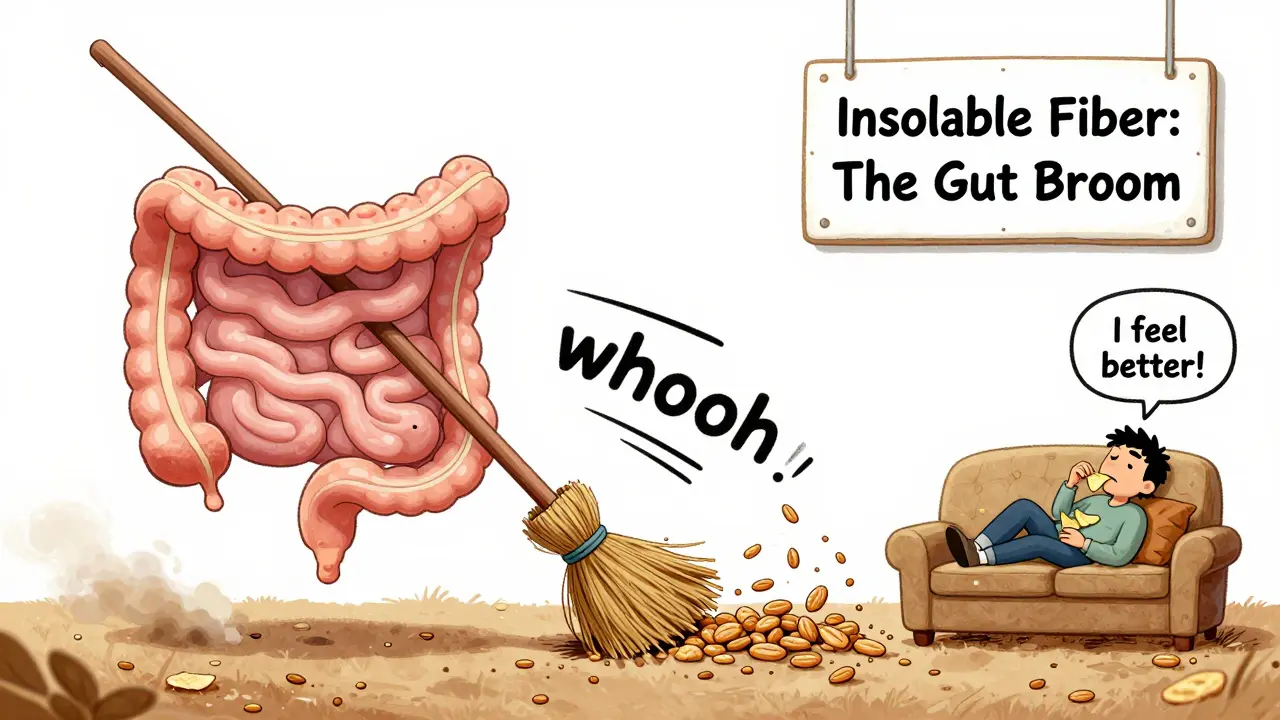
How Much Do You Really Need?
The Mayo Clinic says adults need 25-38 grams of total fiber per day. But here’s the catch: most Americans get less than half that. Only 5% meet the minimum. For weight control, you need at least 10-15 grams of soluble fiber daily. That’s not hard if you’re eating whole foods. One medium apple has 2.4 grams of fiber-71% of it soluble. Half a cup of cooked lentils gives you 7.8 grams, with most being soluble. One tablespoon of psyllium husk powder adds 5 grams of pure soluble fiber. A 2023 analysis of 62 studies found that eating just 7 grams of viscous soluble fiber per day led to an average weight loss of 0.75 pounds and a 0.25-inch reduction in waist size after 10 weeks. That’s not dramatic-but it’s consistent. And when you combine it with a healthy diet, the results compound.Whole Foods vs. Supplements
You can buy fiber supplements-psyllium, inulin, glucomannan-but the research is clear: whole foods win. Why? Because fiber doesn’t work alone. Apples come with vitamin C, antioxidants, and natural sugars that help your body process the fiber better. Oats have magnesium, B vitamins, and healthy fats. Beans have protein and iron. These all work together to improve satiety, reduce cravings, and stabilize blood sugar. Supplements can help if you’re struggling to hit your numbers, but they’re not magic pills. A 2023 Healthline survey of 1,245 people found that 63% of those who successfully lost weight with fiber did it through food-not pills. The most effective foods? Beans and lentils (28%), oats (22%), and apples (19%). And here’s the downside of supplements: they often cause bloating, gas, or constipation if you don’t drink enough water. The PMC study recommends 16-24 ounces of water for every 5 grams of supplemental fiber. Skip that, and you’ll feel worse, not better.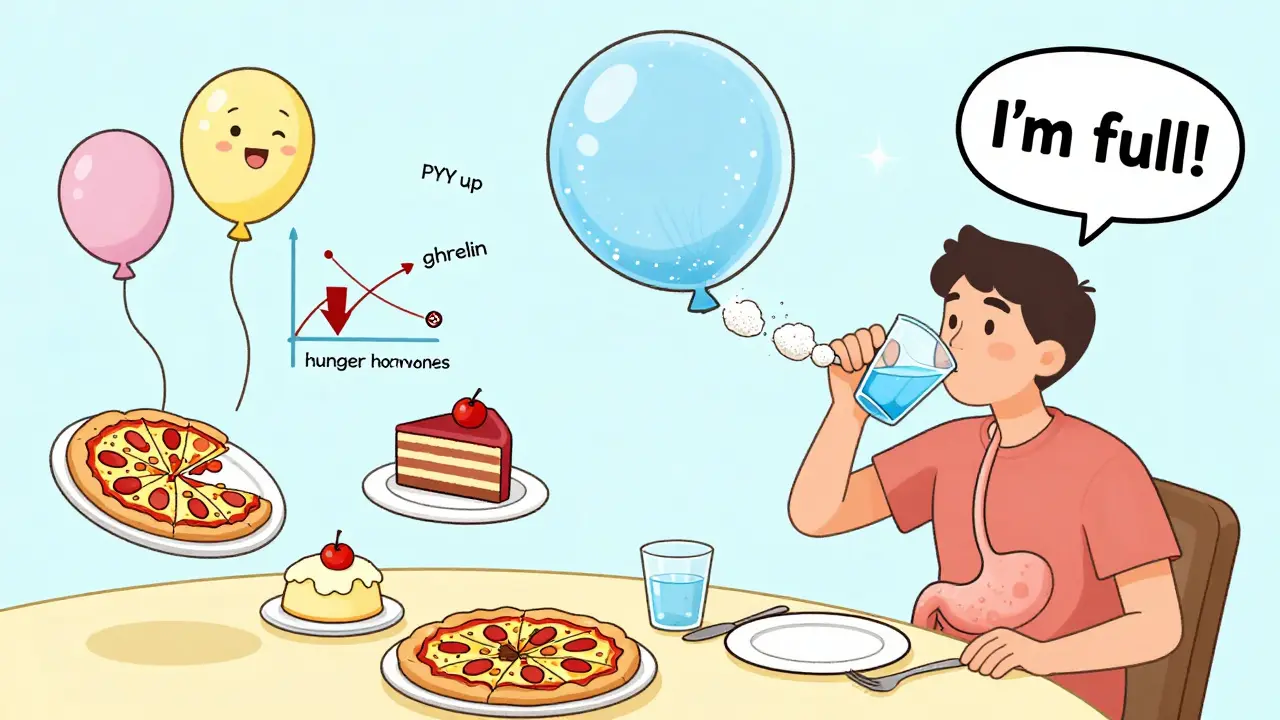
How to Use Fiber for Weight Control-Practically
You don’t need to overhaul your diet. Start small.- Start your day with oatmeal. Add chia seeds or ground flaxseed. That’s 8-10 grams of soluble fiber before 9 a.m.
- Swap white rice for barley or quinoa. Barley has 6 grams of fiber per cup-most of it soluble.
- Snack on an apple with almond butter. The pectin in the apple plus the fat in the butter keeps you full for hours.
- Before dinner, drink a glass of water with 1 teaspoon of psyllium husk. It’s a simple trick that reduces calorie intake by 10-15% at that meal.
- Don’t jump from 10 grams to 30 grams overnight. Increase by 5 grams per week. Most side effects come from going too fast.
What Doesn’t Work
Don’t expect fiber to do all the work. It’s not a cure. You can’t eat a bag of psyllium and still eat pizza every night and lose weight. Fiber works best when it’s part of a pattern: eating more plants, drinking water, sleeping well, and moving regularly. Also, avoid trendy fiber powders with added sugars, flavors, or artificial sweeteners. They defeat the purpose. Stick to plain psyllium, glucomannan, or inulin without additives. And don’t rely on fiber bars or fortified cereals. They often have 1-2 grams of fiber and 15 grams of sugar. You’re better off with a banana.The Bottom Line
Soluble fiber is your best friend for weight control. It slows digestion, reduces fat absorption, lowers hunger hormones, and helps you eat less without trying. Insoluble fiber keeps your gut healthy, which supports long-term success. You don’t need fancy supplements. You don’t need to track every gram. Just eat more beans, oats, apples, lentils, and chia seeds. Add a little psyllium if you need a boost. Drink water. Go slow. And let your body do the rest.People who eat at least 25 grams of fiber daily have 27% lower rates of obesity, according to NHANES data. That’s not a coincidence. It’s biology.
Which type of fiber is better for weight loss: soluble or insoluble?
Soluble fiber is far more effective for weight loss. It forms a gel that slows digestion, reduces appetite, and blocks some fat absorption. Insoluble fiber helps with digestion and prevents constipation but doesn’t directly affect hunger or calorie intake.
How much soluble fiber should I eat daily to lose weight?
Aim for 10-15 grams of soluble fiber per day. Studies show that consuming 7 grams of viscous soluble fiber (like psyllium or beta-glucans) daily leads to an average weight loss of 0.75 pounds and a 0.25-inch reduction in waist size over 10 weeks.
Can fiber supplements help with weight loss?
Yes-but not as well as whole foods. Psyllium husk supplements have shown measurable weight loss in studies, but whole foods like beans, oats, and apples provide more nutrients, better satiety, and fewer side effects. Supplements work best when used to fill gaps, not replace meals.
Why do I get bloated when I eat more fiber?
Bloating usually happens when you increase fiber too quickly or don’t drink enough water. Your gut bacteria need time to adjust. Increase fiber by only 5 grams per week and drink at least 16-24 ounces of water for every 5 grams of supplemental fiber.
What are the best whole food sources of soluble fiber for weight loss?
The top sources are lentils and beans (7-8g per half cup), oats (4g per cup), chia seeds (5g per tablespoon), apples (2.4g per medium fruit), and psyllium husk (5g per teaspoon). These foods naturally combine soluble fiber with protein, healthy fats, and antioxidants for better satiety and metabolic benefits.
Start with one change: swap your morning toast for oatmeal. Add a tablespoon of chia seeds. Drink a glass of water before lunch. In a few weeks, you’ll notice you’re not as hungry between meals. That’s fiber doing its job-quietly, consistently, and without hype.
Comments (8)
-
Blessing Ogboso March 22, 2026
As someone raised in Nigeria where we’ve been eating beans, yams, and guinea corn for generations, I’m always amused by how Western diets treat fiber like some new-age miracle. My grandma didn’t need a Harvard study to tell her that soaking beans overnight and eating them with pap (fermented corn porridge) kept you full till sundown. Soluble fiber? We just called it ‘food that doesn’t let you get hungry too fast.’
And honestly? The idea that you need supplements is kind of sad. In my village, we didn’t have psyllium husk-we had ugba (fermented locust beans), okra stew, and unpeeled plantains. No labels. No science papers. Just food that worked because it was whole.
Also, the 3:1 insoluble-to-soluble ratio? That’s just how traditional African diets naturally balance. No one counted grams. We just ate what was in season, what grew nearby, and what made our bellies feel calm. Maybe the real lesson here isn’t about fiber types-it’s about trusting ancestral food wisdom over corporate nutrition trends.
And yes, I’ve tried the psyllium supplement. Gave me bloating worse than jollof rice with too much pepper. Stick to real food. Your gut will thank you.

-
Zola Parker March 23, 2026
Okay but… what if fiber is just a placebo for people who hate willpower? 🤔
I mean, if you’re eating oatmeal because ‘it slows digestion’ but still bingeing on pizza at midnight… are you really ‘using fiber’ or just performing wellness? 😅
Also, ‘soluble fiber blocks 15-20% of fat absorption’ sounds like a magic trick. Where’s the lab video? Did they feed people oatmeal and then weigh the poop? 🤨
Don’t get me wrong-I eat apples. But let’s not pretend fiber is a weight-loss spell. It’s a tool. Like a hammer. Doesn’t build the house by itself. 🛠️

-
florence matthews March 23, 2026
I love how this post doesn’t just say ‘eat more veggies’ but actually explains the why. 🌱
As someone who struggled with IBS and bloating for years, I didn’t realize how much my ‘fiber problem’ was actually a ‘water and speed problem.’ Started with 5g extra fiber per week + 3L water daily. No supplements. Just lentils, apples, and flax in my smoothies.
After 8 weeks? Less bloating, less cravings, and I stopped snacking after dinner. Not because I ‘tried harder’-because my body stopped screaming for sugar.
Also, the part about hormones? YES. It’s not just ‘fullness.’ It’s your brain finally getting the signal that you’re not starving. That’s huge.
And no, I don’t count grams. I just make sure my plate has at least one ‘brown thing’-oats, beans, whole grain. It’s lazy, but it works. 😊

-
Mihir Patel March 23, 2026
fr fr fiber is just the new keto 😂
people act like psyllium is some sacred herb like its gonna cure their 3am snack habit. bro i ate 3 bags of chia seeds last week and still ordered fries. its not magic its just… fiber.
also who the hell has time to measure 7g of viscous fiber? my grandma just ate rice and beans and lived to 92. no supplements. no science. just life.
also typo: ‘peptide YY’ i thought it was ‘peptide YYY’ like a meme. lol
stop overcomplicating food. eat real stuff. drink water. move. done.

-
Kevin Y. March 25, 2026
Thank you for this incredibly well-researched and thoughtful breakdown. I’ve been recommending fiber to clients for years, but never with this level of nuance. The distinction between soluble and insoluble is so often blurred in popular media, and your explanation of the physiological mechanisms-gastric emptying delay, fat absorption inhibition, and hormonal signaling-is both accurate and accessible.
I especially appreciate the emphasis on whole foods over supplements. As a nutrition professional, I see too many people relying on fiber powders while maintaining poor dietary patterns. The synergy of fiber with micronutrients, polyphenols, and healthy fats is irreplaceable.
One small addition: fermented fiber-rich foods like sourdough or tempeh may enhance gut microbiome adaptation, further improving tolerance. Just a thought!
Keep sharing science like this. It’s desperately needed.

-
Raphael Schwartz March 26, 2026
fiber won't save your lazy ass. eat less. move more. done.
you think i care about psyllium? i care about my waistline. if i eat a bag of beans and still eat donuts, i'm still fat. simple.
stop pretending science fixes bad habits. it doesn't. discipline does.
also typo: 'peptide YY' lol what is this, a sci-fi novel?
just say no to junk. that's the real fiber.

-
Marissa Staples March 27, 2026
I’ve been thinking about this a lot lately-not as a weight-loss strategy, but as a way to reconnect with eating. There’s something deeply calming about the rhythm of fiber: how it doesn’t rush you, how it doesn’t spike you, how it just… sits with you.
I used to eat like I was running from myself. Now? I eat an apple slowly. I chew. I notice the texture. I don’t rush to the next bite.
It’s not about losing weight. It’s about learning to be with food instead of fighting it.
Maybe that’s why it works. Not because of chemistry. But because it forces you to slow down. And in a world that never stops, that might be the real miracle.
Also-I’m 37. I’ve lost 12 pounds in 6 months without trying. Just by eating like I’m not in a race. Weird, right?

-
Rachele Tycksen March 28, 2026
lol i read this whole thing and still ate a bag of chips.
but hey, at least now i know why i feel gross after psyllium. thanks? 😴
also i tried the oatmeal thing. it tasted like cardboard. i miss toast.
