
Chemotherapy isn't just one drug. It's a whole system of powerful medicines designed to attack cancer by targeting cells that divide fast. That’s the key. Cancer cells multiply quickly, and chemotherapy exploits that weakness. But here’s the catch: some of your healthy cells divide fast too - like those in your hair follicles, gut lining, and bone marrow. That’s why chemotherapy works so well against tumors, and why it also causes side effects that can feel just as harsh as the disease itself.
How Chemotherapy Drugs Actually Kill Cancer Cells
There are over 100 different chemotherapy drugs, grouped into six main classes, each with a different way of stopping cancer from growing. They don’t all work the same way, but they all aim to interrupt the cell division process.
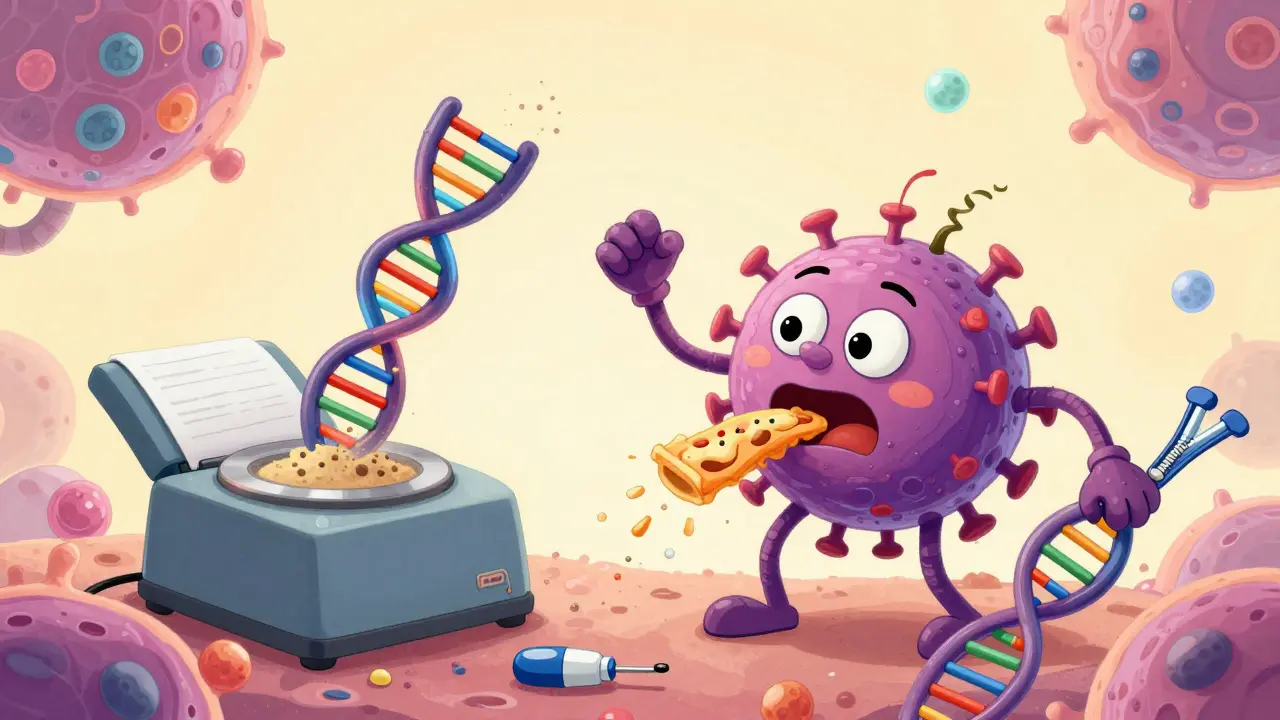
Alkylating agents like cyclophosphamide damage DNA directly by sticking chemical groups onto it. Think of it like throwing sand into a copy machine - the cell can’t read its own blueprint anymore, so it can’t divide. These drugs are often used for lymphomas and leukemias.
Antimetabolites, such as 5-fluorouracil and capecitabine, are imposters. They look like the building blocks cells need to make DNA and RNA, but once they’re inside, they sabotage the process. Cancer cells gobble them up, thinking they’re food, and then they die from internal chaos. These are common in colorectal and breast cancers.
Anthracyclines like doxorubicin work in two ways: they slip between the DNA strands like a zipper pull, and they also block an enzyme called topoisomerase II that’s needed to untangle DNA during division. This causes massive breaks in the genetic code. Doxorubicin is used for breast cancer, lymphoma, and sarcomas - but it can be tough on the heart, so doctors carefully track lifetime doses.
Plant alkaloids like vincristine and paclitaxel attack the cell’s skeleton. Microtubules are like tiny train tracks inside the cell that help pull chromosomes apart during division. Vincristine stops them from forming. Paclitaxel does the opposite - it freezes them in place. Either way, the cell gets stuck mid-division and dies. Paclitaxel is a staple for breast and ovarian cancers, often given every three weeks at 175 mg/m².
Topoisomerase inhibitors like etoposide also target that enzyme, but in a different spot. They trap the enzyme on the DNA, turning it into a roadblock. When the cell tries to move past it, the DNA snaps.
Most chemotherapy is given through an IV - about 65% of treatments. Some, like capecitabine, come as pills you take at home. Others go directly into the spinal fluid, abdomen, or even arteries feeding the tumor. The route depends on where the cancer is and which drug you’re getting.
Why Side Effects Happen - And Why They’re Not Always Avoidable
Chemotherapy doesn’t have a GPS. It can’t tell the difference between a cancer cell and a fast-dividing healthy cell. That’s why side effects are so common. It’s not a mistake. It’s the cost of the strategy.
Fatigue is the most reported side effect - 82% of patients say it hits them hard. It’s not just being tired. It’s a deep, bone-weary exhaustion that sleep doesn’t fix. This comes from your bone marrow struggling to make new red blood cells, plus your body using energy to repair damage from the drugs.
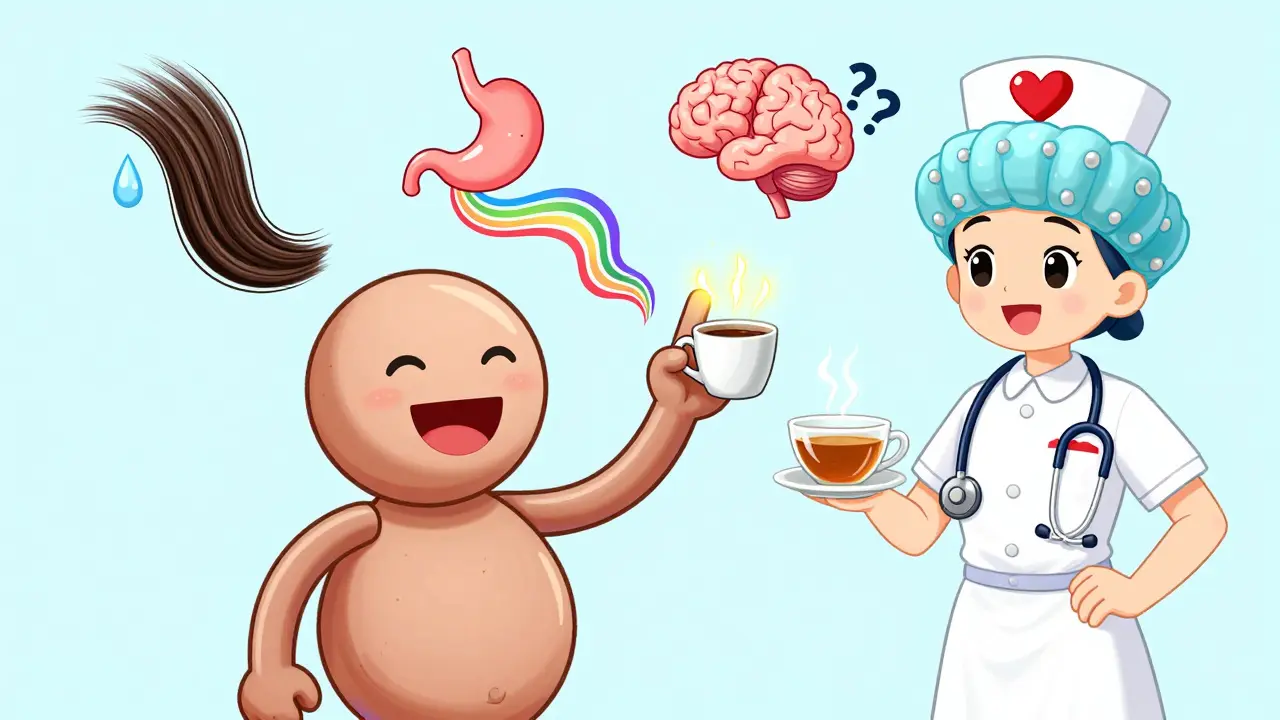
Hair loss happens because hair follicles are among the fastest-growing cells in your body. Drugs like paclitaxel and doxorubicin wipe them out. Scalp cooling caps can reduce hair loss by up to 60% in breast cancer patients using taxanes, according to a 2022 JAMA study. But they’re not perfect, and they’re not always covered by insurance.
Nausea used to be a nightmare. In the 1980s, 70-80% of patients on strong chemo got severe vomiting. Now, thanks to drugs like ondansetron and aprepitant, that’s dropped to 10-20%. But here’s the twist: the nausea often comes back 24 to 72 hours after treatment - the delayed kind. And for 68% of patients, the meds help with the first wave, but not the second. Many patients say they feel fine right after the infusion, then crash later.
Neuropathy - tingling, numbness, or burning in hands and feet - affects 30-40% of people on platinum drugs or taxanes. It can be mild, or it can last for years. Some patients lose the ability to button shirts or hold a coffee cup. Doctors tell you to report it early. Once nerve damage is permanent, there’s no undo button.
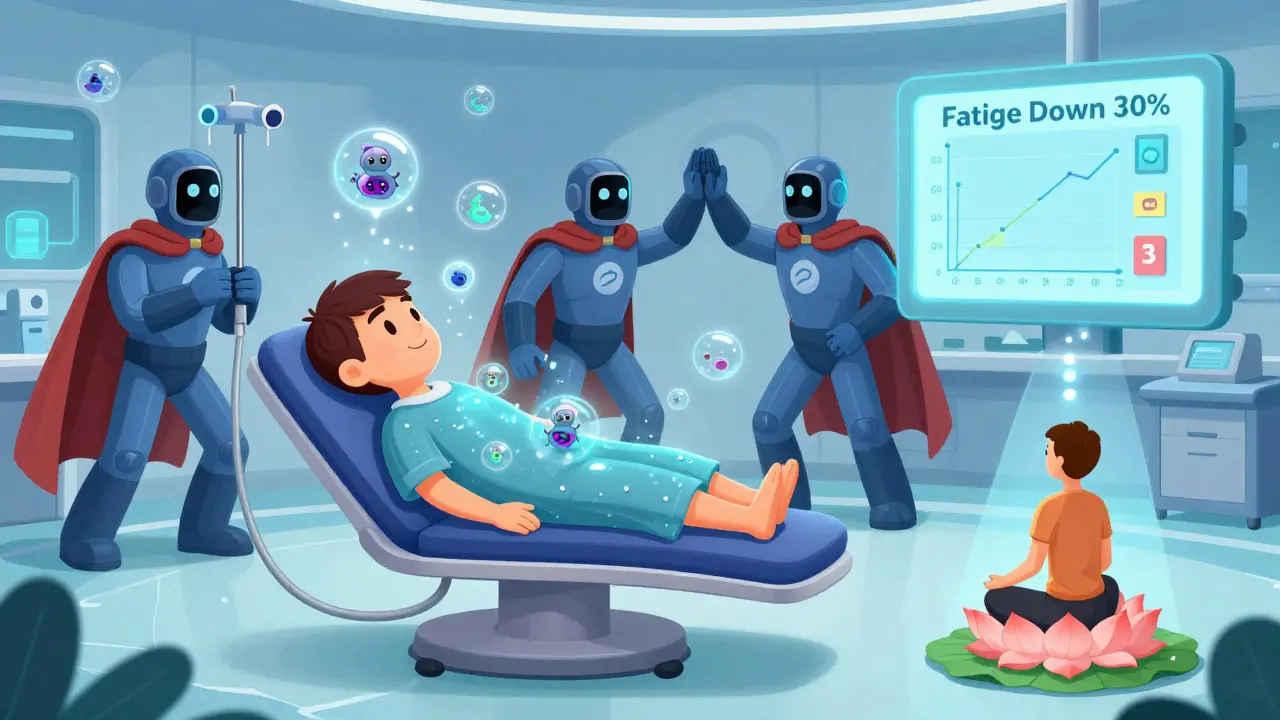
“Chemo brain” is real. About 75% of patients report trouble focusing, remembering names, or finding words during treatment. A third still feel it six months later. Studies show meditation apps like Calm or Headspace, used 20 minutes a day, can cut cognitive complaints by 30-40%. Exercise helps too - 30 minutes of walking or cycling daily reduces fatigue by 25-30% across 17 clinical trials.
What You Can Do to Manage Side Effects
Managing chemo isn’t about avoiding side effects - it’s about controlling them so you can keep living.
For nausea: Eat small, bland meals. Toast, bananas, rice, and crackers are your friends. Avoid strong smells. Drink ginger tea or suck on hard candies. Some patients swear by ginger supplements, but talk to your oncologist first - they can interact with other drugs.
For fatigue: Don’t try to power through. Rest when you need to. But don’t stay in bed all day. Light movement - even a short walk - helps your body make more energy. A 2023 American Cancer Society review found that patients who moved daily had better sleep, less depression, and more energy overall.
For neuropathy: Wear gloves when washing dishes or handling cold items. Check your feet daily for cuts you might not feel. Avoid tight shoes. If your fingers go numb, tell your team. They might lower the dose or switch drugs before it gets worse.
For mouth sores: Rinse with salt water or baking soda solution. Avoid alcohol-based mouthwashes. Use a soft toothbrush. Some patients benefit from cryotherapy - sucking on ice chips during the infusion - which can reduce mouth sores in certain treatments.
For low blood counts: Watch for fever. A temperature of 100.4°F or higher during chemo is an emergency. It could mean your white blood cell count is dangerously low. Call your oncologist immediately - don’t wait. You might need antibiotics or a growth shot to boost your immune system.
Chemotherapy Today: Still Essential, But Changing
Chemotherapy isn’t going away. In fact, 6.2 million Americans get it every year. It’s still the first-line treatment for 78% of blood cancers like leukemia and lymphoma. For ovarian cancer, it’s used in 95% of cases. Even in breast cancer, where targeted therapies have taken over for some subtypes, chemo is still part of the plan for most patients.
But it’s evolving. New drugs like trilaciclib (approved by the FDA in 2023) protect bone marrow during chemo, reducing the need for blood transfusions and growth shots. Scalp cooling is becoming more common. Medical cannabis is being studied for neuropathy and nausea - early results show promise, with some patients reporting 55% less pain with CBD-THC blends.
Chemotherapy is also being combined with immunotherapy. Instead of choosing one or the other, doctors now mix them to get the best of both: chemo weakens the tumor, and immunotherapy helps the immune system finish the job. This combo is now standard for lung, bladder, and some breast cancers.
Still, chemo doesn’t work for every cancer. In slow-growing prostate cancer, hormone therapy does more with fewer side effects. In melanoma or lung cancer with specific gene mutations, targeted pills often come first. Chemo is no longer the only option - but it’s still a critical tool.
What Patients Really Say About Chemotherapy
On Reddit’s cancer forums, patients talk about the emotional toll more than the physical. One woman wrote: “I could handle the nausea and the fatigue. But when I couldn’t remember my daughter’s teacher’s name, I felt like I was losing myself.”
Another said: “The metallic taste ruined everything. Even water tasted like pennies. Nothing helped.”
But many also say the same thing: “The support teams made all the difference.” Nurses who check in after hours. Pharmacists who explain side effects in plain language. Social workers who help with transportation or bills.
By the third cycle, most patients know what works for them. They learn which foods help, which times of day they feel best, and when to call for help. It’s not easy. But with the right support, most people get through it - and come out stronger.
Is chemotherapy still used today, or are newer treatments replacing it?
Yes, chemotherapy is still widely used. It remains the first-line treatment for 78% of blood cancers like leukemia and lymphoma, and is used in 95% of ovarian cancer cases. While targeted therapies and immunotherapies have replaced chemo in some cancers - like metastatic breast cancer with HER2 or hormone receptor mutations - chemo is still essential for many others, especially when tumors lack specific targets. It’s often combined with newer treatments to improve results.
Do all chemotherapy drugs cause hair loss?
No. Hair loss depends on the drug. Alkylating agents like cyclophosphamide and anthracyclines like doxorubicin almost always cause it. Others, like capecitabine or certain platinum drugs, may cause thinning but not total loss. Drugs like paclitaxel cause complete hair loss in most patients. Scalp cooling systems can reduce hair loss by up to 60% for taxane-based regimens, but they’re not effective for all drugs or all patients.
Can chemotherapy cause permanent nerve damage?
Yes. Peripheral neuropathy from drugs like paclitaxel or oxaliplatin can become permanent in 5-10% of patients. Symptoms include numbness, tingling, or pain in hands and feet that doesn’t go away after treatment ends. Early reporting is key - if you notice symptoms, tell your doctor right away. They may lower your dose or switch drugs to prevent lasting damage.
Is it safe to take vitamins or supplements during chemotherapy?
It depends. Some supplements can interfere with how chemo works. High doses of antioxidants like vitamin C or E might reduce the effectiveness of some drugs. Vitamin D is a gray area - some studies link deficiency to worse neuropathy, but major oncology groups say there’s not enough proof to recommend routine supplementation. Always talk to your oncology team before taking anything - even fish oil or probiotics.
How long do chemotherapy side effects last?
Most side effects like nausea, fatigue, and low blood counts improve within weeks after the last treatment. But some linger. Fatigue can last 6-12 months. Chemo brain may persist for months or longer in 35% of patients. Neuropathy can be permanent in a small number of cases. Long-term effects depend on the drugs used, your age, and your overall health before treatment. Follow-up care is important to monitor and manage these issues.
Can you work while receiving chemotherapy?
Many people do, but it’s not easy. About 57% of working patients report chemo brain makes it harder to focus, remember tasks, or meet deadlines. Fatigue and nausea also play a role. Some adjust to part-time hours, work from home, or take medical leave. Others push through. There’s no right answer - it depends on your job, your treatment plan, and how your body responds. Communicate with your employer and consider accommodations under the ADA if needed.
Comments (8)
-
Jessica Salgado December 16, 2025
I still remember the first time I lost my hair. Not in a dramatic movie way-more like a quiet, devastating trickle into the sink. I stared at it for ten minutes, then just cried. No one tells you that the worst part isn’t the nausea or the fatigue. It’s the way your own body turns against you, and you can’t even blame it. It’s just doing its job. But damn, it hurts.
Then I got a scalp cooling cap. It felt like wearing a frozen helmet, but I kept it on for three hours straight. Lost maybe 40% of my hair. Not perfect, but enough to feel like I still had some control. If you’re on taxanes, ask your nurse about it. Even if insurance won’t cover it, it’s worth fighting for.

-
Steven Lavoie December 16, 2025
Chemotherapy remains one of the most precisely calibrated forms of medical warfare we have. The fact that we can target rapidly dividing cells with such specificity-while still managing to spare enough healthy tissue to keep people alive-is a triumph of pharmacology. That said, the collateral damage is not incidental; it’s inherent to the mechanism.
What’s often under-discussed is the metabolic burden. The liver and kidneys are working overtime to process these cytotoxic agents, which is why hydration and renal monitoring are non-negotiable. And while we celebrate new agents like trilaciclib, we must not forget the foundational role of supportive care: antiemetics, G-CSF, and nutritional support. These are not adjuncts-they are the backbone of tolerability.

-
Anu radha December 18, 2025
My sister went through chemo last year. She said the worst was the taste-everything tasted like metal. Even water. She stopped eating for days. Then she tried sucking on lemon drops and it helped a little. She also said walking every day, even just around the house, made her feel less tired. I wish more people knew this. It’s not magic, but it helps.

-
Jigar shah December 19, 2025
Interesting breakdown of drug classes. I’m curious about the pharmacokinetics of capecitabine versus 5-FU. The oral prodrug conversion via thymidine phosphorylase in tumor tissue is a clever mechanism-does this confer any real advantage in terms of tumor selectivity, or is it mostly for patient convenience? Also, how does the dosing schedule (e.g., 175 mg/m² every 3 weeks) correlate with pharmacodynamic half-life and cell cycle specificity? Would appreciate peer-reviewed sources if available.

-
Sachin Bhorde December 20, 2025
Bro, chemo’s wild. I’ve seen it up close-my cousin did 12 cycles for stage 3 colon cancer. Doc gave him capecitabine + oxaliplatin. Dude lost all his hair, got neuropathy so bad he dropped his coffee cup every morning. But he kept biking 3 miles every day. Said it kept his mind from spiraling.
And yeah, the ‘chemo brain’? Real. He forgot his own birthday. But he started using voice memos on his phone to remember stuff. Also, ginger chews. Don’t knock ‘em. And don’t take random supplements-some junk can mess with the drugs. Talk to your oncologist, not your cousin’s yoga teacher.
Also, scalp cooling? Total game-changer if you can get it. My cousin got like 70% retention. Looked like a dude with a bad haircut, not a bald cancer patient. Small wins, man.

-
Joe Bartlett December 22, 2025
Brits have it better. We got free chemo, free scalp cooling, free nurses who actually answer the phone. You lot in the US pay through the nose just to survive. I mean, really. A country that spends billions on fighter jets can’t cover basic cancer care? Shameful.

-
Marie Mee December 22, 2025
They say chemo kills cancer but what if it’s actually making it worse? I read this one guy online who said the toxins build up in your fat cells and then the cancer comes back stronger. And what about all those chemicals in the IV bags? Are they really safe? My neighbor’s aunt died after chemo and they said it was ‘complications’ but I think they covered it up. They don’t want you to know the truth. Big Pharma doesn’t want you healthy. They want you hooked.
And why do they always use the same drugs? Why not try something new? Maybe it’s all a lie. Maybe the real cure is already out there and they’re hiding it. I don’t trust them. Not one bit.

-
Salome Perez December 24, 2025
What strikes me most about chemotherapy is not its brutality, but its humanity. The way nurses sit with patients during infusions, holding their hands as they drift off from anti-nausea meds. The way pharmacists patiently explain why ginger tea isn’t just folklore, but a documented adjuvant. The way social workers quietly arrange rides to appointments because someone can’t afford Uber.
Chemotherapy is not a cure-all-it’s a bridge. A grueling, imperfect, awe-inspiring bridge between diagnosis and survival. And the true miracle isn’t the drug-it’s the people who show up, day after day, to walk beside you across it.
So to every oncology nurse, every patient who gets up to walk around the block, every family member who learns to make bland toast with perfect precision: you are the real treatment. The drugs just give you the chance to be brave.
