
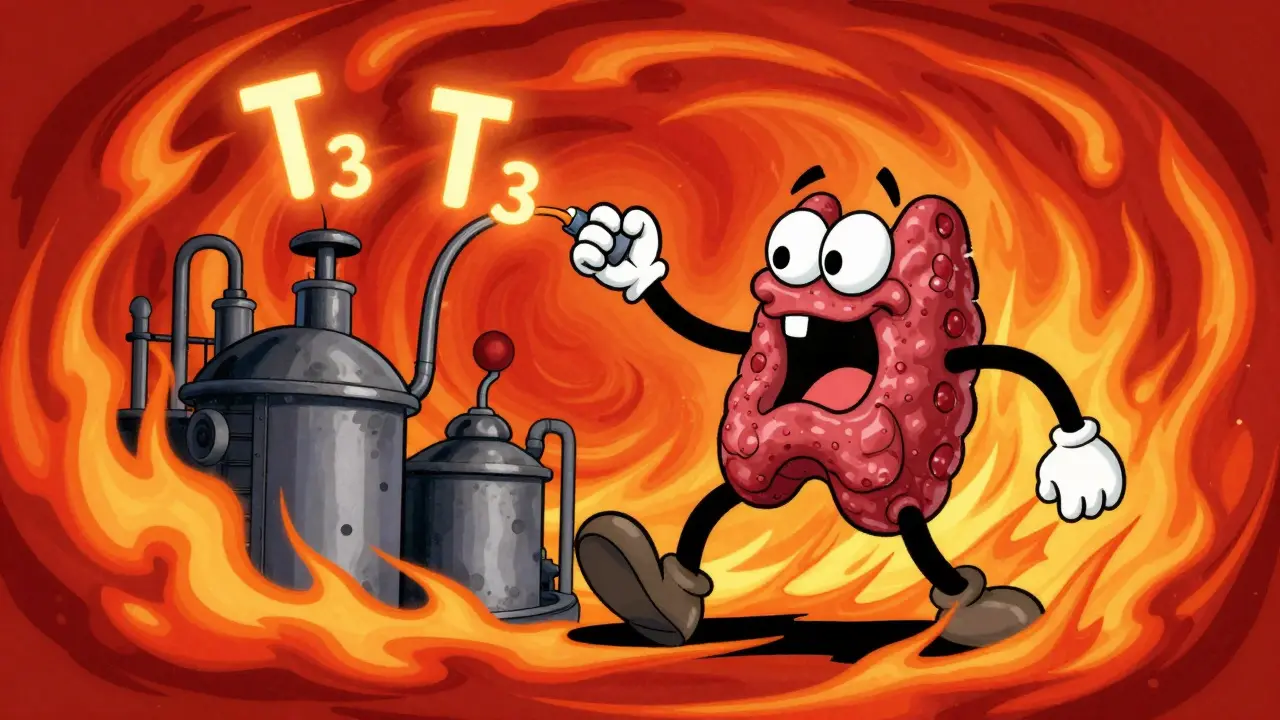
Imagine a body where every single biological process is suddenly shifted into overdrive. The heart races, the temperature spikes to dangerous levels, and the mind slips into delirium. This isn't a bad reaction to too much caffeine; it's a Thyroid Storm is a rare, life-threatening complication of hyperthyroidism characterized by an extreme overproduction of thyroid hormones that leads to multi-system organ failure. When the thyroid gland floods the bloodstream with too much T3 and T4, the body's metabolism accelerates to a point where the heart and brain simply cannot keep up.
For most people with hyperthyroidism, the condition is a slow burn. But a thyroid storm is a flash fire. It transforms a manageable endocrine issue into a medical emergency where the mortality rate can approach 100% if left untreated. However, when caught early and managed in an Intensive Care Unit (ICU), the odds change dramatically. The goal is simple: shut down the hormone production, block the effects of the hormones already in the blood, and keep the organs functioning while the fire is put out.
Quick Facts on Thyroid Storm
- Nature: An acute endocrine emergency involving multi-system failure.
- Key Markers: Fever often exceeding 104°F and heart rates over 140 bpm.
- Risk: Without treatment, it is almost always fatal; with ICU care, survival rates improve significantly.
- Triggers: Often caused by infection, surgery, or skipping medication.
What Exactly Triggers a Thyroid Storm?
A thyroid storm doesn't usually happen out of nowhere. It typically strikes people who already have Hyperthyroidism-a condition where the thyroid is overactive-but whose condition is either untreated or poorly managed. The most common culprit is Graves' disease, an autoimmune disorder that pushes the thyroid into overdrive.
The storm is usually ignited by a secondary stressor. In about 20-30% of cases, a respiratory infection acts as the trigger. Other common catalysts include major surgery, severe physical trauma (like a direct blow to the neck), or extreme emotional distress. Even something as common as a stroke or diabetic ketoacidosis can push a fragile metabolic balance over the edge. Interestingly, a small number of patients experience this crisis after receiving radioactive iodine therapy, usually a week or more after the procedure.
Spotting the Danger: Symptoms and Diagnosis
Unlike standard hyperthyroidism, which develops over months, a thyroid storm unfolds over hours. The symptoms are violent and obvious. The most striking feature is a high fever, often hitting 104°F to 106°F, accompanied by heavy sweating (diaphoresis). The heart begins to race, often exceeding 140 beats per minute, and blood pressure can spike to 180 mmHg or higher.
The brain is often the first place where the severity becomes apparent. About 90% of patients show altered mental status, ranging from extreme agitation and restlessness to full-blown psychosis or coma. Meanwhile, the digestive system rebels, with 50-60% of patients suffering from severe diarrhea. In the most critical cases, the liver begins to fail, leading to jaundice where total bilirubin levels climb above 3 mg/dL.
Doctors often use the Burch-Wartofsky scoring system to make a quick call. If a patient scores above 45, it's highly likely they are in a storm. This system is vital because waiting for blood tests to confirm elevated free T3 and T4 levels can waste precious hours when every minute counts.
The ICU Battle Plan: Aggressive Treatment
Once a patient hits the ICU, the medical team launches a multi-pronged attack. The strategy is to hit the problem from four different angles: stopping production, blocking conversion, slowing the heart, and supporting the organs.
First, they use high-dose antithyroid drugs. Methimazole or Propylthiouracil (PTU) are the gold standards here. PTU is often preferred because it doesn't just stop the thyroid from making new hormones; it also helps stop the body from converting T4 into the more potent T3.
About an hour after the first dose of antithyroid medication, doctors administer Potassium Iodide. This effectively "shuts down" the thyroid gland's ability to release more hormone into the blood. To tackle the racing heart, Propranolol is used, often delivered intravenously to bring the heart rate down quickly and reduce the strain on the cardiovascular system.
Because the body is in a state of extreme stress, corticosteroids like hydrocortisone are given to prevent adrenal insufficiency. For the fever, acetaminophen is the go-to choice-NSAIDs are generally avoided. In severe cases where the patient is unconscious or in respiratory failure, mechanical ventilation and fluid resuscitation (often 2-3 liters of saline) are required to keep the patient stable.
| Medication/Intervention | Primary Goal | Typical Usage |
|---|---|---|
| PTU / Methimazole | Stop hormone production | High loading dose, followed by frequent smaller doses |
| Potassium Iodide | Block hormone release | Administered 1 hour AFTER antithyroid drugs |
| Propranolol | Control tachycardia | IV or Oral to lower heart rate below 140 bpm |
| Hydrocortisone | Prevent adrenal failure | IV every 8 hours |
| Acetaminophen | Manage hyperthermia | Preferred over NSAIDs for fever control |
Recovery and the Road Ahead
Survival depends almost entirely on the clock. If treatment starts within 6 hours of the first symptom, survival rates jump to 75-80%. If the delay exceeds 24 hours, that number plummets to 20%. Even with the best care, the ICU stay is usually intense. Many patients require mechanical ventilation for about five days and may need vasopressors to keep their blood pressure stable.
The recovery of the mind follows a gradual path. Agitation usually clears within 48 hours, and confusion lifts within three days. However, full cognitive recovery can take up to two weeks. Once the storm has passed, the underlying cause of the hyperthyroidism must be dealt with permanently. About 85% of survivors end up needing lifelong thyroid hormone replacement therapy because the thyroid is either surgically removed or deactivated using radioactive iodine to ensure a second storm never happens.
For those who experience a "refractory" case-where standard meds don't work-doctors may use plasmapheresis. This process literally filters the excess hormones out of the blood, and it has shown a success rate of around 78% in severe cases.
Is thyroid storm the same as hyperthyroidism?
No. Hyperthyroidism is a general state of overactive thyroid function. A thyroid storm is an acute, life-threatening crisis where that overactivity reaches a critical level, causing organs to fail. Think of hyperthyroidism as a simmering pot and a thyroid storm as the pot boiling over and exploding.
Can a thyroid storm be treated at home?
Absolutely not. A thyroid storm is a medical emergency that requires an ICU. It involves complex medication timing and constant monitoring of heart rhythm and vital signs that can only be done in a hospital setting.
Why is the order of medication important?
Potassium iodide must be given after the antithyroid drugs (like PTU). If given first, the iodide can actually provide the thyroid gland with more "raw material" to produce more hormones, potentially worsening the storm.
What is the long-term outlook after surviving a storm?
Most survivors do very well if they commit to their follow-up care. While many require permanent hormone replacement, the risk of recurrence is very low (2-3%) as long as the underlying hyperthyroidism is properly managed through surgery or medication.
Can stress actually cause a thyroid storm?
Yes, severe emotional or physical stress can act as a trigger for people who already have an underlying thyroid condition. This stress triggers a systemic response that can push an unstable thyroid into a full crisis.
Next Steps and Warning Signs
If you or a loved one have a diagnosed thyroid condition, the best defense is adherence. Skipping your anti-thyroid medication is one of the fastest ways to invite a crisis. Be vigilant about "red flag" symptoms: a sudden, unexplained spike in heart rate, extreme anxiety, or a fever that won't come down.
For those recovering from a storm, the priority is a strict follow-up schedule with an endocrinologist. Because the risk of recurrence jumps to 25-30% for those who ignore follow-up care, these appointments are not optional-they are a lifeline.