
Tension Pneumothorax: Causes, Risks, and Emergency Care
When air gets trapped in the chest cavity under pressure, it doesn’t just sit there—it starts crushing everything around it. This is tension pneumothorax, a medical emergency where air accumulates in the pleural space, collapsing the lung and shifting the heart and major blood vessels. Also known as compressive pneumothorax, it’s not a slow-progressing issue. It kills within minutes if untreated. Unlike a simple collapsed lung, tension pneumothorax creates a one-way valve effect: air enters but can’t escape, so pressure keeps building until the body can’t breathe—or pump blood.
This isn’t rare in trauma cases. Car crashes, stab wounds, even broken ribs from a fall can punch a hole in the lung or chest wall. People on ventilators in hospitals are also at risk—the machine can force air into the wrong space. And yes, it can happen to healthy people without injury, though that’s less common. The real danger? Symptoms sneak up fast. Sharp chest pain. Trouble breathing. Skin turning blue. A trachea that shifts sideways. No pulse. No breath. If you’ve ever seen someone go from fine to critical in under a minute, this is why.
It’s not just the lung that’s affected. The heart gets squeezed. Blood can’t return to it. Oxygen levels crash. That’s why every second counts. Emergency responders don’t wait for X-rays—they act on symptoms. A needle through the chest wall to release the trapped air? That’s the first step. It’s not pretty, but it’s life-saving. And it’s why knowing the signs matters, whether you’re a patient, caregiver, or just someone who’s seen a bad accident.
What you’ll find below isn’t just medical theory. These are real cases, real warnings, and real actions taken by people who survived because they recognized the problem fast. From how trauma teams respond to how patients misread symptoms as something minor, the posts here cut through the noise. You’ll see how tension pneumothorax connects to chest injuries, drug side effects that weaken lung tissue, and why some medications increase risk in vulnerable people. No fluff. Just what you need to know to spot it, understand it, and act before it’s too late.
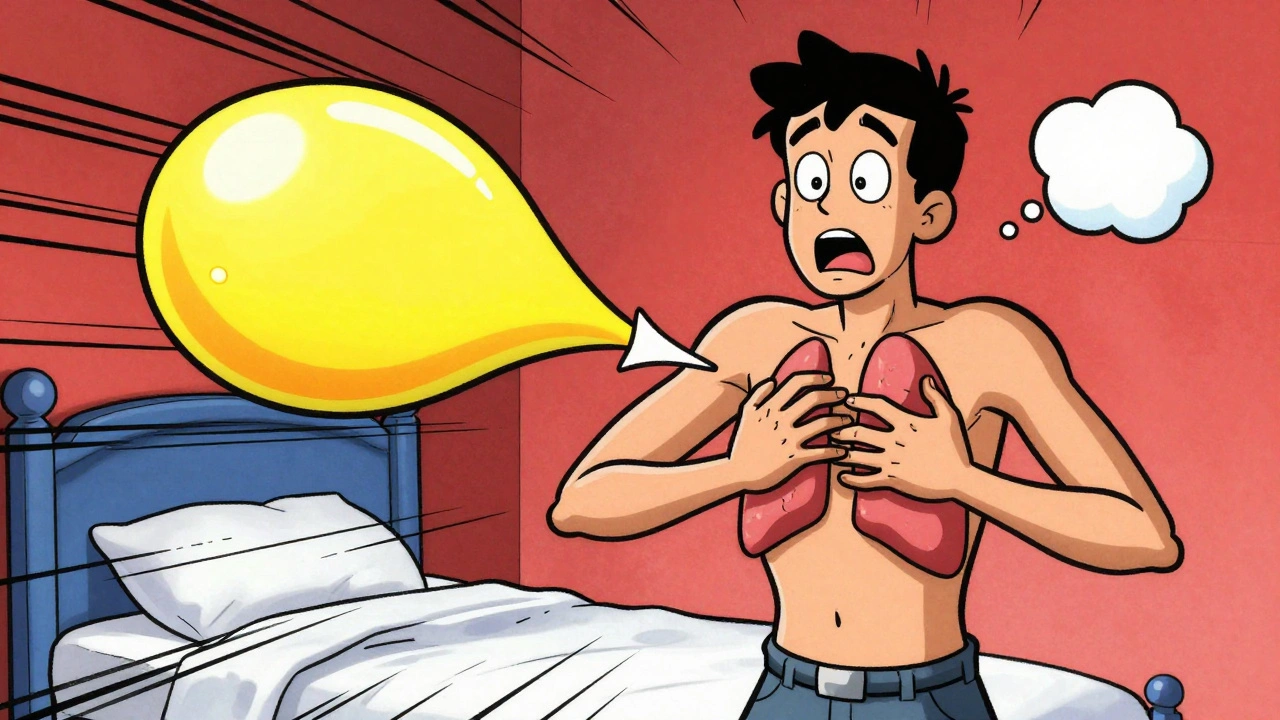
Pneumothorax: Recognizing Collapsed Lung Symptoms and Getting Emergency Care Fast
Haig Sandavol Dec 2 11A collapsed lung, or pneumothorax, is a medical emergency that requires quick recognition and treatment. Learn the key symptoms, how it's diagnosed, and why immediate care saves lives - plus what to do after you leave the hospital.
More Detail