
OTC Allergy Meds: What Works, What to Avoid, and How to Stay Safe
When you reach for an OTC allergy med, over-the-counter medication used to relieve allergy symptoms like runny nose, itchy eyes, or sneezing. Also known as antihistamines, these drugs are the first line of defense for millions—but many people use them wrong, or worse, mistake side effects for allergies. That’s dangerous. Taking the wrong pill because you think you’re allergic to one brand? You could end up with a real reaction—or miss the actual cause of your symptoms.
Here’s the thing: what most call an "allergy" to Zyrtec or Claritin is often just a drug side effect, an expected, non-immune reaction like drowsiness or dry mouth. A true allergic drug reaction, a life-threatening immune response like hives, swelling, or trouble breathing is rare—but it happens. And if you’ve been told you’re allergic to all antihistamines because one made you sleepy, you might be avoiding meds that could actually help. The FDA warns that mislabeling side effects as allergies leads to costlier, riskier treatments. That’s why checking labels matters—not just for the drug name, but for what’s inside. Ingredients like food allergens, hidden substances like soy, dyes, or lactose that can trigger reactions in sensitive people are often in OTC pills. If you’re allergic to sesame or dairy, that little capsule might be a minefield.
And it’s not just about the pills. Some people take OTC allergy meds with other drugs—like blood pressure pills or antidepressants—and don’t realize the combo can cause dizziness, rapid heartbeat, or worse. You don’t need to be a pharmacist to spot trouble. Just ask: Is this new symptom happening right after I took the pill? Did it start when I switched brands? Did it go away when I stopped? Keeping a simple symptom log, like the ones we talk about in our posts, can save you from a trip to the ER.
Below, you’ll find real stories and science-backed advice on how to tell the difference between a side effect and a true allergy, which OTC meds are safest for people with other conditions, how food labels hide allergens even in pills, and why checking every label—before every dose—isn’t just smart, it’s lifesaving. No fluff. No guesses. Just what you need to use these meds without putting yourself at risk.
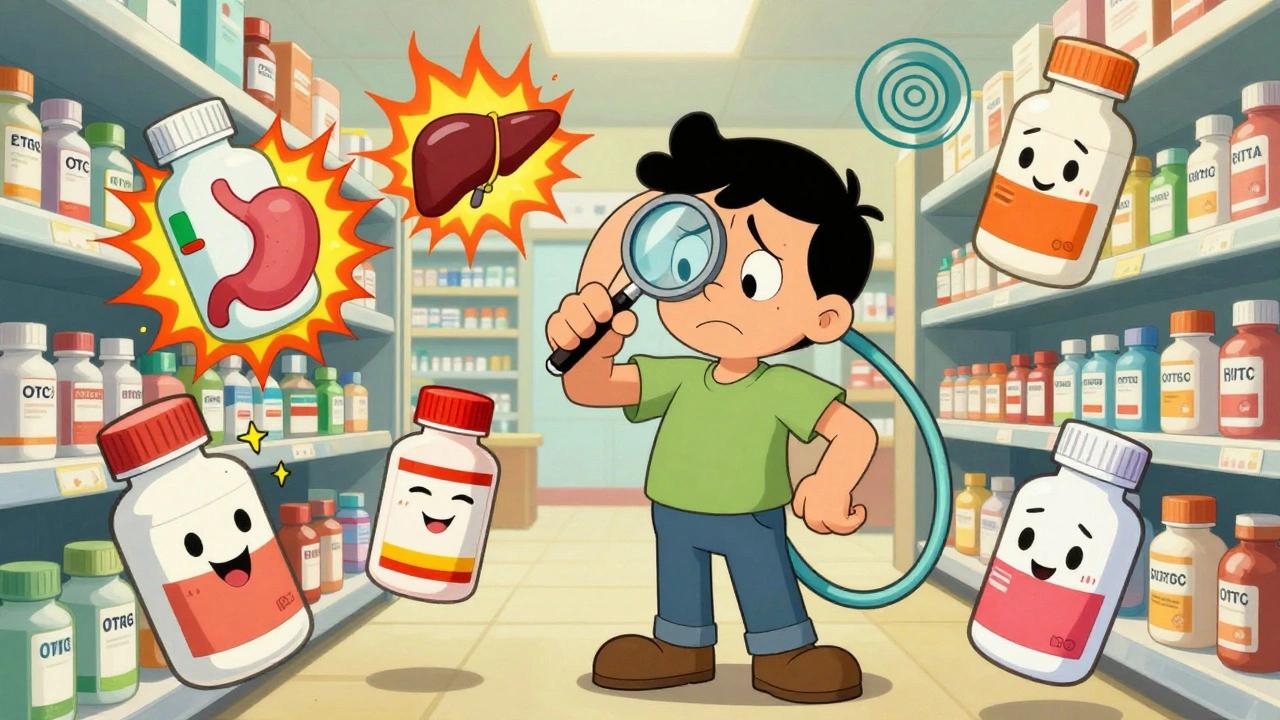
Over-the-Counter Medications: NSAIDs, Acetaminophen, and Antihistamines Explained for Safe Use
Haig Sandavol Dec 5 12Learn how to safely use common OTC medications like NSAIDs, acetaminophen, and antihistamines. Know the risks, dosing limits, and hidden dangers so you don’t end up in the ER.
More Detail