
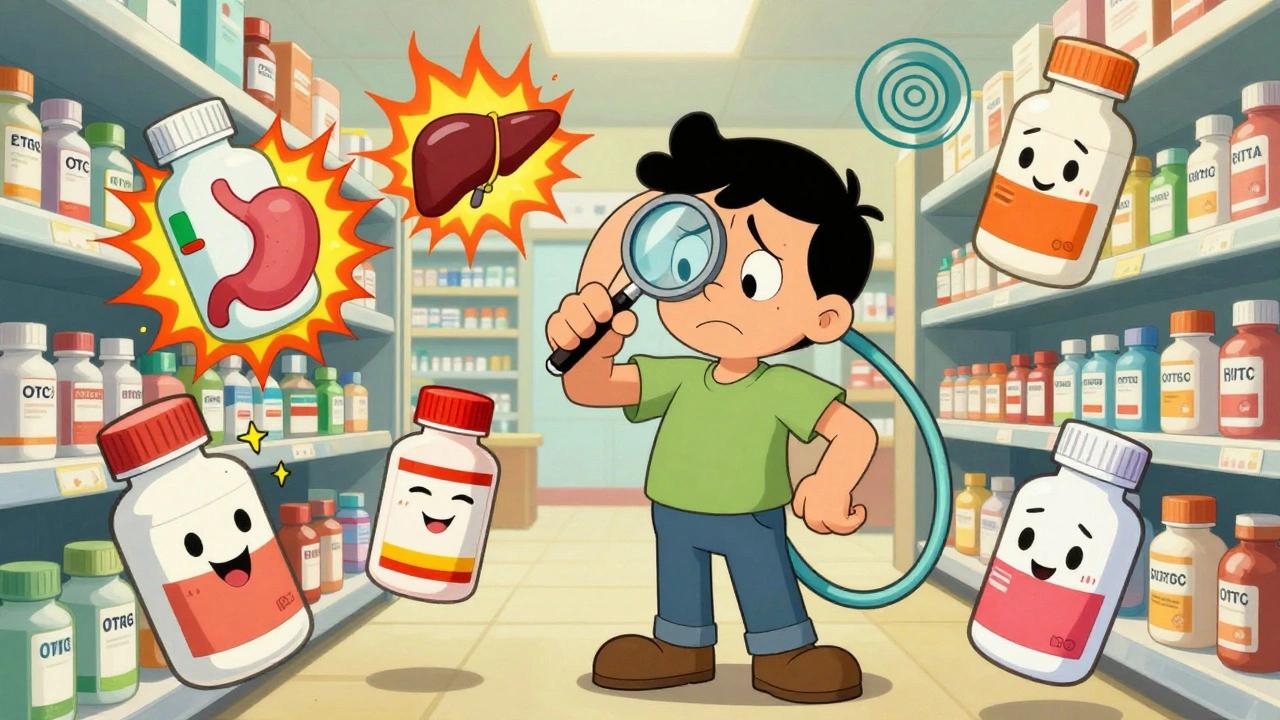
Why OTC Medications Can Be Dangerous If You Don’t Know What You’re Taking
You walk into the pharmacy looking for relief from a headache, a stuffy nose, or sore knees. You grab a bottle of ibuprofen, a box of Tylenol, or a pack of Claritin. It’s easy. It’s convenient. But here’s the thing: OTC doesn’t mean harmless. Every year, over 56,000 people end up in the emergency room because of acetaminophen overdoses. Thousands more get stomach bleeding from NSAIDs. And many seniors fall because an antihistamine made them dizzy. These aren’t rare mistakes. They’re common.
People think, ‘It’s just a pill from the shelf.’ But these aren’t candy. They’re powerful drugs with real risks. And if you don’t know how they work-or what’s hiding in the bottle-you’re playing Russian roulette with your health.
NSAIDs: The Pain and Inflammation Fix-With a Catch
NSAIDs like ibuprofen (Advil, Motrin IB) and naproxen (Aleve) work by blocking enzymes that cause pain and swelling. That’s why they’re great for sprains, arthritis, menstrual cramps, and muscle soreness. A 2021 study in the Journal of Pain Research found ibuprofen was 50% more effective than acetaminophen for inflammatory pain.
But here’s the downside: NSAIDs irritate your stomach lining. Regular use-especially over 1,200mg a day-can raise your risk of internal bleeding by 2.5 times. People with ulcers, kidney disease, or heart problems should avoid them. And if you have asthma, 10-20% of you could have a dangerous reaction called aspirin-exacerbated respiratory disease.
OTC ibuprofen comes in 200mg tablets. The max daily dose is 1,200mg-that’s six pills. But many people don’t realize they’re already taking NSAIDs in other products. Cold medicines? Some have ibuprofen or naproxen. Pain patches? Voltaren gel is also an NSAID. Stack them, and you’re in danger zone.
Acetaminophen: The ‘Gentler’ Painkiller That Can Kill Your Liver
Acetaminophen (Tylenol) is the most popular OTC pain reliever in the U.S. It’s in over 600 products-from cold meds to sleep aids. Why? Because it doesn’t hurt your stomach or affect blood clotting. That’s why doctors often recommend it for seniors or people on blood thinners.
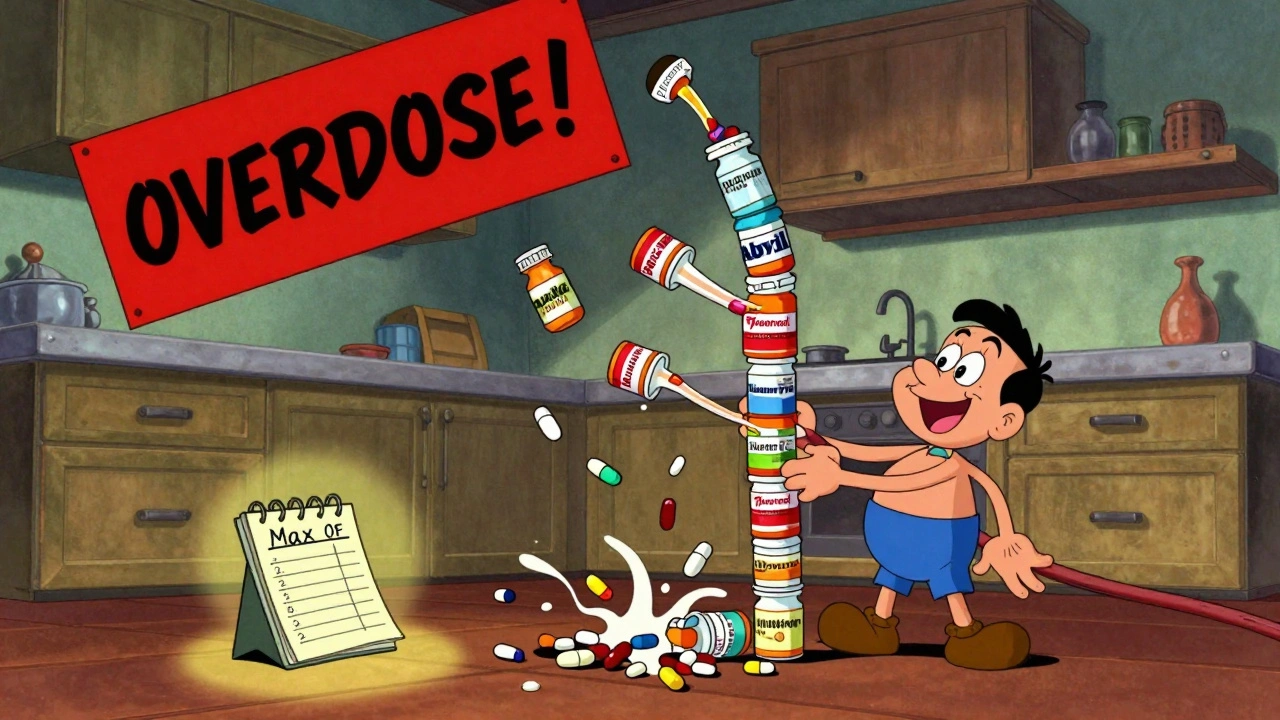
But here’s the catch: acetaminophen has no safety buffer. The difference between a safe dose and a toxic one is small. The FDA says the max daily dose is 4,000mg. But many manufacturers now recommend 3,000mg as a safer limit. Why? Because 56,000 ER visits a year are caused by accidental overdoses. Most of them? People took two or three products with acetaminophen and didn’t realize it.
Example: You take one Tylenol (500mg) for a headache. Then you take a cold tablet (325mg). Then you take a sleep aid (650mg). That’s already 1,480mg before lunch. By bedtime, you could hit 4,000mg without even trying. And your liver doesn’t warn you until it’s too late.
There’s also a new rule: all liquid acetaminophen must now be 160mg per 5mL. That’s to stop parents from mixing up teaspoons and tablespoons. But even with that, 20% of pediatric overdoses still happen because of dosing errors.
Antihistamines: Clearing Allergies-But at What Cost?
Antihistamines block histamine, the chemical that makes your nose run and your eyes itch. They fall into two groups: first-gen and second-gen.
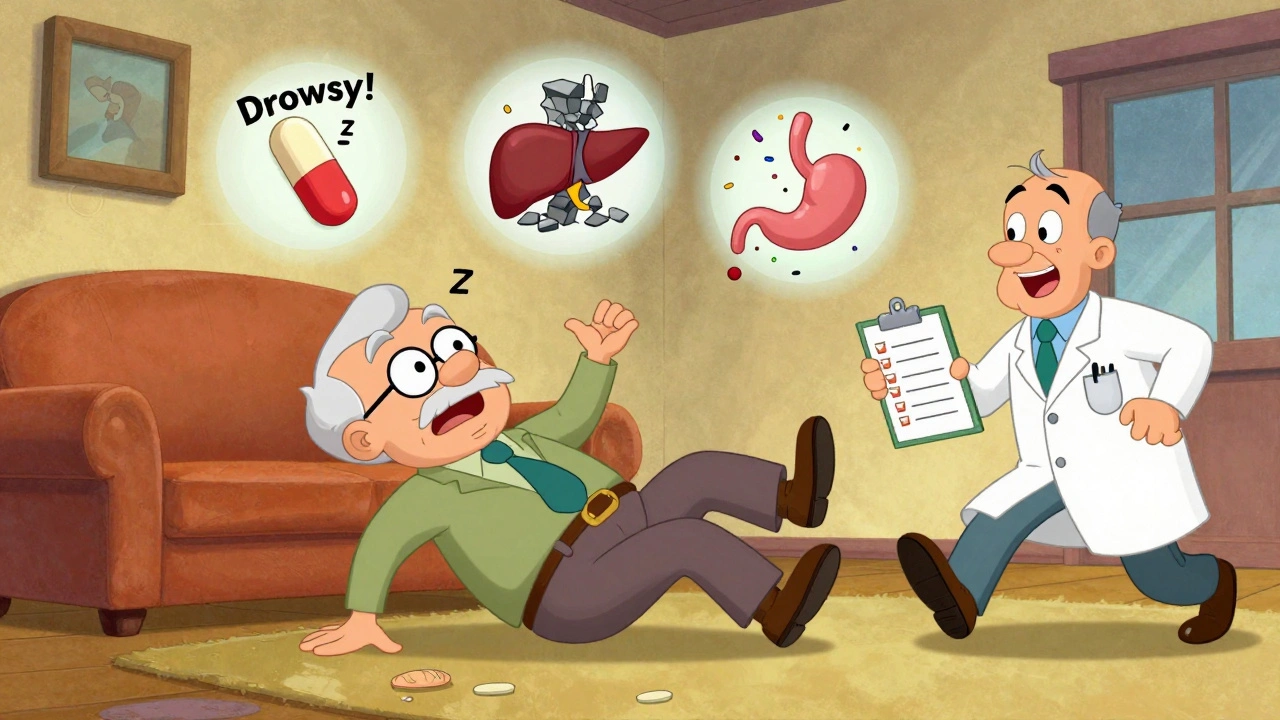
First-gen: diphenhydramine (Benadryl), chlorpheniramine. These work fast-within 15-30 minutes. But they cross into your brain. That’s why 50% of users report drowsiness. In older adults, this increases fall risk by 50%. A 2021 JAMA Internal Medicine study linked these meds to confusion and memory problems in seniors.
Second-gen: loratadine (Claritin), cetirizine (Zyrtec), fexofenadine (Allegra). These are designed to stay out of your brain. Only 8% of users feel sleepy. They last 24 hours. That’s why Claritin holds 41% of the allergy market. But they take longer to kick in-1 to 3 hours. So if you need quick relief, they’re not ideal.
And here’s something most people don’t know: not all antihistamines work the same for everyone. Genetic differences mean 20% of people respond better to one than another. If Claritin doesn’t help, try Zyrtec. If Zyrtec makes you tired, try Allegra. It’s trial and error.
What You’re Not Reading on the Label
OTC labels are designed to look simple. But they hide details.
- ‘Active Ingredients’ are the drugs. ‘Inactive ingredients’ are fillers, dyes, or preservatives. If you’re allergic to dyes like FD&C Red No. 40, you could have a reaction-even with a ‘natural’ product.
- Dosing tools aren’t always included. Only 60% of liquid bottles come with a proper measuring cup. Using a kitchen spoon? That’s how you overdose.
- ‘Behind-the-counter’ means you need to ask the pharmacist. Pseudoephedrine (in cold meds like Sudafed) is limited to 3.6g per day because it’s used to make meth. You need ID and a logbook.
- Generic brands are often the same as name brands. Perrigo makes store-brand Tylenol and Claritin. The active ingredient is identical. Save money-just check the label.
How to Use OTC Meds Safely-A Simple Checklist
Follow this every time you pick up an OTC drug:
- Read the label twice. Look for ‘Active Ingredients.’ If two products have the same one, don’t take them together.
- Know your max dose. Ibuprofen: 1,200mg/day. Acetaminophen: 3,000mg/day (not 4,000). Loratadine: 10mg/day.
- Use the right tool. Never guess a teaspoon. Use the cup or syringe that came with the bottle.
- Check for interactions. If you take blood pressure meds, antidepressants, or blood thinners, talk to a pharmacist before taking OTC pain or allergy drugs.
- Don’t use them long-term. If you need pain relief for more than 10 days, or allergy meds for more than 2 weeks, see a doctor. You might have something deeper.
When to Skip the Shelf and See a Pharmacist
You don’t need a doctor for a headache. But you do need a pharmacist if:
- You’re over 65 and taking multiple meds.
- You have kidney, liver, or heart disease.
- You’re pregnant or breastfeeding.
- You’ve had stomach bleeding or ulcers.
- You’re unsure if your cold medicine has acetaminophen.
Pharmacists are trained to spot hidden risks. They’ll check your meds, explain what’s safe, and point you to the right product. No judgment. No pressure. Just help.
What’s Changing in OTC Medications
The FDA is moving fast. In 2023, they proposed lowering the max acetaminophen dose from 4,000mg to 3,250mg. Why? Because liver damage is still too common.
Topical NSAIDs are getting stronger. A 3% diclofenac gel is now available OTC for arthritis pain-no swallowing pills needed.
And the biggest shift? More prescription drugs are going OTC. Low-dose atorvastatin (for cholesterol) could be next. If it follows omeprazole (Prilosec), it could dominate the heartburn market in just a few years.
But with more access comes more responsibility. Just because it’s on the shelf doesn’t mean it’s safe for everyone.
Final Thought: OTC Doesn’t Mean Risk-Free
OTC meds are a gift-when used right. They give us control over minor pain, fever, and allergies without a doctor’s visit. But they’re not toys. They’re tools. And like any tool, they can hurt you if you don’t understand how they work.
Next time you reach for a bottle, pause. Read the label. Check the dose. Ask yourself: ‘Am I taking this because I need it-or because it’s easy?’
Safe use isn’t complicated. It’s just careful.
Can I take ibuprofen and acetaminophen together?
Yes, you can take ibuprofen and acetaminophen together if needed. They work differently, so combining them can give better pain relief than either alone. But stick to the max daily dose for each: no more than 1,200mg of ibuprofen and 3,000mg of acetaminophen in 24 hours. Don’t mix them with other pain relievers or cold meds that already contain one of these ingredients.
Is it safe to take antihistamines every day?
Second-generation antihistamines like loratadine, cetirizine, and fexofenadine are generally safe for daily use for allergy control. But first-gen ones like Benadryl shouldn’t be taken daily-they cause drowsiness, memory issues, and increase fall risk, especially in older adults. If you need daily allergy relief, talk to your pharmacist about switching to a non-sedating option.
Why does Tylenol have a black box warning?
Tylenol doesn’t have a black box warning, but the FDA requires all acetaminophen products to carry a warning about liver damage. The reason? Acetaminophen overdose is the leading cause of acute liver failure in the U.S. The warning is on the label, not a black box, but it’s just as serious. Never exceed the daily limit, and avoid alcohol while taking it.
Can NSAIDs cause high blood pressure?
Yes. NSAIDs like ibuprofen and naproxen can raise blood pressure, even in people who’ve never had high BP. They can also make blood pressure medications less effective. If you have hypertension, talk to your pharmacist before using NSAIDs. Acetaminophen is usually a safer choice for pain in this case.
Are generic OTC meds as good as brand names?
Yes. Generic OTC meds contain the same active ingredients, doses, and strengths as brand names. The only differences are in color, shape, flavor, or inactive ingredients. Store-brand ibuprofen, acetaminophen, and loratadine work just as well as Advil, Tylenol, or Claritin-and cost much less. Always check the ‘Active Ingredients’ section to be sure.
What should I do if I accidentally take too much acetaminophen?
Call Poison Control at 1-800-222-1222 immediately. Do not wait for symptoms. Acetaminophen overdose can damage your liver without you feeling anything at first. The antidote, N-acetylcysteine, works best if given within 8 hours. Even if you feel fine, get help. Liver damage can be silent-and deadly.
Next Steps: Be the Boss of Your Medicine Cabinet
Start today. Go to your medicine cabinet. Take out every OTC bottle. Lay them on the table. Write down the active ingredient for each. See if you have more than one with acetaminophen or ibuprofen. Toss the ones you don’t need. Keep only what you use regularly.
Buy a small notebook. Write down your max daily doses. Keep it next to your meds. If you’re unsure about a new product, take the bottle to the pharmacy. Ask the pharmacist: ‘Is this safe with what I’m already taking?’
OTC meds are powerful. But they’re not magic. They’re medicine. And you deserve to use them safely-not by guesswork, but by knowledge.
Comments (12)
-
joanne humphreys December 6, 2025I never realized how many products contain acetaminophen until I started reading labels. I was taking Tylenol for headaches and a cold medicine at night, not knowing both had it. Now I keep a little notebook next to my meds. Best habit I’ve picked up this year.

-
Priya Ranjan December 8, 2025People are so careless with medicine. It's not rocket science to read a label. If you can't follow basic instructions, maybe you shouldn't be self-medicating at all. This isn't a suggestion-it's a public health crisis waiting to happen.

-
Mansi Bansal December 9, 2025The structural inadequacy of public health literacy in the United States is profoundly alarming. One cannot help but observe the alarming proliferation of polypharmacy among the lay population, exacerbated by the commodification of pharmaceuticals into consumer goods. The absence of mandatory pharmacist consultation prior to purchase constitutes a systemic failure of preventive medicine.

-
Kay Jolie December 9, 2025Okay but let’s be real-why is everyone still using first-gen antihistamines? Like, diphenhydramine is basically just a sedative with a side of ‘allergy relief.’ If you’re taking Benadryl daily and calling it ‘allergy management,’ you’re not being proactive-you’re being lazy. Zyrtec or Allegra, please. Your brain will thank you.

-
Billy Schimmel December 11, 2025I used to take ibuprofen like candy. Then I got a stomach ulcer. Now I just take Tylenol and pretend I’m not in pain. It’s not glamorous, but it’s safer.

-
Shayne Smith December 13, 2025I just checked my cabinet. Had three different things with acetaminophen. Tossed two. Felt like a wizard.

-
Max Manoles December 13, 2025The FDA's proposed reduction of the maximum daily acetaminophen dose from 4,000 mg to 3,250 mg is a scientifically grounded, evidence-based adjustment that aligns with epidemiological data on hepatotoxicity. Furthermore, the labeling standardization for liquid formulations represents a critical step toward mitigating pediatric dosing errors, which remain disproportionately high due to non-standardized household utensils.

-
Clare Fox December 15, 2025i keep thinking about how we treat medicine like snacks. like if it’s on the shelf, it’s fine. but it’s not. it’s a chemical that changes how your body works. we forget that. we’re so used to quick fixes we don’t even pause anymore.

-
Akash Takyar December 15, 2025I appreciate this detailed and well-researched article. It is imperative that individuals, especially in developing nations, are educated about the risks associated with over-the-counter medications. Pharmacists must be empowered to provide counseling, and community health workers should be trained to disseminate this knowledge.

-
Arjun Deva December 16, 2025They’re hiding it. The pharmaceutical companies. They know how many people overdose. They profit from it. Why else would they keep putting acetaminophen in every cold medicine? It’s not an accident. It’s a business model.

-
Annie Gardiner December 17, 2025So... we're supposed to trust pharmacists now? The same ones who sold me OTC sleep aids with diphenhydramine when I asked for 'something non-drowsy'? I think I'll just keep my own research thank you very much.

-
Kumar Shubhranshu December 17, 2025Check labels. One pill. One dose. No mixing. Done.
