
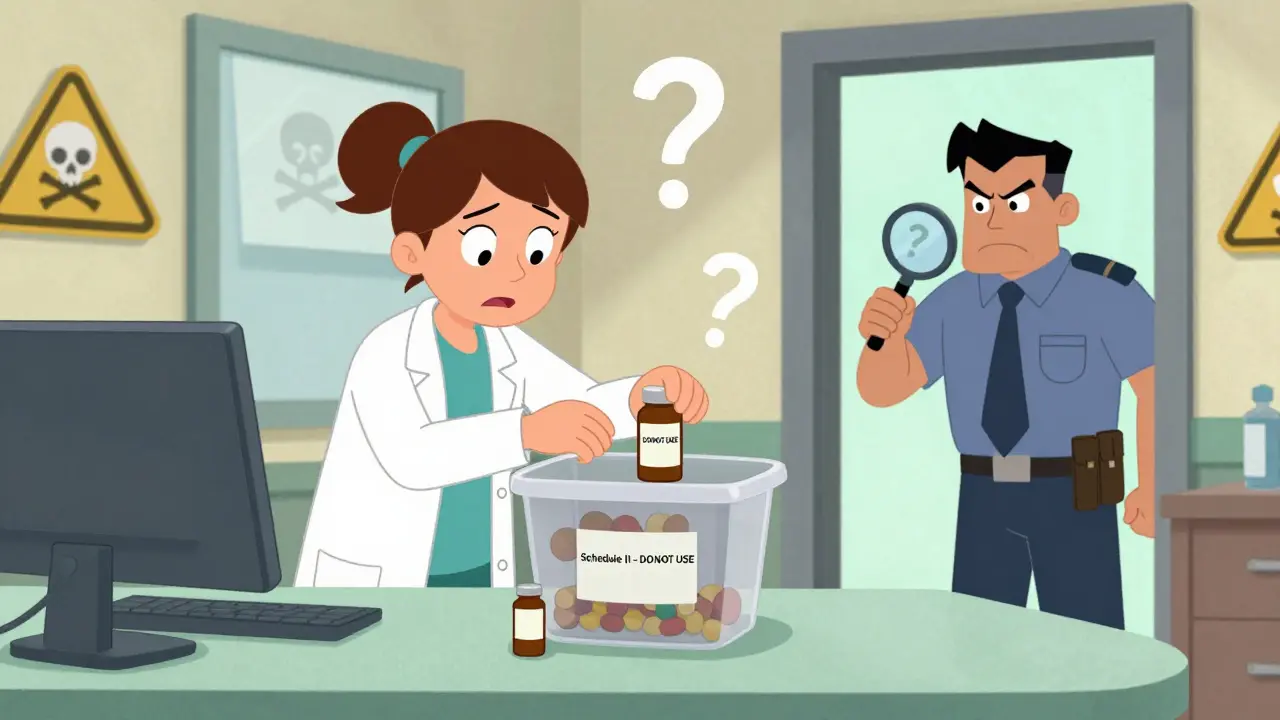
Handling expired controlled substances isn’t like tossing out an old bottle of ibuprofen. These drugs-opioids, benzodiazepines, stimulants, and other Schedule II-V narcotics-are tightly regulated because they carry real risks: addiction, diversion, environmental harm, and even death if they fall into the wrong hands. The DEA doesn’t just recommend proper disposal-it requires it. And failing to follow the rules can mean fines, loss of your DEA registration, or worse.
Why You Can’t Just Flush or Trash Them
You’ve probably seen those flyers saying to mix old pills with coffee grounds or kitty litter and throw them in the trash. That works for regular over-the-counter meds. But for controlled substances? Not even close. The DEA explicitly says flushing or mixing expired narcotics with household waste is unacceptable if the drug can still be recovered. Why? Because someone-maybe a teenager, a pet, or a person struggling with addiction-can dig it out, crush it, or dissolve it. A single leftover oxycodone tablet can be enough to cause an overdose. Even crushing or dissolving them in water isn’t allowed. That’s a common myth. The DEA’s position, confirmed by UCSF’s Environmental Health & Safety team in 2022, is clear: no incineration, no dissolution, no pouring down the sink. These methods don’t meet the legal standard of making the substance “non-retrievable.”What the DEA Actually Requires
The rules come from Title 21 of the Code of Federal Regulations, especially Part 1317, which was finalized in 2014 after the Secure and Responsible Drug Disposal Act of 2010. The goal? Prevent diversion and ensure accountability. The DEA divides disposal into two categories: inventory disposal and wastage. Inventory disposal means getting rid of entire stockpiles-expired bottles, unused vials, or surplus pills you never used. This applies to larger quantities. For this, you must use a DEA-registered reverse distributor. These are licensed companies that collect, transport, and incinerate controlled substances under strict chain-of-custody rules. You can’t just call any waste company. They have to be DEA-registered. Wastage is the small amount left in a syringe after giving a shot, or a few leftover tablets from a patient’s prescription. For these, you can dispose of them on-site-but only if two authorized people witness it, sign off on it, and document everything.How to Dispose of Schedule II Substances (Like Oxycodone, Fentanyl, Adderall)
Schedule II drugs have the highest potential for abuse and dependence. That means the strictest rules. You must use DEA Form 222 to transfer these to a reverse distributor. Since January 1, 2023, this form has been electronic-only through the DEA’s Electronic Registration System (ERS). Paper forms are no longer accepted. The system cuts processing time from over a week to under two days. Once you submit the form, the reverse distributor schedules a pickup. Fees vary but typically range from $250 to $500 per pickup, depending on volume and location. In Houston, many clinics report wait times of 10-14 business days for a pickup, which can be frustrating if you’re trying to clear out expired stock. You must keep records of every transfer for at least two years. That includes the date, quantity, DEA Form 222 number, and the reverse distributor’s name. If you’re audited and can’t produce those records, you’re in trouble.What About Schedule III-V Substances (Like Hydrocodone, Xanax, Klonopin)?
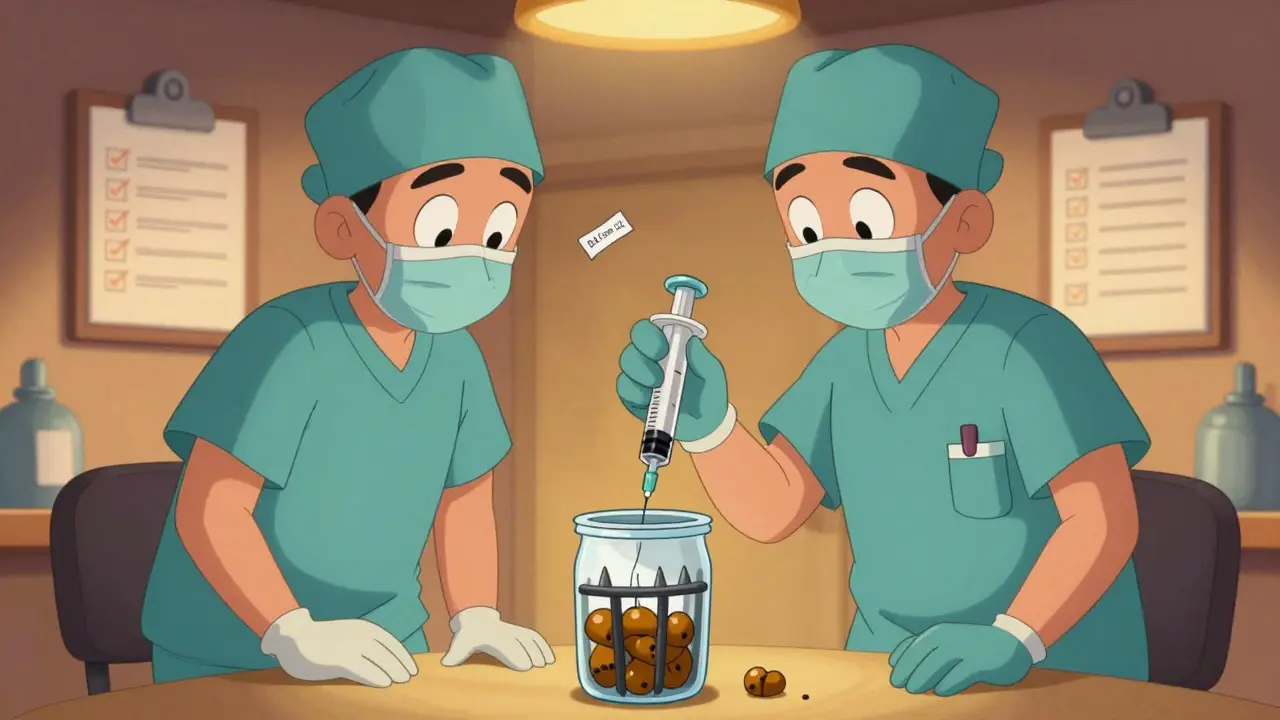
These are still controlled, but the rules are slightly more flexible. You can still use a reverse distributor-many practices do, for simplicity. But you also have another option: on-site disposal with two witnesses. The process is simple:- Label the substance clearly: “Expired - Do Not Use.”
- Store it separately from active inventory in a locked cabinet.
- When ready to dispose, two authorized personnel (one must be the DEA registrant or their direct agent) must be present.
- Witness the destruction: pour the liquid into a secure, non-retrievable container, or place solid pills into a sharps container with a non-retrievable liner (not a regular trash bin).
- Document the date, time, substance name, quantity, and names of both witnesses.
- Keep this log for two years.
Who Needs to Follow These Rules?
It’s not just hospitals and pharmacies. If you’re a licensed prescriber, you’re responsible. This includes:- Hospitals and clinics
- Dental offices
- Veterinary practices
- Research labs
- Long-term care facilities
- Any entity with a DEA registration to handle controlled substances
Documentation Is Non-Negotiable
The DEA doesn’t just want you to dispose of drugs. They want proof you did it right. Every disposal event-whether it’s a reverse distributor pickup or a two-person wastage-requires a paper or digital record. The record must include:- Date and time of disposal
- Name and DEA number of the registrant
- Name and quantity of the substance
- Method of disposal
- Names and signatures of all witnesses
- For reverse distributors: the DEA Form 222 number and receipt
Training and Compliance
Every person who handles controlled substances-pharmacists, nurses, vet techs, researchers-must get trained. The DEA requires:- Initial 2-hour training when you start handling controlled substances
- Annual 1-hour refresher
- How to identify controlled substances by schedule
- Correct disposal methods
- Documentation requirements
- What counts as “wastage” vs. “inventory”
- How to use the ERS system for Form 222
What Happens If You Don’t Follow the Rules?
In 2022, the DEA conducted 1,847 compliance inspections. They issued 327 warning letters and levied $2.47 million in fines. Common violations:- Storing expired drugs without documenting disposal
- Using unregistered waste haulers
- One person disposing of controlled substances alone
- Failing to keep disposal logs
- Using improper methods like flushing or kitty litter
What’s Changing Soon?
The DEA is rolling out the Electronic Inventory Management System (EIMS) by 2025. This will require real-time reporting of all controlled substance transactions-including disposals. Right now, you submit Form 222 and wait. Soon, you’ll log disposal events as they happen. This means faster audits, fewer paperwork errors, and better tracking. The market is also changing. Three companies-Stericycle, Daniels Health, and Drug and Laboratory Disposal, Inc. (DLD)-control over 80% of the reverse distributor market. Fees are rising 6-7% per year. Waiting longer for pickups is becoming common.Practical Steps for Your Practice
Here’s what you should do right now:- Take inventory of all controlled substances in your facility. Separate expired, damaged, or unused ones.
- Label everything clearly: “Expired - Do Not Use.”
- Store them in a locked, separate container away from active inventory.
- Determine if you’re doing inventory disposal (use reverse distributor) or wastage (two-person witness).
- If using a reverse distributor, register for ERS and submit DEA Form 222 electronically.
- If doing on-site wastage, train two authorized personnel and start logging every disposal.
- Review your disposal logs for the past two years. Are they complete? Are they signed?
- Schedule annual training for all staff who handle controlled substances.
Where to Find Help
If you’re unsure where to start:- Use the DEA’s online disposal locator to find registered reverse distributors near you.
- Check your state’s pharmacy board website-some have additional rules.
- Contact your facility’s environmental health and safety (EHS) department if you’re in a hospital or university.
- For veterinary practices, the American Veterinary Medical Association offers free disposal guides.
Can I throw expired controlled substances in the regular trash?
No. The DEA prohibits disposing of controlled substances in regular trash, even if mixed with kitty litter or coffee grounds. These methods don’t make the drug non-retrievable and can lead to diversion. Only reverse distributors or two-witness on-site destruction are allowed.
Do I need a DEA Form 222 for all expired drugs?
Only for Schedule II substances. For Schedule III-V, you can use a reverse distributor or dispose of small amounts (wastage) on-site with two witnesses. DEA Form 222 is required for all transfers of Schedule II drugs to reverse distributors and must be submitted electronically via the ERS system since January 2023.
What if I can’t afford a reverse distributor pickup?
For small quantities, you can dispose of Schedule III-V substances on-site with two authorized witnesses. This avoids the $250-$500 fee. But you must document everything and keep records for two years. Schedule II substances still require a reverse distributor-there’s no cost exception.
How long do I need to keep disposal records?
At least two years. This includes DEA Form 222 copies, wastage logs, and receipts from reverse distributors. The DEA conducts unannounced inspections and can fine you for incomplete or missing records.
Can I give expired controlled substances to a patient?
No. Giving expired controlled substances to a patient is illegal and dangerous. Expired drugs may lose potency or become unstable. Even if the patient asks for them, you cannot transfer them. They must be disposed of properly under DEA rules.
Are there any free disposal options?
The DEA’s National Take Back Day (held twice a year) allows the public to drop off medications for free. But this is only for individuals-not licensed facilities. Pharmacies and clinics cannot use these events for their own inventory. Reverse distributors remain the only legal route for professional disposal.
What happens if I accidentally dispose of a controlled substance the wrong way?
If it was a one-time mistake and you report it immediately, document the error, and correct your procedures, the DEA may issue a warning instead of a fine. But if it’s repeated, or if there’s evidence of negligence or intent to avoid compliance, penalties can be severe-including loss of your DEA registration.
Comments (15)
-
Luke Davidson January 23, 2026I used to think tossing old pills in the trash was fine till my cousin’s kid found a fentanyl patch in the garbage and ended up in the ER. Now I’m all in on proper disposal. This post saved my license and maybe a few lives. Thanks for laying it out so clear.
Even my vet now uses a reverse distributor. Who knew pet meds were this serious?

-
Shanta Blank January 23, 2026So let me get this straight-somebody’s gonna get fined $100k because they didn’t log that one leftover oxycodone tablet they flushed in 2019? Meanwhile the government’s handing out free Narcan like candy and calling it harm reduction. The hypocrisy is thicker than a meth lab’s walls.

-
Chloe Hadland January 24, 2026I work in a small clinic and we were totally clueless until last year. We started doing two-person wastage for the Xanax and it’s been smooth. No drama, no fees, just two people signing a sheet. It’s not glamorous but it’s legal. Small steps.

-
Jenna Allison January 24, 2026For Schedule III-V, the two-witness method is legit. But make sure both people are DEA-registered or their direct agents. I’ve seen people use a nurse and a receptionist-invalid. The DEA doesn’t care if you’re ‘busy.’ The regs are the regs.

-
Sharon Biggins January 26, 2026I know it’s boring but logging every tiny thing is what keeps you out of jail. I used to hate it. Now I keep a digital log on my phone. Took me 3 days to set up but now I don’t sweat audits. You got this.

-
Josh McEvoy January 27, 2026DEA Form 222 is now online?? 😱 I thought I was gonna have to fax something on parchment paper. Thank god. Took me 12 mins to submit mine. Reverse distributor picked up in 5 days. No drama. Just fill the form and chill. 🙌

-
Dolores Rider January 28, 2026They say ‘don’t flush’ but who’s really watching? The DEA’s got better things to do than check your bathroom trash. And if they do? You just say you didn’t know. Everyone says that. It’s not like they’re gonna come knock on your door for one pill. 🤷♀️

-
Tommy Sandri January 29, 2026The regulatory framework for controlled substance disposal is a necessary component of public health infrastructure. While compliance burdens may appear onerous, they serve a demonstrable function in mitigating diversion and environmental contamination. Institutions must prioritize procedural fidelity over convenience.

-
Viola Li January 30, 2026You people are so obsessed with rules. What if the drug’s expired and no one’s gonna use it? Why punish someone for being responsible enough to not hoard it? This feels like control freaks hiding behind paperwork. The real problem is addiction-not the trash can.

-
Vatsal Patel January 31, 2026So let me get this straight-some guy in Houston pays $500 to dump 5 pills, but a junkie in the alley can get a whole bag for $20? The system’s rigged. The DEA doesn’t care about the people. They care about the paperwork. We’re all just cogs in a machine that doesn’t work.

-
Amelia Williams February 2, 2026I just started training my staff on this and honestly? It’s been eye-opening. We had no idea how many of our meds were just sitting in drawers. We did a full audit, labeled everything, and scheduled our first pickup. Feels good to be doing it right. You don’t need to be perfect-just consistent.

-
venkatesh karumanchi February 4, 2026In India, we just give expired meds to local pharmacies for recycling. No forms. No witnesses. No fees. Maybe the US system is too rigid? Or maybe we’re just not taking it seriously enough? I’m curious.

-
Tiffany Wagner February 4, 2026I’m a solo practitioner and I was terrified of this. But I used the DEA’s locator tool, found a local company that charges $300, and did the ERS form in 15 minutes. I keep my log in a Google Doc. Simple. Done. No stress.

-
John McGuirk February 6, 2026This whole thing is a scam. The DEA makes you pay $500 to dispose of a drug they control. Then they sell the same drug to pharmaceutical companies who make billions off it. The real criminals are the ones writing the rules. You think they care about your safety? They care about control.

-
Heather McCubbin February 8, 2026I used to work at a clinic where they just threw the pills in the dumpster. One day a kid broke in and OD’d on a fentanyl patch. The owner lost his license. The nurse cried for a week. I still see her at the grocery store. She never talks about it. But I know. We all know. You don’t just ‘forget’ to log a disposal. You just don’t care. And that’s why people die.
