
Malassezia Yeast: Causes, Skin Issues, and What You Can Do
When your scalp itches, your face flakes, or your chest breaks out in red patches, Malassezia yeast, a type of fungus that lives naturally on human skin. Also known as Pityrosporum orbiculare, it’s not an invader—it’s a tenant. But when it grows out of control, it can trigger real problems like seborrheic dermatitis, dandruff, and even stubborn rashes on the neck, armpits, or groin. This isn’t about poor hygiene. It’s about your skin’s oil, your immune response, and how your body handles this common fungus.
Malassezia yeast feeds on oils your skin produces. That’s why it loves the scalp, face, and chest—areas with lots of sebaceous glands. In some people, the yeast triggers inflammation. The result? Flaking, redness, and itching that won’t quit. It’s not contagious, but it can flare up with stress, humidity, or changes in your hormones. People with weakened immune systems or those on long-term antibiotics are more likely to struggle with it. And here’s the catch: many think it’s eczema or psoriasis. But if your rash responds to antifungal shampoos or creams, it’s probably Malassezia.
You won’t find it in every skin care product, but you’ll find it in the ones that work. Antifungal ingredients like ketoconazole, selenium sulfide, and pyrithione zinc target Malassezia directly. Shampoos, body washes, and topical creams with these can calm flare-ups fast. Some people need to use them regularly, not just when symptoms appear. And while diet myths abound, there’s no solid proof that sugar or dairy makes it worse—though cutting back might help if you’re sensitive.
What’s interesting is how this tiny fungus connects to bigger health topics. The same skin reactions you see with Malassezia show up in studies on immune response, antibiotic overuse, and even gut-skin links. That’s why some of the posts here cover drug reactions, skin infections, and how medications can shift your body’s balance. You’ll find guides on spotting real skin issues, understanding when a rash is fungal versus bacterial, and how to avoid treatments that make things worse. There’s also advice on managing skin health when you’re on long-term meds—because sometimes, the cure causes the problem.
If you’ve tried hydrocortisone and it didn’t help, or if your dandruff keeps coming back no matter what shampoo you use, Malassezia might be the missing piece. The posts below give you real, no-fluff ways to identify it, treat it, and keep it from coming back. No hype. No guesswork. Just what works—and what doesn’t.
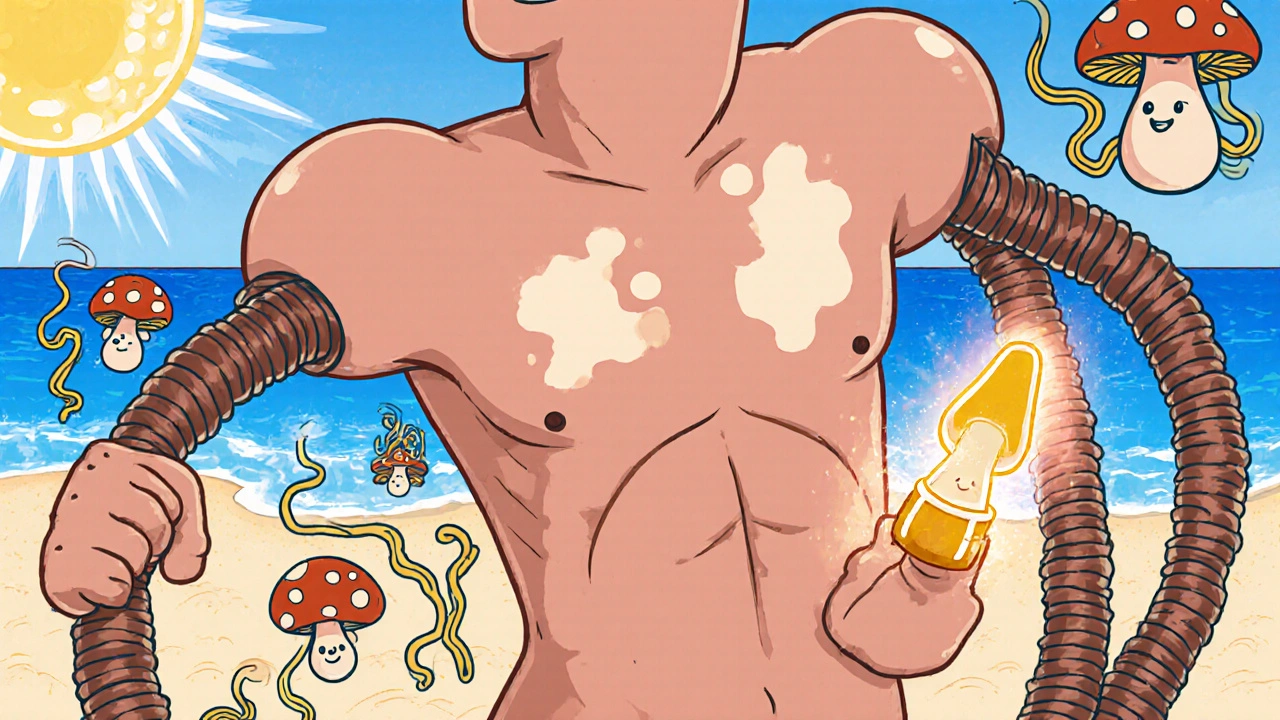
Tinea Versicolor: How to Treat Yeast Overgrowth and Prevent Recurrence
Haig Sandavol Nov 28 9Tinea versicolor is a common fungal skin condition caused by yeast overgrowth, leading to discolored patches. Learn how to treat it effectively and prevent recurrence with simple, evidence-based maintenance routines.
More Detail