
FDA Prescribing Information: What You Need to Know About Drug Safety and Usage
When you pick up a prescription, the FDA prescribing information, the official drug guide approved by the U.S. Food and Drug Administration that details safe usage, risks, and proper dosing. Also known as the package insert, it’s the most accurate source for how a medication works—and what could go wrong. This isn’t just paperwork for doctors. It’s your roadmap to using drugs safely, avoiding dangerous interactions, and spotting real side effects before they become serious.
Most people never read it. But if you’re on statins, anticoagulants like warfarin, or antidepressants like citalopram, skipping this info puts you at risk. The FDA prescribing information, includes critical details about drug interactions, dosing limits, and who should avoid the medication. For example, it tells you that citalopram shouldn’t go above 40mg a day because of heart rhythm risks, or that Dong Quai can make warfarin dangerously strong. It also lists adverse drug reactions, serious side effects that are documented in clinical trials and post-market reports—not just common nausea or drowsiness, but things like serotonin syndrome, QT prolongation, or internal bleeding. These aren’t guesses. They’re facts the FDA requires manufacturers to prove before a drug hits the market.
It’s not just about what’s in the bottle. The FDA approval, the official process that validates a drug’s safety and effectiveness for its labeled uses also governs how generics are made, how combination antibiotics are tested, and why some drugs get recalled. That’s why you’ll find posts here about generic antibiotic availability, look-alike drug names causing errors, and how to dispose of pills without leaking your personal health data. These all tie back to the same system: the FDA’s rules for how drugs are made, labeled, and monitored after they’re sold.
What you’ll find below isn’t a list of medical jargon. It’s real stories from people who’ve been burned by mislabeled allergies, confused by drug names, or scared by side effects they didn’t understand. You’ll learn how to read a prescribing guide like a pro—spotting red flags, asking the right questions, and knowing when a drug’s risks outweigh its benefits. Whether you’re managing diabetes, heart failure, ADHD, or just trying to avoid a bad reaction, this is the info that keeps you safe. No fluff. No marketing. Just what the FDA says—and what you need to do next.
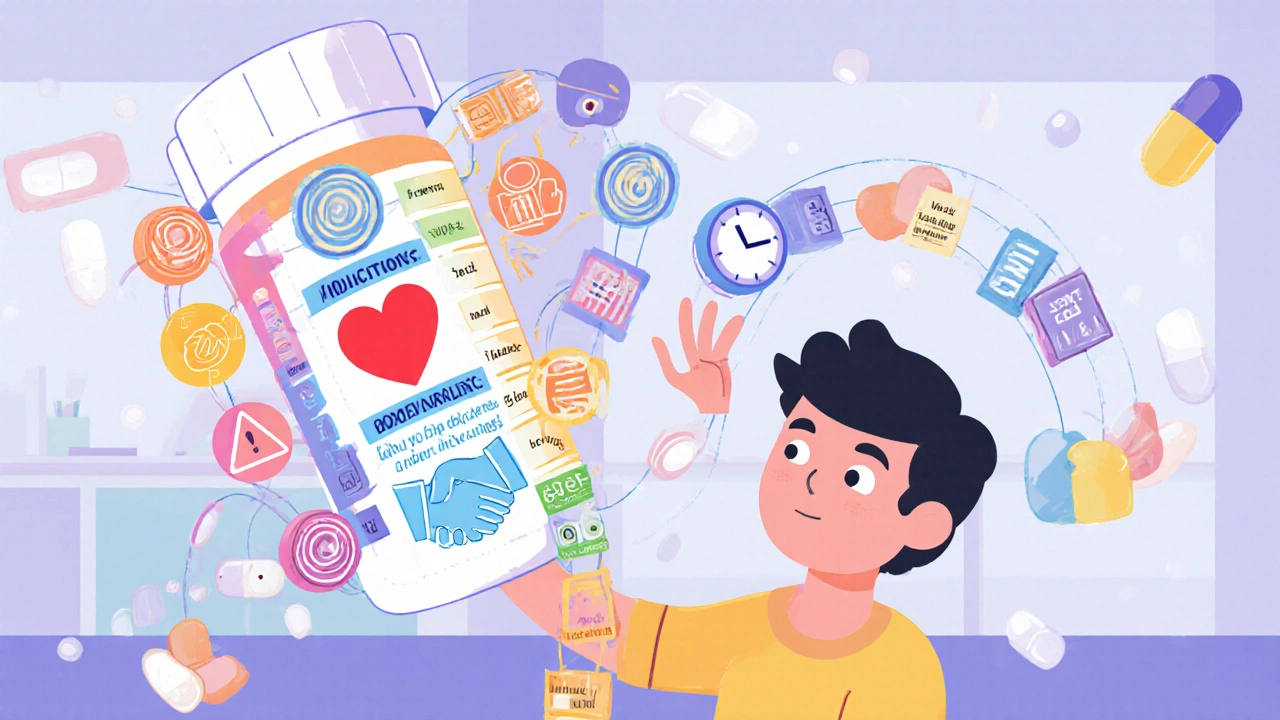
How to Read FDA Drug Labels: Understanding Key Information Sections
Haig Sandavol Nov 26 7Learn how to read the FDA drug label to understand prescriptions, avoid dangerous interactions, and spot critical safety warnings like Boxed Warnings and Recent Major Changes. Essential for patients and caregivers.
More Detail