
Antifungal Shampoo: What It Is, How It Works, and When You Need It
When your scalp itches, flakes, or feels oily in patches, it’s often not just dry skin—it could be a antifungal shampoo, a medicated shampoo designed to kill fungus on the scalp. Also known as antifungal scalp treatment, it’s one of the most common first-line remedies for persistent dandruff and scalp inflammation. Unlike regular shampoos that clean dirt and oil, antifungal shampoos target microscopic fungi like Malassezia, which thrive on the scalp and trigger flaking, redness, and irritation.
These shampoos aren’t just for occasional flakes. If you’ve tried regular anti-dandruff products and nothing sticks, you might be dealing with seborrheic dermatitis, a chronic skin condition fueled by fungal overgrowth and immune response. It looks like dandruff but often spreads to the eyebrows, nose, and ears. ketoconazole shampoo, a prescription-strength antifungal agent, is one of the most effective treatments backed by clinical studies. Other common ingredients include pyrithione zinc, selenium sulfide, and ciclopirox—each works differently but targets the same root cause: fungus.
Antifungal shampoos don’t cure the condition—they control it. That’s why many people use them regularly, not just when symptoms flare. They’re often used alongside other treatments, like topical steroids or light therapy, especially when inflammation is severe. You won’t find them in the regular shampoo aisle; they’re either behind the counter at pharmacies or sold as OTC formulas with lower concentrations. And while they’re generally safe, overuse can dry out your scalp or lead to resistance—so timing and frequency matter.
What’s interesting is how closely this connects to other topics you’ll find here: how medications interact with your body, how to read labels to spot active ingredients, and why some treatments work better than others based on individual biology. You’ll see posts about drug reactions, skin infections, and even how to track symptoms over time—all of which tie into understanding what’s really going on under your scalp.
Below, you’ll find real, practical guides on identifying fungal infections, comparing active ingredients, avoiding common mistakes, and knowing when to see a doctor instead of just reaching for another bottle. No fluff. Just what works—and what doesn’t.
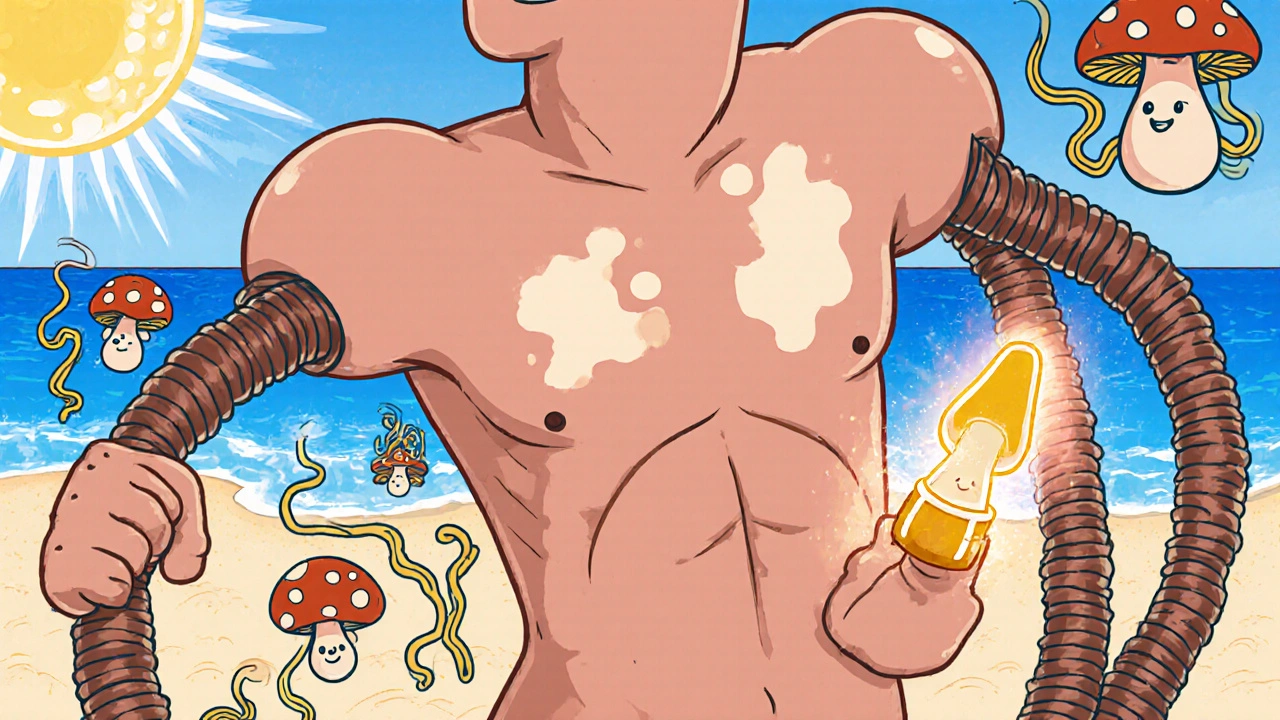
Tinea Versicolor: How to Treat Yeast Overgrowth and Prevent Recurrence
Haig Sandavol Nov 28 9Tinea versicolor is a common fungal skin condition caused by yeast overgrowth, leading to discolored patches. Learn how to treat it effectively and prevent recurrence with simple, evidence-based maintenance routines.
More Detail