
Every year, thousands of people in the U.S. die from mistakes they never saw coming-because they took the wrong pill. Not because they were careless. Not because they didn’t care. But because they didn’t check the label.
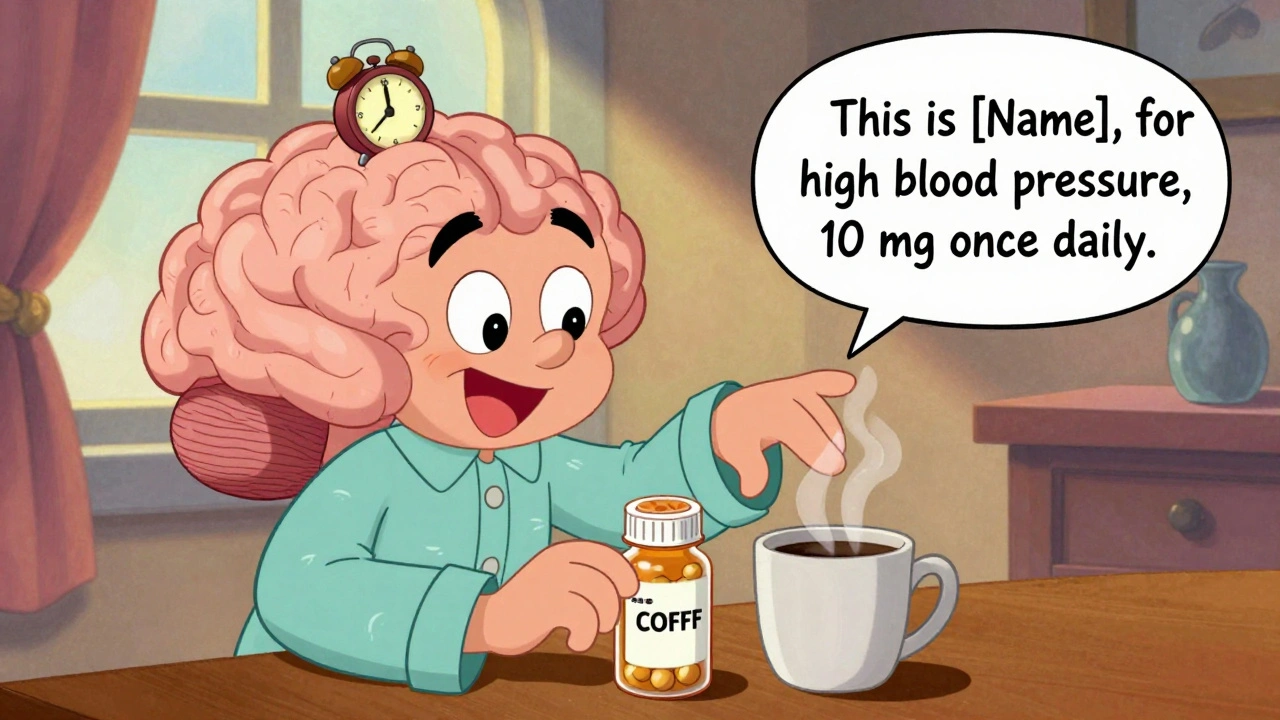
You’ve been there. Morning rush. Coffee in one hand, pill bottle in the other. You’ve taken this same pill for months. You know what it looks like. You know what it’s for. So you skip it. Just this once. But that’s how mistakes happen. And they happen more often than you think.
The FDA says medication errors cause 7,000 to 9,000 deaths each year in the U.S. And a third of those errors? They come from people grabbing the wrong bottle because they didn’t double-check the label. Not because they’re old. Not because they’re confused. Just because they didn’t pause.
Here’s the truth: checking your label before every dose isn’t just good advice. It’s the single most effective thing you can do to stop a medication error before it starts. Studies show it cuts your personal risk by up to 76%. That’s more than pill organizers. More than reminder apps. More than any tech gadget. Just slowing down for five seconds-long enough to read the label-can save your life.
What You Need to Check on Every Label
It’s not enough to glance at the bottle. You need to verify ten specific things every single time. Here’s the list-write it down if you have to.
- Your full name-Does it match your ID? Even a middle initial mismatch can mean the wrong medicine.
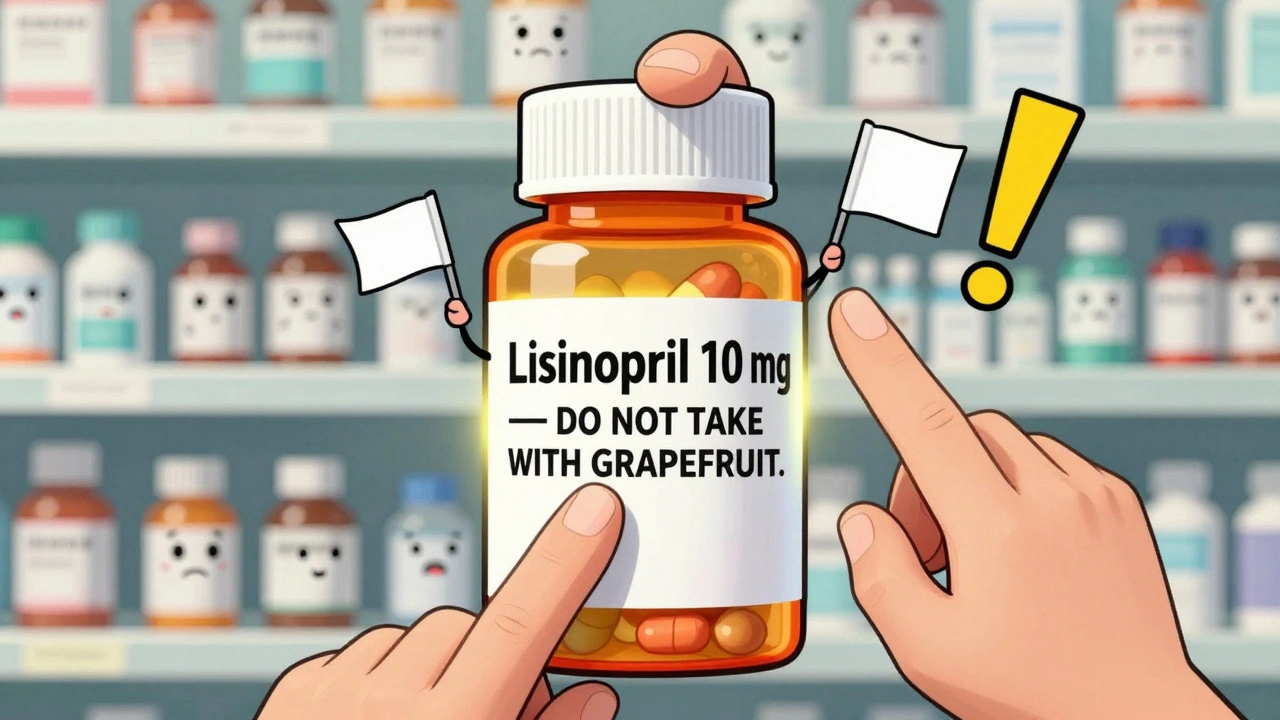
- Drug name-Both brand and generic. If it says "Lisinopril 10 mg" but you thought it was "Zestril," they’re the same. But if it says "Lisinopril 20 mg," that’s a problem.
- Dosage-Is it 5 mg, 10 mg, or 20 mg? The difference matters. Too little won’t help. Too much can hurt.
- How often to take it-Once a day? Twice? After meals? At bedtime? Don’t assume.
- Prescriber’s name-Is this the doctor you expected? A mix-up here can mean a drug meant for someone else.
- Expiration date-Never take medicine past this date. It loses strength. Some become unsafe.
- Fill date-If it’s older than 30 days, ask your pharmacist. Some meds degrade fast.
- Warnings-"Avoid alcohol." "May cause dizziness." "Do not take with grapefruit." These aren’t suggestions. They’re safety rules.
- Pharmacy name and phone-If something looks off, call them. They’ll confirm.
- Quantity and refills-Did you get 30 pills? Or 60? Did you expect another refill? Missing refills can mean you’re out.
You don’t need to memorize all ten. Just make a habit of reading them aloud-out loud-every time. Even if you’re alone. Even if you’re in a hurry.
Why Memory Fails (And What to Do Instead)
You think you remember your meds. You’ve taken them for months. You’re confident. But here’s what research shows: 83% of people who rely on memory stop checking labels within two weeks.
Why? Because your brain is wired to save energy. Once something feels routine, your brain stops paying attention. That’s not laziness. That’s biology.
So you need to trick your brain. You need to build a habit that forces you to pause.
The most effective method? The Three-Touch Method, endorsed by the American Society of Health-System Pharmacists. Here’s how it works:
- Hold the bottle in your hand.
- Touch the label with your index finger. Say out loud: "This is [your name], for [condition], [dosage] [times per day]."
- Touch the cap. Say: "I am taking this now."
That’s it. Three touches. Three words. Takes five seconds. But studies show it boosts adherence to 92% after 30 days. Silent checking? Only 64%.
Why does it work? Because you’re engaging multiple senses-touch, sound, sight. Your brain can’t ignore it. It’s no longer automatic. It’s intentional.
Make It Stick: Where and When to Check
Habits stick when they’re tied to something you already do every day. So don’t rely on willpower. Use your environment.
Place your pill bottles where you’ll see them-and can’t skip them.
- Next to your coffee maker-so you check before your first sip.
- On your toothbrush holder-so you check after brushing.
- In your car, next to your keys-so you check before leaving the house.
One study found that placing meds in the path of daily routines reduced missed checks by 53%. That’s huge.
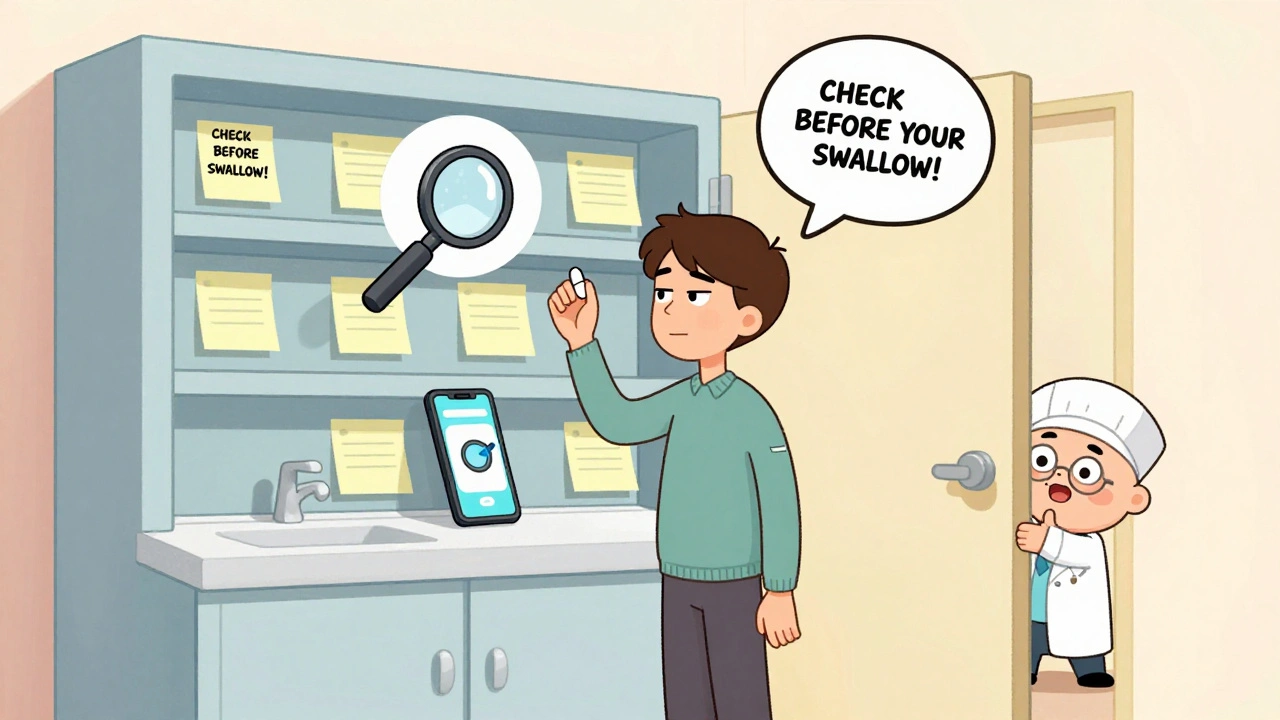
And if you take multiple pills? Use a simple checklist taped to your medicine cabinet. Write down your meds and the times you take them. Every morning, check off each one as you take it. If you can’t check it off, stop. Go back. Recheck the label.
What If You Can’t Read the Label?
One in five adults over 65 has trouble seeing small print. And 42% of patients complain about labels being too small or blurry.
You don’t have to struggle with this.
- Ask your pharmacist for a magnifying label. Many pharmacies offer free magnified versions with larger fonts and high-contrast colors.
- Request a large-print label when you pick up your prescription. By law, they must accommodate you.
- Use a phone magnifier app-there are free ones that zoom in on text.
- Ask a family member to read the label to you-and record it on your phone. Play it back when you take your pill.
Pharmacists are trained to help with this. Don’t be shy. Say: "I need this label easier to read. Can you help?" They’ve heard it before. They’ll help.
When Label Checking Isn’t Enough
Label checking is powerful-but it’s not magic. It doesn’t fix everything.
It won’t help if:
- You have severe dementia and can’t remember why you’re checking.
- You’re visually impaired and no accommodations are made.
- You have low health literacy and don’t understand what the words mean.
In those cases, you need extra support.
Ask your doctor or pharmacist for a medication review. Many pharmacies offer free monthly check-ins where they go over all your pills with you. Bring your list. Bring your bottles. Ask: "Is this still right?"
Also try the teach-back method: After your pharmacist explains your meds, ask them to explain it again. Then explain it back to them in your own words. If you can’t, they’ll fix the explanation. Studies show this improves retention by 57%.
And if you’re caring for someone else? Don’t just remind them. Sit with them. Watch them check the label. Then ask them to tell you what they saw. That’s how you catch mistakes before they happen.
Why This Matters More Than Ever
The average person over 65 takes 5.1 prescription drugs. That’s more than five chances a day to make a mistake.
And it’s getting worse. New drugs. New combinations. New dosages. Labels are changing. The FDA updated its labeling rules in January 2025 to make them clearer-bigger fonts, better contrast, plain language. But if you don’t read them, the changes don’t matter.
Right now, only 28% of U.S. pharmacies offer formal label-checking training. That’s not enough. But you don’t have to wait for them to catch up.
You can start today. Right now. Before your next pill.
This isn’t about being perfect. It’s about being consistent. One day you forget. That’s okay. The next day, you remember. That’s what builds safety.
Medication errors don’t happen because of evil. They happen because of distraction. Because of haste. Because of assumption.
You can break that chain. Just by pausing. Just by reading. Just by saying it out loud.
It’s not complicated. It’s not expensive. It’s not hard.
It’s just five seconds.
What if I take the same medication every day? Do I still need to check the label?
Yes. Even if you’ve taken the same pill for years, the label can change. The dosage might be updated. The pharmacy might switch brands. The expiration date might be wrong. Your body changes too. What worked last year might not be right this year. Always check.
Can I rely on my pill organizer instead of checking labels?
No. Pill organizers help you remember when to take pills, but they don’t tell you what you’re taking. You could put the wrong pill in the wrong compartment. Always verify the label before filling your organizer-and again before taking each dose.
What should I do if I realize I took the wrong medication?
Call your pharmacist or doctor immediately. Don’t wait to see if you feel sick. Even if you feel fine, some reactions take hours to show up. Keep the bottle and the wrong pill you took-this helps them figure out what happened and how to fix it.
Are there apps that help with label checking?
Yes-but only if they require you to photograph or scan the label before logging a dose. Apps that just remind you to take pills without verification are 63% less effective at preventing errors. Look for apps that force you to confirm the label matches what you’re about to take.
How long does it take to build the habit of checking labels?
Most people need 18 to 22 repetitions to make it automatic. That’s about three weeks if you check every day. Don’t aim for perfection. Aim for consistency. Miss a day? Just start again the next day. The goal isn’t to be flawless-it’s to never stop trying.
Comments (13)
-
Charles Moore December 3, 2025
Just started using the three-touch method after reading this. Took me three days to remember, but now I do it automatically. Even my cat seems to pause when I say it out loud. Weird, but it works. No more panic when I grab the wrong bottle.

-
Gavin Boyne December 4, 2025
Oh wow, so the FDA’s 7,000 deaths per year is just the tip of the iceberg? And we’re still letting pharmacies print labels in Comic Sans? I mean, I get that ‘plain language’ is a thing now, but if your font size is smaller than a mosquito’s eyelash, you’re not helping anyone. Also, who designed the pill organizer that makes me think I’m playing Tetris with my heart medication?

-
Rashi Taliyan December 5, 2025
I cried reading this. My grandmother took the wrong pill last year - not because she was forgetful, but because the label was printed in gray ink on a white bottle. She didn’t say anything for weeks. She thought it was her fault. Please, pharmacies - if you can’t make it readable, don’t give it out. We’re not asking for luxury. We’re asking to live.

-
Kara Bysterbusch December 6, 2025
While the structural integrity of this methodology is commendable - particularly the cognitive anchoring via tactile-linguistic reinforcement - one must consider the sociocultural heterogeneity of patient populations. The assumption of universal literacy, visual acuity, and linguistic fluency remains a critical epistemic flaw in the proposed framework. A truly equitable intervention must integrate multimodal feedback loops, including audio-visual aids and culturally contextualized pharmacological nomenclature. Furthermore, the absence of a longitudinal data validation cohort in the cited studies renders the 92% adherence metric statistically tenuous without control for confounding variables such as socioeconomic status and healthcare access disparity.

-
Rashmin Patel December 7, 2025
OMG YES. I’ve been doing this for months and it’s literally saved my life. I take 7 pills a day and I used to just throw them down like candy. Now I touch, say it out loud, touch the cap - and I even have a little voice memo on my phone that says ‘Rashmin, this is metformin 500mg, morning, for diabetes.’ I play it before I take it. My mom thinks I’m crazy. I don’t care. I’m alive. And if you’re not doing this, you’re playing Russian roulette with your organs. 🙏🫡

-
sagar bhute December 8, 2025
This is just corporate fear-mongering wrapped in a pretty bow. You think people are dumb? No. They’re tired. The system is designed to confuse you. Pills change brands every month. Labels get swapped. Pharmacists don’t even read them. This ‘three-touch’ nonsense? It’s a Band-Aid on a bullet wound. The real problem? Pharma greed. Insurance red tape. And you? You’re just being sold a checklist so you stop suing them.

-
Cindy Lopez December 9, 2025
‘You’ve been there.’ No, I haven’t. I always check. And I use a magnifying glass. And I keep a spreadsheet. And I cross-reference with the manufacturer’s website. And I log it in my health app. So your anecdotal ‘five seconds’ advice is not only insufficient, it’s dangerously under-specified. You need to include a verification protocol with timestamped digital confirmation. Otherwise, this is just feel-good fluff.

-
James Kerr December 10, 2025
Bro, I used to skip checking too. Now I do it while I’m waiting for my coffee to drip. Five seconds. No big deal. And now I don’t have to wonder if I’m taking my blood pressure pill or my thyroid pill. I just say it out loud. ‘This is me. This is my pill. I’m taking it.’ Feels weird at first, but now it’s like a little ritual. Kinda calming, honestly. 😊

-
shalini vaishnav December 12, 2025
How can Americans be so careless? In India, we memorize our medicines by heart since childhood. Our elders taught us: ‘If you don’t know what you’re taking, you don’t deserve to live.’ This post reads like a kindergarten safety manual. You don’t need apps or labels. You need discipline. And respect for your body. Not this Western hand-holding nonsense.

-
vinoth kumar December 12, 2025
I shared this with my mom and my uncle. We all started doing the three-touch thing together. Now we text each other every morning: ‘Did you touch and say it?’ It’s become this little family thing. My uncle even made a poster with the list and taped it to his fridge. We’re not perfect, but we’re trying. And that’s more than most families do.

-
bobby chandra December 13, 2025
Let me tell you something - this isn’t just about pills. It’s about reclaiming control. In a world where algorithms decide what you eat, what you watch, and who you love - here’s one tiny thing you can still own. Five seconds. One label. One breath. One choice. That’s power. That’s rebellion. That’s how you say ‘I am still here, and I will not be erased by negligence.’

-
Archie singh December 15, 2025
Label checking is a placebo for people who don’t want to admit they’re too lazy to learn their own meds. If you can’t remember what 10mg of lisinopril looks like after five years, maybe you shouldn’t be managing your own pills. Let someone else do it. Or get a guardian. Or stop pretending you’re in charge.

-
Gene Linetsky December 17, 2025
They’re watching you check your pills. Every time you touch that bottle, they’re logging it. The FDA, the insurance companies, the AI that tracks your ‘medication compliance score.’ This isn’t safety. It’s surveillance. They want you to think you’re in control - so you don’t ask why your pills cost $500 or why your doctor keeps changing them. Don’t be fooled. The label is a trap. The real danger is the system that made you need one.
