
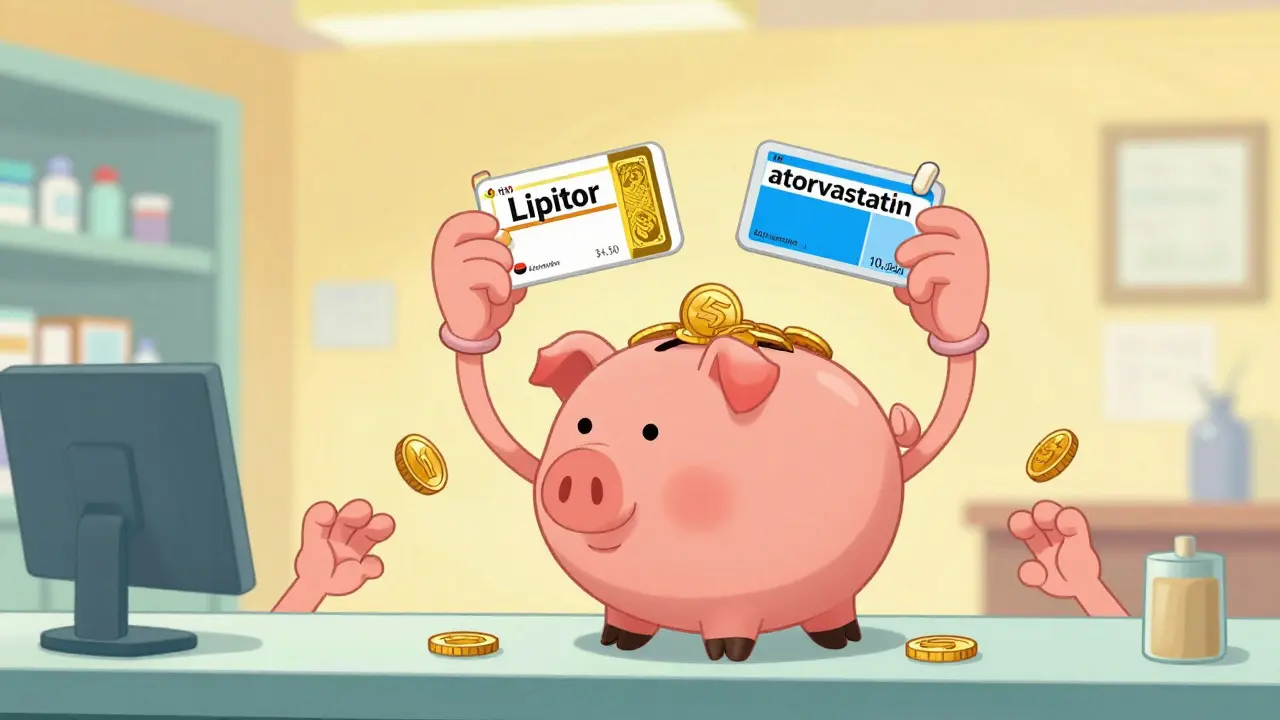
When you pick up a prescription, you might see two options on the label: a brand-name drug like Lipitor or its generic version, atorvastatin. The price difference can be dramatic-$4.50 per tablet for the brand versus just 10 cents for the generic. It’s natural to wonder: Is the cheaper version really the same? Can you trust it? The answer isn’t just yes-it’s almost always yes, with a few important exceptions.
What Makes a Generic Drug ‘Generic’?
A generic drug isn’t a copycat. It’s a legal, FDA-approved version of a brand-name drug that contains the exact same active ingredient, in the same strength and dosage form. The FDA requires that generics deliver the same amount of medicine into your bloodstream at the same rate as the brand. This is called bioequivalence. To prove it, manufacturers run tests showing that the concentration of the drug in your blood stays within 80% to 125% of the brand’s levels. In real-world studies, the actual difference is usually just 3.5%-less than the natural variation your body has from day to day.
What’s different? The color, shape, size, and inactive ingredients-like fillers, dyes, or preservatives. These don’t affect how the drug works, but they can make a pill look or taste different. That’s why you might suddenly get a blue pill instead of a white one, or a capsule instead of a tablet. It’s the same medicine, just made by a different company.
Why Are Generics So Much Cheaper?
Brand-name drugs cost a lot because the company that invented them spent years and millions developing them, running clinical trials, and marketing them. Once the patent expires-usually 20 years after the drug was first filed-the door opens for other companies to make the same drug without repeating all that expensive research.
Generic manufacturers don’t need to run new safety trials. They just prove their version works the same way. That cuts costs dramatically. On average, generics cost 80% to 85% less than their brand-name counterparts. For example:
- Zoloft (sertraline): $400 for a 30-day supply (brand) vs. $4 (generic)
- Lyrica (pregabalin): $650/month (brand) vs. $15/month (generic)
- Advair Diskus: $300 per inhaler (brand) vs. $120 (generic)
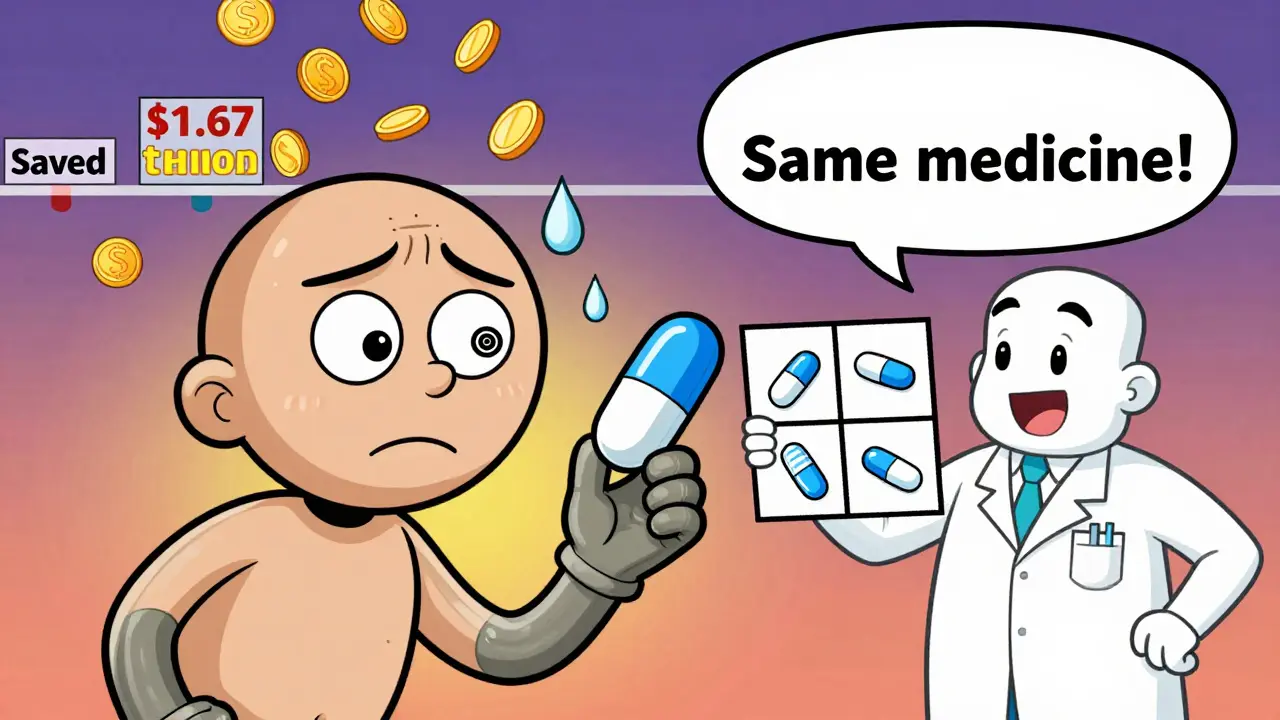
Over the past decade, generics saved the U.S. healthcare system over $1.67 trillion. That’s about $265 saved per person every year.
Are Generics Really as Effective?
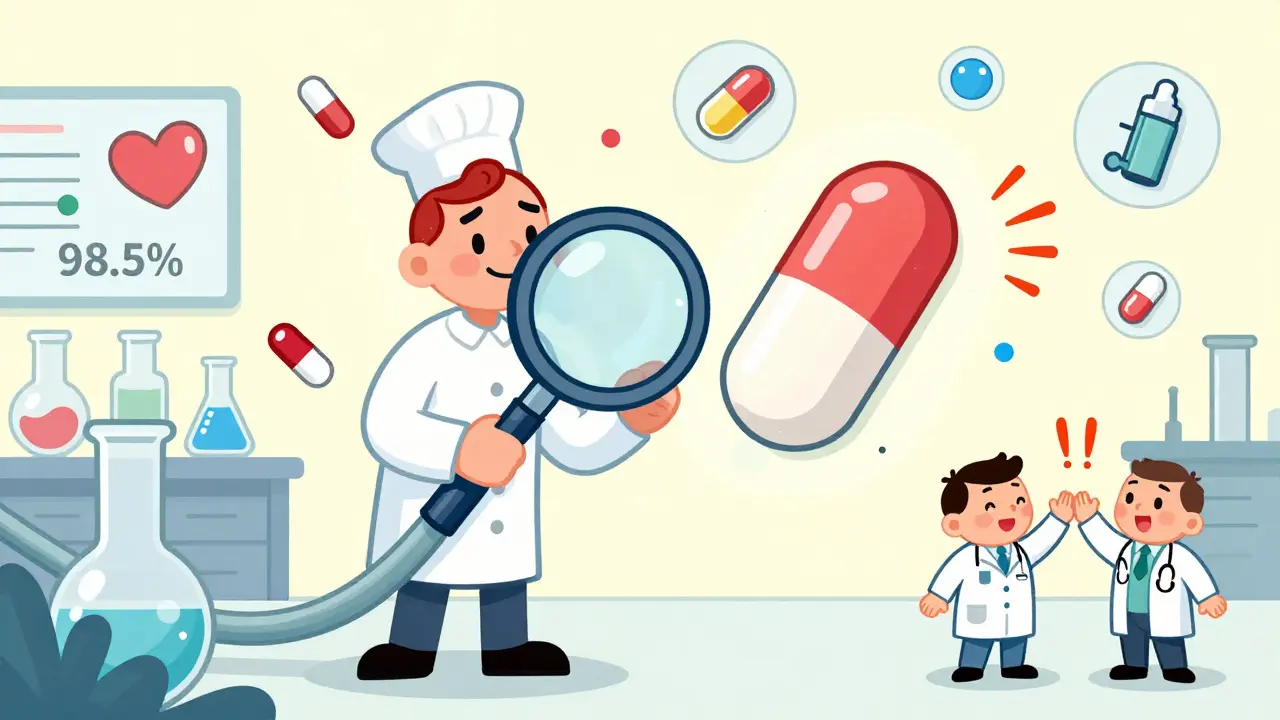
Yes-almost always. A major 2019 review in JAMA Internal Medicine looked at 47 studies involving nearly 10,000 patients. It found that generic drugs performed identically to brand-name drugs in 98.5% of cases. This held true across heart medications, antidepressants, diabetes drugs, and more.
The FDA has strict rules. Every generic must meet the same standards for purity, strength, stability, and quality as the brand. In fact, many brand-name drugs are made in the same factories as generics. The only difference? The label.
But here’s what patients often don’t know: the FDA allows up to a 20% range in bioequivalence. That sounds scary-until you realize that in practice, the average difference is only 3.5%. Harvard Medical School’s Dr. Niteesh Choudhry puts it simply: “The variation is tiny. Brand-name drugs are not always better. Many are highly expensive.”
When Should You Stick With the Brand?
There are a few situations where switching to a generic might need extra care:
- Narrow therapeutic index (NTI) drugs: These are medications where even a small change in blood level can cause harm or reduce effectiveness. Examples include warfarin (blood thinner), levothyroxine (thyroid hormone), and phenytoin (anti-seizure). For these, some states require prescribers to write “dispense as written” on the prescription. In 28 states, pharmacists must notify the doctor if they switch your levothyroxine brand.
- Complex delivery systems: Inhalers, patches, and injectables are harder to copy exactly. A 2016 study found that 12% of patients switching from Advair Diskus to a generic inhaler had trouble using the new device properly-even though the medicine inside was the same. The difference was in how the device worked.
- Extended-release formulations: Some generic versions of long-acting pills, like Wellbutrin XL (bupropion), have had issues in the past. The FDA issued a warning in 2012 about certain generics not releasing the drug at the same rate. Not all generics are affected, but if you notice a change in how you feel after switching, talk to your doctor.
- Allergies to inactive ingredients: Rare, but possible. If you’re allergic to a dye, gluten, or a specific filler, you might react to one generic but not another. Always check the inactive ingredients list if you have known allergies.
What Do Patients Really Experience?
Real-world feedback tells a clear story. On Drugs.com, 82% of users report being satisfied with generics, compared to 85% for brand-name drugs. Most people don’t notice a difference.
But complaints do pop up. Reddit threads in r/pharmacy show that 27% of users get confused when their pill changes color or shape. One person wrote: “I took my antidepressant for years-then one day it looked different. I thought I got the wrong medicine and stopped taking it. I didn’t know it was still the same.”
That’s why education matters. A 2023 study found that giving patients a picture of their new pill reduced medication errors by 37% during switches. Pharmacists are your best resource here. In fact, 68% of patients are nervous about generics at first-but 89% keep using them after a quick chat with their pharmacist.
Cost is the biggest driver. On r/PersonalFinance, 93% of people who switched to generics said the main reason was saving money. And it works: Kaiser Family Foundation found that when people can afford their meds, adherence goes up by 22%.
How to Make the Smart Choice
You don’t need to be a pharmacist to make the right call. Here’s how:
- Ask your doctor: If you’re on a medication with a narrow therapeutic index, ask if switching is safe. Don’t assume it’s okay.
- Check your pharmacy: If your generic looks different from last month, ask if it’s the same manufacturer. Some pharmacies stick with one maker to avoid confusion.
- Use free tools: GoodRx shows real-time prices for both brand and generic versions. The FDA’s Drugs@FDA database lets you look up your drug and see which generics are approved.
- Don’t panic over appearance: A different color or shape doesn’t mean it’s weaker. It just means a different company made it.
- Monitor how you feel: If you notice new side effects or a drop in effectiveness after switching, tell your doctor. It’s rare, but it can happen.
For most people, choosing a generic is a no-brainer. You get the same medicine, same results, at a fraction of the cost. And if you’re on a long-term medication like high blood pressure or cholesterol pills, that savings adds up to thousands over time.
What’s Changing in 2025?
The landscape is shifting. The Inflation Reduction Act of 2022 lets Medicare negotiate prices on 10 top-selling drugs starting in 2026. That could push more brands to go generic sooner. Meanwhile, the FDA’s new Generic Drug User Fee Amendments (GDUFA III) are speeding up approvals-1,166 generics were approved in 2022 alone, more than double the number from 2016.
But challenges remain. Over 78% of the active ingredients in generics come from India and China. Supply chain issues can cause shortages. And while 90% of prescriptions are now generic, brand-name drugs still make up 77% of total drug spending-because they’re so expensive.
The future is clear: generics will keep growing. By 2027, they’ll make up 93% of all prescriptions. The real question isn’t whether generics work-it’s whether you’ll let cost stop you from getting the medicine you need.
Are generic drugs as safe as brand-name drugs?
Yes. The FDA requires generic drugs to meet the same strict standards for safety, strength, purity, and quality as brand-name drugs. They’re tested in the same facilities, under the same rules. The only differences are in inactive ingredients and appearance-not effectiveness or safety.
Why do some people say generics don’t work for them?
In rare cases, patients report changes in how they feel after switching. This is most common with drugs that have a narrow therapeutic index (like thyroid or seizure meds) or complex delivery systems (like inhalers). Sometimes, it’s due to differences in inactive ingredients or how the pill is absorbed. But in over 98% of cases, the medicine works the same. If you notice a change, talk to your doctor before stopping the medication.
Can I switch between different generic brands?
Yes, but be aware that different manufacturers may make pills that look different. For most medications, this is fine. For drugs like levothyroxine or warfarin, frequent switches between generics can cause small changes in blood levels. If you’re on one of these, it’s best to stick with the same manufacturer. Ask your pharmacist to keep you on the same version.
Do insurance plans prefer generics?
Absolutely. Most insurance plans, including Medicare Part D, require you to try the generic first. If you want the brand, you’ll often pay a higher copay-or your plan may not cover it at all. This isn’t just cost-saving for insurers-it’s standard practice to help patients afford their meds.
How do I know if my generic is FDA-approved?
All legally sold generics in the U.S. must be FDA-approved. You can check the FDA’s Drugs@FDA database or the Orange Book to confirm. Look for an “AB” rating-that means it’s rated as therapeutically equivalent to the brand. If your pharmacy is licensed and reputable, you can trust that the generic is approved.
What to Do Next
If you’re on a brand-name drug and paying more than $50 a month, ask your pharmacist or doctor if a generic is available. Most are. If you’re already on a generic and feel fine-keep taking it. Don’t switch back to the brand unless your doctor advises it.
For chronic conditions, the savings add up fast. A $400 monthly medication becomes $15. That’s not just money saved-it’s peace of mind, better adherence, and fewer skipped doses. You’re not settling for less. You’re choosing a smarter, equally effective option.
Comments (15)
-
Thomas Anderson December 16, 2025
Generics are the real MVPs. I’ve been on blood pressure meds for 8 years-switched to generic, saved $300/month, no side effects, no drama. Why pay more for the same pill with a fancy logo?

-
Sarthak Jain December 17, 2025
yo i was so skep at first, like wtf is this blue pill?? but then i checked the actve ingredint-same as my brand. now i’m hooked on generics. saved my ass financially. also, my pharma tech showed me the FDA database-total game changer. 🙌

-
Edward Stevens December 18, 2025
Oh wow, a whole article about how generics are ‘just as good’? Shocking. Next you’ll tell me tap water is ‘just as hydrating’ as Fiji. I mean, sure, the active ingredient is the same… but why does my brand-name Zoloft make me feel like a human and the generic make me feel like a confused toaster? Oh right-because placebo isn’t just in your head, it’s in the packaging.

-
Dwayne hiers December 19, 2025
Let’s clarify bioequivalence thresholds: the 80–125% window is statistically valid, but for NTI drugs like levothyroxine, even a 5% shift can trigger TSH fluctuations. That’s why pharmacists track manufacturer changes-AB-rated doesn’t mean identical in clinical practice. Always monitor labs after a switch, especially if you’re on warfarin or phenytoin. It’s not fearmongering, it’s pharmacokinetics.

-
Natalie Koeber December 21, 2025
Have you ever wondered who really owns the FDA? Big Pharma. They fund the agency. Generics are a trap. The ‘same active ingredient’? Yeah, right. The fillers are different-probably glyphosate or nanobots. That’s why I only take brand-name. My thyroid won’t be a lab rat for corporate profit.

-
Rich Robertson December 21, 2025
In South Africa, generics are the only option for most people. We don’t have the luxury of brand-name premiums. And you know what? People live. People thrive. The medicine works. It’s not about nationalism or brand loyalty-it’s about access. If you can afford the brand, great. But don’t pretend the generic is ‘lesser’ when it’s saving lives in places where medicine isn’t a privilege-it’s a necessity.

-
Rulich Pretorius December 23, 2025
The real question isn’t whether generics work-it’s why we’ve been conditioned to equate price with quality. We’ve been sold the myth that expensive = better, when in truth, the most effective drug is the one you actually take. Generics remove the barrier to adherence. That’s not just economics-it’s ethics.

-
Sinéad Griffin December 24, 2025
GENERIC = GOVERNMENT CONSPIRACY 😤💊 I switched to generic Adderall and felt like a zombie for 3 weeks. My brain was MELTING. Then I went back to brand-BOOM. Focus returned. Big Pharma doesn’t want you to know this. They’re selling you poison disguised as savings. #SaveOurMinds #NoToGenerics

-
Wade Mercer December 25, 2025
I don’t care what the FDA says. If I paid for the brand, I expect the brand. Why should I settle for something that looks like it was made in a garage? It’s not about money-it’s about dignity. I’m not a charity case.

-
jeremy carroll December 26, 2025
Guys, I was terrified to switch from brand to generic for my antidepressant. But I did it-saved $400/month. No weird side effects. Honestly? I felt better because I wasn’t stressed about money. Sometimes the real medicine is peace of mind. You’re not losing anything. You’re gaining freedom.

-
Daniel Wevik December 27, 2025
Let’s talk about the supply chain. Over 80% of API for generics comes from India and China. That’s not a flaw-it’s efficiency. The FDA inspects those plants. If they fail, they’re shut down. The system works. The real problem? People don’t trust the process because they don’t understand it. Education > fear.

-
Daniel Thompson December 27, 2025
As a medical professional, I’ve seen patients refuse generics out of fear. I’ve also seen them die because they couldn’t afford their medication. There is no moral high ground in paying $400 for a pill when $4 does the same job. This isn’t about personal preference-it’s about public health responsibility.

-
Alexis Wright December 28, 2025
Let’s be real: the FDA’s 80–125% bioequivalence window is a legal loophole disguised as science. That’s a 45% swing! You think your body doesn’t notice? You think your liver doesn’t care if your drug peaks at 1.2x the brand? The system is rigged. The brand-name companies pay for the testing. The FDA is a revolving door. You’re not getting ‘the same drug’-you’re getting a statistical approximation. And you call that medicine?

-
Tim Bartik December 29, 2025
Y’all are acting like generics are some socialist plot. I’m proud to be an American who saves $300 a month on my statin. I’m not poor-I’m smart. And if you think your brand-name Lipitor is better, go ahead and keep paying for the marketing budget. I’ll be over here, living longer and richer.

-
Jonny Moran December 29, 2025
Just want to say-pharmacists are your secret weapon. I used to panic every time my pill changed color. Then I started asking my pharmacist: ‘Hey, is this the same maker?’ They’d show me the label, explain the difference, even gave me a little card with the pill image. That’s the kind of care that builds trust. Generics aren’t scary. Ignorance is.
