
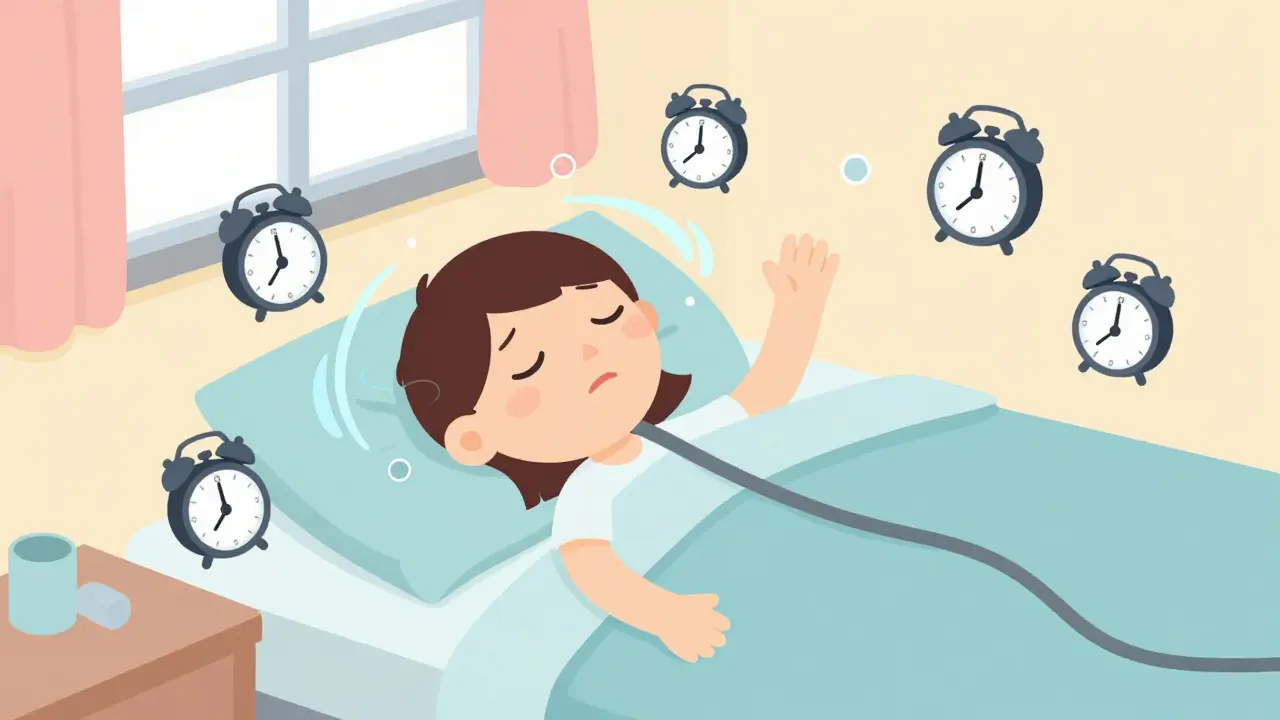
For most people, a full night's sleep feels refreshing. But for those with idiopathic hypersomnia, even 12 hours of sleep leaves them exhausted. This rare neurological disorder affects 10 in 100,000 people, yet many suffer for years before getting a diagnosis. Unlike regular tiredness, idiopathic hypersomnia causes unrelenting sleepiness that doesn't improve with extra sleep. It's not laziness-it's a serious medical condition with real neurological causes.
What is Idiopathic Hypersomnia?
Idiopathic hypersomnia is a chronic sleep disorder where people experience excessive daytime sleepiness despite getting enough or even too much sleep at night. The word "idiopathic" means the cause is unknown. Symptoms include:
- Extreme daytime sleepiness that persists for at least three months
- Unrefreshing naps that last over an hour
- "Sleep drunkenness" - severe confusion and disorientation upon waking
- Difficulty waking up, sometimes requiring multiple alarms
- Cognitive issues like memory lapses and trouble concentrating
Unlike narcolepsy, which involves sudden sleep attacks and cataplexy (muscle weakness triggered by emotions), idiopathic hypersomnia doesn't have these symptoms. People with IH typically sleep longer at night-often 10-11 hours-and still feel exhausted during the day. The Sleep Foundation reports that 36-66% of patients experience profound sleep inertia lasting hours after waking. One patient described it as "waking up feeling like I'm underwater, unable to think clearly for two hours".
Why Diagnosis Takes Years
Getting diagnosed with idiopathic hypersomnia is tough. Many patients see 4-5 doctors before getting the right diagnosis. Why? Because symptoms overlap with depression, chronic fatigue syndrome, or just "being tired."
Doctors use two key tests:
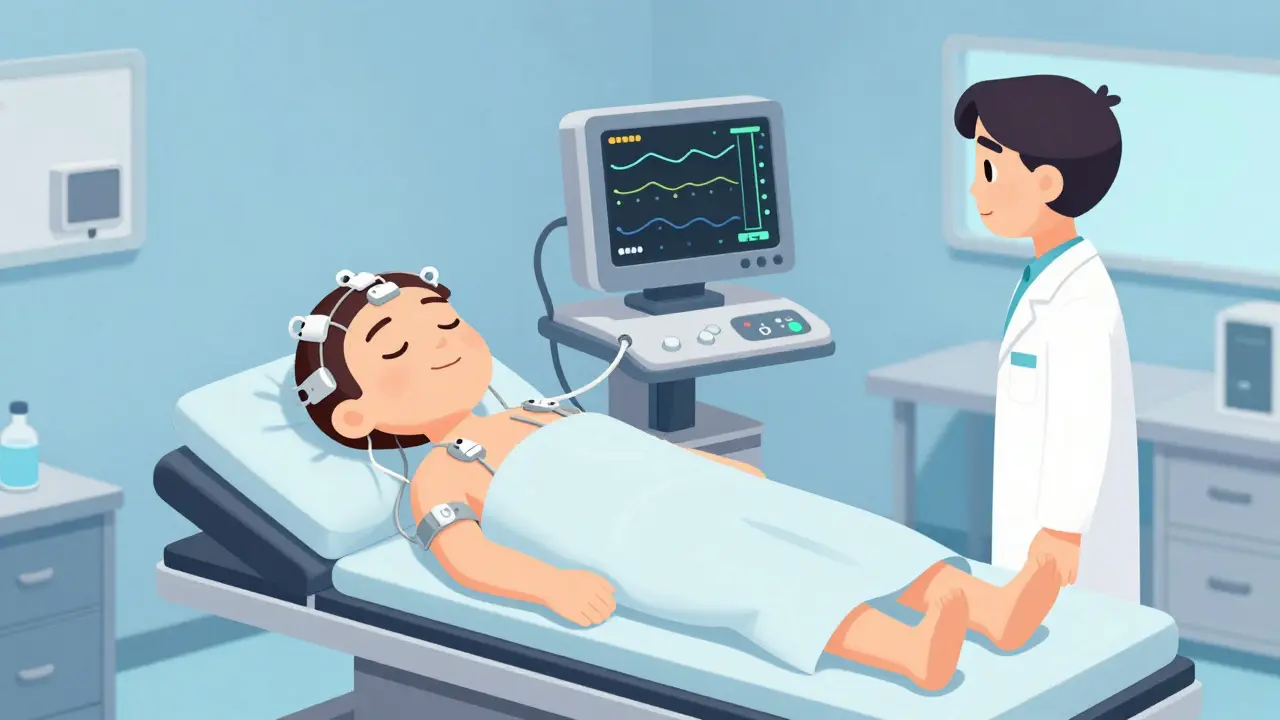
- Polysomnography (PSG): An overnight sleep study to rule out other sleep disorders like sleep apnea.
- Multiple Sleep Latency Test (MSLT): Measures how quickly you fall asleep during the day. In IH, this test usually shows normal results, which often confuses doctors.
According to the Sleep Foundation, the average diagnostic delay is 8.3 years. Patients often get misdiagnosed as having depression or anxiety. One patient shared, "I was told to "just drink more coffee" for five years before finding a specialist." The Polysomnography test is critical because it rules out sleep apnea or other conditions that mimic IH. Without it, doctors might miss the real issue.
Treatment Options That Actually Work
There's no cure for idiopathic hypersomnia, but several treatments help manage symptoms. The FDA-approved medication for IH is Xywav (calcium, magnesium, potassium, and sodium oxybates). It's a liquid taken at night and reduces daytime sleepiness by 63% in clinical trials. However, it requires careful dosing due to potential side effects.
Other common treatments include:
- Modafinil: A stimulant used for narcolepsy that helps about 45% of IH patients, though it often requires higher doses. Modafinil is commonly prescribed but can cause headaches or anxiety in some users.
- Cognitive Behavioral Therapy for Hypersomnia (CBT-H): A 12-week program that teaches sleep scheduling and energy management. Studies show 58% improvement in daily functioning. This therapy is especially helpful for patients who struggle with daily routines.
- Lifestyle adjustments: Strict sleep schedules, avoiding caffeine after noon, and strategic napping (20 minutes max). These simple changes can make a big difference in managing symptoms.
Many patients find combining medication with therapy works best. A 2022 study found 72% of participants improved significantly when using both approaches. The Histamine system in the brain plays a key role in wakefulness. Research suggests low histamine levels may contribute to IH, which is why treatments targeting this pathway show promise.

How IH Affects Daily Life
Idiopathic hypersomnia doesn't just make you tired-it disrupts every part of life. Consider these real-world impacts:
- 62% of patients have lost jobs due to sleepiness-related performance issues.
- 78% report near-miss car accidents from falling asleep at the wheel.
- 41% forget basic tasks like turning off the stove, creating home safety risks.
- 74% experience clinical depression linked to the disorder's severity.
"I set 17 alarms to wake up for work and still overslept three times in two months," says one patient on Reddit. "That cost me a promotion." These aren't just statistics-they're daily struggles for people who can't control their sleepiness. The Sleep Inertia symptom, where waking up causes prolonged confusion, makes mornings especially challenging. Many patients need hours to feel fully alert.
What's New in Research
Scientists are making progress in understanding and treating IH. A March 2023 study identified a biomarker pattern in cerebrospinal fluid that correctly diagnoses 89% of IH cases. This could cut diagnostic delays significantly.
Several promising treatments are in development:
- GABA-A receptor modulators: Five compounds are in Phase 2 trials to reduce excessive sleepiness. These target the brain's GABA system, which GABA-A receptors regulate.
- Pitolisant: A histamine H3 receptor antagonist showing 47% response rate in early studies. It works by boosting histamine activity in the brain.
- Orexin replacement therapy: Still in preclinical testing but could address the root cause. Orexin is a brain chemical that promotes wakefulness, and its dysfunction is linked to IH.
The International Classification of Sleep Disorders (ICSD-4) will release refined IH criteria in late 2024. NIH funding for hypersomnia research has grown 625% since 2018, signaling growing urgency for solutions. The Multiple Sleep Latency Test remains a key diagnostic tool despite its limitations in IH cases.
What are the main symptoms of idiopathic hypersomnia?
The main symptoms include excessive daytime sleepiness lasting at least three months, unrefreshing naps longer than one hour, severe sleep inertia (sleep drunkenness) where waking up causes confusion and disorientation, difficulty waking up even with multiple alarms, and cognitive issues like memory lapses and trouble concentrating. Unlike narcolepsy, IH does not involve cataplexy or sudden sleep attacks.
How is idiopathic hypersomnia diagnosed?
Diagnosis starts with a sleep history and physical exam. Doctors then conduct an overnight polysomnography (PSG) to rule out other sleep disorders like sleep apnea. This is followed by a Multiple Sleep Latency Test (MSLT), which measures how quickly you fall asleep during the day. Unlike narcolepsy, IH patients typically have normal MSLT results, which can make diagnosis challenging. The International Classification of Sleep Disorders (ICSD-3) requires symptoms to persist for at least three months with no other underlying cause.
How does idiopathic hypersomnia differ from narcolepsy?
While both cause excessive daytime sleepiness, narcolepsy involves sudden sleep attacks, cataplexy (muscle weakness triggered by emotions), and abnormal REM sleep patterns. IH patients don't experience cataplexy or sudden sleep attacks. They typically sleep longer at night (10-11 hours) and have unrefreshing naps that last over an hour. Narcolepsy patients often have shorter, refreshing naps (15-20 minutes), whereas IH naps don't provide relief. IH also develops gradually over weeks or months, while narcolepsy symptoms often appear abruptly.
What treatments are available for idiopathic hypersomnia?
The only FDA-approved medication for IH is Xywav, a sodium oxybate-based treatment that reduces sleepiness by 63% in clinical trials. Other options include modafinil (helps 45% of patients), and cognitive behavioral therapy for hypersomnia (CBT-H), which has shown 58% improvement in daily functioning. Lifestyle changes like strict sleep schedules and avoiding caffeine after noon also help. Many patients find combining medication with therapy provides the best results.
Why is diagnosing idiopathic hypersomnia so difficult?
Diagnosis is challenging because symptoms overlap with depression, chronic fatigue syndrome, or general tiredness. The Multiple Sleep Latency Test (MSLT), commonly used for narcolepsy, often shows normal results in IH patients, confusing doctors. Many patients see 4-5 healthcare providers before getting a correct diagnosis. On average, it takes 8.3 years from symptom onset to diagnosis. New biomarkers in cerebrospinal fluid, identified in 2023, may soon improve diagnostic accuracy.
Comments (15)
-
Savannah Edwards February 7, 2026
For years I thought I was just lazy until I got diagnosed. It's not about willpower-it's a neurological issue. My mornings are a battle; even 10 hours of sleep leaves me groggy. I've tried everything-caffeine, naps, alarms-but nothing helps much. The sleep drunkenness is brutal. Waking up feels like I'm underwater, unable to think clearly for hours. I've lost jobs because of it. Doctors kept dismissing me until I found a specialist. It's frustrating how common the misdiagnosis is. Many people think it's depression or just tiredness. But it's so much worse. The cognitive issues are real; I can't focus, forget things constantly. It's hard to explain to others. I wish more people knew about this. This post really highlights the need for better awareness.

-
Mayank Dobhal February 9, 2026
It's not laziness-it's a medical condition.

-
Marcus Jackson February 10, 2026
The MSLT test often shows normal results for IH patients, which is why it's often misdiagnosed. PSG is key to rule out sleep apnea. The Sleep Foundation data shows diagnostic delays averaging 8.3 years. It's crucial to have the right tests.

-
Natasha Bhala February 11, 2026
u r right about the mslt its so hard to get diagnosed i had 2 see 4 docs before finding a specialist but there's hope new treatments comin stay strong

-
Gouris Patnaik February 12, 2026
In India, we don't have this problem. It's a Western issue. People need to toughen up. Sleep disorders are just laziness. This is why I don't trust Western medicine.

-
Jesse Lord February 12, 2026
i understand where ur coming from but ih is real its not about laziness its a neurological disorder many people suffer silently we need more awareness and support lets be kind to each other

-
AMIT JINDAL February 14, 2026
Ah, my dear Jesse, while your sentiment is noble, the reality is far more complex. 🌟 In my extensive research, I've found that IH is exacerbated by modern lifestyles in developed nations. 🤔 Traditional societies like mine prioritize discipline and structured routines, which prevent such issues. 😌 However, I do agree that awareness is key. 🌈 Let's spread knowledge and compassion. 💫

-
Catherine Wybourne February 14, 2026
Ah, the eternal struggle of the sleep-deprived. 🤔 While it's tempting to blame 'laziness', the reality is far more fascinating. In my travels across cultures, I've seen how sleep disorders are often misunderstood. But let's be honest-this isn't just a medical issue; it's a societal one. We need to rethink how we view rest. 💡 (And yes, coffee isn't the answer. Trust me.)

-
Ashley Hutchins February 15, 2026
u r so right about the societal issue but people need 2 take responsibility. i mean if u r tired maybe u r not doing enough. i've read stadies that say lack of discipline causes this. its not a real disorder. just weak willpower

-
Niel Amstrong Stein February 16, 2026
Hey Ashley, I get where u're coming from but it's not that simple. 🌍 Sleep disorders are complex. IH isn't about willpower. It's a medical condition. 🧠 We need empathy, not judgment. Let's support each other. 💙 #ScienceNotShame

-
Paula Sa February 17, 2026
It's fascinating how much we still don't know about sleep. IH reminds us that the brain is a mystery. We should approach this with humility. Every person's experience is unique. Let's work together to find solutions. 🌱

-
Mary Carroll Allen February 18, 2026
Paula u r so right! It's a mystery! 🌟 But we need action now. This isn't just about understanding-it's about saving lives. People are losing jobs, accidents happen. We need more funding, better treatments. No more waiting. Let's fight for change. 💪

-
Joey Gianvincenzi February 18, 2026
It is imperative that the medical community acknowledges the severity of idiopathic hypersomnia. The current diagnostic protocols are woefully inadequate. I demand immediate action to revise the criteria and fund further research. This is not acceptable.

-
Amit Jain February 18, 2026
This entire article is nonsense. IH doesn't exist. It's all in people's heads. They're just lazy. Wake up and get a job. Stop making excuses.

-
Sarah B February 20, 2026
This is a Western problem. In my country we don't have this. People need to toughen up. No excuses.
