
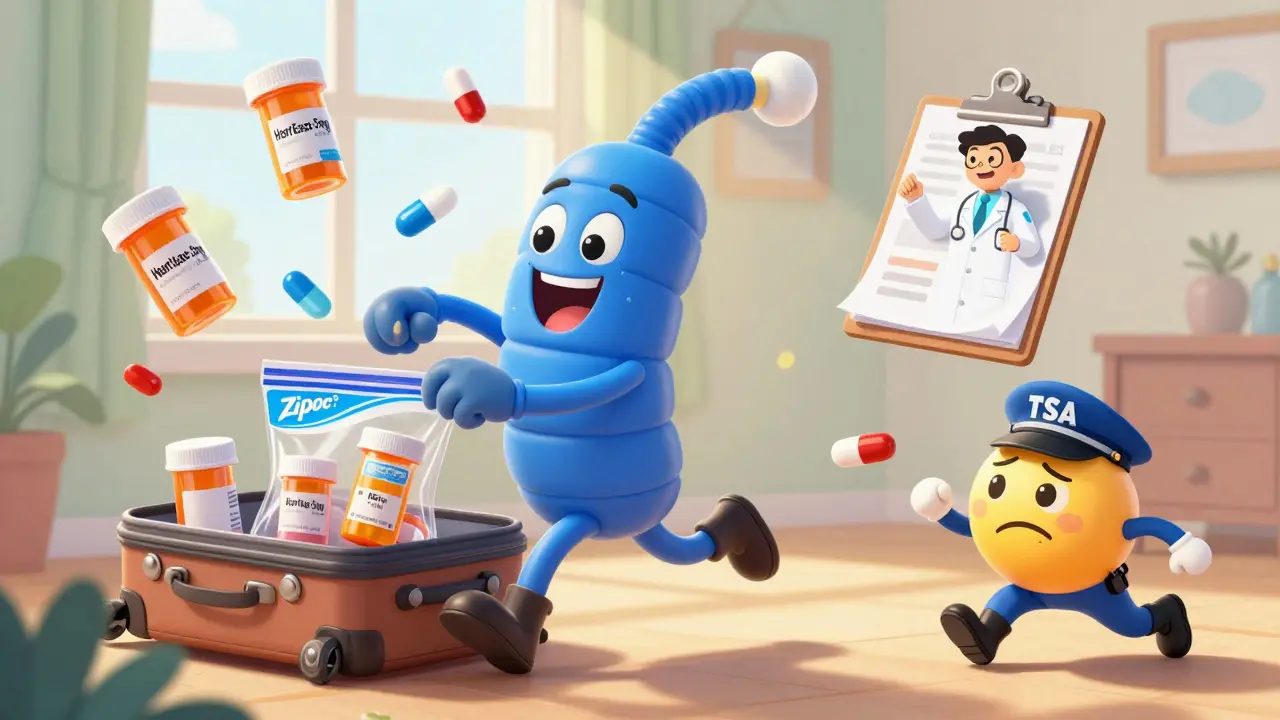
Running out of medication halfway through a road trip or stuck on a cruise ship with no access to your pills isn’t just inconvenient-it can be dangerous. Whether you’re driving across the country or sailing through the Caribbean, packing your meds the right way matters more than you think. The good news? It’s simple if you know what to do. No guesswork. No last-minute panic. Just clear, step-by-step steps that keep you safe and compliant.
Start 30 Days Before You Leave
Don’t wait until the night before your trip. Give yourself time to check if your medications are allowed where you’re going. Some countries ban common drugs like ADHD stimulants, certain painkillers, or even antihistamines. Royal Caribbean and Norwegian Cruise Line require you to declare controlled substances 30 days before sailing. Same goes for some U.S. states on road trips-medical marijuana is legal in 38 states but still illegal in 13, and crossing state lines with it can get you fined or worse. Talk to your doctor. Ask them to confirm:- Which of your meds are safe in your destination countries
- If you need a letter explaining why you take them
- Whether you need extra refills
Keep Everything in Original Containers
This is non-negotiable. TSA, Customs, and cruise lines all require prescriptions to stay in their original pharmacy bottles. Why? Because unlabeled pills look like drugs. And if you’re caught with a ziplock full of white pills and no label, you could be detained at a port or border. Your bottle should have:- Your full name (must match your passport)
- The pharmacy’s name and contact info
- The doctor’s name and prescription number
- Clear dosage instructions
Bring Extra Pills-A Lot More Than You Think
Delays happen. Flights get canceled. Ships dock late. Road trips hit traffic jams or accidents. The odds aren’t low: OAG Aviation says 23% of international flights experience delays. The RV Industry Association reports 15% of travelers have meds confiscated or lost on the road. Here’s what to bring:- For road trips: At least 1 extra day’s supply
- For cruises: At least 2 extra days’ supply
- For international travel: 3 extra days’ supply
Use the Right Packing System
You can’t just toss pills into your suitcase. Organization saves time and stress. Here’s what works:- Original bottles in a clear quart-sized Ziploc bag - Keep this in your carry-on. TSA allows unlimited prescription meds, but they must be visible and accessible.
- Separate document sleeve - Put your doctor’s letter, prescription copies, and your medication list in a waterproof pouch. Attach it to the outside of your bag so you can grab it fast at security or customs.
- Color-coded Ziplock bags - Use one bag for heart meds, one for pain, one for daily vitamins. Label them with masking tape. One Reddit user cut their medication errors to zero using this method on a 14-day cruise.
- Approved pill organizers - Only if they’re labeled. Special Journeys says pill minders must be taped shut with the date, time, and your name written clearly. Unlabeled organizers? Not allowed on most cruises.
Know the Rules for Cruises vs. Road Trips
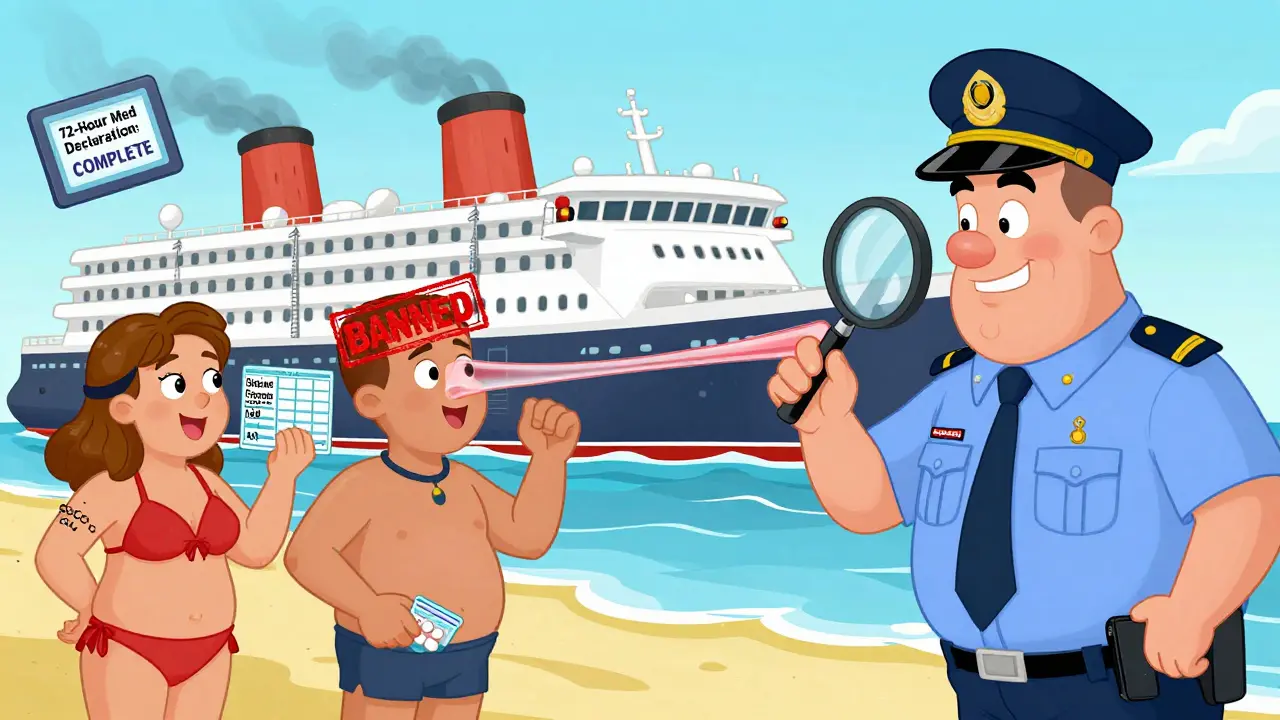
Cruises and road trips have different rules because of international borders and shipboard law. Cruise lines (Royal Caribbean, Norwegian, Carnival):- All meds must be in original containers
- Controlled substances (like codeine, oxycodone, Adderall) need advance notice and often a doctor’s note
- Some Caribbean ports ban common U.S. meds-check the IAMAT database before you go
- Electronic submission of your med list is now required 72 hours before sailing on Royal Caribbean
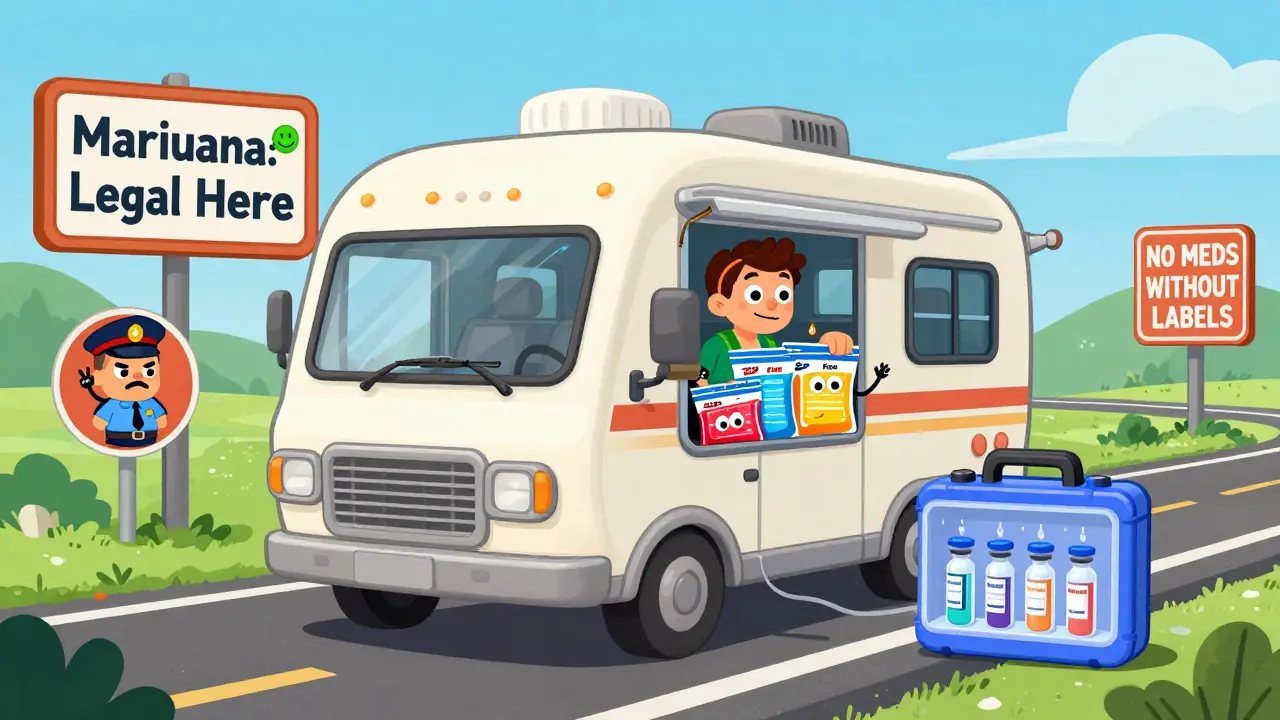
- State laws vary. Some states require prescriptions to be no more than a 30-day supply
- Medical marijuana is a minefield-even if it’s legal in your state, crossing into a non-legal state can get you arrested
- AAA found 67% of road-trippers had medication issues crossing state lines
- Pharmacies are everywhere-90% of Americans live within 5 miles of one. If you run out, you can refill. But don’t count on it for controlled substances.
Protect Your Meds from Heat, Cold, and Loss
Medications don’t like extremes. Heat can ruin insulin. Cold can freeze liquid meds. Sunlight can degrade pills.- Keep your meds in your carry-on, never checked luggage. SITA reports a 0.02% lost luggage rate-but that’s still 1 in 5,000 bags. You don’t want to be that person.
- Use a small insulated bag with a cold pack if you’re carrying insulin or other temperature-sensitive drugs.
- Don’t leave pills in the car. Even in winter, a car can hit 120°F inside. That’s enough to break down your meds.
- Consider a travel case with UV protection. These cost $15-$30 and keep meds stable for up to 72 hours.
Don’t Forget the Backup Plan
Even with perfect packing, things go wrong. That’s why you need a backup.- Travel medical insurance is a must. The Cruise Lines International Association says the average cost of a medical evacuation from a cruise ship is $48,000.
- Know where the ship’s medical center is. Most cruise lines have 24/7 clinics, but they can’t refill prescriptions-they can only stabilize you.
- Have a list of nearby pharmacies at each port. Apps like GoodRx or PharmacyChecker can help you find low-cost options abroad.
- Share your med list with a travel partner. If you pass out, they need to know what you take and when.
What to Do If You Get Stopped
If customs or TSA asks about your meds:- Stay calm. Don’t argue.
- Hand them your original bottles and doctor’s letter.
- Don’t offer extra info unless asked.
- If they say a med is banned, ask for a written explanation. Sometimes, it’s a misunderstanding.
Real Stories, Real Lessons
One user on Reddit, u/TravelMedNurse, shared that she once watched a passenger get denied entry in the Bahamas because his Adderall was in a plastic bag. He had no prescription label. He missed the cruise. Another, u/RoadWarriorDad, had his insulin confiscated at a state border because the bottle didn’t have his name on it. He had to drive 90 miles to a pharmacy to get a new one. But then there’s u/CruiseMedExpert, who used color-coded bags and a printed list. She said she never missed a dose-even when the ship was delayed three days. The difference? Preparation.Final Checklist Before You Go
Do this 24 hours before departure:- ✅ All meds in original containers with labels
- ✅ 2-3 extra days’ supply
- ✅ Medication list (brand, generic, dose, frequency) in print and on phone
- ✅ Doctor’s letter if you take controlled substances
- ✅ Clear Ziploc bag for carry-on meds
- ✅ Waterproof document sleeve with copies
- ✅ Insulated case if you need temperature control
- ✅ Travel insurance confirmation
- ✅ Digital copy of all docs backed up in the cloud
Can I put my pills in a pill organizer for a road trip?
Yes, but only if the organizer is clearly labeled with your name, the medication name, dosage, and time of day. Unlabeled pill organizers are not allowed on cruises and can raise red flags at border crossings. If you’re driving, it’s less strict-but if you get pulled over, having original bottles will save you time and stress.
Do I need a doctor’s note for my prescriptions?
For most regular medications, no. But if you take controlled substances like opioids, stimulants (Adderall, Ritalin), or benzodiazepines, yes-get a letter. Many countries, including some Caribbean islands, treat these as illegal drugs. A letter from your doctor explaining why you need them can prevent detention or confiscation.
Can I bring over-the-counter meds like ibuprofen or allergy pills?
Yes, and you should. Many countries restrict common OTC drugs like pseudoephedrine (found in cold meds) or high-dose antihistamines. Keep them in original packaging with the label intact. Even if you think it’s harmless, don’t assume it’s allowed everywhere. Check the WHO’s 2022 International Travel Medication Report for restricted substances.
What if I run out of meds on a cruise?
Cruise ships have medical centers, but they can’t refill prescriptions. They might give you a temporary supply of a similar drug, but it won’t be your exact brand or dosage. That’s why bringing extra pills is critical. If you’re on insulin or heart meds, running out could be life-threatening. Always pack more than you think you’ll need.
Is it okay to keep meds in my purse or pocket instead of my carry-on?
Only if you’re not flying. If you’re on a plane, TSA requires all medications to be in your carry-on luggage. If you’re driving or on a cruise, you can keep them in your personal bag, but don’t leave them in the car or checked luggage. The risk of loss or damage is too high. Keep them with you at all times.
Can I get my meds repackaged for travel at the pharmacy?
Yes. CVS, Walgreens, and other major pharmacies now offer free travel repackaging services. They’ll put your meds in labeled, TSA-compliant containers with your name and dosage info. This is perfect if you take 10+ pills a day. Just ask at the counter-it’s a free service, and they’ll do it while you wait.
Do I need to declare my meds at customs?
You don’t have to declare them unless asked. But if you’re entering a country with strict drug laws (like Japan, Dubai, or some Caribbean islands), it’s smarter to have your doctor’s letter and original bottles ready. Customs officers can ask to see your meds at any time. Being prepared avoids delays and misunderstandings.
Are there any apps to help track my meds while traveling?
Yes. Apps like Medisafe, MyTherapy, and Pill Reminder can send you alerts for doses and let you share your schedule with a travel partner. The CDC now recommends using digital tools with QR codes that link to your medication list. Many travel clinics now provide these QR codes on printed checklists. Scan it, and you’ll see your full med list-even if your phone dies.
Comments (13)
-
Sarah Little January 2, 2026
Let me just say, if you're not using a TSA-compliant, labeled, color-coded Ziploc system with a digital QR-linked med list, you're not just unprepared-you're a liability to yourself and others. The Special Journeys 2023 report is clear: 90% of cruise med incidents stem from unlabeled containers. This isn't advice-it's a public health imperative.

-
innocent massawe January 3, 2026
Thank you for this. In Nigeria, we don’t have access to many of these meds, so seeing how others manage is eye-opening. 🙏 I’ll share this with my cousin who travels to the US for treatment. Safety first, always.

-
veronica guillen giles January 4, 2026
Oh wow. So let me get this straight-you’re telling me I can’t just dump my 17 pills into a cute little dinosaur-shaped organizer because ‘some cruise line in the Bahamas might get suspicious’? And I thought my life was already overly regulated. Next you’ll tell me I need a notarized affidavit for my Advil.

-
Vincent Sunio January 5, 2026
The assertion that ‘unlabeled pills look like drugs’ is not merely an observation-it is a legally substantiated presumption under 21 U.S.C. § 841 and international customs protocols. Furthermore, the CDC’s recommendation for a bilingual medication list is not optional; it is a standard of care recognized by the WHO and the International Council of Nurses. Failure to comply constitutes negligence, not mere oversight.

-
JUNE OHM January 6, 2026
EVERYTHING IS A GOVERNMENT TRAP. 🚨 They want you to use original bottles so they can track your meds through the pharmacy database. And don’t even get me started on QR codes-they’re linking your health data to the CDC’s AI surveillance system. I keep my insulin in a thermos in my sock drawer. If they want it, they’ll have to pry it from my cold, dead hands. 🇺🇸💣

-
Philip Leth January 7, 2026
As someone who’s driven from Texas to Alaska with a full prescription regimen, I can tell you-just keep it simple. Original bottles. Extra days. Keep ‘em on you. Don’t overthink it. I once had a cop ask about my blood pressure meds and I just handed him the bottle. He said, ‘Damn, man, you’re serious about this.’ That’s all you need: respect for the process.

-
Angela Goree January 9, 2026
Why do people even bother with pill organizers? You know what happens when you put your meds in those little plastic trays? They get mixed up. They get spilled. They get lost. And then you’re stuck on a cruise ship with no way to know if you took your 10mg or your 20mg-and you think, ‘Oh, I’m fine,’ and then you’re not fine. And then you’re dead. And then your family sues the cruise line. And then the cruise line blames YOU for not following the rules. So don’t be that person. Keep. It. In. The. Bottle.

-
Shanahan Crowell January 10, 2026
You got this! Seriously-this guide is gold. I used the color-coded bags on my Alaska cruise last year and never missed a dose, even when we got stuck in a storm for 48 hours. Pro tip: label the bags with a Sharpie, not masking tape-it doesn’t smear in humidity. You’re not just packing meds-you’re packing peace of mind.

-
Kerry Howarth January 10, 2026
Original containers. Extra supply. Carry-on only. Done. No drama. No confusion. Just follow the steps. Your future self will thank you.

-
Tiffany Channell January 12, 2026
Let’s be real-this entire guide is just corporate fear-mongering disguised as ‘safety.’ The FDA doesn’t care if your pills are in a Ziploc. The cruise lines don’t have the manpower to check every bottle. This is about liability, not health. And yet, people eat it up like it’s gospel. Pathetic.

-
Joy F January 14, 2026
Think about it: the original bottle isn’t just a container-it’s a symbol of medical authority. A ritual object. A sacred vessel that separates the ‘legitimate patient’ from the ‘drug-seeking deviant.’ When you transfer your pills, you’re not just breaking rules-you’re rejecting the entire medical-industrial complex’s narrative of control. And yet… we still do it. Why? Because we’re tired. Because we want convenience. Because we’re human. And that’s the tragedy.

-
Haley Parizo January 15, 2026
People treat medication like it’s a luxury. It’s not. It’s oxygen. It’s water. And yet we treat it like a Spotify playlist we can shuffle. This isn’t about rules-it’s about dignity. The right to survive without begging for permission from a TSA agent who’s never heard of levothyroxine. You don’t need a letter. You need respect. And if the system won’t give it to you? Pack like you’re carrying your life. Because you are.

-
Ian Detrick January 17, 2026
Just read this. Then do it. No excuses. Your meds aren’t optional. Your safety isn’t negotiable. You’re not just packing pills-you’re packing your future. And that’s worth a little extra effort.
