
When you pick up a generic pill at the pharmacy, you probably don’t think about how long it took to get there. But behind every affordable medication is a complex, tightly timed process run by the U.S. Food and Drug Administration (FDA). For manufacturers, getting a generic drug approved isn’t just about paperwork-it’s about money, competition, and patient access. So how long does it actually take?
What’s the standard timeline for FDA generic drug approval?
The FDA’s official goal for a standard generic drug application (called an ANDA) is 10 months after the application is accepted for review. That’s the target. But the real numbers tell a more detailed story.
In 2025, the FDA’s average approval time for generic drugs dropped to 35.59 days for the mean and 25.26 days for the median-based on quarterly data from the Center for Drug Evaluation and Research (CDER). That’s not a typo. Those are days, not months. So why does everyone still say 10 months?
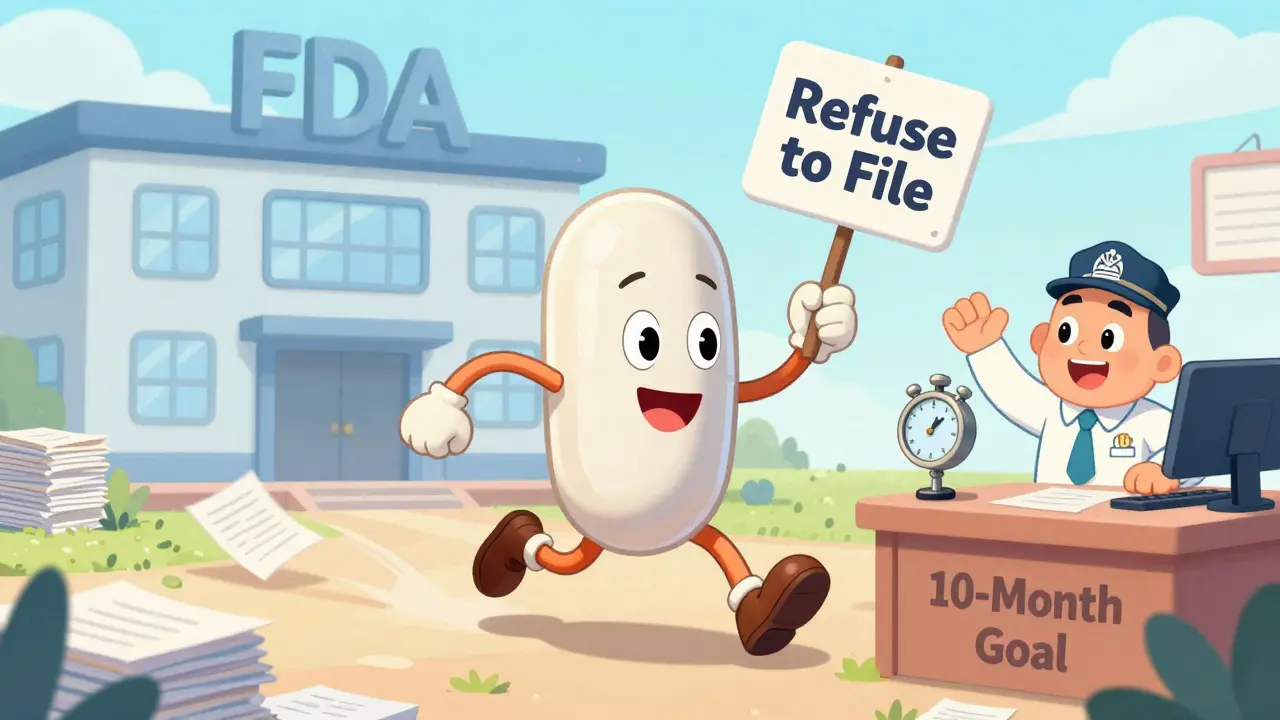
The 10-month clock starts only after the FDA confirms your application is complete enough to begin reviewing it. Before that, there’s a 60-day filing review. If your paperwork is messy, incomplete, or missing key data, the FDA will send back a “refuse to file” letter. That pauses everything. You fix it, resubmit, and the clock resets.
So if you’re a manufacturer, plan for 10 months from the moment you submit a clean, complete application. But if you’re a patient or a pharmacist wondering why a new generic just hit the shelves, the FDA likely approved it in under a month after the final review started.
Why do some generics take months longer than others?
Not all generic drugs are created equal. A simple tablet-like generic ibuprofen or metformin-is easy to copy. The chemistry is straightforward. The FDA can review it quickly.
But complex generics? Those are another story.
Think inhalers, injectables, nasal sprays, or drugs with special coatings or delivery systems. These require advanced testing to prove they work the same way as the brand-name version. The science is harder. The data is bigger. The FDA needs more time.
One Reddit user reported a nasal spray generic taking 1,087 days from submission to approval. Another got a standard tablet approved in 278 days. That’s nearly three years versus less than a year.
The FDA’s own data shows that complex generics still take longer. But they’re getting faster. Since 2023, the agency’s dedicated review teams for complex products have cut approval times by 22%. That’s progress.
What’s a “priority review” for generics?
The FDA doesn’t treat every generic the same. If a drug is in short supply-or if no other generic exists-the agency can give it priority status. That means faster review.
While the FDA doesn’t publish exact timelines for priority generics, industry insiders say they often get approved in 6 to 8 months instead of 10. Some are approved even faster if they’re tied to public health emergencies or chronic shortages.
For example, in 2025, the FDA approved first generics for epinephrine injections, doxycycline oral suspension, and ivermectin tablets-all drugs with high demand and limited competition. These were fast-tracked. The agency says it’s now approving more first generics than ever before.
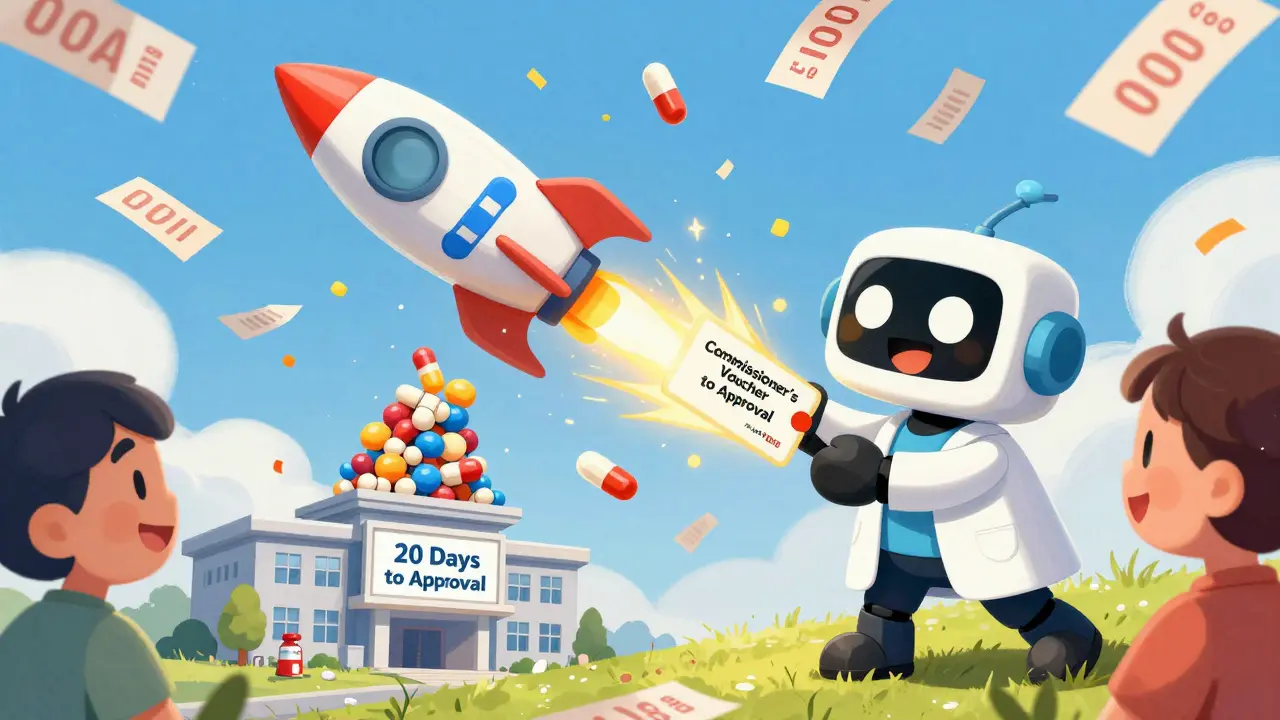
There’s also a new tool in the FDA’s toolbox: the Commissioner’s National Priority Voucher (CNPV). If a company applies for a generic that addresses a critical shortage or is hard to manufacture, they can get a voucher that cuts review time from 10 months to just 1 to 2 months. It’s a game-changer.
What happens if the FDA says “no”?
Getting a “complete response letter” (CRL) isn’t the end-it’s just a detour. The FDA sends this when your application has issues: missing data, flawed testing, or problems with manufacturing.
In Q2 2025, 42.3% of applications got a CRL on the first try. That’s up from 37.8% in 2024, which sounds bad-but it’s actually a sign of better screening. The FDA is catching problems earlier, so manufacturers don’t waste time on flawed submissions.
Fixing a CRL usually takes 3 to 6 months. Then you resubmit, and the clock starts again. Some companies go through two or three rounds before approval. That’s why the average time can still feel long, even if the official goal is 10 months.
Experts say the best way to avoid CRLs is to submit a rock-solid application. That means perfect chemistry data, clear manufacturing details, and full bioequivalence studies. Don’t cut corners. The FDA sees it.
How is the FDA speeding things up?
The FDA isn’t just waiting for applications to come in. They’re actively making the process faster.
Since 2024, they’ve been testing artificial intelligence to help review applications. In pilot programs, AI reduced review time for standard generics by 15.8%. That’s not replacing reviewers-it’s helping them sort through data faster, flagging inconsistencies, and highlighting key issues.
They’ve also started using “rolling review” for some applications. Instead of waiting to send the whole ANDA at once, companies can submit parts as they’re ready. The FDA reviews each piece as it arrives. That cuts down on waiting time.
And then there’s GDUFA III-the latest funding agreement between the FDA and generic drug makers. It sets new goals: 90% of standard applications approved by the goal date and 75% of priority applications approved on time. The FDA is on track to meet these targets.
By 2027, the goal is to cut median approval times to just 20 days for standard generics and 10 days for priority ones. That’s not science fiction-it’s the plan.
Who benefits from faster approvals?
Patients. Pharmacists. Health systems. Everyone.
Generic drugs make up 90% of all prescriptions in the U.S. but cost only 23% of total drug spending. That’s over $1.7 trillion saved in the last decade thanks to generics.
Faster approvals mean more competition. More competition means lower prices. When a new generic hits the market, the brand-name drug’s price often drops by 30% to 50% within months.
Companies like Teva, Viatris, and Sandoz lead the pack in approvals because they’ve mastered the process. They use pre-submission meetings with the FDA, hire experienced regulatory teams, and invest in quality data from day one.
Small companies can get help too. The FDA offers fee waivers for small businesses-though only 4.7% of applicants qualify. Still, it’s a lifeline for startups trying to bring affordable drugs to market.
What’s the catch? Are we sacrificing safety?
Some experts worry.
Dr. Peter Lurie from the Center for Science in the Public Interest says rushing approvals could risk patient safety if quality checks slip. The FDA counters that they use a risk-based approach: more scrutiny for complex drugs, less for simple ones. They’re not cutting corners-they’re cutting waste.
The Congressional Budget Office warns that without more funding, these speed gains might stall after 2027. The FDA is doing more with less. If Congress doesn’t increase GDUFA fees, the momentum could slow.
But so far, the data doesn’t show a drop in quality. The number of recalls for generics hasn’t increased. Inspections are still happening. The science is still being verified. The FDA’s track record for safety remains strong.
What should you do if you’re waiting for a generic?
If you’re a patient: ask your pharmacist. If a generic is approved, they’ll know. Some drugs hit the market quietly. Others get big announcements.
If you’re a manufacturer: focus on quality, not speed. Submit a clean application. Use pre-submission meetings. Don’t guess what the FDA wants-ask them.
If you’re a healthcare provider: know that generics aren’t just cheaper-they’re often better for access. A faster approval means more patients get the medicine they need, when they need it.
The FDA’s goal isn’t just to approve drugs. It’s to make sure they’re safe, effective, and available. The timelines are getting shorter. The system is getting smarter. And for millions of people, that means better health-and lower bills.
How long does the FDA take to approve a generic drug?
The FDA aims to approve a standard generic drug application (ANDA) within 10 months after accepting it. But once the full review starts, the average approval time is now under 36 days, with a median of just 25 days. Complex generics take longer-sometimes over a year.
What is a complete response letter (CRL) from the FDA?
A complete response letter is the FDA’s way of saying your application has issues that need fixing-like missing data, flawed testing, or manufacturing problems. About 42% of applications get a CRL on the first try. Fixing it usually takes 3 to 6 months, then you resubmit.
Do priority reviews speed up generic drug approvals?
Yes. If a generic drug treats a shortage or has no competition, the FDA can give it priority review. These are typically approved in 6 to 8 months. A new program called the Commissioner’s National Priority Voucher can cut approval time to just 1-2 months for critical drugs.
Why do some generic approvals take over a year?
Complex generics-like inhalers, injectables, or special-release tablets-require more testing and data to prove they work the same as the brand. The science is harder, and the FDA needs more time. Some complex products still take 1,000+ days to approve, though timelines are improving.
Is the FDA using AI to approve generics faster?
Yes. Since 2024, the FDA has been testing AI tools to help review applications. In pilot programs, AI reduced review time for standard generics by 15.8%. It helps flag inconsistencies and speeds up data analysis-but human reviewers still make the final call.
How do faster generic approvals affect drug prices?
Faster approvals mean more competition, which drives prices down. When a new generic enters the market, the brand-name drug’s price often drops 30% to 50% within months. Over the past decade, generics have saved the U.S. healthcare system over $1.7 trillion.
If you’re wondering why a generic drug you need isn’t available yet, the answer isn’t always simple. But the system is changing-faster, smarter, and more focused on patients than ever before.
Comments (15)
-
Glen Arreglo December 19, 2025
Man, I had no idea the FDA was approving generics in under a month after review started. I always assumed it took months just to get through the queue. This makes me feel a lot better about the price drops I’ve seen at the pharmacy lately.
Still crazy how some complex drugs like inhalers take over a year though. That’s not efficiency, that’s a bottleneck.

-
benchidelle rivera December 19, 2025
The data is clear, but the narrative is misleading. The 10-month figure isn’t outdated-it’s the total timeline from first submission to approval, including resubmissions and administrative delays. Reducing the review window to 25 days doesn’t change the fact that most applicants submit incomplete dossiers. This isn’t faster approval-it’s better preparation by big pharma.

-
Isabel Rábago December 20, 2025
They’re cutting corners. I’ve seen too many people get sick from generics that don’t work right. The FDA used to be a watchdog. Now it’s a speedrun contest for profit-driven corporations. AI can’t detect subtle bioequivalence issues. You don’t gamble with people’s health just to hit a quarterly target.

-
Moses Odumbe December 22, 2025
AI reviewing meds?? 😱 That’s wild. I mean, I get it, but like… what if the algorithm misses something? I trust a human more than a bot that’s been trained on 10,000 ibuprofen apps. Also, 1-2 months for a voucher? That’s basically a VIP pass for big companies. Where’s the love for the small guys?

-
bhushan telavane December 23, 2025
Interesting. In India, we get generics within weeks after patent expiry. But we don’t have the same regulatory depth. Maybe the US system is just more thorough, even if slower. Still, 35 days average? That’s impressive if true.

-
Connie Zehner December 25, 2025
So let me get this straight-your solution to drug shortages is to give corporate giants a VIP ticket to fast-track approval? And you call that progress? The real problem is monopolies, not bureaucracy. The FDA is just a rubber stamp for Big Pharma now. 🤡

-
Jedidiah Massey December 26, 2025
Let’s not conflate throughput with therapeutic equivalence. The GDUFA III metrics are statistically valid, but they do not account for pharmacokinetic variance in bioequivalence studies across populations. The 90% approval rate is a compliance metric, not a clinical one. The FDA’s risk-based approach is pragmatically sound, but the granularity of CRL feedback remains insufficient for complex delivery systems.

-
Alex Curran December 26, 2025
Wasn’t aware of the CNPV program. That’s actually smart. Cutting review time for critical shortages makes sense. But I wonder how many small firms even know about it. Most of the ones I’ve talked to are drowning in paperwork and don’t even know where to start. The FDA needs outreach, not just faster tech.

-
Allison Pannabekcer December 27, 2025
Thank you for this. I work in a community pharmacy and see the impact every day. When a new generic hits, we get patients who couldn’t afford their meds before suddenly able to refill. It’s not just about cost-it’s about dignity. I hope the FDA keeps this momentum going. And yes, safety matters-but so does access.

-
Dikshita Mehta December 27, 2025
Very well explained. The median of 25 days is the real story here. Most people hear '10 months' and assume that’s the norm. But the data shows the system is working efficiently for clean submissions. The delays come from poor preparation, not slow regulators. Manufacturers need to stop treating the FDA like a suggestion box.

-
Sahil jassy December 28, 2025
AI helping review? Cool. But let’s be real-most of these apps are just copies of brand names. If the chem is the same, why does it take so long? Maybe the FDA should just approve anything that passes bioequivalence and audit the manufacturers later. Save time, save money, save lives.

-
Nicole Rutherford December 30, 2025
Oh please. 'Faster approvals' means more bad generics on the shelf. You think people don’t notice when their blood pressure med stops working? Or their seizure meds cause new side effects? The FDA used to protect us. Now they’re just trying to hit their KPIs. Wake up.

-
Chris Clark December 30, 2025
Wait so if you submit a clean app you get approved in like 3 weeks? That’s insane. I thought it took forever. Also, the AI thing is kinda wild but kinda makes sense-like, if it’s just data matching, why not let a bot do the first pass? Humans can handle the weird stuff. Also, 1.7 trillion saved?? That’s more than some countries’ GDP.

-
Dominic Suyo January 1, 2026
This is peak bureaucratic theater. The FDA is playing a numbers game while patients suffer. You call 25 days 'fast'? That’s the review window after you’ve already spent 18 months fixing your application. The real delay? The system is designed to punish the small, reward the rich, and pretend it’s all about efficiency. It’s not innovation-it’s corporate theater wrapped in data visualization.

-
Carolyn Benson January 2, 2026
Speed is not wisdom. The FDA’s mandate is not to maximize throughput-it is to safeguard human life. When you reduce scrutiny to meet quarterly targets, you are not modernizing-you are commodifying medicine. The 42% CRL rate is not a sign of better screening-it is a sign of systemic failure in industry readiness. We are not fixing the problem-we are just making the paperwork prettier.
