
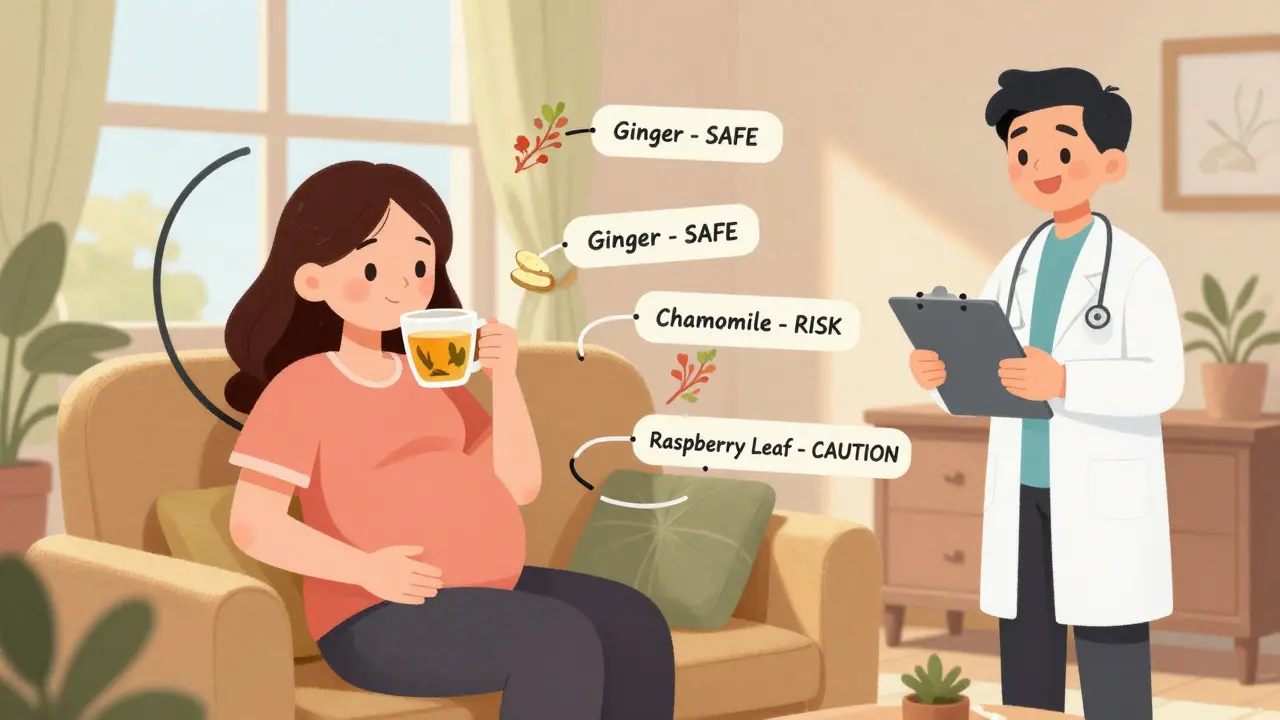
More than 1 in 4 pregnant women take herbal supplements during pregnancy. They reach for ginger tea for morning sickness, chamomile to calm nerves, or raspberry leaf tea to prepare for labor. But here’s the hard truth: most of these products have never been properly tested for safety in pregnancy. And that’s not because no one tried - it’s because pregnant women are almost never included in clinical trials. The result? A massive gap between what people believe and what science actually knows.
What Are People Actually Taking?
Ginger is the most common. Studies show it’s used by up to 28% of pregnant women in places like Catalonia, Spain, and it’s one of the few herbs with solid evidence. At doses under 1,000 mg per day, it works for nausea without raising risks to the baby. The Cleveland Clinic and American Academy of Family Physicians both say it’s a safe, effective option - better than many prescription anti-nausea drugs, which come with their own risks. But ginger is the exception, not the rule. Chamomile? Used by 9% of women in the same study for sleep and anxiety. Yet, some research links it to higher chances of preterm birth and low birth weight. Raspberry leaf? Popular in the third trimester. Women swear it helps labor go smoother. But the American Academy of Family Physicians warns it may increase the chance of needing a C-section if used to induce labor. Cranberry? Often taken to prevent urinary tract infections. It might help, but it’s also tied to spotting in the second and third trimesters - something no one talks about until it happens. And then there are the herbs no one should touch. Rosemary, in medicinal amounts, can stimulate the uterus. Pennyroyal and blue cohosh? These can trigger dangerous contractions. Yet, you can still buy them online with labels that say "natural" and "safe."The Regulatory Black Hole
In the U.S., herbal supplements don’t need FDA approval before they hit the shelf. They’re not held to the same standards as prescription drugs. The FDA doesn’t test them for purity, potency, or safety in pregnancy. A 2023 CDC report found that fewer than 10% of all medications approved since 1980 have enough data to say whether they’re safe during pregnancy - and herbal supplements? Most have zero data. This isn’t just a U.S. problem. In Europe, the rules are tighter. Products must register under the Traditional Herbal Medicinal Products Directive. But even there, enforcement is uneven. In the U.S., a 2024 FDA warning letter targeted three companies for falsely claiming their herbal products were safe for pregnant women. That’s rare. Most products slip through. And the quality? Wildly inconsistent. Studies show 20% to 60% of herbal supplements contain ingredients not listed on the label. Some have fillers. Others have too much of a potent herb. One batch of raspberry leaf tea might have 500 mg of active compounds. The next might have 2,000 mg. No one knows. No one checks.Why Do Women Use Them Anyway?
Many women turn to herbs because they want to avoid pharmaceuticals. They believe "natural" means safer. And in some cultures, herbal remedies have been used for generations. In Korea, nearly 6 out of 10 pregnant women use traditional herbal medicine. In Scandinavia, it’s closer to 1 in 5. But the biggest driver isn’t tradition - it’s misinformation. In a study of 142 Reddit users in a pregnancy forum, 78% said they were unsure if their herbal tea was safe. Yet, 63% still used at least one supplement. Why? Because they got advice from family (38%), social media (29%), or Google searches (24%). Only 14% talked to their doctor first. One woman in the Spanish study took chamomile daily for months because her mom said it helped her sleep during pregnancy. Another started raspberry leaf tea at 36 weeks after seeing a TikTok video. No one warned her it could increase bleeding or trigger contractions.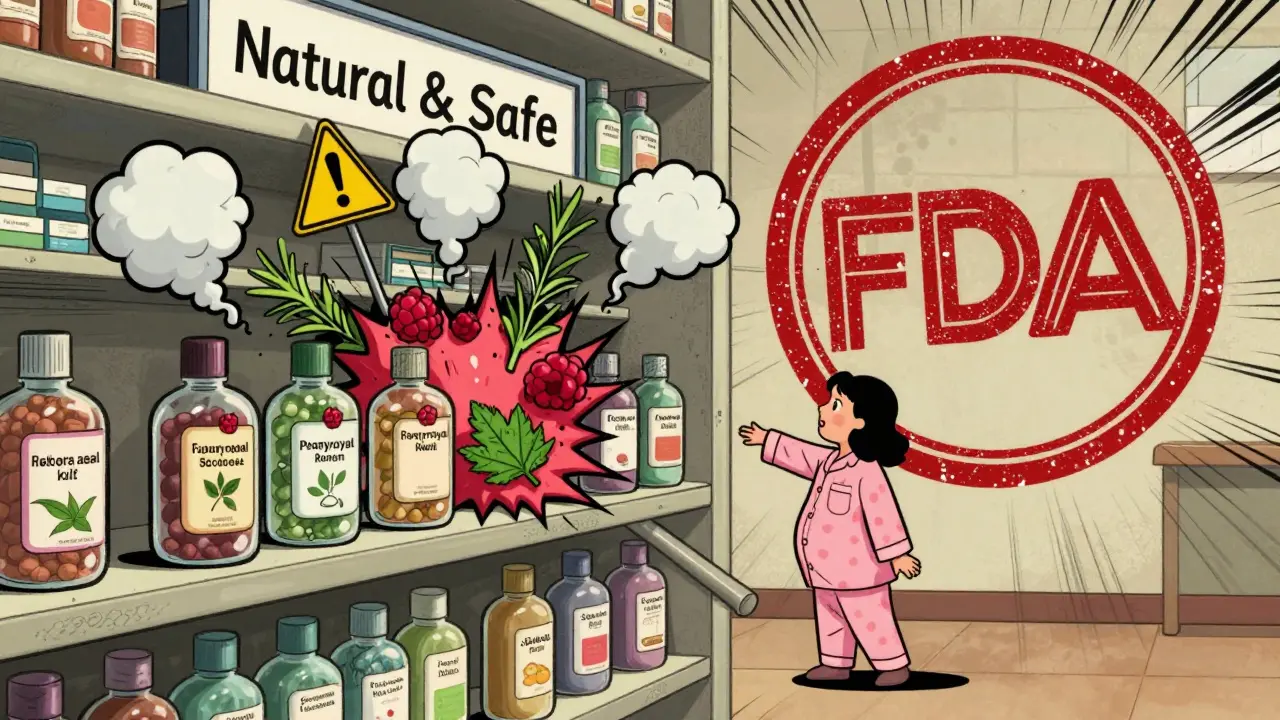
The Real Risks - Beyond the Myths
The biggest danger isn’t just taking something harmful. It’s not knowing what you’re taking. Herbs can interact with prenatal vitamins, blood pressure meds, or even insulin. Ginger, while generally safe, can thin the blood. If a woman is also taking aspirin or has a clotting disorder, that’s a problem. Cranberry supplements can interfere with blood thinners like warfarin. And if a woman is on medication for anxiety or depression, chamomile might make it less effective. Then there’s the timing. Ginger is fine in the first trimester. Raspberry leaf is often used in the third. But if you start it too early - say, at 20 weeks - you might accidentally trigger preterm labor. There’s no standard dose. No clear cutoff. No reliable guide. And the long-term effects? We don’t know. No large study has tracked babies born to mothers who took herbal supplements throughout pregnancy. Did it affect brain development? Growth? Immune function? No data. No answers.What Experts Actually Say
The American College of Obstetricians and Gynecologists (ACOG) says: "Don’t take any herbal product without talking to your provider first." The Cleveland Clinic is even blunter: "People who are pregnant should avoid most herbal supplements." The FDA doesn’t say "don’t use them." It says: "Natural doesn’t mean safe." And they’re right. Just because something comes from a plant doesn’t mean it’s gentle. Foxglove is a plant. It’s used to make digoxin - a heart medication. But the raw plant? Deadly. Doctors who specialize in maternal health say the real issue is communication. Most women don’t think of herbal teas and capsules as "medications." They don’t mention them during checkups. But if you’re taking them, your provider needs to know. That’s how they spot interactions, bleeding risks, or early signs of preterm labor.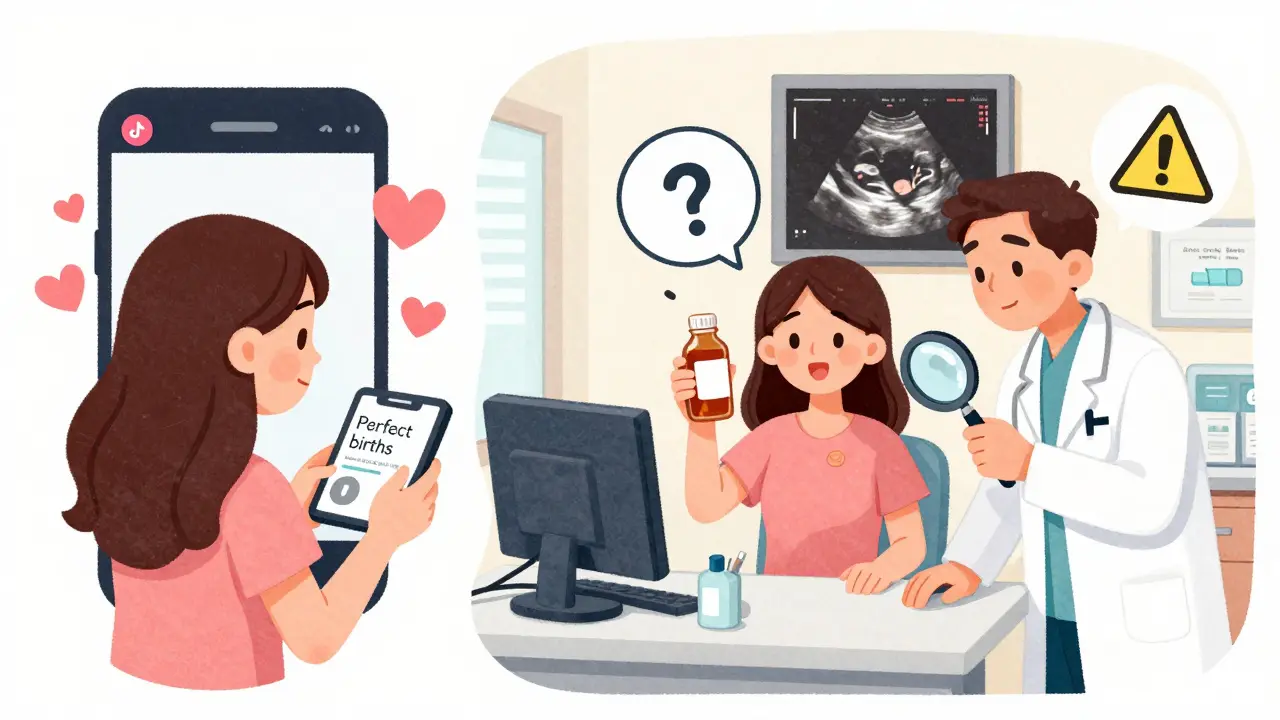
What Should You Do?
If you’re pregnant and using herbal supplements:- Stop assuming safety. Just because it’s sold in a health food store doesn’t mean it’s okay.
- Tell your doctor. Even if you think it’s "just tea." Bring the bottle. Show them the label.
- Only use ginger. It’s the only herb with consistent, reliable safety data for pregnancy. Stick to 1,000 mg or less per day.
- Avoid anything labeled "for labor support" or "uterine tonic." These are red flags.
- Don’t trust social media. If you see a post saying "I took raspberry leaf and had a perfect birth," it’s anecdotal - not evidence.
- Ask your provider first. Not Google. Not your mom. Not a naturopath without medical training.
- Choose prenatal vitamins instead. They’re tested, regulated, and proven to support fetal development.
- Use non-herbal options for symptoms. For nausea: eat small meals, try acupressure bands. For anxiety: talk therapy, gentle yoga. For UTIs: drink water, pee after sex. These work - and they’re safe.
The Bigger Picture
The National Institutes of Health just launched a $12.7 million study to finally answer these questions. It’s a start. But we’re still years away from reliable answers. Right now, the safest choice is simple: avoid herbal supplements unless your provider says otherwise. The risks aren’t theoretical. They’re real. And for every woman who swears by raspberry leaf, there’s another who bled in the third trimester and never knew why. Pregnancy is already a time of uncertainty. Don’t add more by guessing about what’s in your tea.Is ginger safe during pregnancy?
Yes, ginger is considered safe for most pregnant women when used in doses under 1,000 mg per day. Multiple studies and guidelines from the American Academy of Family Physicians and Cleveland Clinic confirm its effectiveness for nausea and vomiting in pregnancy, with no increased risk of birth defects or preterm labor. It’s one of the few herbal supplements with strong evidence backing its safety. Still, avoid it if you’re on blood thinners or have a history of bleeding disorders.
Can raspberry leaf tea help with labor?
There’s no solid proof that raspberry leaf tea makes labor easier or shorter. While some midwives and traditional practices recommend it to "tone the uterus," the American Academy of Family Physicians found it may increase the chance of needing a C-section if used to induce labor. It’s also linked to spotting and contractions in the third trimester. Most experts advise against using it before 37 weeks, and never to try to start labor.
Why aren’t herbal supplements regulated like drugs?
In the U.S., herbal supplements are classified as dietary supplements under the Dietary Supplement Health and Education Act (DSHEA) of 1994. This means manufacturers don’t need to prove safety or effectiveness before selling them. The FDA can only act after a product is on the market and proven harmful - which often takes years. This is why product quality varies wildly, and why dangerous ingredients sometimes go unnoticed.
Are herbal supplements safe while breastfeeding?
Safety data is even scarcer for breastfeeding than for pregnancy. Herbs can pass into breast milk, and babies’ livers aren’t fully developed to process them. The same herbs that are risky in pregnancy - like chamomile, rosemary, or pennyroyal - may affect milk supply or infant behavior. MotherToBaby recommends avoiding all herbal supplements while breastfeeding unless specifically approved by a healthcare provider.
What should I do if I accidentally took a risky herb?
Don’t panic. Stop taking it immediately and contact your OB/GYN or midwife. Most single exposures won’t cause harm, but your provider needs to know to monitor for signs like bleeding, contractions, or changes in fetal movement. If you took something like blue cohosh or pennyroyal, seek care right away - these can cause serious complications. Keep the product label handy; it helps your provider identify the active ingredients.
Comments (10)
-
shannon kozee March 22, 2026
Ginger is fine under 1000mg/day. That’s the only herb with real data. Everything else? Guesswork with a side of TikTok.
Stop pretending natural = safe. Foxglove is natural too.

-
Timothy Olcott March 23, 2026
LMAO so now we’re scared of tea?? 🤡
My grandma drank chamomile while pregnant with 5 kids. All healthy. You people need to chill.
Also why is the FDA even involved in my tea?? 🍵🇺🇸

-
Desiree LaPointe March 23, 2026
Oh honey. You’re telling me the same women who believe in crystal healing and moon cycles are now suddenly terrified of botanicals?
Let me guess - they’ve never read a single study, but they’ll quote a Reddit post like it’s the DSM-5.
And yet they’ll trust a $300 probiotic with 17 unpronounceable strains labeled ‘proprietary blend.’
Consistency is overrated, I suppose.
Also - ‘natural’ is just marketing with a leaf emoji. Next you’ll tell me arsenic is safe because it’s ‘earth-derived.’

-
Jackie Tucker March 24, 2026
Let’s be real - this isn’t about science. It’s about control.
Women have been using herbs for millennia. Now, suddenly, we’re the problem because we didn’t consult a white coat who’s never held a newborn?
Meanwhile, the pharmaceutical industry has spent decades excluding pregnant women from trials - then acting shocked when we turn to alternatives.
It’s not ignorance. It’s institutional neglect dressed up as concern.
And yes, I’ve read the studies. The data gap exists because no one wanted to fund it. Not because women are dumb.
So yes, I’ll keep my raspberry leaf. And I’ll thank my ancestors for knowing more than your FDA flowchart.

-
Chris Dwyer March 26, 2026
Hey - if you’re taking herbs, just TELL YOUR DOCTOR. Seriously.
It’s not about judging. It’s about safety. I’ve seen so many cases where a simple conversation prevented a hospital trip.
Ginger? Cool. Chamomile? Maybe. Blue cohosh? NOPE.
Bring the bottle. Show the label. Ask the question. That’s all it takes.
You’re not stupid for using it. You’re just missing one piece of info.
And that’s fixable. ❤️

-
Natali Shevchenko March 28, 2026
I used to think herbal remedies were just folklore - until I had my second pregnancy and the nausea was unbearable. Prescription meds made me feel like a zombie. Ginger tea? Light as air. Felt like a warm hug in a cup.
But then I started reading - and realized I had no idea what else was in that tea bag. Was it organic? Was it standardized? Was it cut with something else?
That’s the real horror story. Not the herb itself - but the total lack of transparency.
We’re told to trust our instincts, but we’re never given the tools to understand what we’re trusting.
And now we’re stuck between ‘natural is sacred’ and ‘science says maybe not.’
Neither side offers a real path forward. Just fear and guilt.
Maybe the answer isn’t banning herbs - but forcing real labeling. Batch testing. Transparent sourcing.
Because if we’re going to make women choose between ‘safe’ and ‘sane,’ we owe them better than a Google search.

-
Allison Priole March 28, 2026
I took raspberry leaf tea at 36 weeks because my cousin swore by it. I had the smoothest labor ever. No epidural. No tearing. Just calm and strong.
But then I read this post and started sweating. What if it was luck? What if I got lucky and someone else didn’t?
Now I’m terrified to even sip chamomile.
Maybe I should’ve asked my OB first. I didn’t think it counted as medicine.
But I also didn’t think my tea had a 1 in 20 chance of being laced with something I didn’t know about.
So yeah - I’m not taking anything anymore. Not because I’m scared. But because I want to be sure.
And right now? I’m not sure of anything.

-
Johny Prayogi March 28, 2026
Y’all are overthinking this.
My wife took ginger, chamomile, and raspberry leaf. Had a 3-hour labor. Baby’s IQ is 145.
Science? Pfft.
Real life? Works.
Stop scaring people with stats and start trusting moms.
Also - if you’re worried about quality, buy from a trusted brand. Not Amazon. Not some ‘herbalist’ on Instagram.
Simple. 😎

-
Sandy Wells March 29, 2026
It’s not about whether herbs work. It’s about whether we’re being honest with ourselves.
Women use them because they’re told they’re safe. By influencers. By grandmas. By wellness blogs.
But no one says: ‘This has never been tested. You’re the experiment.’
That’s not empowerment. That’s negligence wrapped in lavender-scented optimism.
And if you’re going to call someone ‘judgmental’ for pointing that out - maybe you’re the one who doesn’t want to face the truth.

-
Casey Tenney March 29, 2026
Blue cohosh. Pennyroyal. Rosemary. These aren’t ‘herbs.’ They’re poisons with pretty labels.
And you’re letting your pregnant friend take them because a TikTok said ‘it’s chill’?
That’s not tradition. That’s criminal negligence.
Stop romanticizing ignorance.
People die from this.
And you’re still sipping your ‘natural’ tea like it’s a spa day.
