
Kidney Function Calculator with Creatine Effect
Creatine Effect Calculator
This calculator shows how creatine supplementation affects your kidney function test results. Enter your current values to understand if your creatinine levels might be misleading.
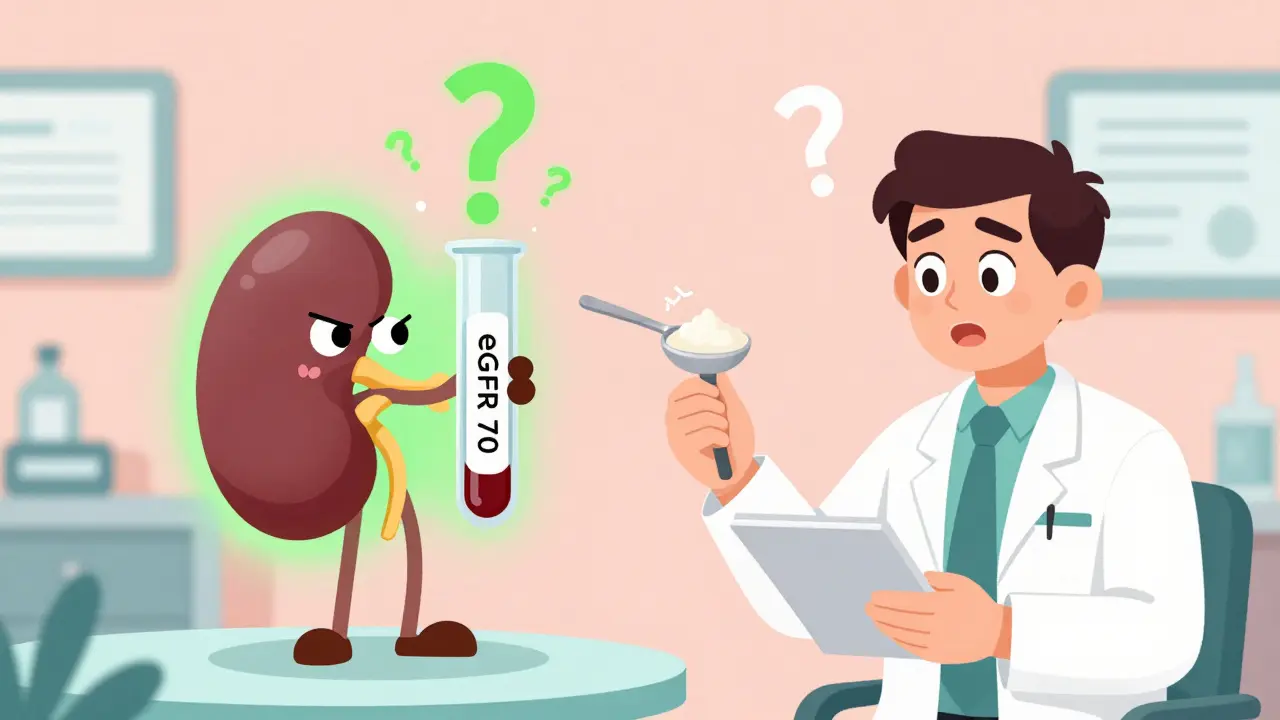
When you take creatine to build muscle or boost performance, your body turns most of it into creatinine-a waste product your kidneys filter out. That’s normal. But here’s the problem: creatine makes your blood creatinine levels rise, and doctors use that number to check if your kidneys are working right. If your creatinine goes up, your eGFR (estimated glomerular filtration rate) drops. And if your eGFR drops, you might get wrongly diagnosed with kidney disease-even if your kidneys are perfectly healthy.
Why Creatine Messes With Kidney Tests
Creatine monohydrate is the most common form of this supplement. About 90% of what you take gets processed by your kidneys and turned into creatinine. That’s not a sign of damage-it’s just chemistry. A standard dose of 5 grams a day can raise your serum creatinine by 10% to 30%. That’s enough to push someone’s eGFR from 90 down to 70, which looks like stage 2 chronic kidney disease (CKD) on paper. But here’s what doesn’t change: your actual kidney function. Your kidneys are still filtering blood just fine. Your urine output stays normal. Your blood pressure stays stable. Your electrolytes don’t spike. Only the creatinine number climbs. And since most labs automatically calculate eGFR using creatinine, you get a false alarm. A 2024 study in Renal Failure used genetic data to prove creatine doesn’t cause kidney damage. The researchers found no link between higher creatine levels and worse kidney function. That’s powerful evidence. Still, doctors who don’t know about creatine supplementation see a high creatinine and think: kidney problem. They order more tests. They refer you to a nephrologist. You stress out. You might even stop working out or change your diet unnecessarily.What Happens When You’re on Kidney Disease Medications
This gets even trickier if you’re already taking medications for kidney disease-like ACE inhibitors, ARBs, or diuretics. These drugs help protect your kidneys. But they also affect how creatinine is cleared from your blood. Creatine adds another layer of interference. There’s no solid proof that creatine harms kidneys in people with early-stage CKD. But there’s also no large-scale safety data for those on long-term kidney meds. That’s why experts like the National Kidney Foundation and UCLA Health say: Don’t take creatine if you have kidney disease or are on nephrotoxic drugs. It’s not because creatine is dangerous-it’s because the interaction is unpredictable. Some case reports exist where people developed kidney problems while taking creatine. One 2011 report described acute tubular necrosis in someone on 3 grams a day with no prior kidney issues. But that’s an extreme outlier. Out of millions of users, these cases are vanishingly rare. The bigger risk isn’t creatine-it’s being misdiagnosed because your test results don’t tell the full story.How to Know If Your Kidneys Are Really OK
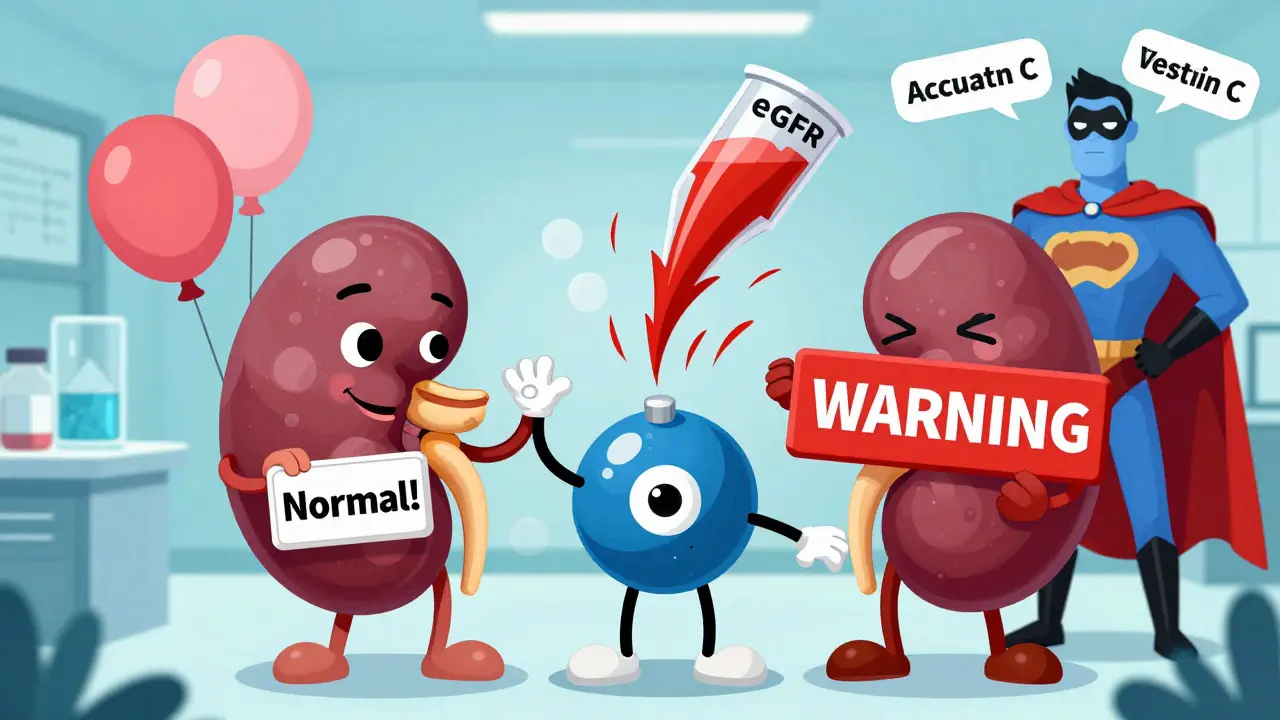
If you’re taking creatine and want to monitor your kidney health, don’t rely on serum creatinine alone. Here’s what actually works:- Use cystatin C instead. This protein is filtered by the kidneys, but it’s not affected by creatine. The CKD-EPI equation using cystatin C gives a much more accurate eGFR for creatine users. Studies show it’s 95% as accurate as direct GFR measurements.
- Check 24-hour urinary creatinine clearance. This test measures how much creatinine your body actually excretes over a full day. If your kidneys are healthy, your creatinine output stays stable-even if your blood creatinine rises.
- Look at other markers. Blood urea nitrogen (BUN), albumin in urine, and electrolytes like sodium and potassium don’t change with creatine. If those are normal, your kidneys are likely fine.
Many labs now offer cystatin C testing. Ask your doctor if they can run it alongside your routine blood work. If they don’t have it, push for it. Your eGFR based on creatinine alone is misleading if you’re supplementing.
What Doctors Need to Ask You
A 2021 study in American Family Physician found that 67% of primary care doctors don’t routinely ask patients about dietary supplements. That’s a huge gap. If you’re on kidney meds and taking creatine, your doctor needs to know. Don’t assume your supplement use is obvious. Most medical forms only list prescription drugs. Creatine is sold as a “dietary supplement,” so it’s easy to forget to mention. But if you’re getting abnormal kidney results, you must say: “I’m taking creatine.” If your doctor isn’t familiar with creatine’s effect on creatinine, share this: “I’m on 5 grams daily. My creatinine is high, but my other kidney markers are normal. Can we check cystatin C?” Most will respond well once they understand the issue.What to Do If You’re Already Diagnosed With CKD
If you’ve been told you have chronic kidney disease and you’re taking creatine, here’s your next step: stop the supplement for 2-4 weeks. Then get your creatinine and eGFR retested. If your numbers improve significantly-say, your eGFR jumps from 75 to 90-you were likely misdiagnosed. One Reddit user, ‘FitMedStudent,’ shared that their eGFR dropped to 78 while taking 5 grams of creatine. After quitting for a month, it bounced back to 95. That’s not uncommon. It doesn’t mean their kidneys were damaged. It means the test was wrong. If your eGFR stays low after stopping creatine, then your kidney disease is real-and you should avoid creatine entirely. But if it normalizes? You’re probably fine. Just stop taking it, and make sure your doctor knows why your numbers changed.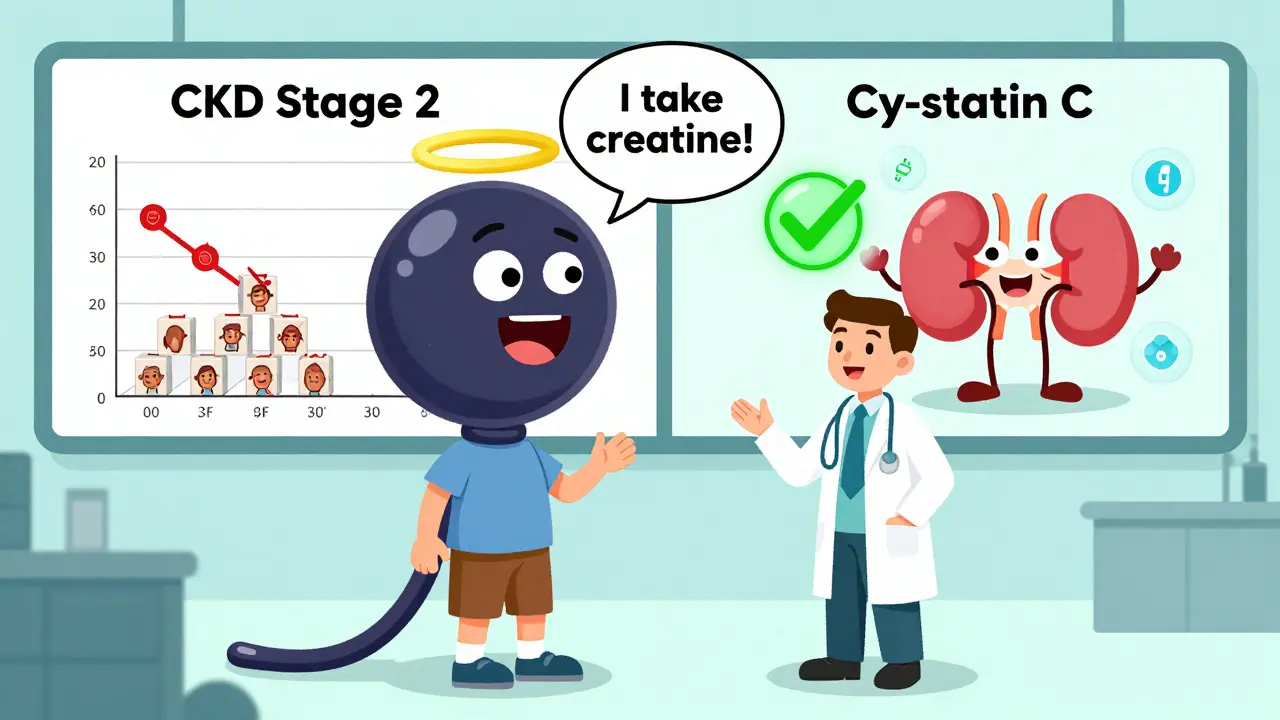
What About ‘Kidney-Safe’ Creatine Products?
You’ll see ads for creatine labeled “kidney-safe,” “low-creatinine,” or “renal-friendly.” These claims are marketing, not science. All creatine monohydrate turns into creatinine the same way. No form of creatine avoids this metabolic pathway. ConsumerLab.com tested several of these products in 2024. None had lower creatinine production. They were just regular creatine with fancy packaging. Save your money. Stick with plain creatine monohydrate-it’s the most studied, cheapest, and most effective form.When to Avoid Creatine Altogether
You should not take creatine if:- You have stage 3 or worse chronic kidney disease (eGFR under 45)
- You’re on dialysis
- You’re taking NSAIDs like ibuprofen or naproxen regularly
- You’re on ACE inhibitors, ARBs, or diuretics and your kidney function is unstable
- You’ve had a recent kidney injury or infection
Even if you’re healthy, start with a lower dose-3 grams a day instead of 5-and get a baseline creatinine test before you begin. Re-test after 4-6 weeks. If your creatinine jumped more than 30%, talk to your doctor about switching to cystatin C testing.
The Bottom Line
Creatine isn’t bad for your kidneys. The science is clear: it doesn’t cause damage. But it makes your kidney tests look worse than they are. That’s the real danger. If you’re healthy and taking creatine, monitor your kidney health with cystatin C-not creatinine. If you’re on kidney disease meds, don’t take creatine unless your nephrologist says it’s safe. And always tell your doctor you’re using it. The supplement industry wants you to believe creatine is harmless. The medical system wants you to believe high creatinine means kidney disease. The truth is in between. You need to be the one who connects the dots.Does creatine damage your kidneys?
No, creatine does not damage kidneys in healthy people. Multiple studies, including a 2024 Mendelian randomization study in Renal Failure, show no causal link between creatine supplementation and kidney harm. The rise in creatinine is a metabolic side effect, not a sign of injury.
Why does creatine make my eGFR look worse?
Creatine breaks down into creatinine, which labs use to calculate eGFR. Higher creatinine = lower eGFR, even if your kidneys are working normally. This is a flaw in the formula, not your kidney function.
Should I stop creatine if my creatinine is high?
If you’re taking creatine and your creatinine is high but your other kidney markers (cystatin C, BUN, urine protein) are normal, try stopping creatine for 3-4 weeks and retest. If your eGFR improves, creatine was the cause-not kidney disease.
Can I take creatine if I have early-stage kidney disease?
Most experts advise against it. Even though creatine isn’t proven to worsen kidney disease, the interaction with medications and the risk of misdiagnosis make it too risky. Stick to proven therapies and avoid supplements unless your nephrologist approves.
What’s the best way to test kidney function while on creatine?
Use cystatin C-based eGFR (CKD-EPI CysC). It’s not affected by creatine and gives a true picture of kidney filtration. If cystatin C isn’t available, a 24-hour urine creatinine clearance test is the next best option.
Do ‘kidney-safe’ creatine products actually work?
No. All creatine monohydrate converts to creatinine the same way. Products labeled as ‘kidney-safe’ are marketing gimmicks. ConsumerLab.com found no difference in creatinine output between them and regular creatine.
How long does it take for creatinine to go down after stopping creatine?
Most people see creatinine levels drop within 2-4 weeks after stopping creatine. It can take up to 6 weeks for full normalization, depending on your muscle mass and how long you took it.
Should I tell my doctor I’m taking creatine before a blood test?
Yes. Always mention all supplements, including creatine, when you’re getting kidney tests. Many doctors don’t ask, and without that info, they may misdiagnose you with kidney disease.
Comments (15)
-
Anjula Jyala January 27, 2026
creatine elevates serum creatinine via non-pathological metabolic conversion this is well-documented in nephrology literature since the 1990s the eGFR formula is fundamentally flawed for athletes and supplement users cystatin C is the gold standard for accurate filtration assessment and yet most labs still default to creatinine-based calculations because it's cheaper and automated

-
Andrew Clausen January 27, 2026
Stop pretending creatine is harmless just because it doesn't directly damage kidneys. The fact that it causes false positives that trigger unnecessary biopsies, referrals, and anxiety is itself a harm. Medical systems should adapt to modern supplement use, not force patients to choose between fitness and accurate diagnostics. This isn't science-it's institutional inertia.

-
Kathy McDaniel January 29, 2026
omg i just found out my doc never asked about supplements 😭 i've been taking creatine for 2 years and my last eGFR was 74… i’m gonna stop for a month and retest. thank you for this post!!

-
Paul Taylor January 30, 2026
Let me break this down for everyone who's confused. Creatine is not a drug. It's a naturally occurring compound in muscle tissue. When you supplement, you're just increasing the pool of creatine your body already has. The conversion to creatinine is unavoidable and predictable. The problem isn't creatine. The problem is that the medical community still treats a metabolic side effect like a disease marker. If your BUN, urine albumin, and blood pressure are normal, your kidneys are fine. The eGFR number is a statistical artifact, not a physiological diagnosis. Ask for cystatin C. If your doctor doesn't know what it is, find a new one. Your health is too important to trust outdated protocols.

-
astrid cook January 31, 2026
They’re hiding the truth. Creatine is just the beginning. Next they’ll say protein powder causes liver failure. And collagen? Oh wait, that’s already happening. Big Pharma doesn’t want you to know supplements can mess with their blood tests. They profit off misdiagnoses. You think your doctor cares? They get paid for referrals, not for listening.

-
April Williams January 31, 2026
I can’t believe people still take creatine. It’s not natural. Your body doesn’t need extra creatine. You’re forcing your kidneys to work harder just to look jacked. And now you want doctors to change their entire diagnostic system because you’re too lazy to stop taking it? This is why America is sick. Stop supplementing and start eating real food.

-
Harry Henderson February 2, 2026
STOP WASTING TIME WITH CYSATIN C. JUST STOP TAKING CREATINE. IF YOU’RE TOO WEAK TO BUILD MUSCLE WITHOUT CHEATING, THEN YOU DON’T DESERVE TO BE HEALTHY. YOU WANT TO LOOK GOOD? DO MORE PUSH-UPS. STOP BUYING INTO THE SUPPLEMENT INDUSTRY LIE. YOUR KIDNEYS DON’T CARE ABOUT YOUR BICEP SIZE.

-
suhail ahmed February 3, 2026
in india we’ve been using creatine-rich foods like milk, fish, and lentils for centuries. the body handles it fine. the real issue is that western medicine treats every metabolic shift like a crisis. i’ve seen nephrologists panic over a 10% creatinine rise while ignoring hypertension and diabetes. if your kidneys are truly failing, you’ll have swelling, fatigue, foamy urine-not just a number on a screen. trust your body, not the algorithm.

-
Candice Hartley February 4, 2026
thank you for this!! 🙏 i’ve been on losartan for 3 years and took creatine for 6 months. my eGFR dropped from 88 to 71. i stopped for 3 weeks and it went back to 85. i’m telling my doctor next visit. also-cystatin C is now covered by my insurance! just ask for it 😊

-
Kirstin Santiago February 5, 2026
It’s wild how much trust we put in automated lab results without questioning the assumptions behind them. Creatine is a perfect example of how medicine lags behind real-world behavior. People aren’t just taking pills anymore-they’re optimizing their bodies with supplements. The system needs to evolve. Not everyone can afford to stop working out just to get a ‘clean’ lab result.

-
Desaundrea Morton-Pusey February 7, 2026
They’re using creatine to track you. The FDA knows this. The rise in creatinine? It’s not a side effect-it’s a biometric marker. They’re collecting your data through your supplements. Next thing you know, your insurance rates go up because your ‘kidney function’ looks bad. Don’t be a guinea pig. Stop the creatine. Or better yet-move to Canada.

-
Murphy Game February 9, 2026
What if creatine is just the gateway? What if the real problem is the lab algorithms being controlled by pharmaceutical companies who profit from CKD diagnoses? Think about it. Every time someone gets a false positive, they get a referral. Every referral leads to more tests. More tests mean more drugs. More drugs mean more profit. This isn’t medicine. It’s a revenue model disguised as science.

-
John O'Brien February 9, 2026
bro i’ve been on creatine for 5 years, no issues. my doc didn’t even know what it was. i printed out the 2024 renal failure study and showed him. he said ‘huh, didn’t know that’ and ordered cystatin c. my eGFR jumped from 76 to 92. dude, just talk to your doctor. it’s not that hard.

-
Kegan Powell February 10, 2026
we’re all trying to be better versions of ourselves-stronger, healthier, more in control. but the system doesn’t meet us where we are. it judges us by outdated metrics. creatine isn’t the enemy. the disconnect between how we live and how medicine measures us is. maybe the real question isn’t whether creatine harms kidneys-but whether our healthcare system is willing to adapt to the people it’s supposed to serve

-
Marian Gilan February 12, 2026
imagine your kidneys are a filter and creatine is just dirt on the screen. the filter still works but the readout says its clogged. doctors dont clean the screen they just say the machine is broken. and now you gotta pay 2000$ for a new machine. lol
