
Tinea Versicolor: Causes, Treatments, and Skin Infection Facts
When your skin starts showing light or dark patches that don’t tan like the rest, it’s often tinea versicolor, a harmless but noticeable fungal infection caused by an overgrowth of yeast naturally living on the skin. Also known as pityriasis versicolor, it’s not contagious, but it can be embarrassing—and it comes back more often than people expect. This isn’t a bacterial infection like impetigo or cellulitis. It’s driven by Malassezia yeast, a type of fungus that thrives in warm, oily, sweaty skin, especially in teens and young adults. Heat, humidity, and excess oil production make it worse, which is why it flares up in summer or after workouts.
What makes tinea versicolor tricky is how it looks. The patches can be white, pink, tan, or brown, depending on your skin tone and how your skin reacts to sunlight. Unlike eczema or psoriasis, it doesn’t usually itch or hurt—just changes color. That’s why many people mistake it for a rash, sunburn, or even vitiligo. The real clue? The patches often show up on the chest, back, neck, or upper arms, and they might flake slightly when scraped. Antifungal treatments, including topical creams, shampoos, and sometimes oral pills, work well if used correctly. But stopping treatment too early is why it returns. You need to keep using it for the full course, even after the patches fade.
It’s not just about slapping on cream. Things like wearing tight synthetic clothes, using oily skincare products, or having a weakened immune system can make tinea versicolor more likely. Some people get it every year, no matter how clean they are. That’s normal. The yeast is always there—it’s just a matter of when it decides to multiply. The good news? You don’t need antibiotics. You don’t need expensive lasers. Simple, affordable antifungal products from your pharmacy can clear it up in days. And if you’ve ever been told your skin issue is "just dry skin" or "a reaction to the sun," you might’ve been misdiagnosed. This is a real, treatable condition.
Below, you’ll find real-world advice from people who’ve dealt with this exact problem. You’ll see how medication side effects can be mistaken for fungal flare-ups, how to tell tinea versicolor apart from other skin infections like cellulitis, and how to avoid common mistakes when using antifungals. There’s also guidance on how to store your meds properly, how to read labels to make sure you’re getting the right treatment, and even how to track symptoms so you can spot patterns before they get bad. No fluff. No guesswork. Just what works.
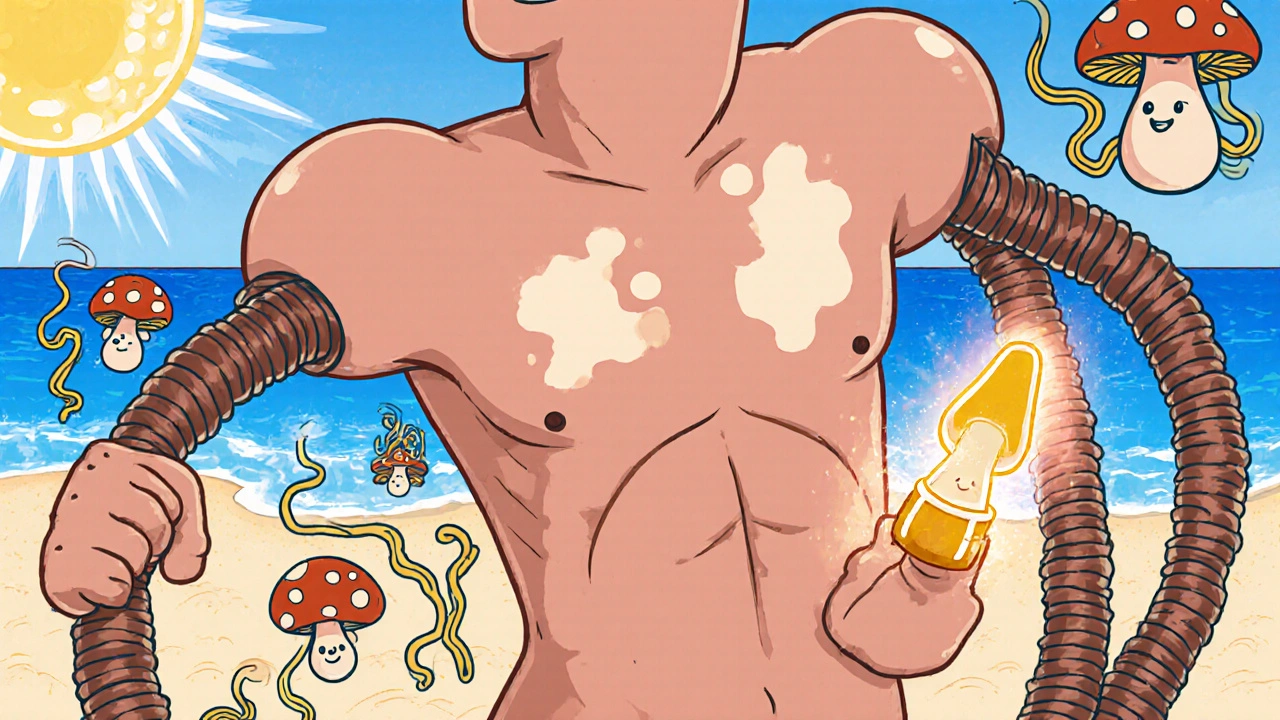
Tinea Versicolor: How to Treat Yeast Overgrowth and Prevent Recurrence
Haig Sandavol Nov 28 9Tinea versicolor is a common fungal skin condition caused by yeast overgrowth, leading to discolored patches. Learn how to treat it effectively and prevent recurrence with simple, evidence-based maintenance routines.
More Detail