
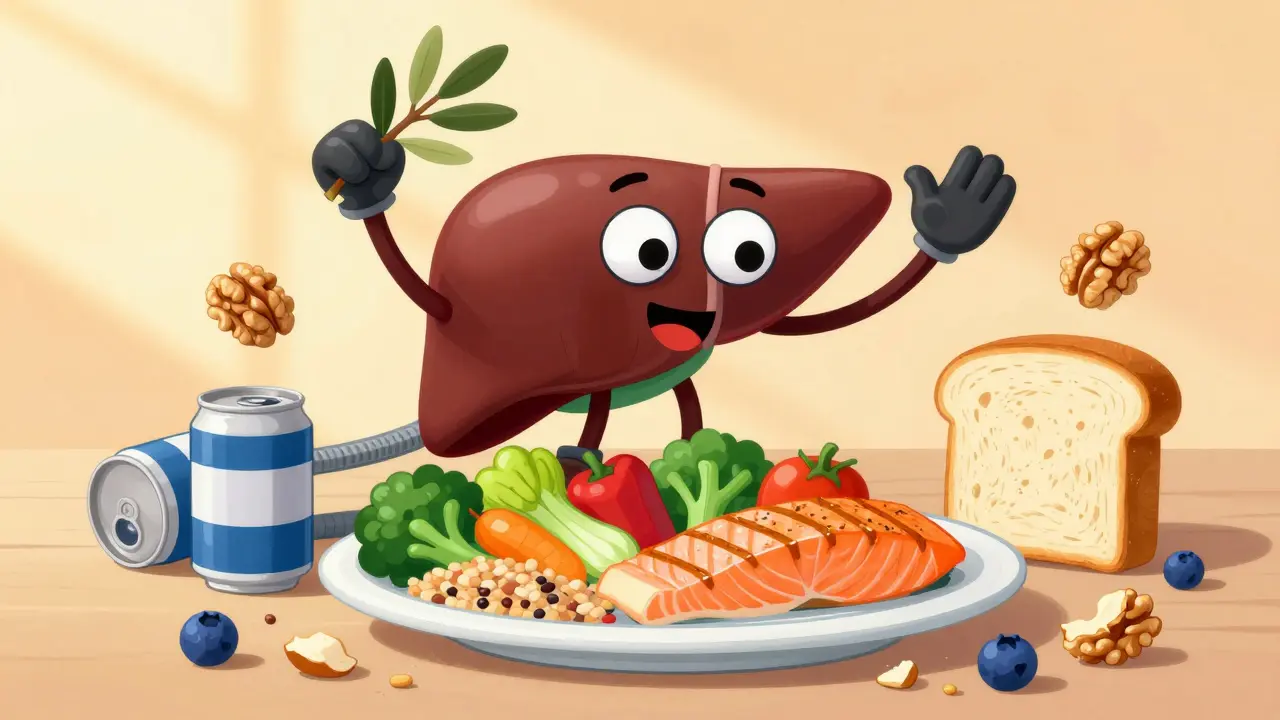
When your liver is struggling, food isn’t just fuel-it’s medicine. If you’ve been told you have fatty liver disease, elevated liver enzymes, or early-stage cirrhosis, the right diet can do more than slow things down. It can reverse damage. Not with pills. Not with expensive supplements. But with what’s on your plate.
What a Liver-Healthy Diet Actually Means
There’s no magic liver cleanse, no juice fast, no detox tea that works. The idea that your liver needs to be "detoxed" is a myth pushed by marketers. Your liver is already the most powerful detox organ in your body. What it needs is support-clean fuel, fewer toxins, and the right nutrients to repair itself. The only diet backed by solid science for liver disease is the Mediterranean diet. Not because it’s trendy. But because decades of research, including major studies from Harvard, Mayo Clinic, and the American Association for the Study of Liver Diseases, show it reduces liver fat by 25-40% in 6-12 months. It lowers liver enzymes like ALT and AST by 20-30%. And it does it without drugs. This isn’t about eating bland, boring food. It’s about swapping out the bad stuff for real, whole foods that your liver actually likes.The Core Rules of a Liver-Healthy Plate
Think of your plate like a traffic light: green lights for what to eat, red for what to avoid.- Half your plate: Vegetables and fruits. Aim for at least 3 servings of veggies and 2 servings of fruit daily. Color matters-dark greens, red peppers, blueberries, and purple grapes are packed with antioxidants that fight liver inflammation.
- One-quarter: Lean protein. Chicken, fish (especially salmon and sardines), tofu, eggs, and legumes. Keep portions to the size of a deck of cards-about 3 ounces per meal.
- One-quarter: Whole grains. Brown rice, quinoa, oats, barley, and whole wheat bread. Skip white rice, white pasta, and anything made with refined flour.
What You Must Cut Out
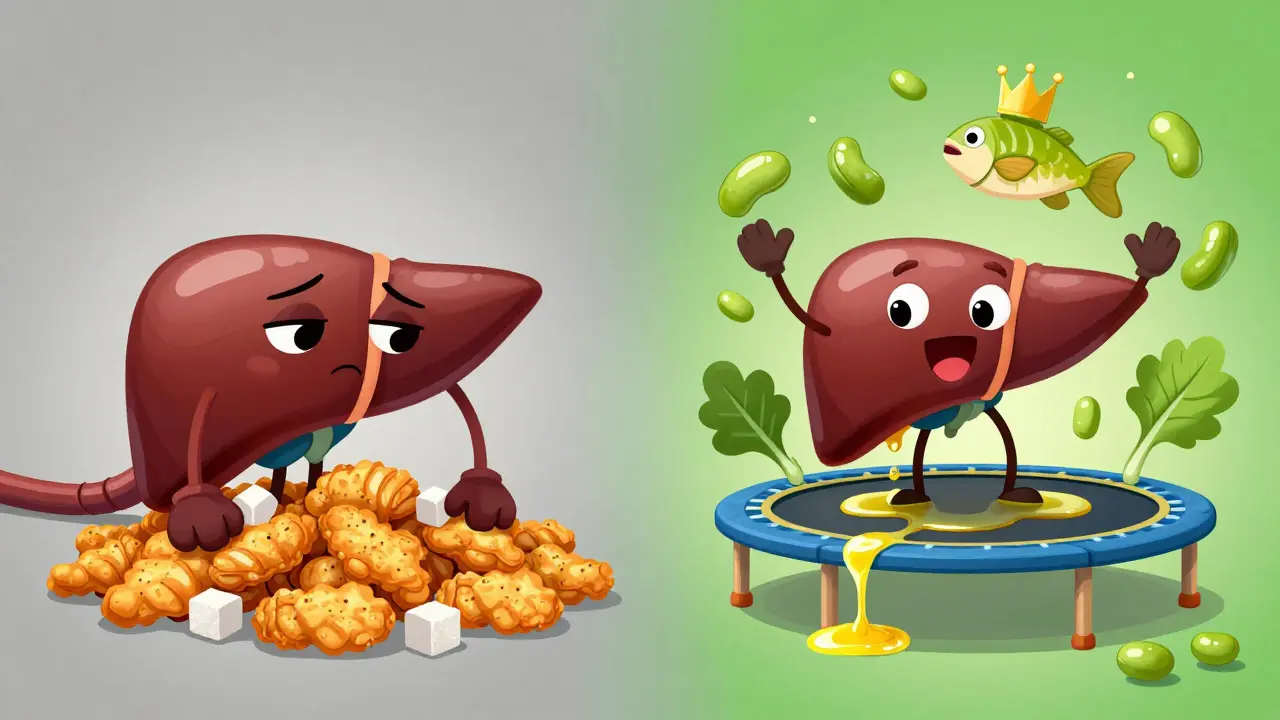
Some foods aren’t just useless-they’re actively harmful to your liver.- Sugary drinks: Soda, sweetened tea, energy drinks, even fruit juice. One 12-ounce can adds 150-200 empty calories and floods your liver with fructose-the exact sugar that turns into liver fat. Cutting these out alone can reduce liver fat by 20% in just 8 weeks.
- Processed carbs: White bread, pastries, crackers, and snack foods. They break down into sugar faster than table sugar. Your liver can’t handle the overload.
- Trans fats: Found in fried foods, margarine, and packaged baked goods. These fats increase inflammation and make fatty liver worse. Check labels for "partially hydrogenated oils"-if it’s there, avoid it.
- Salt: More than 2,000 mg a day can cause fluid buildup in people with advanced liver disease. Skip the salt shaker. Use lemon, herbs, garlic, and vinegar instead.
Why the Mediterranean Diet Wins
Compared to low-fat diets or keto, the Mediterranean diet is the only one proven to improve liver tissue-not just numbers on a blood test. A 2021 meta-analysis showed it reduced liver fat 32% more than low-fat diets and improved fibrosis scores better than keto. Here’s what makes it special:- Healthy fats: Olive oil, avocados, nuts, and seeds. These are rich in monounsaturated fats that lower bad cholesterol and reduce liver fat. A handful of walnuts (30g) a day can lower LDL by 15% in people with fatty liver.
- Fiber: From beans, lentils, vegetables, and whole grains. Fiber helps your gut microbiome, which directly affects liver health. Aim for 30-40 grams a day.
- Antioxidants: Found in berries, dark leafy greens, green tea, and turmeric. These fight oxidative stress-the root cause of liver cell damage.
What About Protein?
There’s a myth that people with liver disease need to eat less protein. That’s outdated. In early-stage disease, you need more protein to prevent muscle loss, which makes liver disease worse. The key is quality. Choose lean sources:- White fish (cod, tilapia)
- Chicken breast
- Eggs
- Lentils and chickpeas
- Tofu and tempeh
Real People, Real Results
John, 58, from Ohio, was diagnosed with stage 2 liver fibrosis. His FibroScan reading was 12.5 kPa-borderline for severe scarring. His ALT (a liver enzyme) was 112 U/L (normal is under 40). He switched to a Mediterranean diet: no soda, no white bread, daily walk, more vegetables. After 9 months:- FibroScan dropped to 6.2 kPa-back in the healthy range.
- ALT fell to 45 U/L.
- He stopped feeling exhausted all the time.
Practical Tips to Get Started
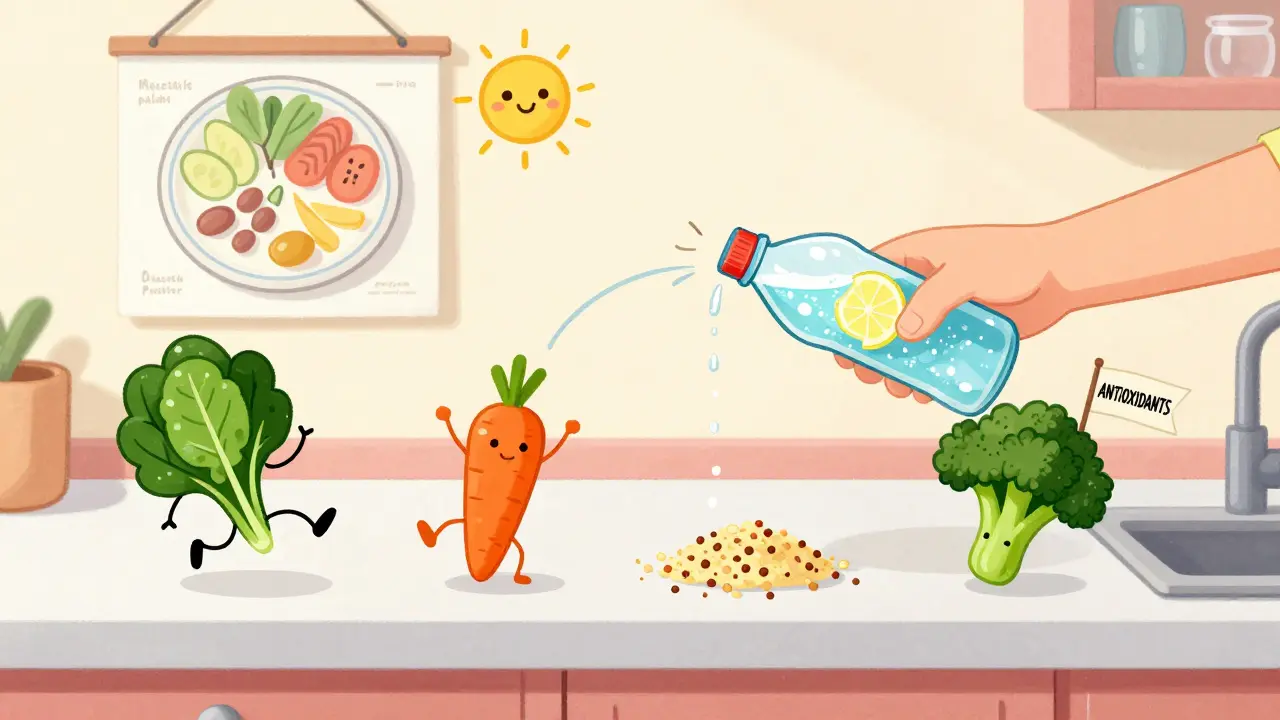
You don’t need to overhaul your life overnight. Start small:- Swap one drink: Replace soda with sparkling water and lemon. That’s it.
- One meal a day: Make lunch or dinner Mediterranean-style. Add olive oil, veggies, and beans.
- Read labels: Look for "added sugars" and "partially hydrogenated oils." If you see them, put it back.
- Use frozen vegetables: They’re just as nutritious as fresh, cheaper, and last longer.
- Batch cook: Cook a big pot of quinoa, roasted veggies, and grilled chicken on Sunday. Eat it all week.
What Doesn’t Work
Avoid these traps:- Detox teas and juice cleanses: The American Liver Foundation says there’s zero evidence they help. They can even harm your liver by causing nutrient deficiencies.
- Extreme low-carb diets: Keto might help short-term, but long-term, it can increase liver inflammation in some people.
- Supplements like milk thistle: Some people swear by them, but no large study proves they reverse liver damage. Focus on food first.
Support and Resources
You don’t have to do this alone.- The VA Health System offers a free 12-week telehealth nutrition program for liver patients. Satisfaction rate: 87%.
- The American Liver Foundation has a helpline (1-800-GO-LIVER) with counselors who help with meal planning, especially for shift workers or low-income families.
- UnitedHealthcare now covers liver-specific nutrition counseling in 12 states for over 2 million people.
The Future Is Food
By 2030, doctors won’t just check your liver enzymes-they’ll ask, "What did you eat last week?" Nutrition is becoming as standard as blood tests in liver disease care. The global NAFLD market is growing, but the real breakthrough isn’t a new drug. It’s a plate of vegetables, olive oil, and fish. Your liver doesn’t need miracles. It needs consistency. Real food. Time. And a little patience. Start today. One meal. One swap. One day at a time. Your liver will thank you.Can you reverse fatty liver with diet alone?
Yes, especially in early stages like non-alcoholic fatty liver disease (NAFLD) or MASLD. Studies show a Mediterranean diet can reduce liver fat by 25-40% and lower liver enzymes by 20-30% within 6-12 months without medication. Even without weight loss, the right foods can repair liver cells and reduce inflammation.
Is the keto diet good for liver disease?
Keto may help short-term by reducing liver fat, but it’s not ideal long-term. Some people experience increased liver inflammation on high-fat, low-fiber versions of keto. The Mediterranean diet has stronger evidence for improving liver tissue structure and reducing fibrosis. Keto also lacks the fiber and antioxidants your liver needs to heal.
What foods are best for lowering liver enzymes?
Foods rich in antioxidants and fiber help lower liver enzymes like ALT and AST. Focus on: leafy greens (spinach, kale), cruciferous veggies (broccoli, Brussels sprouts), berries, nuts (especially walnuts), olive oil, fatty fish (salmon), and whole grains. These reduce inflammation and oxidative stress-two main drivers of enzyme spikes.
Do I need to avoid all sugar?
You don’t need to avoid natural sugar from whole fruits. But you must cut out added sugars-soda, candy, pastries, sweetened yogurt, and even "healthy" granola bars. Fructose, the main sugar in these, is processed almost entirely by the liver and turns into fat. Limit added sugar to under 10% of daily calories-ideally under 25g per day.
How long does it take to see results from a liver-healthy diet?
Many people notice better energy, less bloating, and clearer thinking within 2-4 weeks. Liver enzymes often drop within 6-8 weeks. Significant reduction in liver fat takes 6-12 months. Consistency matters more than perfection. Even small, steady changes add up.
Can I still eat out on a liver-healthy diet?
Yes. Choose grilled fish or chicken, ask for steamed vegetables instead of fries, and request olive oil and vinegar instead of butter or creamy sauces. Avoid anything fried, breaded, or smothered in sauce. Skip the bread basket and soda. Most restaurants can accommodate these requests-it just takes a little planning.
Is the Mediterranean diet expensive?
It can be, but it doesn’t have to be. Frozen vegetables, canned beans, eggs, oats, brown rice, and seasonal fruit are affordable. Buy in bulk. Cook at home. Skip expensive superfoods like goji berries-focus on spinach, apples, and walnuts instead. Community cooking programs have shown you can follow this diet for 35% less than the average American diet.
What if I have advanced cirrhosis?
Diet still matters, but needs change. Protein intake may need adjustment to prevent complications like hepatic encephalopathy, but cutting protein too much can cause muscle loss, which worsens outcomes. Sodium must be strictly limited to under 2,000 mg/day. Always work with a liver specialist and dietitian. Even in advanced stages, good nutrition improves quality of life and survival.
Comments (14)
-
Hayley Ash December 31, 2025Oh wow another 'Mediterranean diet is magic' post. Let me guess, you also think olive oil cures cancer and tomatoes are anti-aging potions? My liver doesn't care about your Pinterest board. I ate salmon and kale for 6 months and my ALT went up. Funny how that works.

-
kelly tracy January 1, 2026This is why America is dying. You think food fixes liver damage? The real problem is Big Pharma suppressing the truth. Your liver doesn't need 'olive oil'-it needs to be left alone. Stop listening to nutritionists who've never held a scalpel.

-
Cheyenne Sims January 2, 2026The assertion that the Mediterranean diet reduces liver fat by 25–40% is misleading. The cited studies often conflate weight loss with dietary composition. Without controlling for caloric deficit, the claim lacks scientific rigor. Furthermore, the term 'liver-healthy diet' is not a recognized medical classification.

-
Shae Chapman January 2, 2026I cried reading this. 🥹 After 3 years of liver pain, I swapped soda for sparkling water and my energy came back in 3 weeks. I didn’t believe it either… but my doctor said my fibrosis score dropped. This isn’t hype. It’s HOPE. Thank you for writing this.

-
Nadia Spira January 4, 2026You're peddling nutritional fundamentalism. The liver doesn't 'heal' from food-it adapts. The real pathology is metabolic syndrome, not fructose. You're conflating correlation with causation. And please, spare me the 'walnuts are supplements' nonsense. That's pseudoscientific reductionism at its finest.

-
Kunal Karakoti January 4, 2026Food is a signal, not a cure. The liver responds to rhythm, not ingredients. Who eats this way in the real world? Most people are just trying to survive. Maybe the problem isn't the diet-it's the system that makes healthy food a privilege.

-
Kelly Gerrard January 6, 2026This is the most important thing you will read this year. Stop wasting time on supplements. Start with one swap. One meal. One day. You don’t need to be perfect. You just need to start. Your liver is waiting.

-
Aayush Khandelwal January 6, 2026The Mediterranean diet isn’t about food-it’s about culture. It’s slow meals, shared tables, no stress. You can’t replicate it with a grocery list. You need to unlearn the hustle. Eat like you’re alive, not like you’re optimizing.

-
Sandeep Mishra January 7, 2026I’m a nurse in Delhi. We see this every day. People come in with fatty liver, poor diet, zero support. I tell them: start with one cup of dal, one boiled egg, no sugar. No fancy stuff. Just consistency. One man, 59, reversed his enzymes in 8 months. He cooked on a gas stove with a single pot. You don’t need a kitchen. You just need to care.

-
Joseph Corry January 8, 2026Let’s be honest: this is just keto with carbs. The 'Mediterranean diet' is a marketing rebrand of low-carb with olive oil. The real study? It’s just a calorie-restricted diet with better branding. Don’t let the word 'olive' fool you.

-
Colin L January 10, 2026I’ve been on this diet for 11 months and I still feel like my liver is a ticking time bomb. I did everything right-no sugar, olive oil, veggies, walks-but my fibroscan went from 8.1 to 8.9. So what’s the point? Is this just a placebo for people who can’t handle the truth? My doctor says I’m headed for transplant. No diet is going to fix that. I just wanted someone to say it’s okay to be angry about it.

-
srishti Jain January 11, 2026Soda is the enemy. Done.

-
henry mateo January 13, 2026i just wanted to say thank you. i swapped my morning pop for water with lemon and my brain fog lifted in 3 days. i didnt even know how bad it was until it was gone. you’re right-its not magic. its just not poison anymore.

-
Glendon Cone January 14, 2026This is the kind of post that actually helps. 🌱 I’m a 42-year-old dad with NAFLD. I started with just cutting out soda and adding one veggie to dinner. Now I meal prep on Sundays. My kids even eat the quinoa. It’s not perfect, but it’s real. And honestly? I feel like I’m finally taking care of myself-not just my liver, but my life. Thanks for not selling a miracle. Just the truth.
