
Calcineurin Inhibitor Side Effect Comparison Tool
Cyclosporine vs Tacrolimus Side Effect Comparison
This tool compares common side effects between cyclosporine and tacrolimus based on clinical studies and real patient experiences. Click on side effect categories to see detailed information.
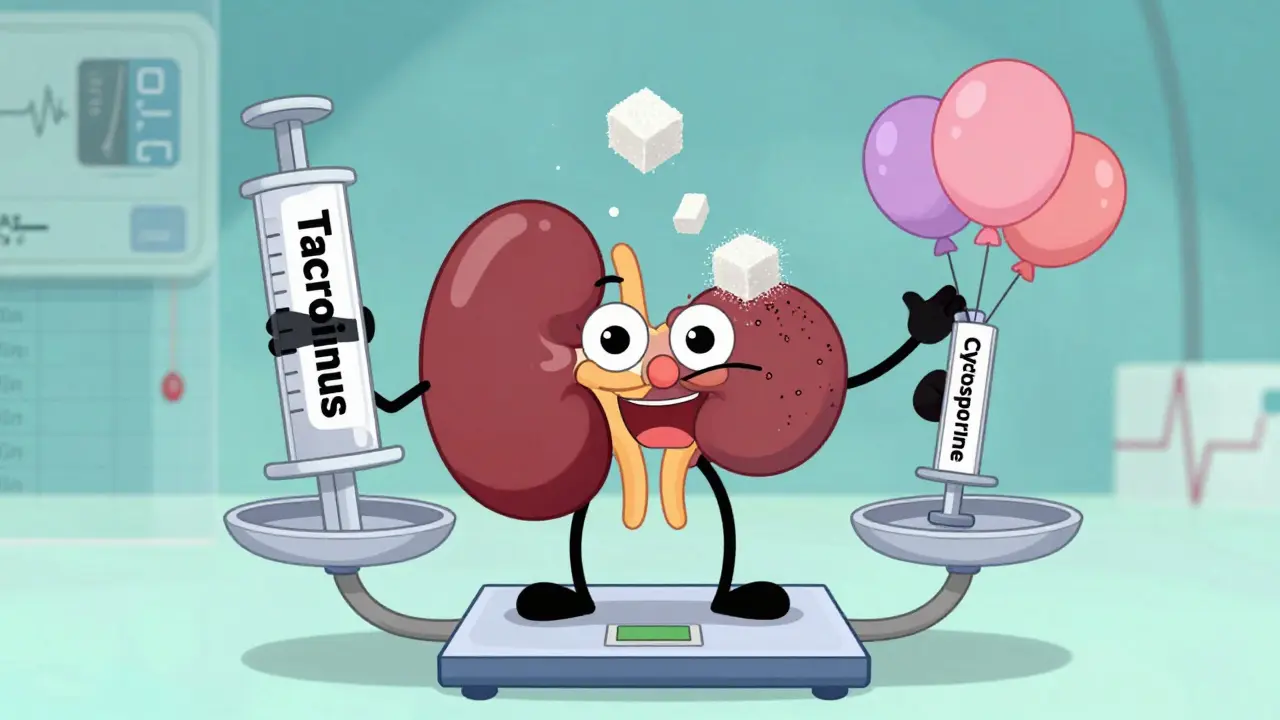
Both calcineurin inhibitors are effective at preventing organ rejection but have different side effect profiles. Tacrolimus generally offers better graft survival (92% vs 85% at one year) but carries a higher burden of neurological side effects and diabetes risk. Cyclosporine has fewer neurological side effects but more hair growth and gum problems.
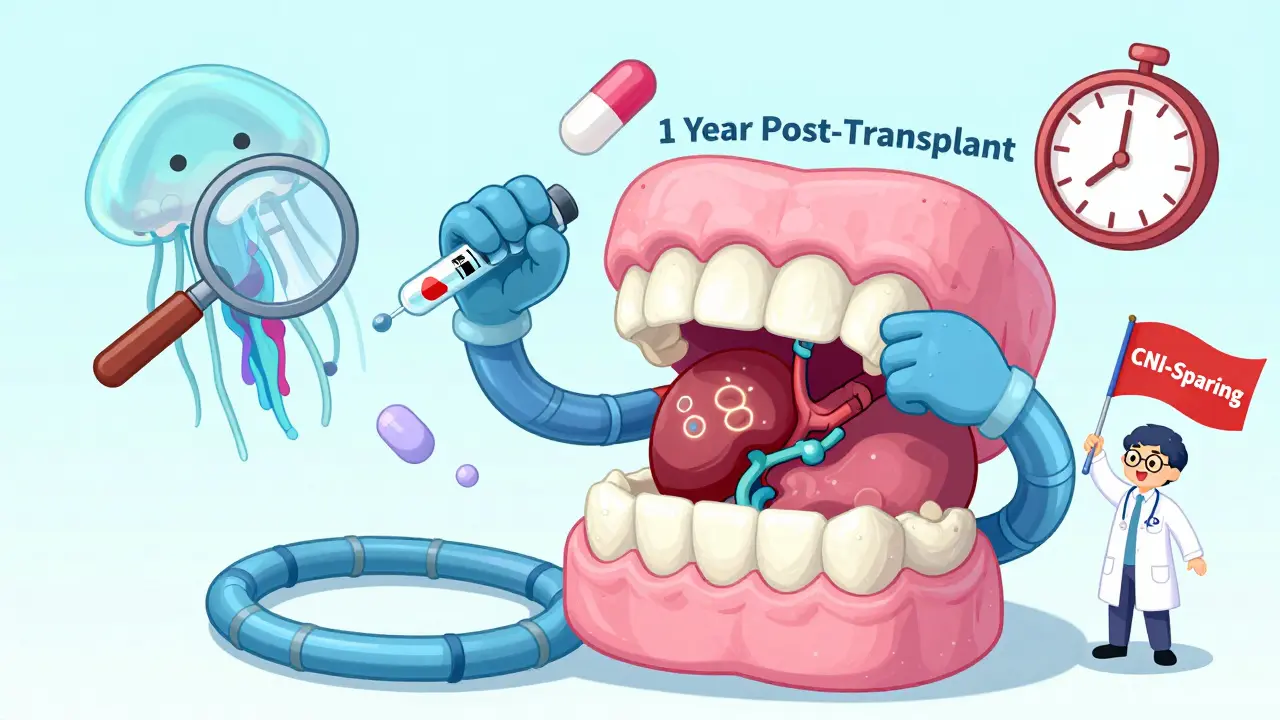
Many transplant centers now use CNI-sparing protocols to minimize side effects while maintaining graft survival. If you're struggling with side effects, ask your doctor about alternatives like belatacept or CNI withdrawal protocols.
If you're on either drug, be aware of these side effects:
- Monitor your blood sugar monthly
- Get your kidney function checked regularly
- Report tremors or brain fog immediately
- Take magnesium supplements if levels are low
- Ask about switching to a different medication if side effects are severe
Side effect risks are individual and depend on dosage, duration, and other medications. Always discuss your specific situation with your transplant team. This tool is for informational purposes only and does not replace medical advice.
When you get a kidney, liver, or heart transplant, your body tries to reject the new organ like it’s an invader. That’s where calcineurin inhibitors come in - drugs like cyclosporine and tacrolimus that shut down your immune system just enough to let the transplant survive. But this lifesaving power comes at a cost. These medications don’t just block rejection; they also mess with your kidneys, nerves, blood sugar, and more. And while both drugs do the same job, their side effects are not the same. One might give you shaky hands and diabetes. The other might make your gums swell and your face grow hair. Knowing the difference isn’t just academic - it can change your daily life.
How Calcineurin Inhibitors Work (And Why They’re Still Used)
Calcineurin inhibitors work by blocking a protein called calcineurin, which T-cells need to sound the alarm and attack foreign tissue. Without that signal, your immune system stays quiet. That’s why these drugs became the backbone of transplant care in the 1980s and 90s. Even today, nearly all kidney transplants in the U.S. use one of them. In 2023, over 40,000 kidney transplants happened here - and about 85% of those patients were on tacrolimus, while only 10% stayed on cyclosporine. Why the shift? Because tacrolimus gives slightly better graft survival - 92% at one year versus 85% for cyclosporine. But that 7% edge comes with a heavier side effect burden.
Doctors don’t use these drugs lightly. They monitor blood levels weekly when starting, then monthly once stable. The goal isn’t to crush your immune system - it’s to find the lowest dose that still prevents rejection. That’s called minimizing the drug, not maximizing it. And more centers are now trying to get patients off CNIs entirely after a year or two, especially if they’re low-risk for rejection.
Nephrotoxicity: The Biggest Threat to Your Kidneys
If you’ve had a transplant, your kidneys are already working hard. Calcineurin inhibitors make that harder. About 25% to 75% of patients see their creatinine rise in the first few months - a sign their kidneys are under stress. This is called acute nephrotoxicity. It’s usually reversible if caught early and the dose is lowered. But long-term use? That’s where things get serious.
Up to 30% of people on these drugs for years develop chronic kidney damage - scarring in the tubules and tissue that can’t be undone. A landmark 2009 study found that calcineurin inhibitors were responsible for 38% of late graft failures in kidney transplant patients. That means nearly four in ten people who lost their transplants years later didn’t die of rejection - they died of drug damage.
There’s no magic fix. Doctors keep a close eye on creatinine and eGFR (estimated glomerular filtration rate). If numbers creep up, they might reduce the dose, switch drugs, or add another medication to protect the kidneys. Some patients now get belatacept instead - a CNI-free option that preserves kidney function better. In one 2023 trial, patients on belatacept had an eGFR of 58.3 mL/min, while those on CNIs were stuck at 49.1. That’s a big difference over time.
Neurotoxicity: Shaky Hands, Brain Fog, and Parkinsonism
Tacrolimus is far more likely than cyclosporine to cause neurological side effects. About 30% to 70% of tacrolimus users get tremors - shaky hands that make writing, eating, or holding a coffee cup difficult. Cyclosporine? Only 10% to 25%. A 2020 meta-analysis confirmed this gap clearly.
But tremors aren’t the worst of it. Some patients develop something far more alarming: drug-induced parkinsonism. A 2022 case report described a kidney transplant patient who started tacrolimus and within two weeks couldn’t walk without shuffling, his hands trembled constantly, and his face lost expression. He was misdiagnosed with Parkinson’s disease - until doctors switched him to cyclosporine. His symptoms vanished in two weeks. Then, eight months later, he was switched back to cyclosporine… and the tremors came back. That’s how powerful this effect is.
Even subtler problems happen. Up to 20% of tacrolimus users develop mild cognitive changes - trouble remembering names, slower thinking, brain fog. That’s why some transplant centers now do formal neurocognitive tests at three months. If you’re on tacrolimus and feel like your brain isn’t working right, don’t brush it off. Talk to your team. Lowering the trough level from 8-10 ng/mL to 3-5 ng/mL helped 78% of patients in one study. Sometimes, less is more.
Diabetes Risk: Tacrolimus vs Cyclosporine
If you didn’t have diabetes before your transplant, you might get it after. That’s called new-onset diabetes after transplant (NODAT). It happens in 15% to 30% of tacrolimus users. For cyclosporine? Only 5% to 15%. Why? Tacrolimus directly damages the insulin-producing beta cells in your pancreas. It blocks the calcineurin-NFAT pathway - the same one it uses to calm T-cells. So it’s not just suppressing rejection; it’s also suppressing your body’s ability to make insulin.
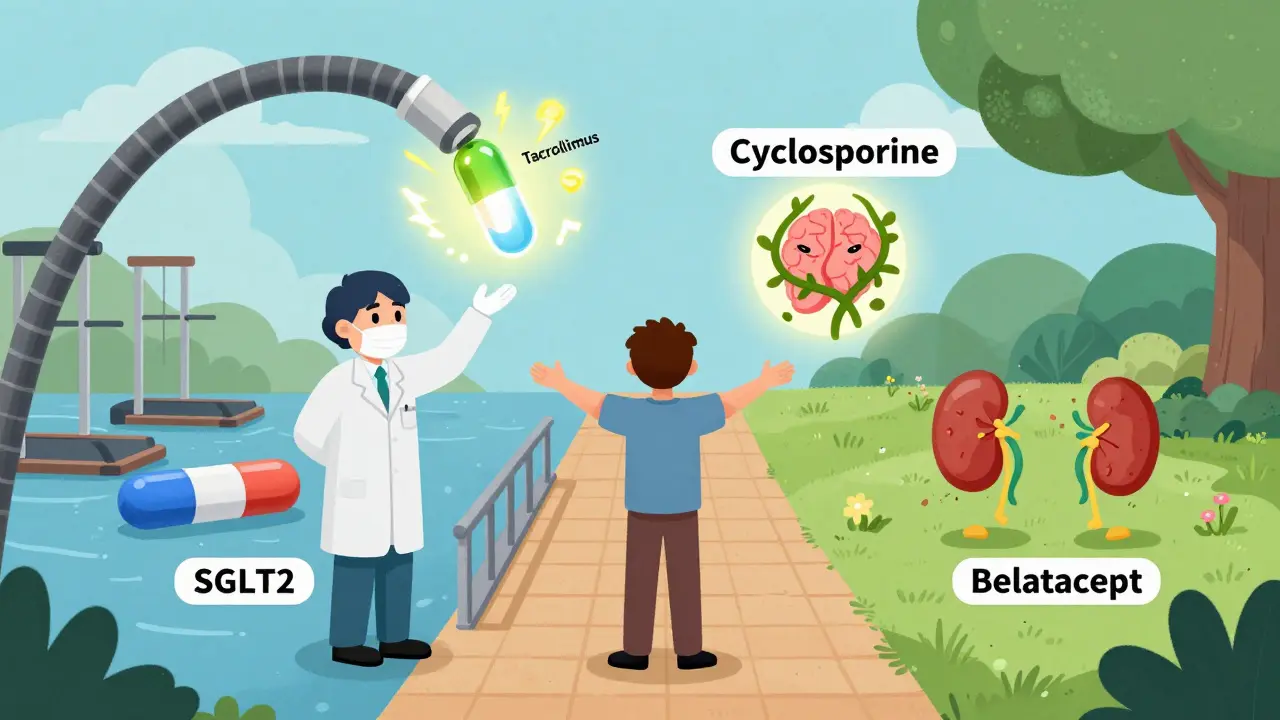
Once you have NODAT, you’re at higher risk for heart disease, nerve damage, and kidney problems - all things you’re already trying to avoid after transplant. The good news? You don’t have to live with it. The 2021 CIRT-T trial showed that starting an SGLT2 inhibitor (like empagliflozin) at the first sign of high blood sugar cut diabetes progression by 38%. These drugs don’t just lower glucose - they protect your heart and kidneys too. Many centers now use them as a preventive step, not a last resort.
Cyclosporine’s Unique Problems: Hair, Gums, and More
Cyclosporine might be quieter in the brain and pancreas, but it has its own set of issues. About 20% to 30% of users grow unwanted hair - on the face, arms, back. It’s not just cosmetic; it can be emotionally crushing, especially for women. One patient on a transplant forum said, “I stopped going to family gatherings because I looked like a man.”
Another common problem: gingival hyperplasia - gums that swell, bleed, and overgrow. Up to 25% of users get this. It’s not just painful; it makes brushing hard and increases infection risk. Dentists often recommend aggressive hygiene, and sometimes surgery to trim the gums. The fix? Switching to tacrolimus. Many patients report their gums return to normal within months.
Cyclosporine also causes more nausea and diarrhea than tacrolimus - but only slightly. Still, for someone already dealing with fatigue and stress, those extra stomach issues can be the last straw.
Shared Side Effects: Blood Pressure, Potassium, and Magnesium
Both drugs do the same damage in some areas. About half to 70% of users develop high blood pressure. That’s because calcineurin inhibitors constrict blood vessels - the same way they constrict kidney arteries. You’ll likely need one or two blood pressure pills. Many patients are on lisinopril or amlodipine.
Both also cause high potassium (hyperkalemia) and low magnesium (hypomagnesemia). High potassium can cause heart rhythm problems. Low magnesium leads to muscle cramps, fatigue, and even heart arrhythmias. Most patients need daily magnesium supplements - often 400-800 mg - just to stay normal. Doctors check levels monthly and adjust doses accordingly.
These side effects are so common, they’re part of the standard monitoring plan. Every transplant center has a checklist: creatinine, potassium, magnesium, glucose, blood pressure, drug levels. If one number is off, they adjust.
What Patients Actually Say
Surveys from transplant communities tell a story numbers can’t. On the American Transplant Foundation’s forum, 68% of 1,245 patients on tacrolimus reported moderate to severe side effects. Tremors? 72%. Sleep problems? 65%. Managing diabetes? 48%. On Reddit’s r/transplant, cyclosporine users talked mostly about hair and gums. Tacrolimus users? Tremors, brain fog, and insulin shots.
A 2022 study using the Transplant Effect Questionnaire found that CNI side effects lowered quality of life scores by 15 to 22 points out of 100. That’s like losing a full grade of health. And here’s the kicker: 78% of patients in a 2023 National Kidney Foundation survey said they’d switch to a different drug - even if it was just as effective - if it meant fewer side effects.
What’s Changing Now? The Move Away from CNIs
The tide is turning. New drugs like voclosporin (approved in 2021 for lupus nephritis) and belatacept (used in transplants) offer similar protection with fewer side effects. Belatacept doesn’t hurt the kidneys or cause diabetes. In one trial, patients on belatacept had better kidney function and fewer metabolic problems - with the same survival rate.
More centers are now using CNI-sparing protocols. Instead of starting with high doses and staying there, they use antibodies to block rejection at first, then lower or remove CNIs after a few months. A trial at UCSF showed that 89% of low-risk patients kept their transplants after one year - with 40% fewer side effects.
By 2025, European guidelines want half of all transplant patients off CNIs. The goal isn’t just to keep the organ alive - it’s to keep the person healthy, active, and free from tremors, diabetes, and swollen gums.
What You Can Do
If you’re on cyclosporine or tacrolimus:
- Get your blood levels checked regularly - don’t skip them.
- Ask your doctor if you’re on the lowest effective dose.
- Monitor your blood sugar monthly, even if you feel fine.
- Take magnesium supplements if your levels are low - it’s not optional.
- Report tremors, brain fog, or gum swelling immediately - don’t wait.
- Ask about alternatives: belatacept, mTOR inhibitors, or CNI withdrawal protocols.
You don’t have to live with side effects as just “part of the deal.” The medicine has evolved. So should your care.
Are cyclosporine and tacrolimus the same thing?
No. Both are calcineurin inhibitors used to prevent organ rejection, but they’re chemically different. Tacrolimus is stronger per milligram and causes more tremors, diabetes, and GI issues. Cyclosporine causes more hair growth, gum swelling, and high blood pressure. Tacrolimus is now used more often because it gives slightly better transplant survival, but its side effects are harder to manage.
Can you stop taking calcineurin inhibitors after a transplant?
Yes - and more doctors are doing it. For patients with low risk of rejection, many centers now use a "CNI-sparing" approach: start with a strong antibody at transplant, then reduce or remove the CNI after 3 to 12 months. Studies show this cuts side effects by 40% without increasing rejection. It’s not for everyone, but if you’re struggling with side effects, ask if you’re a candidate.
Which has worse side effects: cyclosporine or tacrolimus?
It depends on what you care about. Tacrolimus is worse for tremors, diabetes, and brain fog. Cyclosporine is worse for hair growth, gum swelling, and high blood pressure. Both harm the kidneys over time. Tacrolimus is more powerful at preventing rejection, so it’s used more often - but if you’re struggling with its side effects, switching to cyclosporine might improve your quality of life significantly.
Do calcineurin inhibitors cause weight gain?
Not directly. But both drugs can cause high blood sugar, which leads to insulin resistance and fat storage. Also, many transplant patients take steroids at the same time - and those are a major cause of weight gain. So while CNIs don’t make you fat, they can make it harder to lose weight or control blood sugar, which indirectly leads to weight gain.
How often should blood levels be checked for cyclosporine and tacrolimus?
When you first start, levels are checked weekly - sometimes twice a week. Once stable, monthly checks are typical. But if your dose changes, your kidney function drops, or you start a new medication, you’ll need more frequent testing. The target range for tacrolimus is 5-10 ng/mL; for cyclosporine, it’s 100-200 ng/mL. Staying in range reduces side effects and keeps your transplant safe.
Comments (8)
-
rajaneesh s rajan January 29, 2026
So tacrolimus gives you brain fog and diabetes, cyclosporine turns you into a hairy gorilla with gum problems... and we call this medicine? 😅

-
Alex Flores Gomez January 30, 2026
Let’s be real-CNIs are just glorified chemical handcuffs. We’re trading one chronic condition for another. The fact that we’re still using 40-year-old drugs because they ‘work’ is a indictment of pharmaceutical innovation, not a victory. 🤷♂️

-
Doug Gray January 31, 2026
The real tragedy isn't the nephrotoxicity or the parkinsonism-it's that we've normalized this as 'part of the journey.' We don't accept this level of collateral damage in oncology. Why do we accept it in transplant care? The calcineurin pathway isn't sacred-it's just the first thing we found. And now we're stuck with it like a bad marriage.
Belatacept isn't a miracle-it's a *baseline expectation*. If we can reduce rejection rates by 1% with a drug that doesn't wreck your kidneys, why aren't we scaling it like it's oxygen? Because profit margins. Because formularies. Because inertia. We're not treating patients-we're optimizing for cost-per-outcome spreadsheets.
And don't get me started on the 'CNI-sparing' protocols. That's not innovation-that's damage control dressed in clinical jargon. If you have to *sparing* a drug to make it tolerable, maybe it shouldn't be in the first-line toolbox at all.
I've seen patients on tacrolimus with tremors so bad they couldn't hold a fork. One guy cried because he couldn't hug his daughter without shaking. And the response? 'We'll lower your trough.' Like that fixes the trauma. Like that fixes the fact that your body is being slowly dismantled by the very thing keeping you alive.
It's not about choosing between two terrible options. It's about demanding a third. A better one. And until we do, we're not healers-we're accomplices.

-
Frank Declemij January 31, 2026
Monthly labs are non-negotiable. Magnesium supplements aren't optional. If your doctor isn't checking potassium, creatinine, and drug levels every 30 days, find a new one. This isn't guesswork-it's precision medicine. And if you're on tacrolimus and your glucose is creeping up, start an SGLT2 inhibitor now, not when you're insulin-dependent. Prevention beats management every time.

-
DHARMAN CHELLANI February 2, 2026
Belatacept? More like bela-who? This is just Big Pharma’s new cash cow. You think they’d let you off CNIs if it didn’t cost 10x more? Wake up. The real goal is to keep you hooked on expensive drugs forever-not make you healthy.

-
kabir das February 3, 2026
Did you know... the FDA knew about the neurotoxicity in 1998? They buried it. The NIH funded 17 studies showing cyclosporine causes gingival hyperplasia... and still approved it. Why? Because the manufacturers donated to their conferences. I’ve seen the emails. The system is rigged. You’re not sick because of biology-you’re sick because of corruption.
And now they want you to switch to belatacept? It’s just the same poison in a different bottle. They’ll make you diabetic with that too. Just slower. So you pay longer.

-
paul walker February 5, 2026
Man I was on tacrolimus for 3 years. Tremors were brutal-couldn’t hold a coffee cup without spilling. Switched to cyclosporine and my hands stopped shaking. Then my gums started growing like vines 😅. But honestly? I’d take the hairy face over the brain fog any day. Just got off both last year with a mTOR combo and I feel like a new person. Don’t give up-ask for alternatives. You deserve to live, not just survive.

-
Pawan Kumar February 6, 2026
It is not merely a matter of pharmacological trade-offs-it is a systemic failure of the biomedical paradigm to prioritize human dignity over statistical survival metrics. The transplant community has become a temple of utilitarianism, where the body is reduced to an organ inventory, and side effects are merely variables in a regression model. One must ask: if the cure requires the erosion of one's identity-through tremors, hirsutism, and cognitive decay-is it truly a cure? Or merely a prolongation of suffering under the banner of medical progress?
