
Impetigo: What It Is, How It Spreads, and What Treatments Actually Work
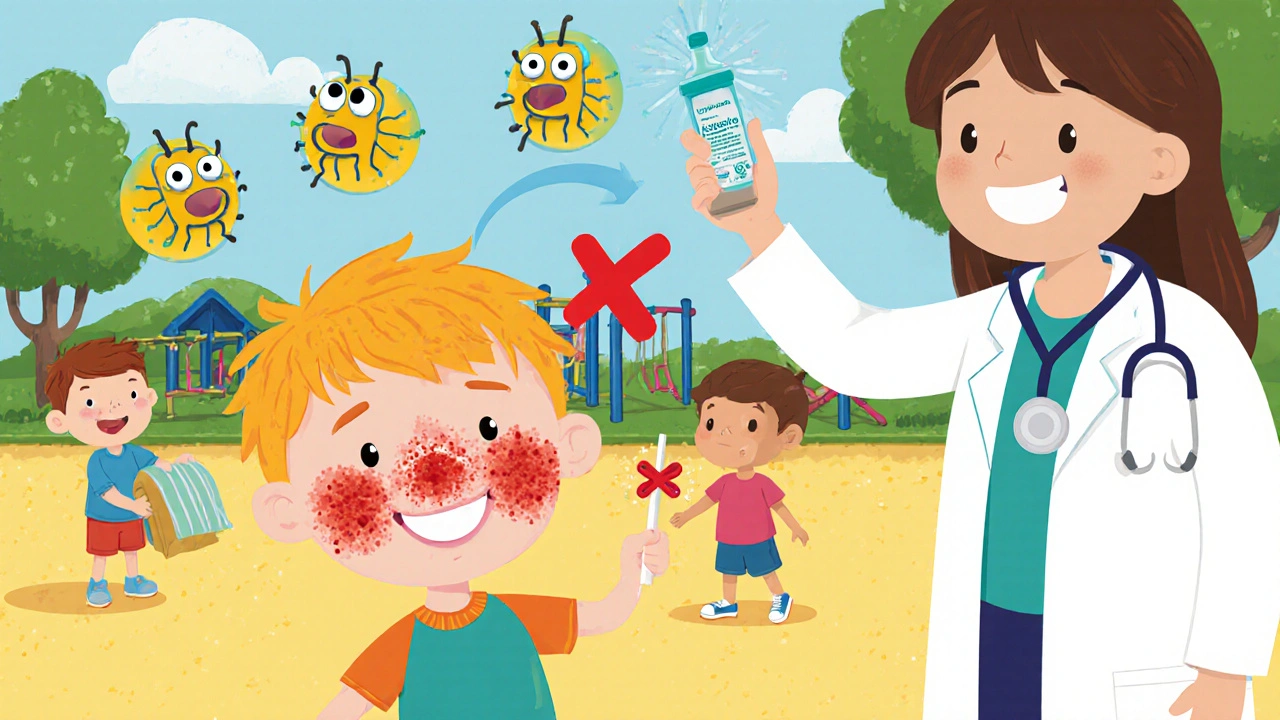
When your child comes home from school with red sores around the nose or mouth that turn into honey-colored crusts, it’s likely impetigo, a highly contagious bacterial skin infection common in children. Also known as school sores, it’s not dangerous—but it spreads fast, and ignoring it can make things worse. This isn’t just a rash. It’s caused by bacteria, usually Staphylococcus aureus or staph, a common skin bacterium that can invade broken skin, or sometimes Streptococcus pyogenes or strep, the same bug behind strep throat. These bacteria don’t need deep wounds to start trouble—tiny cuts, insect bites, or even dry, cracked skin from eczema are enough.
Impetigo shows up in two main forms: one with blisters that burst and leave sticky crusts (non-bullous), and another with larger fluid-filled blisters (bullous). The first kind is far more common. It’s not just ugly—it’s infectious. Kids rub their faces, touch toys, hug siblings, and suddenly the whole household has it. Adults get it too, especially if they have diabetes, eczema, or a weakened immune system. That’s why it shows up in nursing homes, locker rooms, and even among athletes. The good news? It responds well to treatment. Topical antibiotics like mupirocin work for mild cases. For worse infections, oral antibiotics like cephalexin or clindamycin clear it up fast. But here’s the catch: if you stop the medicine early because the sores look better, the bacteria come back—and stronger. And overusing antibiotics? That’s how resistant strains spread.
You’ll find posts here that break down how to tell impetigo apart from other skin conditions like ringworm or eczema flare-ups. You’ll see what doctors really recommend for home care, how to stop it from spreading in your house, and why some over-the-counter creams do more harm than good. There’s also advice on when to call a doctor—because sometimes what looks like impetigo is something else entirely. If you’ve been told to just "let it run its course," you’re not alone. But that’s not the whole story. With the right steps, you can get through it in days, not weeks.
Bacterial Skin Infections: Impetigo, Cellulitis, and Antibiotics Explained
Haig Sandavol Nov 27 12Impetigo and cellulitis are common bacterial skin infections that require different treatments. Learn how to tell them apart, which antibiotics actually work, and when to seek emergency care.
More Detail