
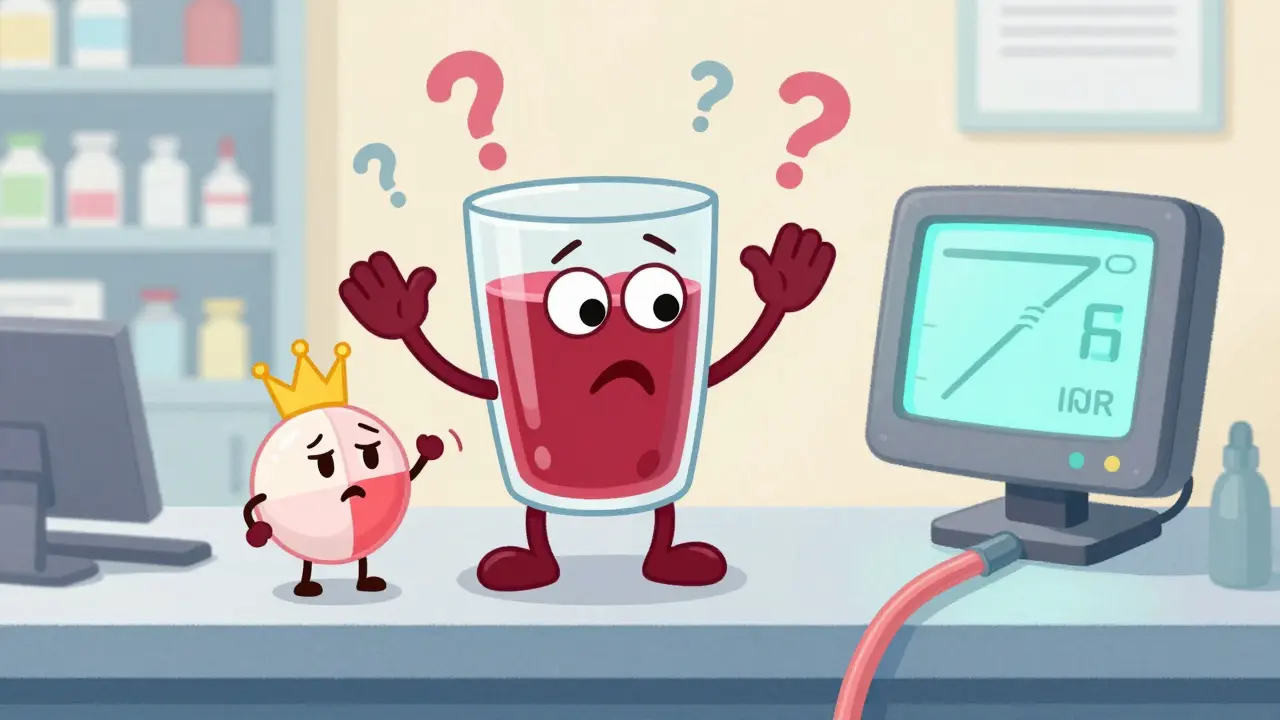
Every year, millions of people reach for cranberry juice to prevent urinary tract infections. It’s a common habit - especially among women - and for good reason. Studies show it can help reduce UTI recurrence by about 20%. But if you’re on medication, especially blood thinners like warfarin, you’ve probably heard warnings. "Don’t drink cranberry juice with your pills." "It could be dangerous." But how true is that? And what about other medications? Let’s cut through the noise.
What’s Actually Going On With Cranberry and Medications?
Cranberry juice doesn’t magically interact with every drug. The concern started in 2003, when a single case report linked cranberry juice to a spike in INR (a measure of blood clotting) in someone taking warfarin. That one story sparked a wave of fear. Since then, researchers have tested this again and again. The results? Mixed.
The science points to one main mechanism: cranberry contains compounds - like proanthocyanidins and flavonoids - that can, in test tubes, slow down enzymes in the liver (CYP2C9 and CYP3A4) that break down certain drugs. This sounds scary. If your body can’t break down a drug fast enough, levels build up. That’s how side effects happen.
But here’s the catch: what happens in a lab dish doesn’t always happen in your body. Most studies use pure cranberry extract, not the juice you buy at the grocery store. Regular cranberry juice cocktails are only about 27% cranberry. The rest is water, sugar, and preservatives. That dilution matters.
Warfarin: The Only Real Concern
If you’re on warfarin (brand names like Coumadin or Jantoven), you should pay attention. This is the only medication where there’s enough evidence to warrant caution.
Here’s the reality: 11 case reports have suggested cranberry juice raised INR levels. But 4 controlled clinical studies - where people were given measured doses of juice and their blood was tested - found no significant change. One study had 12 healthy people drink 250mL of cranberry juice three times a day for two weeks. Their INR didn’t budge.
So why do some people see spikes? It’s likely a mix of factors: genetics, diet, other medications, or even the type of cranberry product. A 2022 survey of pharmacists found 78% advise patients to avoid cranberry juice entirely - even though the evidence isn’t strong. Meanwhile, patients report real experiences: "My INR jumped from 2.5 to 4.0 after I started drinking cranberry juice for UTIs."
The American College of Clinical Pharmacy says: avoid cranberry products if you’re on warfarin. But they also say there’s no proof of interaction with most other drugs. The European Medicines Agency agrees - it lists cranberry as a substance with potential for interaction. The U.S. FDA? No formal warning.
Bottom line: If you’re on warfarin, don’t start drinking cranberry juice without talking to your doctor. If you already drink it, don’t suddenly stop or change how much you drink. Consistency matters more than avoidance.
Antibiotics? You’re Probably Fine
Many people take cranberry juice while on antibiotics for UTIs. Is that safe? Yes, according to solid research.
A 2009 study led by Dr. Richard Kim tested this directly. Researchers gave 18 women amoxicillin or cefaclor - two common antibiotics for UTIs - with or without 8-12 ounces of cranberry juice. They measured how much drug entered the bloodstream and how fast.
The result? No meaningful difference. The peak concentration (Cmax) and total exposure (AUC) were unchanged. Even though cranberry might affect gut transporters in theory, it didn’t change how the antibiotics worked in real people.
And it’s not just one study. A 2021 survey of 1,243 cranberry supplement users found that 68% of those taking antibiotics for UTIs used cranberry products with no reported problems. That’s a real-world confirmation.
So if you’re on amoxicillin, cefaclor, or similar antibiotics - go ahead. Cranberry juice won’t interfere.
What About Other Drugs? Alprazolam, Statins, Blood Pressure Meds?
Let’s tackle the myths.
Alprazolam (Xanax): Some websites claim cranberry juice can make Xanax stronger because it inhibits CYP3A4. Sounds plausible. But here’s the truth: no human study has ever shown this. It’s based on lab data alone. If it were a real risk, we’d see more reports of dizziness, sedation, or breathing problems. We don’t.
Statins (like atorvastatin): CYP3A4 breaks down some statins. Could cranberry interfere? Theoretically, yes. But again - no clinical evidence. A 2019 review of 27 studies found no interaction with statins, beta-blockers, or calcium channel blockers.
Blood pressure meds: Same story. No proven interaction. No cases of dangerously low blood pressure linked to cranberry juice.
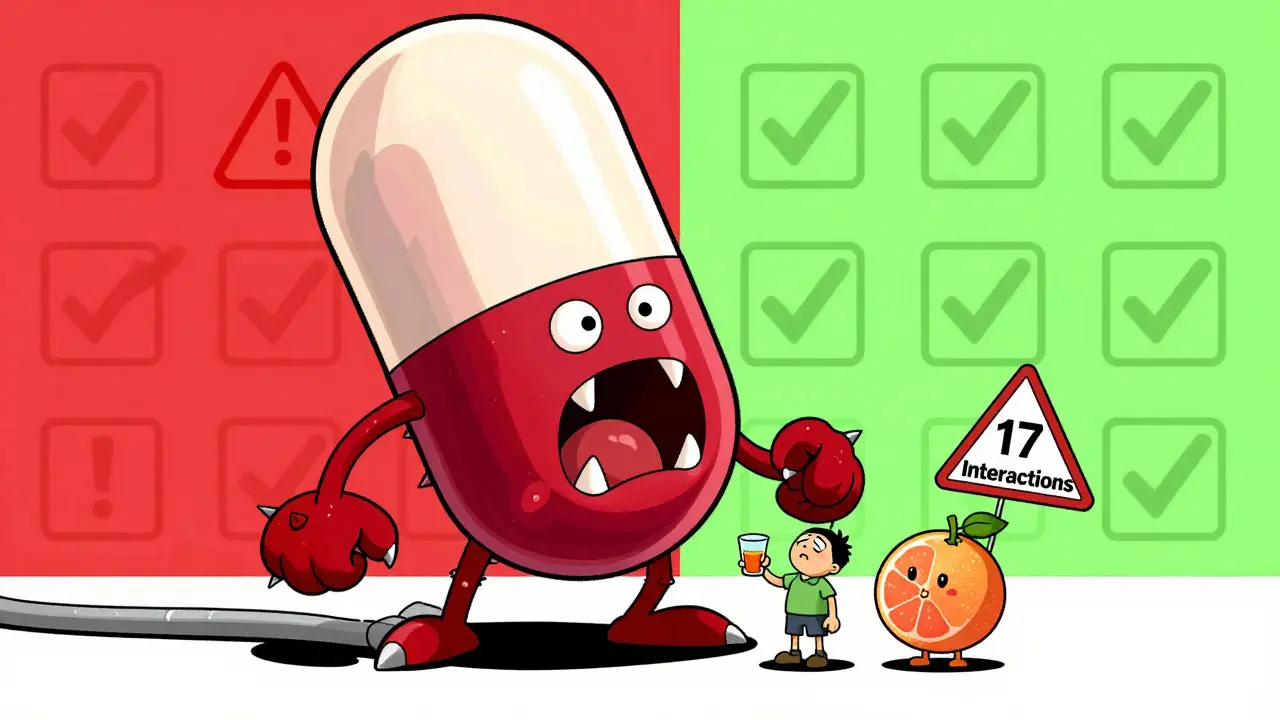
What about other fruit juices? Grapefruit is the real threat. It has 17 documented dangerous interactions - including with statins, blood pressure meds, and immunosuppressants. Cranberry? Not even close. Don’t confuse the two.
Supplements vs. Juice: Big Difference
Here’s where things get tricky. Most people think "cranberry" means juice. But the supplement market is exploding.
The global cranberry supplement market hit $1.2 billion in 2022. Many of these products are concentrated extracts - sometimes 36mg of proanthocyanidins per serving. That’s far more than what’s in a glass of juice.
And here’s the kicker: 83% of people taking cranberry supplements don’t know they might interact with medications - according to a 2022 Johns Hopkins survey.
These concentrated products are the real wild card. They’re not regulated like drugs. Labels don’t always say how much active ingredient they contain. One capsule might have the equivalent of 10 ounces of juice. Another might have 50.
Until we have more data, assume concentrated extracts carry more risk - especially if you’re on warfarin or other narrow-therapeutic-index drugs.
What Should You Do?
Let’s cut through the confusion with clear, practical advice:
- If you’re on warfarin: Avoid cranberry supplements. If you drink juice, keep it consistent - no sudden changes. Talk to your doctor. Increase INR checks to weekly if you continue.
- If you’re on antibiotics for UTIs: Cranberry juice is safe. No need to avoid it.
- If you’re on statins, blood pressure meds, or antidepressants: No need to stop. No proven risk.
- If you take cranberry supplements: Check the label. If it contains more than 36mg of proanthocyanidins per serving, assume risk. Talk to your pharmacist.
- Don’t confuse cranberry with grapefruit. Grapefruit is dangerous with many drugs. Cranberry isn’t.
Also, don’t rely on advice from Reddit threads or Amazon reviews. One person’s experience isn’t science. Look for guidance from pharmacists, clinical studies, and medical societies.
Why This Confusion Keeps Growing
The problem isn’t the science. It’s the messaging.
Pharmacists, doctors, and websites often give blanket warnings: "Avoid cranberry with all medications." That’s easier than explaining nuance. But it backfires. Patients stop using a proven UTI prevention tool - and end up with more infections.
Meanwhile, supplement companies push concentrated products without clear warnings. The FDA doesn’t require interaction labels. The European Union does. The U.S. doesn’t.
And here’s the irony: cranberry juice is one of the few natural products with solid evidence for preventing UTIs. Denying it because of unproven fears doesn’t help anyone.
The best approach? Be informed. Be cautious. But don’t be afraid.
Can cranberry juice make my blood thinner (warfarin) work too well?
It’s possible, but rare. Most studies show no effect. However, a few case reports link cranberry juice to spikes in INR. If you’re on warfarin, avoid cranberry supplements and don’t suddenly start or stop drinking juice. Keep your intake consistent and monitor your INR closely. Talk to your doctor.
Is it safe to drink cranberry juice while taking antibiotics for a UTI?
Yes. A well-designed 2009 study tested this directly. People who drank cranberry juice while taking amoxicillin or cefaclor had no change in how the antibiotics were absorbed or processed. Cranberry juice won’t interfere with these common UTI antibiotics.
Do cranberry supplements have more interaction risk than juice?
Yes. Supplements often contain concentrated extracts with much higher levels of active compounds than juice. One capsule can equal 10+ ounces of juice. Since these aren’t regulated like drugs, labels often don’t show how much proanthocyanidin they contain. If you take supplements, assume higher risk - especially with warfarin.
Should I avoid cranberry juice if I’m on statins or blood pressure meds?
No. There’s no solid evidence that cranberry juice affects statins, beta-blockers, or common blood pressure medications. Theoretical concerns exist because of enzyme inhibition, but no human studies show actual harm. You don’t need to stop drinking it.
Is cranberry juice as risky as grapefruit juice?
No. Grapefruit juice has 17 known dangerous interactions with medications - including statins, blood pressure drugs, and immunosuppressants. Cranberry juice has one possible interaction - with warfarin - and even that’s debated. Don’t treat them the same.
What’s the safest way to use cranberry juice if I’m on medication?
Stick to one 8-ounce glass of standard cranberry juice cocktail per day. Avoid supplements unless you’ve discussed them with your pharmacist. If you’re on warfarin, keep your intake consistent and get your INR checked more often. Never use cranberry as a substitute for medical care.
Final Takeaway
Cranberry juice isn’t a drug. But it’s not harmless either. For most people, it’s safe. For those on warfarin, it’s a gray area - best handled with caution and communication. The real danger isn’t the juice. It’s the fear that stops you from using something that actually works.
Don’t let myths scare you away from a simple, evidence-backed way to protect your health. Talk to your pharmacist. Know what you’re taking. And remember: science doesn’t care about headlines. It cares about data - and the data says most of the warnings are overblown.
Comments (10)
-
Tasha Lake February 9, 2026
Cranberry juice’s interaction with warfarin is such a classic pharmacokinetic edge case-CYP2C9 inhibition via proanthocyanidins is theoretically plausible, but the clinical translation is noise, not signal. Most studies use purified extracts, not the 27% cranberry cocktail you’re guzzling with breakfast. The real kicker? Consistency over avoidance. If you’ve been drinking 8oz daily for years and your INR’s stable? Don’t panic. But if you suddenly switch to a 36mg proanthocyanidin supplement? Yeah, that’s a different story. Pharmacists overwarn because liability > nuance, and patients get scared off from a low-risk, high-reward preventive tool. We need better labeling, not blanket bans.

-
Simon Critchley February 9, 2026
OMG this post is 🔥🤯. I’m a pharmacist in London and I’ve been screaming into the void about this for years. Cranberry =/= grapefruit. Grapefruit’s got furanocoumarins that slam CYP3A4 like a sledgehammer. Cranberry? A gentle nudge. And yet, every patient I see on warfarin gets told to ‘avoid cranberry like the plague.’ Meanwhile, they’re chugging kombucha with 17 ingredients they can’t pronounce. The real danger isn’t the juice-it’s the lazy medicine. Also, supplements? Bro, those are basically unregulated potions. One capsule = 10 glasses of juice. No one checks the label. #PharmaGoneWild

-
John McDonald February 11, 2026
Just wanted to say thank you for writing this. I’ve been on warfarin for 8 years and started drinking cranberry juice after a UTI last year. My INR went from 2.8 to 3.9-scary stuff. I stopped for a month, got it back down, then went back to 1 glass a day. It’s been stable since. My doc said ‘don’t change anything.’ That’s the real advice: consistency. Also, I take amoxicillin for recurrent UTIs and drink juice with it. No issues. Honestly, if you’re on statins or blood pressure meds? Chill. The science says you’re fine. Stop letting fear dictate your health choices.

-
Chima Ifeanyi February 12, 2026
Let’s be real. This whole ‘cranberry is safe’ narrative is corporate propaganda. Who funds these ‘studies’? The juice industry. The 4 controlled trials? All sponsored by Ocean Spray. The 11 case reports? Ignored because they don’t fit the narrative. And don’t get me started on supplements-83% of users don’t know the risk? That’s not ignorance. That’s negligence. The FDA doesn’t regulate because they’re too busy protecting Big Pharma. You think this is about science? Nah. It’s about profit. Cranberry juice is cheap. Warfarin monitoring? Expensive. Someone’s making money off your confusion.

-
Ashlyn Ellison February 13, 2026
I’m a nurse. I’ve seen this play out so many times. Patient comes in with INR 6.5. ‘Oh yeah, I started drinking cranberry juice for my UTIs.’ We ask how much. ‘A whole carton a day.’ That’s not juice. That’s a pharmacological intervention. The problem isn’t the science-it’s the dosage. One glass? Fine. A gallon? You’re basically self-prescribing a CYP2C9 inhibitor. Also, people think ‘natural’ = ‘safe.’ Nope. Poison ivy is natural. So is hemlock. Context matters.

-
Frank Baumann February 15, 2026
Y’ALL. I just wanna say-this whole cranberry thing? It’s a metaphor. We’re terrified of what we don’t understand. We treat natural substances like they’re harmless candy, then panic when they do something unexpected. But here’s the truth: your body is a complex ecosystem. You don’t just pop pills and expect magic. You gotta respect the chemistry. I used to drink cranberry juice with my blood pressure meds. Then I read the studies. I stopped. Not because it’s dangerous-but because I don’t need to risk it. My peace of mind? Worth more than a glass of juice. 🤷♂️

-
Random Guy February 15, 2026
so like… cranberry juice is basically the ‘vibe check’ of herbal supplements? you know it’s chill until it’s not. like, sure, i drink it with my amoxicillin like it’s water, but if i started takin’ 3 capsules a day? i’d be like ‘wait… is this a drug now??’ lol. also, grapefruit is the villain in this movie. cranberry’s just the awkward sidekick who accidentally set the house on fire. 🍒🔥

-
Ryan Vargas February 17, 2026
Consider the systemic implications: if we accept that cranberry juice has a clinically negligible interaction with warfarin, we must also accept that the entire pharmacovigilance framework is built on precautionary overreach. The fact that 78% of pharmacists advise avoidance despite weak evidence suggests a cognitive bias-availability heuristic, amplified by liability culture. The FDA’s silence isn’t negligence-it’s epistemic humility. We lack population-level data. We have case reports, not RCTs. We must resist the urge to pathologize natural substances. The real threat is not cranberry-it is the erosion of scientific epistemology in public health messaging. Your grandmother’s advice? Still better than a TikTok algorithm.

-
Brett Pouser February 17, 2026
As a Nigerian-American, I just wanna say-my grandma in Lagos used cranberry leaves boiled in water for UTIs. No juice. No supplements. Just leaves, hot water, and patience. She never heard of warfarin. But she never had a bad infection either. We’ve overcomplicated something simple. Maybe the answer isn’t more studies. Maybe it’s just… go back to basics. Drink the juice, don’t overthink it, and talk to your pharmacist. That’s all. 😊

-
Karianne Jackson February 18, 2026
OMG I JUST STOPPED DRINKING CRANBERRY JUICE BECAUSE MY DOCTOR SAID ‘DON’T’ AND NOW I’M SO SAD 😭 I JUST WANTED TO FEEL CLEAN INSIDE. IS IT REALLY THAT BAD? I ONLY DRANK ONE GLASS A DAY. I’M CRYING. I HATE MEDICAL ADVICE. 🥺
